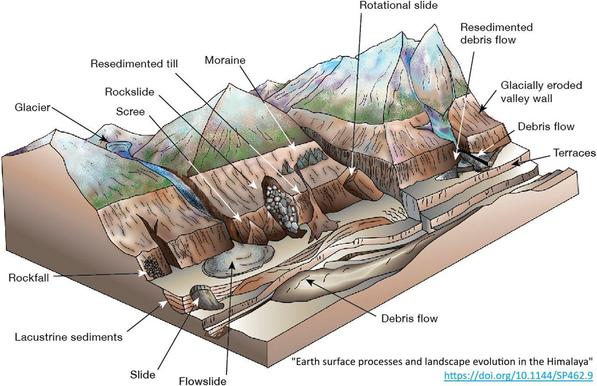
Compound Hydrogeomorphic Cascades And Rapid Upstream To Downstream Hazard Coupling In The Eastern Himalaya
--
https://doi.org/10.1038/s41598-026-52915-8 <-- shared paper
--
https://doi.org/10.5194/esurf-13-1281-2025 <-- shared paper
--
https://doi.org/10.1007/s11069-025-07766-3 <-- shared paper
--
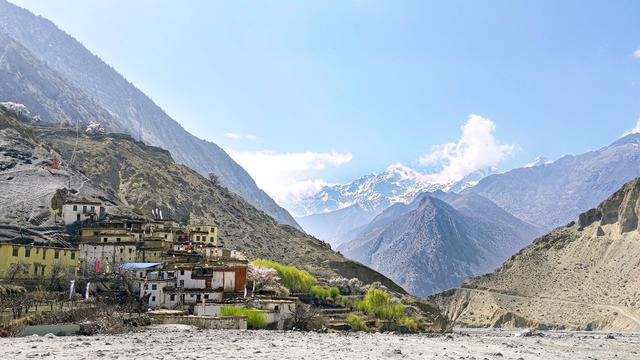
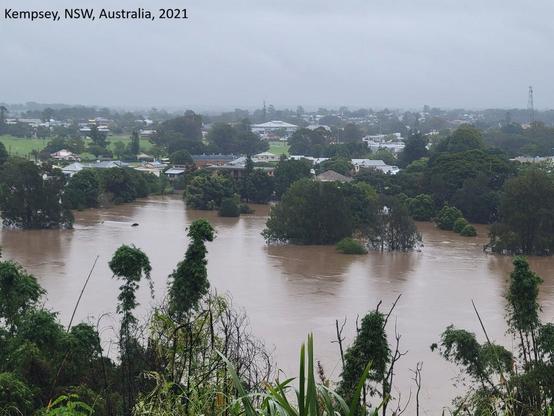
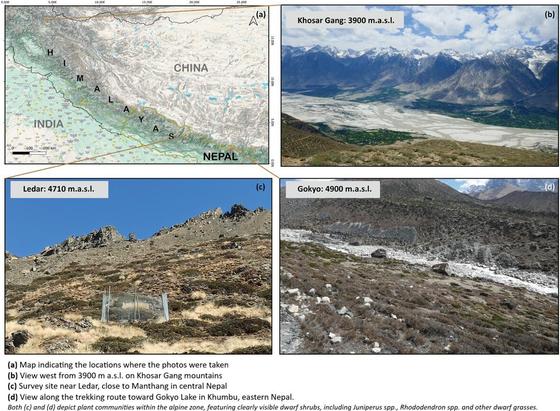
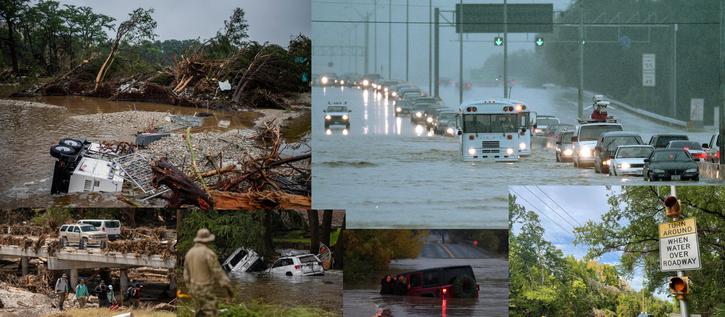
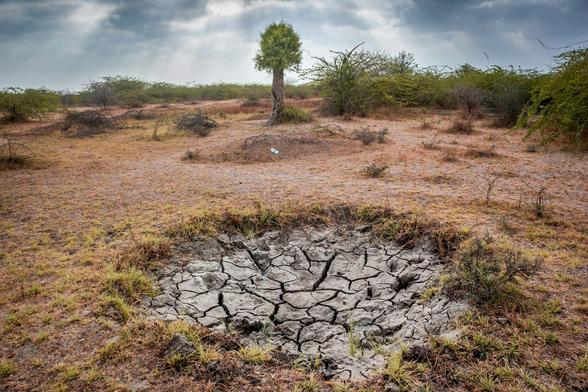
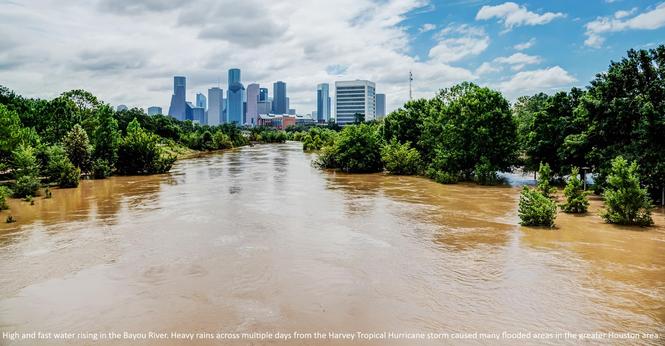
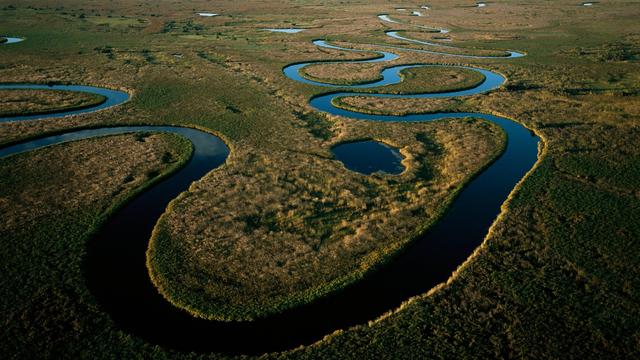
[I recognise that the photo is instead for the floods, etc in Lubra, Nepal - but felt it better showed the hydrogeomorphical setting (sic) for the 'casual' post viewer...]
H/T @Kuldeep Dutta
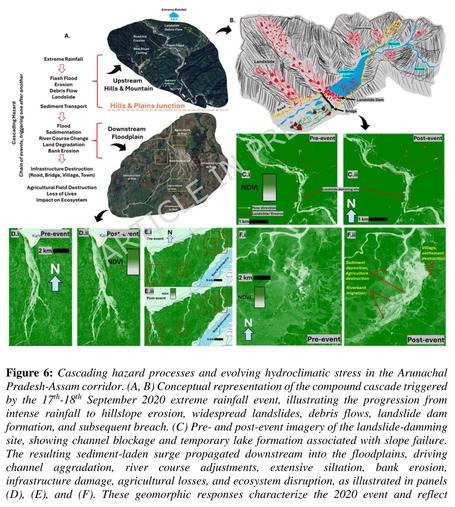
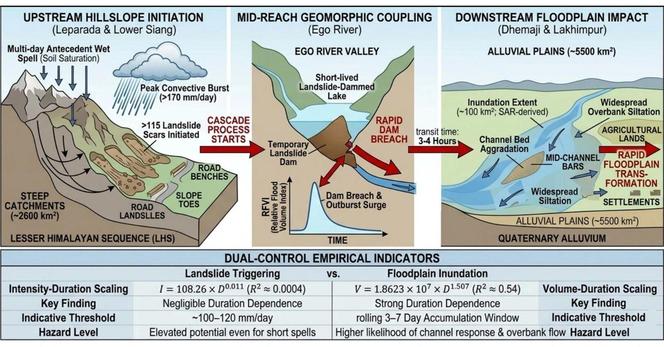
“In hilly regions transitioning rapidly to low gradient alluvial plains, localized hydrometeorological triggers can instantly scale into devastating basin wide disasters. This study dissects the September 2020 cascading hazard in parts of the Arunachal Pradesh-Assam corridor to quantify the rapid coupling between upstream hillslopes and downstream floodplains…”
--
“Extreme precipitation in the Eastern Himalaya is increasingly associated with coupled hillslope-floodplain hazards. This study examines the 17th-18th September 2020 rainfall event in Arunachal Pradesh initiating landslides and its downstream impacts in Assam, India, using multi-sensor satellite data and long-term rainfall records. Sentinel-2 imagery was used to map landslides and debris flows, Sentinel-1 SAR data to delineate flood extent, and IMD gridded rainfall (1996–2020) to analyse rainfall spell characteristics. The event triggered widespread slope failures, localized landslide damming, and a subsequent breach, generating sediment-laden flows that inundated ~ 100 km2 of the Dhemaji floodplain. A backscatter-derived Relative Flood Volume Index (RFVI) indicates spatial variability in inundation intensity, although it does not represent absolute flood volume. Rainfall analysis suggests that antecedent wetness from preceding spells preconditioned slopes, while peak daily rainfall (> 170 mm/day/) initiated landsliding. Power-law scaling shows negligible dependence of intensity on duration (R² ≈ 0.0004), whereas cumulative rainfall exhibits a stronger relationship with duration (R² ≈ 0.54). These results indicate distinct roles of rainfall intensity and accumulation in controlling landslide initiation and downstream flooding, respectively, highlighting the importance of compound rainfall forcing in rapid hydrogeomorphic cascades...”
#EarthScience #RemoteSensing #Himalayas #NaturalHazards #ClimateChange #ScientificReports #GeospatialAnalysis #DisasterMitigation #Landslide #Flooding #alluvial #fluvial #water #hydrology #hydrography #flood #flooding #spatialanalysis #spatiotemporal #mountain #plain #hydrometeorological #hydrogeomorphology #ArunachalPradesh #Assam #India #hillslope #floodplain #rainfall #precipitation #extremeweather #engineeringgeology #massmovement #landslide #debrisflow #risk #hazard #monitoring #GIS #spatial #mapping #remotesensing #satellite #Sentinel #sedimentation #humanimpacts #infrastructure #damage #cost #economics #public #safety #model #modeling #downstream
Hydroclimate Volatility On A Warming Earth
--
https://doi.org/10.1038/s43017-024-00624-z <-- shared 2025 paper
--
https://newsroom.ucla.edu/releases/floods-droughts-fires-hydroclimate-whiplash-speeding-up-globally <-- shared UCLA article, “Floods, Droughts, Then Fires: Hydroclimate Whiplash Is Speeding Up Globally “
--
H/T @Daniel Swain
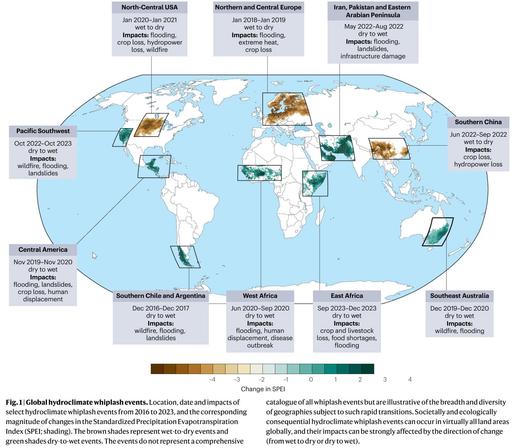
“Hydroclimate volatility refers to sudden, large and/or frequent transitions between very dry and very wet conditions. In this Review, we examine how hydroclimate volatility is anticipated to evolve with anthropogenic warming. Using a metric of ‘hydroclimate whiplash’ based on the Standardized Precipitation Evapotranspiration Index, global-averaged subseasonal (3-month) and interannual (12-month) whiplash have increased by 31–66% and 8–31%, respectively, since the mid-twentieth century. Further increases are anticipated with ongoing warming, including subseasonal increases of 113% and interannual increases of 52% over land areas with 3 °C of warming; these changes are largest at high latitudes and from northern Africa eastward into South Asia. Extensive evidence links these increases primarily to thermodynamics, namely the rising water-vapour-holding capacity and potential evaporative demand of the atmosphere. Increases in hydroclimate volatility will amplify hazards associated with rapid swings between wet and dry states (including flash floods, wildfires, landslides and disease outbreaks), and could accelerate a water management shift towards co-management of drought and flood risks. A clearer understanding of plausible future trajectories of hydroclimate volatility requires expanded focus on the response of atmospheric circulation to regional and global forcings, as well as land–ocean–atmosphere feedbacks, using large ensemble climate model simulations, storm-resolving high-resolution models and emerging machine learning methods…
#water #hydrology #hydroclimate #whiplash #global #spatialanalysis #spatiotemporal #weatherwhiplash #ecogeomorphology #sustainability #ecology# ###
#water #hydrology #hydroclimate #volatility #dry #wet #drought #flood #flooding #wildfire #landslide #massmovement #whiplash #global #spatialanalysis #spatiotemporal #weatherwhiplash #ecogeomorphology #sustainability #ecology #hydrogeomorphology #climatechange #extremeweather #anthropogenicwarming #climate #weather #connection #StandardizedPrecipitationEvapotranspiration #precipitation #rainfall #research #evapotranspiration #risk #hazard #riskassessment #disease #pandemic #publichealth #publicsafety #waterquality #watersecurity #watermanagement #hydrography #atmospheric #regional #global #forcing #climatemodel #model #modeling #AI #machinelearning
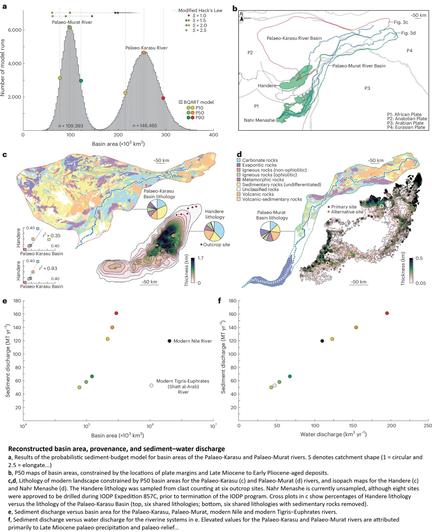
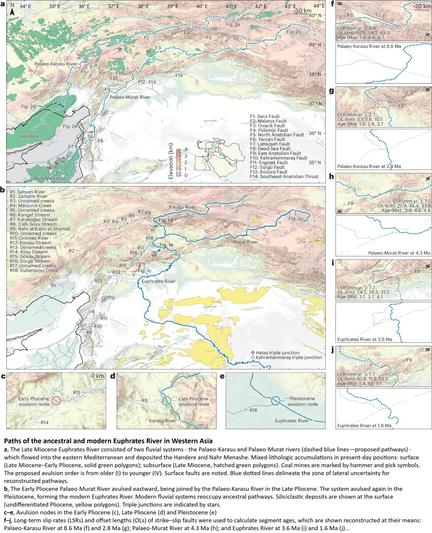
Late Miocene Euphrates River Drained Into A Partially Desiccated Eastern Mediterranean
--
https://doi.org/10.1038/s41561-026-01962-x <-- shared paper
--
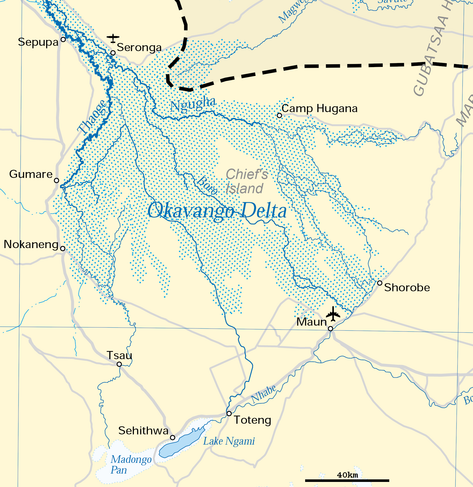
[the paleogeographic reconstruction is outstanding, including the strength and information conveyed so well in that figure, kudos!]
H/T @lina Jakaitė-Darkšė
“Although the Euphrates River - stretching ~3,000 km across Western Asia - has shaped the region’s geology for millions of years, the timing of its origin and the evolution of its course remain enigmatic. So far, two contrasting hypotheses have been proposed to explain the fluvial system’s Late Neogene path: termination in Anatolia at a palaeo-lake or the Mediterranean, or a southeastward continuation to Arabia. Here [they] use seismic-reflection and topographic data to show that two previously identified sedimentary accumulations - deposited during the terminal phase of the Late Miocene Messinian salinity crisis - resulted from dual riverine systems that drained into a partially desiccated eastern Mediterranean before avulsing toward the Persian Gulf and converging to form the modern Euphrates River. From probabilistic sediment-budget modelling, [they] show that although the latest Messinian drainage basins were an order of magnitude smaller than their present-day extents, the total palaeo-discharge exceeded that of the modern Tigris, Euphrates and Nile rivers combined, indicating intense palaeo-precipitation and high palaeo-relief. These results suggest that plate-margin deformation both controlled the fluvial avulsions that diverted the Euphrates River from the Anatolian–Eurasian Plate to the Arabian Plate, and established the conditions necessary for the development of the alluvial Fertile Crescent…”
#water #hydrology #hydrography #paleogeography #Euphrates #river #Miocene #reconstruction #spatialreconstruction #geology #change #erosion #MiddleEast #spatialanalysis #spatiotemporal #Neogene #Anatolia #paleolake #Mediterranean #Arabia #Messinian #remotesensing #model #modeling #topography #hydrogeomorphology #geomorphology #PersianGulf #sediment #paleodischarge #volume #Tigris #elevation #platetectonics #structuralgeology #platemargin #fluvial #avulsion #FertileCrescent
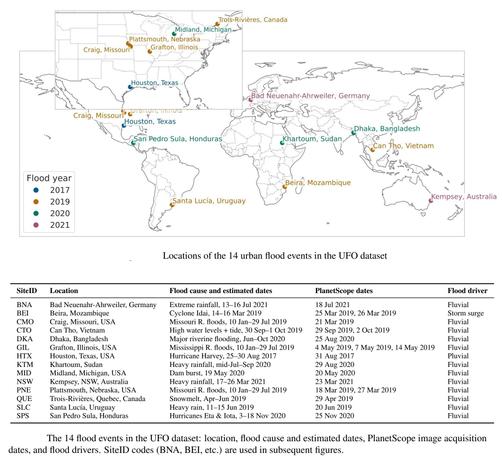
Urban Flood Observations [UFO] - A Hand-Labeled Training And Validation Dataset Of Post-Flood Inundation
--
https://doi.org/10.48550/arXiv.2604.23066 <-- shared paper
--
https://zenodo.org/records/19698577 <-- shared dataset
--
H/T @Rohit Mukherjee
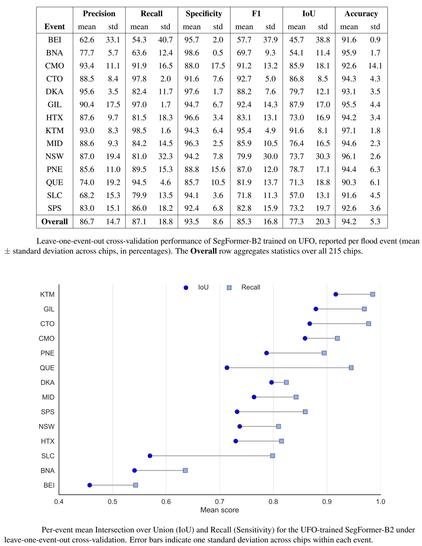
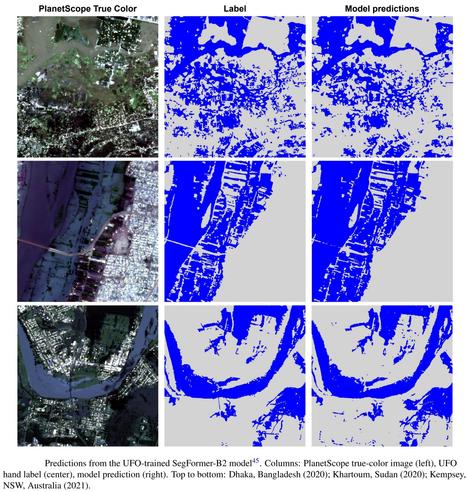
“UFO includes 215 high-resolution PlanetScope image chips and corresponding labels from 14 global flood events, with a focus on urban environments. The labels capture visible surface water in post-flood scenes.
Labeling floods from space is hard, especially in urban areas. Building shadows, narrow channels, wet soil, complex drainage features, and mixed pixels all make it difficult. [They] spent a lot of time refining the labels, and [they] think they can be useful for benchmarking flood-mapping methods and for training flood models (if you have PlanetScope access).
As an initial benchmark, [they have] trained a SegFormer model on the dataset and achieved a mean IoU of 77.3% under leave-one-event-out validation, where each flood event was held out entirely from training…”
--
“Urban flooding affects lives and infrastructure worldwide. Mapping inundation in complex urban environments from satellite imagery remains challenging due to limited spatial resolution, infrequent acquisitions, and cloud cover. [They] present Urban Flood Observations (UFO), a global, hand-labeled dataset of post-flood inundation in diverse urban settings. UFO comprises 215 image chips (1024 by 1024 pixels) from 14 flood events between 2017 and 2021, derived from 3 metre PlanetScope imagery. Each chip is annotated with two classes: 'inundated' (all visible surface water, including floodwater and pre-existing water bodies (permanent or seasonal)) and 'non-inundated'. To demonstrate the dataset's utility, [they have] trained a segmentation model using leave-one-event-out cross-validation, achieving a mean Intersection over Union (IoU) of 77.3. [They] also used UFO to evaluate two widely used surface water products, the Sentinel-1-based NASA IMPACT model and Google's 10 m Dynamic World water class, which yielded IoUs of 44.1 and 48.1, respectively. UFO is publicly available to support the development and validation of urban inundation mapping methods…”
#UrbanFloodObservations #Urban #Flood #Observations #flooding #UFO #PlanetScope #remotesensing #GIS #spatial #mapping #opensource #opendata #floodmapping #model #modeling #floodmodels #infrastructure #water #hydrology #extremeweather #hydrography #humanimpacts #cost #economics #risk #hazard #segmentationmodel #elevation #topography #surfacewater #satellite #senteniel #IMPACT #testcases
Scientists See More Vegetation In The Himalayas - But It Is Not Good News, Because That Extra “Green” Can Disrupt Water, Snow, And High-Mountain Biodiversity | Plants Growing Higher Across Himalaya As Climate Warms
(Vegetation On The Move: Elevational Shifts And Greening Dynamics Across The Himalayan Alpine Zone)
--
https://www.ecoticias.com/en/scientists-see-more-vegetation-in-the-himalayas-but-it-is-not-good-news-because-that-extra-green-can-disrupt-water-snow-and-high-mountain-biodiversity/33120/ <-- shared technical article
--
https://news.exeter.ac.uk/faculty-of-environment-science-and-economy/earth-and-environmental-science/plants-growing-higher-across-himalaya-as-climate-warms/ <-- shared technical newsitem
--
https://doi.org/10.1002/ecog.08259 <-- shared (2026) paper
--
https://doi.org/10.1111/gcb.14919 <-- shared (2020) paper
--
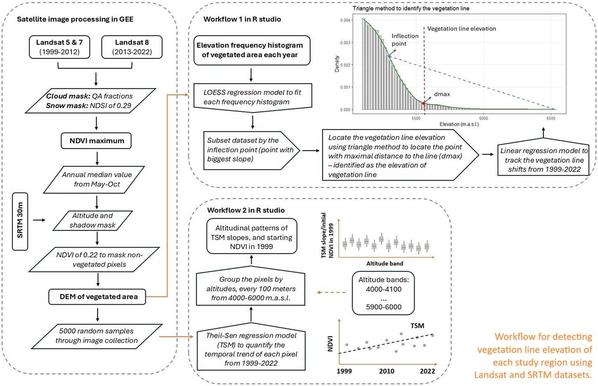
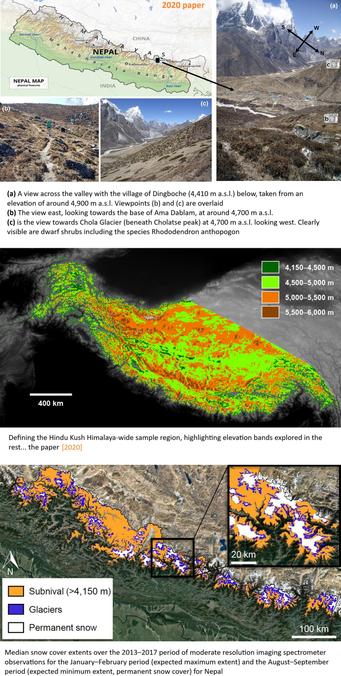
“For years, the biggest climate warning from the Himalaya was easy to picture because glaciers were shrinking on the roof of Asia. Now, researchers are pointing to a quieter signal, one that can look almost harmless from a distance. The mountains are getting greener.
New research [link above] shows alpine vegetation moving higher across six Himalayan regions from 1999 to 2022, pushed in part by warming and reduced snow depth. That might sound like nature recovering, but in this fragile landscape, more plant cover at extreme heights may change how snow is stored, how water runs downhill, and how rivers behave for communities far below…”
#GIS #spatial #mapping #remotesensing #earthobservation #satellite #landsat #landcover #NDVI #Himalaya #Nepal #India #Bhutan #climatechange #glacier #vegetation #alpine #level #greening #spatialanalysis #spatiotemporal #snow #water #ice #hydrography #hydrology #ecosystems #humaninpacts #phenology #model #modeling #HighMountainAsia #greenness #ERA5 #vegetationline #altitude #climatictrends #warming #precipitation #rainfall
The Growing Threat of Flooding on Transportation Infrastructure Across Texas Through 2100
--
https://doi.org/10.1029/2026EF008207 <--shared paper
--
H/T @Rakibul Ahasan
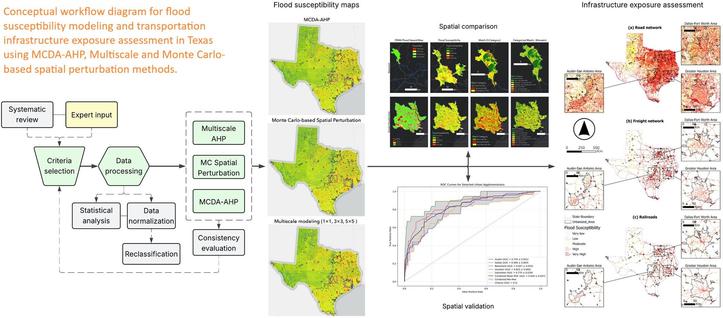
“[The researchers] modeled flood susceptibility across Texas at 30 m resolution and projected how it shifts through 2100. The headline is not just that flood risk grows, but that it moves, into places current planning and regulatory maps are not watching. The July 2025 Kerrville flooding sat squarely inside the kind of inland hazard expansion this model projects.
KEY TAKEAWAYS:
● 95% of new flood exposure by 2100 is inland, away from the coast, shifting the resilience problem into interior river basins that planning has historically deprioritized.
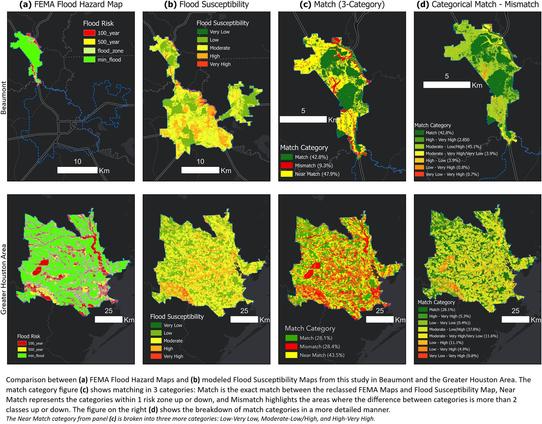
● Where [they] benchmarked against FEMA's National Flood Hazard Layer, the model flags substantial hidden risk in rapidly urbanizing peri-urban areas, most notably in Greater Houston.
● Climate change alone expands the flood-susceptible footprint by 10–12% by 2100, before any new road or land-use development, so this is a conservative floor, not a ceiling.
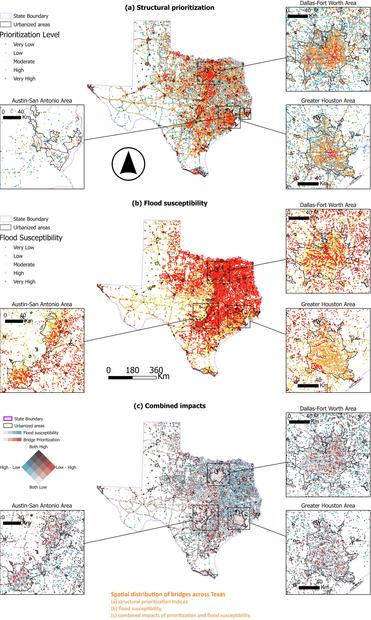
● Half the state's roads and rail and 80% of its bridges already sit in flood-susceptible zones today.
● [They] accounted for both factor-importance and spatial-scale uncertainty, using a Monte Carlo weight-perturbation ensemble and multiscale analysis across nested neighborhoods.
The practical takeaway: this is a statewide screening layer, not a replacement for site-level hydraulic studies. It shows planners and policymakers where the gap between today's protection and tomorrow's risk is widest, and where unmapped peri-urban growth is walking into exposure that regulatory maps still call safe…”
#water #hydrology #hydrography #extremeweather #flood #flooding #Texas #TX #USA #transportation #infrastructure #humanimpacts #risk #hazard #cost #economics #floodsusceptibility #GIS #spatial #mapping #raster #elevation #modeling #model #spatialanalysis #planning #regulation #warning #Kerrville #hazardmapping #floodexposure #inland #coast #urban #urbanisation #development #growth #Houston #lowlying #climatechange #landuse #development #geostatstics #MonteCarlo #regionalscreening #naturalhazard #infrastructureresilience #floodmapping #hydrogeomorphology #geomorphometry #aginginfrastructure
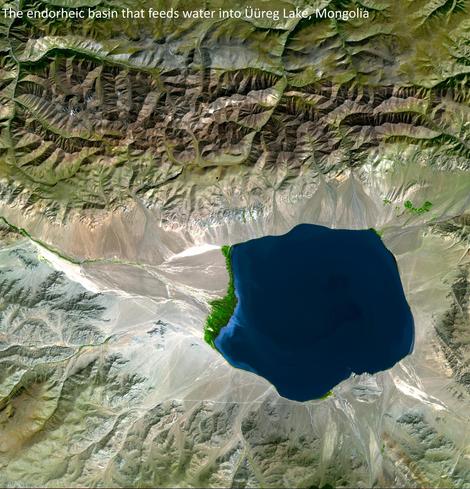
[G]lobal Decline In Endorheic Basin Water Storages
--
https://doi.org/10.1038/s41561-018-0265-7 <-- shared paper
--
https://en.wikipedia.org/wiki/Endorheic_basin <-- shared Wikipedia page
--
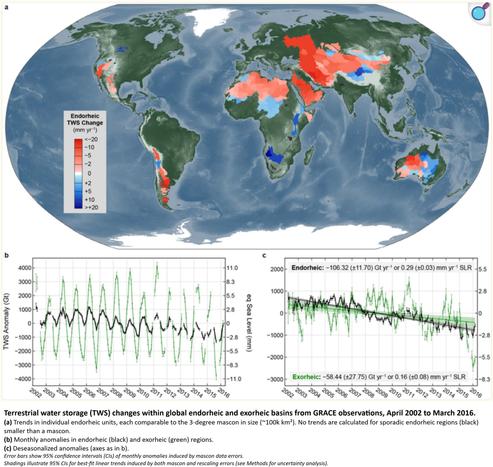
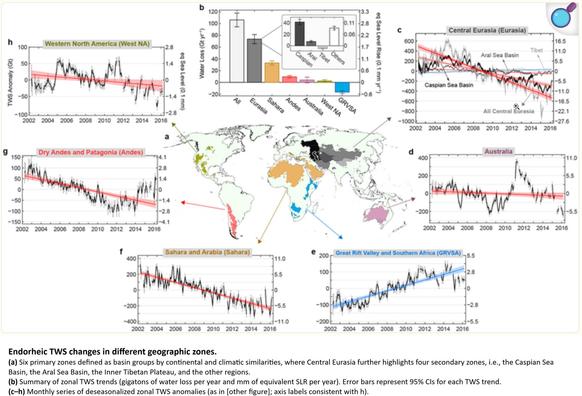
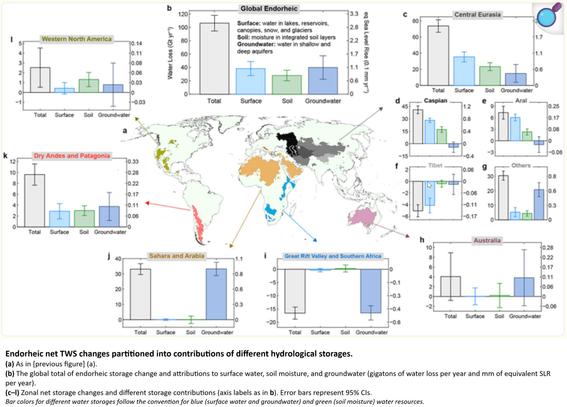
“Endorheic (hydrologically landlocked) basins spatially concur with arid/semi-arid climates. Given limited precipitation but high potential evaporation, their water storage is vulnerable to subtle flux perturbations, which are exacerbated by global warming and human activities. Increasing regional evidence suggests a probably recent net decline in endorheic water storage, but this remains unquantified at a global scale. By integrating satellite observations and hydrological modelling, [they] reveal[ed] that during 2002–2016 the global endorheic system experienced a widespread water loss of about 106.3 Gt/yr, attributed to comparable losses in surface water, soil moisture and groundwater. This decadal decline, disparate from water storage fluctuations in exorheic basins, appears less sensitive to El Niño–Southern Oscillation-driven climate variability, which implies a possible response to longer-term climate conditions and human water management. In the mass-conserved hydrosphere, such an endorheic water loss not only exacerbates local water stress, but also imposes excess water on exorheic basins, leading to a potential sea level rise that matches the contribution of nearly half of the land glacier retreat (excluding Greenland and Antarctica). Given these dual ramifications, [they] suggest the necessity for long-term monitoring of water storage variation in the global endorheic system and the inclusion of its net contribution to future sea level budgeting…”
#water #hydrology #hydrography #global #waterresources #waterstorage #Endorheic #Basin #watersecurity #arid #semiarid #rainfall #precipitation #spatialanalysis #spatiotemporal #globalwarming #climatechange #humanimpacts #anthropogenic #regional #remotesensing #GIS #spatial #mapping #earthobservation #surfacewater #groundwater #soilmoisture #exorheic #watermanagement #hydrosphere #waterstress #SLR #sealevelrise #monitoring #waterbudgets
Decoupling Of Surface Water Storage From Precipitation In Global Drylands Due To Anthropogenic Activity
--
https://doi.org/10.1038/s44221-024-00367-7 <-- shared paper
--
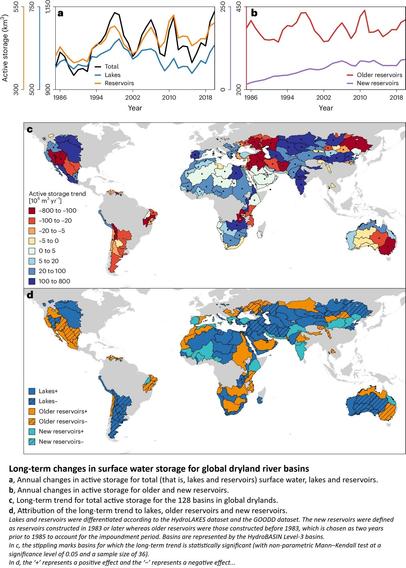
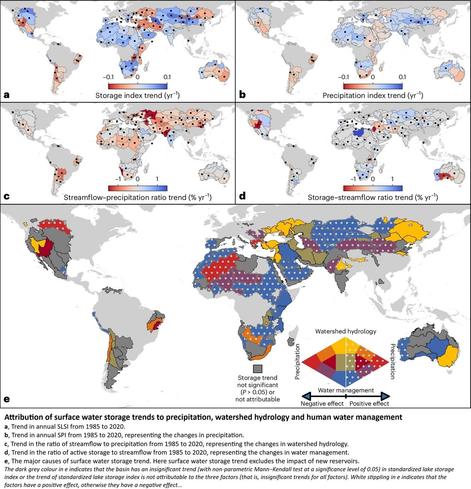
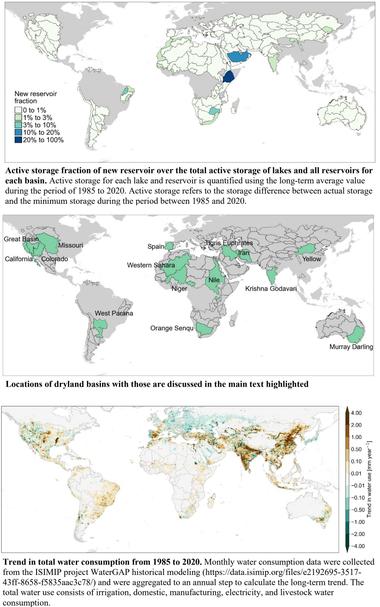
“The availability of surface water in global drylands is essential for both human society and ecosystems. However, the long-term drivers of change in surface water storage, particularly those related to anthropogenic activities, remain unclear. Here [they] use[d] multi-mission remote sensing data to construct monthly time series of water storage changes from 1985 to 2020 for 105,400 lakes and reservoirs in global drylands. An increase of 2.20 km³ per year in surface water storage is found primarily due to the construction of new reservoirs. For lakes and old reservoirs (constructed before 1983), conversely, the trend in storage is minor when aggregated globally, but they dominate surface water storage trends in 91% of individual global dryland basins. Further analysis reveals that long-term storage changes in these water bodies are primarily linked to anthropogenic factors - including human-induced warming and water-management practices - rather than to precipitation changes, as previously thought. These findings reveal a decoupling of surface water storage from precipitation in global drylands, raising concerns about societal and ecosystem sustainability…”
#water #hydrology #hydrography #waterstorage #waterresources #surfacewater #global #drylands #precipitation #rainfall #watersecurity #ecosystems #habitat #publichealth #anthropogenic #GIS #spatial #mapping #remotesensing #earthobservation #spatiotemporal #spatialanalysis #monitoring #geostatistics #engineering #reservoirs #infrastructure #lakes #waterbodies #globalwarming #climatechange #sustainability #planning #baseline
Study Highlights Growing Importance Of Multi-Day Storms In Future U.S. Flood Risk
--
https://news.okstate.edu/articles/engineering-architecture-technology/2026/study-highlights-growing-importance-of-multi-day-storms-in-future-u.s.-flood-risk <-- shared technical article
--
https://doi.org/10.1088/2752-5295/ae4f14 <-- shared paper
--
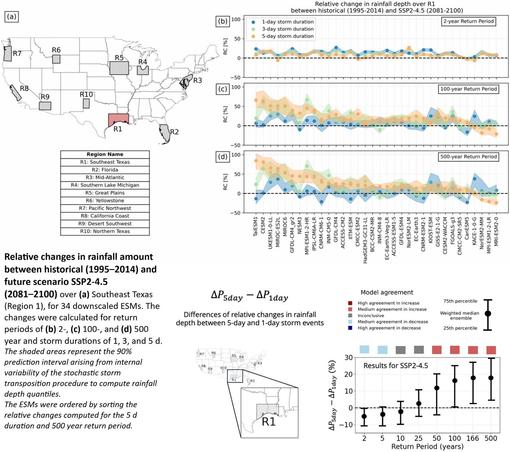
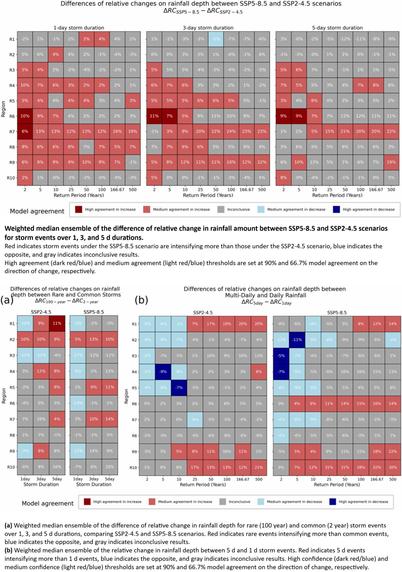
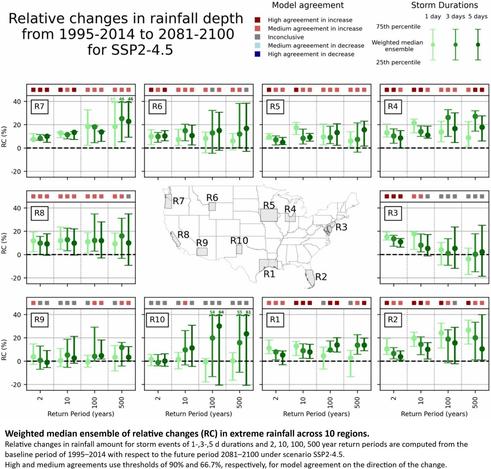
“Extreme rainfall is projected to intensify as the climate warms, yet whether the greatest increases will occur in multi-day or single-day events remains uncertain. This knowledge gap is particularly pressing given recent catastrophic floods triggered by multi-day rainfall events, prompting the question of whether multi-day events could, in fact, intensify more than their daily counterparts, and by how much. This study addresses this question using an ensemble of 34 downscaled Earth System Models under two Shared Socioeconomic Pathways (SSP2-4.5 and SSP5-8.5), focusing on changes in extreme rainfall by the end of the century across ten regions of the contiguous United States. [Their] statistical framework evaluates model agreement, ensemble-mean changes, and the significance of these changes for both daily and multi-day rainfall extremes. Results show that extreme rainfall amounts are expected to increase for most regions and durations. The degree of intensification, however, depends strongly on event rarity and regional climate characteristics. Notably, in the U.S. western Gulf Coast region, very rare multi-day events (e.g., 500 year return period) are projected to intensify more than their daily counterparts, a phenomenon that could be explained by increased stalling of tropical cyclones, which can prolong heavy rainfall over multiple days. These results challenge the assumption that daily extremes dominate future risk and highlight the need to consider event duration when updating flood-hazard maps, design standards, and adaptation planning…”
#Flooding #FloodRisk #FloodInsurance #FloodAwareness #Explore #FloodPreparedness #FlashFlooding #ClimateResilience #climatechange #extremeweather #DisasterPreparedness #StormwaterManagement #FloodSafety #CommunityResilience #risk #hazard #model #modeling #floodrisk #multiday #rainfall #precipitation #storm #water #hydrology #hydrography #planning #policy #regulations #climatemodel #CONUS #USA #publicsafety #cost #economics #damage #loss #infrastructure #spatiotemporal #spatialanalysis #earthsystemmodels #forecasting #meteorology #designstandards #floodmapping #mitigation #flood