Manchester Monday 5 2nd February 2026.

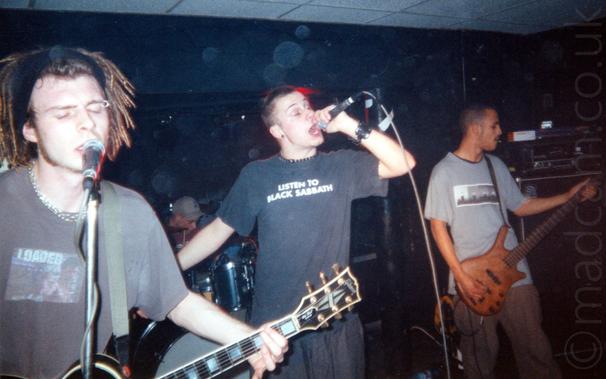
Graham, guitarist with London-based Nu-Metal/Art-Metal band Miocene, on stage at The Roadhouse, Manchester, 7th March 2001.

#Manchester #TheRoadhouse #Miocene #Metal #ManchesterMonday #LondonBands #ManchesterMusic #LiveMusic #photography

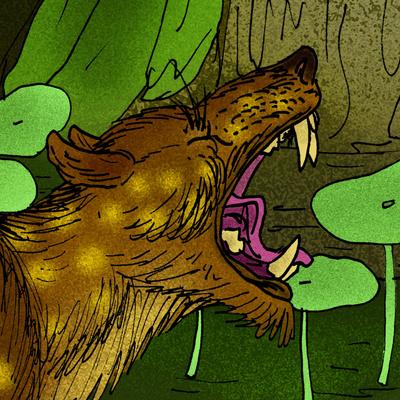
Stupendemys geographica es la tortuga de agua dulce más grande que ha existido, con un caparazón que supera los 2 metros de longitud y la tonelada de peso. Vivió desde el Mioceno medio al comienzo del Plioceno (9-7,2 MdA) sin competición, manteniendo una dieta omnívora que incluía animales duros, como moluscos y pequeños cocodrilos. 📷Ryan Somma #mioceno #miocene #plioceno #pliocene

It is indeed likely the direction of Orion as someone suggested, although without giving a reason.

Another study I just found while searching Opher et al on Bluesky, saw us moving through a #RadcliffeWave" from 14Ma to 12.5Ma with similar impact on heliosphere and stuff. And that was in the Orion region.

https://www.univie.ac.at/en/news/press-room/press-releases/detail/the-galactic-journey-of-our-solar-system/

https://www.aanda.org/articles/aa/full_html/2025/02/aa52061-24/aa52061-24.html

So I guess, widefield astroimages of #Orion would show our most recent heliosphere and climate terrorist, Opher's hydrogen cloud.

Maybe 🤔 it looks like the interstellar medium around the Pleiades, that verra pretty whitish haze. In and around the constellation. You can see it in stacked widefield images taken without telescopes.

Very pleased to have found the other study about the #Miocene cloud.

What'S the fuss?
Climate sensitivity. IMO, we can't use climate knowledge from before 750ka to inform today's #climateSensitivity calculation.
Hell, the hydrogen cloud denting the protective heliosphere will have increased Earth's cloud cover because of the increased cosmic rays which are cloud-seeders. And clouds... are the biggest uncertainty in today's ECS.

Also Earth herself changed a LOT since 14Ma. Ocean thruways, mountain ranges, biomes, nothing today is comparable to earlier than 1Ma, 750ka with the cloud. See the video of Chris Scotese's tectonics and the chart for CO2 and °C by Judd, Tierny 2024.

#Astronomy #astrophotography #climateChange

#CentralAsia’s #fruit and #nut #forests: the real Garden of Eden?

Birthplaces of some of the world’s most beloved snacks

by Monica Evans
17 December 2020

"Millions of years ago, in the temperate montane forests of a little-known region in Central Asia, some of the world’s best-loved fruit and nut trees began to grow. #Apples, #apricots, #cherries, #plums, #grapes, #figs, #peaches, #pomegranates, #pears, #almonds, #pistachios and #walnuts all originated in the hills and valleys of the #TianShan mountain range, which stretches from #Uzbekistan in the west to #China and #Mongolia in the east.

"The area is volcanic and geologically tumultuous, but fertile – scientists have hypothesized that in a place prone to frequent eruptions, earthquakes and landslides, shorter-lived tree species that could disperse their seeds widely by making themselves palatable to large mammals had a better shot at survival than long-lived, slow-maturing trees.

"And that tasty survival strategy has served these species well. For residents of the region, the foods represent both security and social currency. 'From the taxi drivers to the ministers to the local people, almost everyone carries some #DriedFruit or #Nuts with them,' says Paola Agostini, a lead natural resources specialist for Europe and Central Asia at the World Bank. 'It’s like this safety net, and it’s also a lovely gift: something to share with others that is always appreciated.'

"Central Asian marketplaces offer a cornucopia of colors, flavors, textures and varieties – many more than those most of us are accustomed to finding in our local supermarket’s produce aisle. 'I was always astonished that people in the region could so easily tell which country a particular dried apricot came from,' says Agostini. 'Their knowledge of these products is just so deep.'

"Procuring and sharing these energy-dense treats is an ancient practice in the area. Fruit and nuts were major commodities on the Silk Road, an ancient network of trade routes that tracked through the heart of Central Asia, linking Europe, the Middle East and Asia, from the first century BC through to the mid-1400s. Over centuries of trade and travel – and lots of munching by humans, camels and horses along the way – prized fruit and nut species spread their seeds wider and wider, and new hybrid varieties were created, many of which are now supermarket and home-orchard staples, cultivated enthusiastically in temperate regions across the globe.

"Narratives of plant domestication often tend to overstate the role of humans, but newer science suggests that 'evolution in parallel' with the plants we love is often a more accurate way of framing this process. 'It’s very unlikely that when somebody took an apple from #Kazakhstan and carried it across an entire continent, they were thinking that they could cross it with another variety and end up with something better,' says #RobertSpengler, a paleo-ethnobotanist at the Max Planck Institute in Jena, Germany. 'They were more likely just carrying the seeds to plant somewhere else. And in doing so, they inadvertently set off a chain reaction of hybridization events.'

"According to Spengler’s research into the origins of apples, humans were not the first mammals to participate in that process of dispersal and co-evolution, either. In the late #Miocene, which spanned the period from 11.63 to 5.33 million years ago, large mammals such as #mammoths and #horses played critical roles in dispersing apple seeds and facilitating their evolutionary process into the large, sweet, flavor-rich fruits we enjoy today."

Learn more:
https://thinklandscape.globallandscapesforum.org/48941/central-asias-fruit-and-nut-forests-the-real-garden-of-eden/

#SolarPunkSunday #Ethnobotany #PlantHistory #SaveTheForests #SaveTheTrees #FruitTrees #NutTrees

Durante el Mioceno medio (15 MdA) vivió el Kelenken guilermoi, el mayor ave del terror (Phorusrhacidae) con 3 metros de altura y un cráneo de 71,6 cm de longitud. Gran parte de esta longitud pertenece a su pico, que pudo haber usado como un hacha.📷Michael B. H. #mioceno #miocene

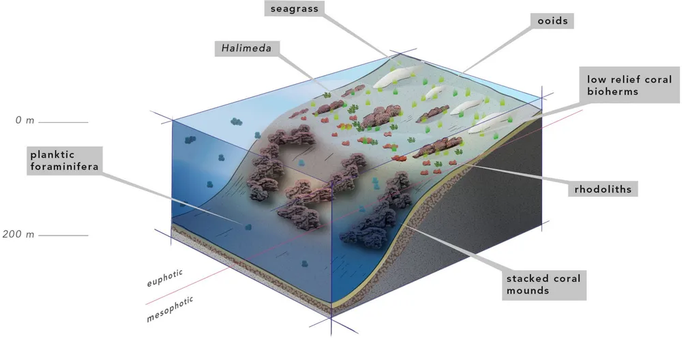
#SeaCows Have Engineered the #PersianGulf’s #Seagrass Ecosystems for Over 20 Million Years https://www.si.edu/newsdesk/releases/ancient-manatee-relative-reveals-sea-cows-have-engineered-arabian-gulfs-seagrass

High abundance of Early #Miocene sea cows from #Qatar shows repeated evolution of seagrass #EcosystemEngineers in Eastern Tethys https://peerj.com/articles/20030/

"This part of the world has been prime #SeaCow habitat for the past 21 million years—it’s just that the sea cow role has been occupied by different species over time."

Another nice example of the long-term "it's all connected!" of the #ocean / #atmosphere system. When the Benguela Upwelling System shifted gears in the late #Miocene, it made southern #Africa more #arid.

Link: https://www.nature.com/articles/s43247-025-02948-0

#silentsunday #murtal #spielberg #miocene #geology
Das Fohnsdorfer Becken mal wieder gefüllt, wie in der Urzeiten. Vor 8 Millionen Jahren wäre das Becken aber mit einem seichten Meer und nicht Wolken gefüllt. 😁

The Fohnsdorf Basin once again filled, as in the before time. 8 million years ago this Basin was filled with a shallow sea instead of the clouds seen here.