 Home Page: Inspirations of Love and Hope
Looking Back: 30 Years of Shame and Finally Understanding My Experience
I’ve lived with this illness for over 30 years, and for most of that time I was ashamed of it.
Doctors kept telling me it was all in my head.
They said I was depressed, anxious, or that I just didn’t want to work hard enough. They usually prescribed antidepressants and anti-anxiety medications, claiming these drugs would fix me. While the medication may have helped my emotional state somewhat, it did nothing to fix the physical symptoms.
Thankfully, I eventually stopped letting them gaslight me into taking more and different medications.
Every time I tried to explain how my body would completely crash after doing normal things, I was met with skepticism or pity.
So I started doubting myself.
I felt weak.
I felt crazy.
I carried a lot of shame for something I couldn’t control.
The fatigue and exhaustion that comes with this illness is crushing.
It’s not normal tiredness. It’s a deep, heavy exhaustion that sleep doesn’t fix. Even the smallest activities can leave me completely wiped out for days.
My sleep tracker consistently shows that I get adequate deep sleep and REM sleep, yet I still wake up exhausted. That helped me understand something important:
The problem isn’t simply how much I sleep.
It’s that my dysautonomia prevents the sleep from being restorative.
In the early years, the emotional side of it felt a lot like PMS — that same sudden emotional dysregulation, irritability, and feeling completely off — except instead of happening once a month, it could hit at any time.
Only recently have I finally understood what’s really happening.
What I have is dysautonomia.
My autonomic nervous system doesn’t regulate properly anymore.
That’s why I can suddenly feel freezing cold in a warm room. That’s why I’m much more comfortable lying down than sitting or standing. And that’s why even mild activity can make my whole system short-circuit — suddenly bringing on intense brain fog, overwhelming exhaustion, headaches, insomnia, anxiety, and sometimes depression all at once.
ME/CFS always felt like an incomplete label to me.
Yes, I crash after exertion.
Yes, sleep doesn’t fix it.
Yes, my body has never functioned the way people expect it to.
But understanding it as dysautonomia finally explains the day-to-day reality of living in a body whose nervous system breaks down so easily.
The only thing that actually helps is pacing — staying within my energy envelope.
I try to live as close to the edge as I can, but carefully. Migraines and tinnitus have become warning signs for me. If I respect those early signals, I can often avoid triggering insomnia, which is far worse than a regular crash and completely throws me off balance.
After 30 years, I’ve finally stopped blaming myself.
That alone has been healing.
I’m sharing this journal entry in case it gives someone else a little more language for their own experience.
And for family members, friends, and doctors: please know that when we keep turning down invitations, or seem withdrawn, or disappear for long stretches of time, it’s not because we don’t want to be around you.
Our energy is extremely limited.
We have to be very careful to avoid crashes.
Even now, I keep a little journal between doctor visits so I can clearly communicate what I’ve been experiencing. If you’re struggling to explain this illness during appointments, writing things down and bringing it with you can be incredibly helpful.
Sometimes understanding does not cure the body.
But it can begin to release the shame.
And after so many years of being misunderstood, that matters.
#30YearsOfIllness #AnxietyAndChronicIllness #AutonomicDysfunction #AutonomicNervousSystem #brainFog #chronicFatigue #chronicFatigueSyndrome #chronicIllness #ChronicIllnessAndShame #ChronicIllnessAwareness #ChronicIllnessBlogger #chronicIllnessJourney #chronicIllnessSupport #ChronicIllnessValidation #CrashPrevention #DepressionAndChronicIllness #disability #DisabledLife #DoctorVisits #Dysautonomia #DysautonomiaAwareness #energyEnvelope #Exhaustion #Fatigue #HealingShame #health #HealthJournal #insomnia #InvisibleDisability #invisibleIllness #life #LifeWithDysautonomia #ListeningToTheBody #livingWithChronicIllness #livingWithMECFS #LongTermIllness #MECFS #MECFSAwareness #MedicalGaslighting #mentalHealth #MigraineWarningSigns #MyalgicEncephalomyelitis #NervousSystemDysfunction #nervousSystemRegulation #NonRestorativeSleep #OrthostaticIntolerance #pacing #pacingWithMECFS #patientAdvocacy #PEM #postExertionalMalaise #postViralIllness #rest #RestorativeRest #selfCompassion #ShameAndIllness #Spoonie #SpoonieLife #symptomTracking #tinnitus #UnderstandingChronicIllness #wellness #writing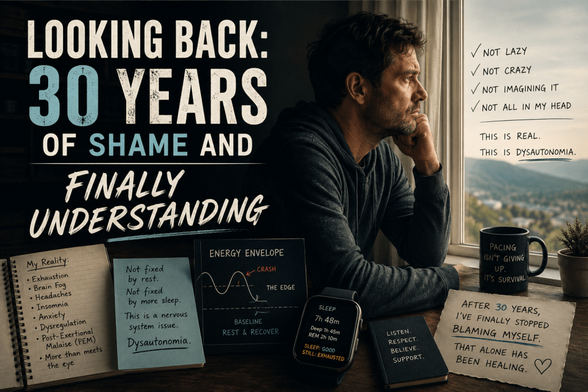
 McKenzie
 illmarks
 dat p1nky
 Camille (they/them)