Cholinergic Receptors Made Easy: Nicotinic and Muscarinic Receptor Functions | USMLE Pharmacology Review

Learn to differentiate nicotinic (Nn, Nm) and muscarinic (M1–M5) receptor functions with this interactive matching activity. Master the key actions involved in synaptic transmission, cardiac control, secretion, and smooth muscle contraction — high-yield for USMLE Step 1.

mymedschool.org
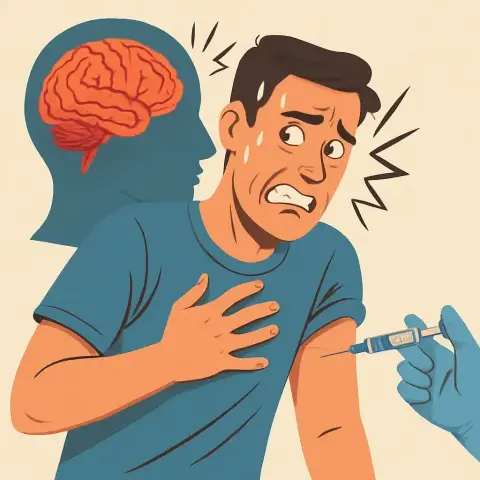
Why Are People Afraid of Needles? The Brain-Body Link and How to Overcome It

Bernard Aybout's Blog - MiltonMarketing.com
Before you continue to YouTube

https://medicalxpress.com/news/2024-12-heart-mini-brain-nervous-heartbeat.html

("putting your #heart into it" a thing?)

…thought to be controlled solely by #autonomicnervoussystem…the heart's #neuralnetwork,…embedded in the superficial layers of the heart wall, has been considered a simple structure that relays the signals…research suggests that it has a more advanced function…

"This 'little brain' has a key role in maintaining and controlling the heartbeat, similar to how the brain regulates rhythmic functions such as locomotion and breathing…"

New research shows that the heart has a mini-brain—its own nervous system that controls the heartbeat

The heart has long been thought to be controlled solely by the autonomic nervous system, which transmits signals from the brain. The heart's neural network, which is embedded in the superficial layers of the heart wall, has been considered a simple structure that relays the signals from the brain. However, recent research suggests that it has a more advanced function than that.

Medical Xpress
Hepatic #lipid #metabolism is regulated by the #AutonomicNervousSystem. This study shows that some #hepatocytes & cholangiocytes are innervated by branches of the vagus nerve; ablating them in mice on a high-fat diet prevents #HepaticSteatosis #PLOSBiology https://plos.io/4hdJiJp
The development of hepatic steatosis depends on the presence of liver-innervating parasympathetic cholinergic neurons in mice fed a high-fat diet

The liver autonomic nervous system is regulated by hepatic lipid metabolism. This study shows that a subset of hepatocytes and cholagiocytes are innervated by nerve terminals originating from the dorsal motor nucleus of the vagus nerve in high-fat diet fed mice and ablation of these cholinergic neurons could prevent hepatic steatosis.

This is a great mnemonic to help regulate when feeling activated - a really good way to remember what to do and good to practise at other times when we're not so activated: OMG (Orient-Move-Ground) https://trecollege.com/orient-move-ground/

This is from
Steve Haines and Body College

#bodycollege #orientmoveground #activation #safety #autonomicnervoussystem #socialengagement #fightorflight #mobilisation #immobilisation #embodiment #downregulation #goslow #wiggleyourtoes

Staying Safe: Avoid 'Oh My God', Try Orient, Move, Ground - TRE College

TRE College
Deciphering the Molecular Mechanisms of Autonomic Nervous System Neuron Induction through Integrative Bioinformatics Analysis. https://doi.org/10.3390/ijms24109053 #AutonomicNervousSystem #Bioinformatics #HumanInducedPluripotentStemCells
Deciphering the Molecular Mechanisms of Autonomic Nervous System Neuron Induction through Integrative Bioinformatics Analysis

In vitro derivation of human neurons in the autonomic nervous system (ANS) is an important technology, given its regulatory roles in maintaining homeostasis in the human body. Although several induction protocols for autonomic lineages have been reported, the regulatory machinery remains largely undefined, primarily due to the absence of a comprehensive understanding of the molecular mechanism regulating human autonomic induction in vitro. In this study, our objective was to pinpoint key regulatory components using integrated bioinformatics analysis. A protein–protein interaction network construction for the proteins encoded by the differentially expressed genes from our RNA sequencing data, and conducting subsequent module analysis, we identified distinct gene clusters and hub genes involved in the induction of autonomic lineages. Moreover, we analyzed the impact of transcription factor (TF) activity on target gene expression, revealing enhanced autonomic TF activity that could lead to the induction of autonomic lineages. The accuracy of this bioinformatics analysis was corroborated by employing calcium imaging to observe specific responses to certain ANS agonists. This investigation offers novel insights into the regulatory machinery in the generation of neurons in the ANS, which would be valuable for further understanding and precise regulation of autonomic induction and differentiation.

MDPI