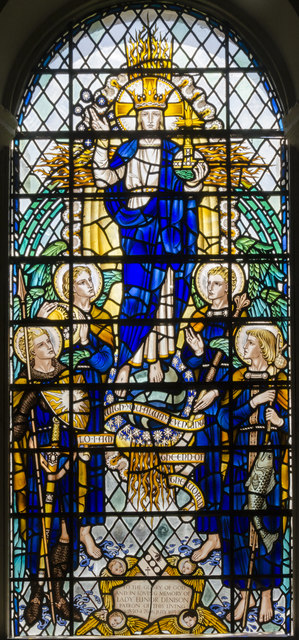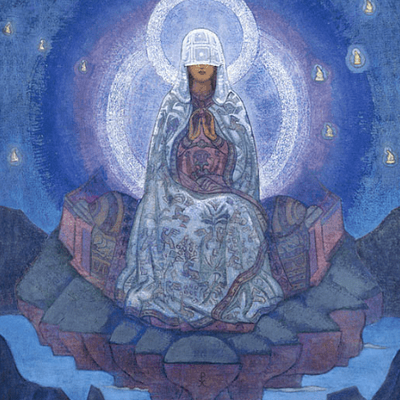
Archangel Gabriel

In Judaism, Christianity, & other Abrahamic religions, Gabriel (or even Cebrail (Djebrail) in some cultures) is an archangel with the power to announce God’s will to mankind as the messenger of God. He’s like the Abrahamic Apollo. He’s mentioned in the Hebrew Bible/Christian Old Testament, the New Testament, & the Quran.

In the Book of Daniel, Gabriel appears to the prophet Daniel to interpret his vision. Gabriel also shows up in the Jewish apocryphal 1st Book of Enoch & other Hebrew writings.

Along with the archangel Michael, Gabriel is described as the guardian angel of the Israelites, defending them against the angels of the other peoples. Many sects of Christianity revere Gabriel as a saint.

In the New Testament’s Gospel of Luke, Gabriel appears to Zachariah, predicting the birth of John the Baptist. Gabriel later appears to Mary, mother of Jesus, to announce that she would conceive & bear a son via a virgin birth.

Islam regards Gabriel as an archangel sent by Allah/God to different prophets, including Muhammad (PBUH). The first 5 verses of the Al-Alaq (96th chapter of the Quran) are believed by Muslims to have been the 1st verses of revelations given by Gabriel to Muhammad (PBUH).

The only book in the Hebrew Bible that explicitly mentions Gabriel is the Book of Daniel, & Gabriel appears to the prophet Daniel to explain his visions (Daniel 8:15-26, 9:21-27). In Daniel’s final vision, an unnamed angel appears to him & speaks of receiving help from the archangel Michael in battle against the Prince of Persia (not the video game) & also Michael’s role in times to come. This unnamed angel is thought to be Gabriel.

Though not named specifically, the “man clothed with linen” mentioned in the Book of Ezekiel chapters 9 & 10 is interpreted as Gabriel in Yoma 77a of the Babylonian Talmud.

There are many references to Gabriel in the Book of Enoch. According to this book, Michael, Uriel, Raphael, & Gabriel complain to God about the many wrongs perpetuated by Azazel & Samyaza. Especially the fact that they revealed “eternal secrets” & sins to mankind & defiled themselves with human women who later gave birth to giant offspring. Or, 1 of our fav subjects to circle back to, the Nephilim. (We will be doing the Nephilim in a future post. It’s currently being researched right now. Along with the Watchers, the Nephilim’s dads.)

As a result, God decides to destroy the Earth (which has been corrupted by those pesky fallen angels; these fallen angels were led by Azazel & Samyaza) & all of its inhabitants except for Noah. God sends Gabriel & the other archangels to go after the fallen angels & cast them into the darkness until the day of their judgment.

In Chapter 20, Gabriel is listed as 1 of 7 holy angels who watch. In Chapter 40, Gabriel is listed as 1 of 4 presences who stand on the 4 sides of God. These 4 archangels will be the ones to cast the fallen angels into the abyss of condemnation on Judgment Day.

According to Rabbinic Judaism, Gabriel (along with Michael, Uriel, & Raphael) is 1 of the 4 angels that stand at the 4 sides of God’s throne & serve as guardian angels of the 4 parts of the Earth. Michael stands on/at the right hand of God. While Gabriel (who ranks beneath Michael) stands at the left. Michael & Gabriel often work together. But Michael is mainly occupied in Heaven, while Gabriel (as the messenger of God) typically executes God’s will on earth.

Gabriel is also associated with the metal gold (the color of fire). Alongside Michael, Gabriel is described as the guardian angel of Israel, defending the Israelites against the angels of the other nations.

Gabriel is 1 of God’s archangels in Kabbalah literature. He’s pictured working in concert with Michael as part of God’s court. He’s identified with the sefira (or the Counting of the Omar. It’s a period of 49 days known as sefira(h).) of Yesod (this is a node in the kabbalistic Tree of Life.). Gabriel isn’t to be prayed to because only God can answer & sends Gabriel as his agent/messenger/courier.

According to Jewish mythology, in the Garden of Eden there’s a tree of life or the “tree of souls” that blossoms & produces new souls, which fall into the Guf, the Treasury of souls. This is located in the 7th Heaven. Gabriel reaches into the Treasury & takes out the 1st soul that comes into his hand.

Gabriel’s 1st appearance in the New Testament is found in the 1st part of Chapter 1 of Luke. This is where the annunciation of the birth of John the Baptist is. John’s dad, Zachariah, was childless because John’s mom, Elizabeth, was barren. An angel shows up to Zechariah to announce the birth of his son. When Zechariah questions the angel, the angel names himself as Gabriel (Luke 1:5-25).

Gabriel’s next appearance is in the 2nd part of Luke, chapter 1. This time, to announce the birth of Jesus to Mary (Luke 1:26-38). In the 1st part of the passage, the angel identifies itself as Gabriel; in the 2nd part of the passage, the angel doesn’t. It’s the author of Luke who calls this angel Gabriel.

Gabriel is more frequently referenced in early Christian pseudepigraphic texts (these are texts whose authorship isn’t by who it’s claimed to be or a real author attributed to some bigger name of the past) than in Amy of the canonical Biblical texts.

Gabriel is mentioned in some of the infancy Gospels, like the Nativity Gospel of Mary, Protevangelium of James, & First Gospel of the Infancy of Jesus Christ. Gabriel is also mentioned in some of the early Christian apocalyptic texts, like the Greek Apocalypse of Ezra & Second Book of Enoch.

In Gnosticism, angels are portrayed as belonging to a pantheon of spiritual beings involved in the creation of the world. According to 1 ancient Gnostic manuscript, the Holy Book of the Great Invisible Spirit. (Which we have posted!) Gabriel is a divine being & inhabitant of the pleroma (This refers to the total of divine powers.) that existed before the demiurge (This is an figure who is responsible for fashioning & maintaining the physical universe). There’s also a reference to Gabriel in Chapter 17 of the Gospel of Judas.

In the theology of the Mormon Church, Gabriel is believed to have lived a mortal life as the prophet Noah. The 2 are regarded as the same individual. Noah was his mortal name & Gabriel being his heavenly name.

Gabriel’s fast day was exclusively celebrated on March 18 between 1588 & 1921. The feast of St. Gabriel was included by Pope Benedict XV in the General Roman Calender in 1921 for celebration on March 24.

In 1969, the day was officially transferred to September 29 for celebration in combination with the feasts of Michael & Raphael. Today, the September 29 date (known as Michaelmas) has been adopted by the Catholic Church, Church of England, Lutheran faith, Anglican Communion, & Western Orthodox churches.

The Eastern Orthodox Church & those Eastern Catholic Churches that follow the Byzantine Rite (a.k.a. the Rite of Constantinople is a liturgical rite developed in the Eastern Christian church of Constantinople.) celebrated the Feast of the Archangels (or Synaxis of the Archangel Michael & the Other Bodiless Powers) on November 8.

For the churches that follow the Julian Calendar, November 9 currently falls on November 21 of the modern Gregorian Calendar (a 13-day difference).

The Eastern Orthodox commemorate Gabriel not only at the Feast of the Archangels, but also on 2 other days: March 26 the “Synaxis of the Archangel Gabriel” & celebrates his role in the Annunciation. July 13, a.k.a. the “Synaxis of the Archangel Gabriel.”

The Coptic Orthodox Church celebrates Gabriel’s feast of 13 Paoni, 22 Koiak, & 26 Paoni. The medieval Coptic work Investiture of the Archangel Gabriel, attributes the feast day of 22 Koiak to the day Gabriel was given the rank of archangel in Heaven.

The Ethiopian Church celebrates Gabriel’s feast of December 18 (in the Ethiopian calendar). A sizable number of its believers making a pilgrimage to a church dedicated to “St. Gabriel” in Kulubi & Wonkshet on that day.

Gabriel is in many places in the Quran. He’s revered as 1 of the primary archangels & as the Angel of Revelation in Islam. He’s primarily mentioned in the verses 2:97, 2:98, 66:4 of the Quran. However, the Quranic text doesn’t refer to him as an angel. In the Quran, the archangel Gabriel appears named in 2:97 & 66:4, as well as in 2:98, where he’s mentioned along with the archangel Michael.

Tafsir (this is like the Jewish Midrash) narrates that Muhammad saw the archangel Gabriel in his full angelic splendor only 2x. The 1st time was when he received his 1st revelation. Islamic tradition holds that Gabriel was sent to numerous pre-Islamic Biblical prophets with revelation & divine injunctions, including Adam, whom Muslims believe was consoled by Gabriel sometime after Fall, too. He’s known by many names in Islam, such as “keeper of holiness.” In Hadith traditions, Jibril is said to have 600 wings.

In Islam, the tree of souls is referred to as the Sidrat al-Muntaha. This is identified as a Ziziphus spina-christi. This is also known as Christ’s thorn jujube.

Muslims believe that Gabriel was tasked with transmitting the scriptures from God to the prophets & messengers as Asbab al-Nuzul or revelation. Asbab al-Nuzul is occasions or circumstances of revelation names the historical context in which Quranic verses were revealed from the perspective of traditional Islam. When Muhammad was questioned which angel is revealing the holy scriptures, he told the Jews they’re revealed by Gabriel.

Muslims also Revere Gabriel for several events that predate what they regard as the 1st revelation narrated in the Quran. Muslims believe that Gabriel was the angel who informed Zechariah of the Nativity of John the Baptist. As well as Mary about the future nativity of Jesus.

Gabriel was 1 of 3 angels who had earlier informed Abraham of the birth of Isaac. Gabriel also makes a famous appearance in the Hadith of Gabriel, in which he questions Muhammad on the core tenets of Islam.

Gabriel is also believed to have delivered punishment from God to the Sodomites by leveling the entire city of Sodom with the tip of his wing. According to a Hadith, Gabriel has the ability to regulate feelings or perception in humans. Particularly happiness or sadness.

Gabriel is believed to have helped Muhammad overcome adversaries significantly against an ifrit during the Night Journey. An ifrit is a powerful type of demon in Islamic culture. Gabriel is also believed to have helped Muhammad overcome his adversaries during the Battle of Badr.

The Yazidis worship 7 Archangels, including Gabriel (Jabra’il), Michael (Mikha’il), Raphael (Rapha’il), Dedra’il, Azra’il, Shamka’il, & Azazil. They’re emanations from God with which God entrusted the world. Yazidis associate Gabriel with Tawusi Melek (the “Peacock Angel”).

Mandaeans venerate Ptahil as the “4th Life.” Ptahil is an uthra (a divine messenger of the light), identified with Gabriel, who creates the poorly made material world with the help of Ruha, a sinful & fallen female ruler who inhabits the World of Darkness.

The creation of the material world occurs by God’s command. But is delegated to Ptahil (a subservient emanation or uthra) with the assistance of Gabriel & others.

Make a one-time donation

Your contribution is appreciated.

Donate

Make a monthly donation

Your contribution is appreciated.

Donate monthly

Make a yearly donation

Your contribution is appreciated.

Donate yearly #1921 #1969 #7thHeaven #Abraham #AbrahamicReligions #AlAlaq #Allah #AnglicanCommunion #Annunciation #Apocryphal #Apollo #Archangel #ArchangelGabriel #ArchangelMichael #Azazel #Azazil #AzraIl #BabylonianTalmud #BattleOfBadr #BookOfDaniel #BookOfEnoch #BookOfEzekiel #BookOfLuke #ByzantineRite #CatholicChurch #Cebrail #ChristSThornJujube #Christian #Christianity #ChurchOfEngland #CopticOrthodoxChurch #CountingOfTheOmar #Daniel81526 #Daniel92127 #December18 #DedraIl #Demiurge #Demon #Djebrail #EasternCatholicChurch #EasternChristianChurch #EasternOrthodox #EasternOrthodoxChurch #Elizabeth #EthiopianCalendar #EthiopianChurch #FallOfMan #FallenAngels #FeastDay #FeastOfTheArchangels #FirstGospelOfTheInfancyOfJesusChrist #Gabriel #GardenOfEden #GeneralRomanCalendar #Gnosticism #GospelOfLuke #GreekApocalypseOfEzra #GregorianCalendar #Hadith #HebrewBible #HolyBookOfTheGreatInvisibleSpirit #Ifrit #InfancyGospels #InvestitureOfTheArchangelGabriel #Isaac #Islam #Israel #Israelites #JabraIl #Jesus #Jibril #JohnTheBaptist #Judaism #JudgmentDay #JulianCalendar #July13 #Kabbalah #Kulubi #Luke12638 #Luke1525 #Lutheran #Mandaeans #March18 #March24 #March26 #Messenger #Michael #Michaelmas #Midrash #MikhaIl #MormonChurch #Muhammad #NativityGospelOfMary #NativityOfJesus #NativityOfJohnOfBaptist #Nephilim #NewTestament #NightJourney #Noah #November21 #November8 #OldTestament #PeacockAngel #Pleroma #PopeBenedictXV #PrinceOfPersia #Prophet #ProtoevangeliumOfJames #Pseudepigrapha #Ptahil #Quran #RabbinicJudaism #RaphIl #Raphael #RiteOfConstantinople #Ruha #Samyaza #SecondBookOfEnoch #Sefira #September29 #ShamkaIl #SidratAlMuntaha #Sodom #SynaxisOfTheArchangelGabriel #SynaxisOfTheArchangelMichael #SynaxisOfTheArchangelMichaelTheOtherBodilessPowers #Tafsir #TawusiMelek #TheGospelOfJudas #TreeOfLife #Uriel #Uthra #VirginBirth #VirginMary #Watchers #WesternOrthodoxChurch #Wonkshet #Yazidis #Yesod #Yoma77a #Zachariah #Zechariah #ZiziphusSpinaChristi
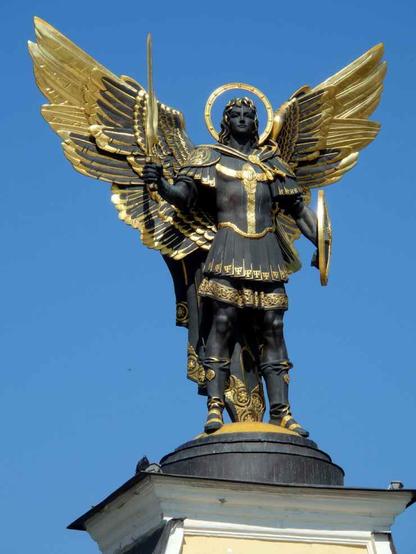

Getting a second run at Good Friday. #Orthodox #JulianCalendar

Archangel Uriel

Uriel means “God is my flame.” His name could be spelled Auriel or Oriel. He’s one of the archangels who’s mentioned in Rabbinic tradition & in certain Christian traditions.

He’s well known in the Russian Orthodox tradition & in folk Catholicism (in both he’s considered to be 1 of the 7 major archangels). In Anglicanism, he’s also well known in European esoteric medieval literature.

Uriel is also known as a master of knowledge & archangel of wisdom. He’s associated with the truth.

In apocryphal, kabbalistic, & occult works, Uriel has been equated (or confused) with Urial, Nuriel, Uryan, Jeremiel, Vretil, Sariel, Puruel, Phanuel, Azrael, & Raphael.

In the Secret Book of John (an early Gnostic work), Uriel is placed in control of the demons who help Yaldabaoth create Adam.

Of the 7 Archangels in the angelology of Judaism, only 2 of them (Gabriel & Michael) are mentioned by name in the canonized Jewish scripture. Where a 4th archangel is added to the named 3 (to represent the 4 cardinal points), Uriel is generally the 4th. Uriel is listed as the 4th angel by Christian Gnostics, under the name of Phanuel.

Uriel appears in the 2nd Book of Esdras, which is found in the Biblical apocrypha (called Esdras IV in the Vulgate). In this, the prophet Ezra asks God a series of questions, & God sends Uriel to instruct him. According to the Revelation of Esdras, the angels who will rule at the end of the world are Michael, Gabriel, Uriel, Raphael, Gabuthelon, Beburos, Zebuleion, Aker, & Arphugitonos. The final 5 listed appear only in the book & nowhere else in apocryphal or apocalyptics works.

In Christian apocryphal Gospels, Uriel plays a role (differing between the sources) in the rescue of Jesus’ cousin, John the Baptist, from the Massacre of the Innocents ordered by King Herod. He carries John & his mom, St. Elizabeth, to join the Holy Family after their flight into Egypt. Their reunion is pictured in da Vinci’s Virgin of the Rocks (a.k.a. Madonna of the Rocks).

Uriel is often identified as a cherub & the angel of repentance. He stood at the Garden of Eden with a fiery sword, or as the angel who’s over the world & over Tartarus. In the Apocalypse of Peter, he appears as the angel of repentance, who is graphically represented as being as pitiless as any demon.

In the Life of Adam & Eve, Uriel is regarded as the spirit (1 of the cherubs) of the 3rd chapter of Genesis. He’s also identified as 1 of the angels who helped bury Adam & Abel in Eden. He checked the doors of Egypt for lamb’s blood during the plague. He held the key to the pit during the end times, & led Abraham to the west.

In modern angelology, Uriel is identified variously as a seraph, cherub, regent of the sun, flame of God, angel of the divine presence, presider over Tartarus/Hell, archangel of salvation, & in later scriptures, identified with Phanuel (“God has turned”). He’s often pictured carrying a book or a papyrus scroll representing wisdom. Uriel is a patron of the arts.

In the Eastern Orthodox churches, Uriel is commemorated together with the other archangels & angels with a feast day of the “Synaxis of the Archangel Michael & the Other Bodiless Powers” on November 8 of the liturgical calendar. For those churches which follow the Julian calendar, November 8 & falls on November 21 on the modern Gregorian calendar.

He’s regarded as the patron saint of the arts & sciences. In addition, every Monday throughout the year is dedicated to the angels.

The Anglicans & Coptic Christians of Ethiopia & Eritrea venerate archangel Uriel. According to the latter, July 11 is his feast day. In the Ethiopian Homily on the Archangel Uriel, he’s pictured as 1 of the great archangels & as the angelus interpres who has interpreted prophecies to Enoch & Ezra, & the helper of both of them.

According to the Homily, at the time of the crucifixion of Jesus, Uriel dipped his wing in the blood & water flowing from Christ’s flank & Filled a cup with it. Carrying the cup, he & the archangel Michael rushed into the world & sprinkled it all over Ethiopia.

In every place where a drop of blood fell, a church was built. Thus, Uriel is often pictured carrying a chalice filled with the blood of Christ in Ethiopian Orthodox iconography. Uriel is honored in the Lutheran Churches as well, with churches including statuary of the archangels Gabriel, Uriel, Michael, & Raphael.

At the Council of Rome of 745, Pope Zachary (intending to clarify the church’s teaching on angels & curbs a tendency toward angel worship) condemned obsession with angelic intervention & angelology. But reaffirmed the approval of the practice of the reverence of angels.

This Synod struck many angels’ names from the list of those eligible for veneration in the church of Rome, including Uriel. Only the reverence of the archangels is mentioned in the recognized Catholic canon of scriptures, namely, Michael, Gabriel, & Raphael, remained acceptable.

In the 16th century, Archangel Uriel appeared before the Sicilian friar Antonio Lo Duca & told him to build a church in the Termini area. Lo Duca told Pope Pius IV about the apparition, and the pope then asked Michelangelo to design the church, which became the Basilica of St. Mary of the Angels & of the Martyrs located at the Esedra Plaza.

In the 1st half of the 11th century, Bulgarian followers of the duelist heresy called Bogomilism, who lived in the dukedom of Ahtum in present-day Banat, invoked Uriel in rituals. This was witnessed by Gerard of Csanad, the Catholic bishop of the area after 1028. Uriel was also named in a small exorcism in the 15th century.

The Book of Enoch (which presents itself as written by Enoch) mentions Uriel in many of its component books. In chapter IX, part of “The Book of the Watchers” (2nd century BC), only 4 angels are named. Those angels are Michael, Uriel, Raphael, & Gabriel. Though some versions have a 5th angel: Suryal or Suriel.

However, chapter XX later lists 7 angels’ names & functions. Those angels are “Uriel, 1 of the holy angels, who’s over the world & over Tartarus,” Raphael, Raguel, Michael, Saraqael, Gabriel, & Remiel.

The Book of the Watchers tells us that Uriel, Raphael, & Gabriel were present before God to testify on behalf of humankind. They ask for divine intervention during the reign of the fallen Grigori (fallen watchers). These fallen ones took human wives & had half-“angel,” half-human offspring called the Nephilim.

Uriel was responsible for warning our boy Noah about the upcoming deluge. After judgment has been brought up on the Nephilim & the Fallen Ones, including the 2 main leaders, Samyaza & Azazel. Uriel then acts as a guide for Enoch for the rest of the Book of Watchers.

In the traditions & hagiography of the Episcopal & other Anglican churches, Uriel is mentioned as an archangel. He’s recognized as the patron saint of the sacrament of confirmation. In some Episcopal churches, Uriel is also regarded as the keeper of beauty & light, & regent of the sun & constellations.

In iconography, he’s shown holding in his right hand a Greek Ionic column, which symbolizes perfection in aesthetics & man-made beauty, and in his left hand is a staff topped with the sun. He is celebrated in the Anglican liturgical calendars of the Feast of the Archangels. The Church of St. Uriel the Archangel at Sea Girt, New Jersey, is a testimony to Anglicans’ devotion to Uriel.

In Hermetic Kabbalah, Uriel’s name is commonly spelled Auriel. He’s regarded as the archangel of the North, & of the element of Earth. According to the teaching of the modern Hermetic Order of the Golden Dawn, Uriel is the archangel of North & East, & is associated with the vegetation of the Earth. In iconography, he’s depicted holding stems of ripened wheat & wearing robes of citrine (a medium deep shade of golden yellow), russet (dark brown with a reddish-orange tinge), olive (like green olives), & black.

One-Time Monthly Yearly

Make a one-time donation

Make a monthly donation

Make a yearly donation

Choose an amount

$1.00 $5.00 $10.00 $1.00 $5.00 $10.00 $5.00 $10.00 $15.00

Or enter a custom amount.

$

Your contribution is appreciated.

Your contribution is appreciated.

Your contribution is appreciated.

DonateDonate monthlyDonate yearly #1028 #11thCentury #15thCentury #16thCentury #2ndCenturyBC #745 #Abraham #Adam #Aker #Angelology #Anglican #AntonioLoDuca #ApocalypseOfPeter #Apocryphal #ArchangelGabriel #ArchangelUriel #Arphugitonos #Auriel #Azazel #Azrael #Banat #BasilicaOfStMaryOfTheAngelsOfTheMartyrs #Beburos #Bogomilism #BookOfEnoch #Bulgaria #Cherub #Christian #Christianity #ChurchOfStUrielTheArchangel #Confirmation #Constellations #CopticOrthodoxChurch #CouncilOfRome #Deluge #EasternOrthodoxChurch #Eden #Egypt #Enoch #Episcopal #Eritrea #EsdrasIV #EsedraPlaza #Ethiopia #EthiopianOrthodoxChurch #Ezra #FallenOnes #FeastDay #FeastOfTheArchangels #FolkCatholicism #Friar #Gabuthelon #GardenOfEden #Genesis #GerardOfCsanad #Gnostic #GreekIonicColumn #GregorianCalendar #Grigori #Hell #HermeticKabbalah #HermeticOrderOfTheGoldenDawn #HolyFamily #HomilyOnTheArchangelUriel #Jeremiel #Jesus #JohnTheBaptist #Judaism #JulianCalendar #July11 #Kabbalah #KingHerod #LeonardoDaVinci #LifeOfAdamEve #Lutherians #MadonnaOfTheRocks #MassacreOfTheInnocence #Michael #Michelanglo #Nephilim #NewJersey #Noah #November21 #November8 #Nuriel #Oriel #Phanuel #PopePiusIV #PopeZachary #Prophet #Puruel #RabbinicJudaism #Raphael #RevelationOfEsdras #RussianOrthodox #Samyaza #Saraqael #Sariel #SeaGirt #SecondBookOfEsdras #SecretBookOfJohn #Seraph #Sicily #StElizabeth #SynaxisOfTheArchangelMichaelTheOtherBodilessPowers #Tartarus #Termini #TheBookOfTheWatchers #Urial #Uriel #Uryan #VirginOfTheRocks #Vretil #Vulgate #Yaldabaoth

@Devonkiwi

Your bins are using the old Julian calendar, it seems.

#BinChat #RevisedJulianCalendar #JulianCalendar

A #leapYear starting on #Wednesday is any year with 366 days (i.e. it includes #29February) that begins on Wednesday 1 #January and ends on #Thursday 31 #December. Its #dominicalLetters hence are ED. The most recent year of such kind was 2020, and the next one will be 2048 in the #GregorianCalendar, or likewise, 2004 and 2032 in the obsolete #JulianCalendar, see below for more. Any leap year that starts on Wednesday has two #FridayThe13ths: those two in this leap year #occurInMarch.
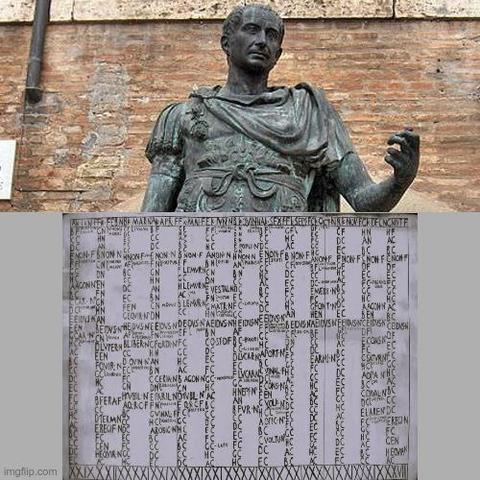
The #JulianCalendar, used almost unchanged to this day, first took effect on #ThisDayInHistory in 45 BCE. Named for dictator #JuliusCaesar, it set 1 January as the new start to the year. The #GregorianCalendar fixed a #LeapYear error, but otherwise preserved the #Roman calendar.
I am now listening to Conjure Me by Julian Calendar #JulianCalendar
https://www.last.fm/music/Julian+Calendar/_/Conjure+Me

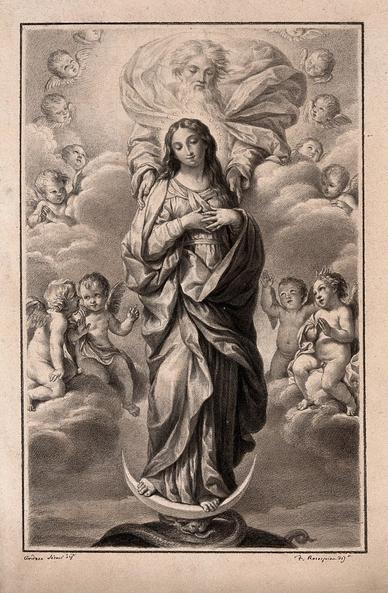
The Assumption of the Virgin Mary

This is 1 of the 4 Marian dogmas of the Catholic Church. Pope Pius XII gave its definition on November 1, 1950 with his apostolic constitution named Munificentissimus Deus as the Assumption of Mary, body & soul, into Heaven. It’s celebrated on August 15th.

Munificentissimus Deus mentions several Holy Fathers, theologians, & Doctor of the Church who held to the Assumption of Mary are: Adrian I, Sergius I, Leo IV, John of Damascus, Amadeus of Lausanne, Modestus of Jerusalem, Anthony of Padua, Albertus Magnus, Thomas of Aquinas, Bonaventure, Bernardino of Siena, Robert Bellarmine, Francis de Sales, Peter Canisius, Francisco Suarez, etc.

It’s debated between theologians, clergy, & laypeople whether Mary actually died or whether she was raised up to eternal life without bodily death.

In Eastern Christianity, they have an equal belief called the Dormition of the Mother of God, or the “Falling Asleep of the Mother of God.” In Lutheran churches, August 15 is celebrated as the Feast of St. Mary. Some Anglican denominations observe August 15 under a variety of names, including the Feast of St. Mary the Virgin or the Falling Asleep of the Blessed Virgin Mary.

In the Passing of the Blessed Virgin Mary, this is credited to Joseph of Arimathea, 1 of the apostles (often pictured as Thomas the Apostle, of Doubting Thomas fame), wasn’t there at the time of Mary’s death. But he gets there late. This brought about a reopening of Mary’s tomb. Only Mary’s grave clothes were found in the empty tomb. Just like her son, Jesus. Subsequently, Mary drops her girdle down to the apostles, from Heaven, as proof of the event happening.

The feast was commanded for Constantinople on August 15 by Emperor Maurice in 600. About 50 years later, it was introduced in Rome & is mentioned in a papal decree of Sergius (687-701), who started a procession for the feast.

Pope Leo IV gave the feast a vigil & an octave to solemnise it above all others. An octave is the 8th day after a church festival, including the day of the festival. Pope Nicholas I placed it on a par with Christmas & Easter. On November 1, 1950, Pope Pius XII declared the Assumption of the Virgin Mary as a dogma of faith.

In the 12th century, a German nun Elisabeth of Schonau was allegedly granted visions of Mary & Jesus. This had a far-reaching influence on the Western Church’s tradition. In her work Visio de resurrectione beaten Virginia Mariae, she tells how Mary was assumed in body & soul into Heaven.

On May 1, 1950, Gilles Bouhours, who was a Marian seer, reported to Pope Pius XII a supposed message that the Virgin Mary would have ordered him to tell the Pope on the dogma of the Assumption of the Holy Virgin Mary.

It’s said that Pius XII asked God for a sign that could reassure him that the dogma of the Assumption of the Virgin Mary was ACTUALLY wanted by God. This just happened to be during the Holy Year of 1950.

When Gilles communicated the message to Pius XII, the Pope considered this message the hoped for granted to Gilles by the Pope. Pius XII himself said the dogma of the Assumption of the body & soul of the Blessed Virgin Mary into Heaven.

Some Catholics believe that Mary passed away before being assumed. But they believe that she was miraculously resurrected before being assumed. This is a moralistic interpretation. Others believe she was assumed bodily into Heaven without dying first. This is an immoralistic interpretation. Either interpretation can be held legitimately by Catholics, with Eastern Catholics observing the Feast as the Dormition.

The Feast of the Assumption of the Blessed Virgin Mary is celebrated in the Roman Catholic Church on August 15th. The Eastern Orthodox & Eastern Catholics celebrated the Dormition of the Mother of God on this date. This is also called the Dormition of the Theotokos, the “falling asleep of the Mother of God. It’s preceded by a 14-day period of fasting.

Eastern Christians believe Mary died a natural death, that he soul was received by Christ upon death, that her body was resurrected after her death, & that she was taken up into a Heaven bodily in anticipation of the general resurrection.

Views differ within Protestantism. They are those with a theology closer to Catholicism sometimes believing in a bodily assumption. Most Protestants don’t believe this.

The Lutheran Church kept the Feast of the Assumption of Mary after the Reformation. They designated August 15th as a lesser festival named “Mary, Mother of Our Lord” or “St. Mary, Mother of our Lord.”

While in Anglicanism, the Assumption of Mary is accepted by some & rejected by others. It disappeared from Anglican worship in 1549. It partially returned to Anglo-Catholic tradition during the 20th century under different names.

A Marian feast on August 15th is celebrated by the Church of England as a non-specific feast of the Blessed Virgin Mary. This feast is called by the Scottish Episcopal Church it’s a feast called “St. Mary the Virgin.” Other Anglican provinces have a feast of the Dormition. The Anglican Church of Canada’s Book of Common Prayer (1962) marks the day as the “Falling Asleep of the Blessed Virgin Mary.”

Assumption Day on August 15th is a nationwide public holiday in Andorra, Austria, Belgium, Burundi, Cameroon, Central African Republic, Chile, Republic of Congo, Cote d’Ivoire, Croatia, Colombia, Costa Rica, Cyprus, East Timor, France, Gabon, Greece, Georgia (the country), Republic of Guinea, Haiti, Italy, Lebanon, Liechtenstein, Lithuania, Luxembourg, Republic of North Macedonia, Madagascar, Malta, Mauritius, Monaco, Montenegro (Albanian Catholics), Paraguay, Philippines (Maragondon, Cavite), Portugal, Romania, Rwanda, Senegal, To go, Seychelles, Slovenia, Spain, Syria, Tahiti, & Vanuatu. It was also in Hungary until 1948.

It’s also a public holiday in parts of Germany (parts of Bavaria & Saarland), Switzerland (in 14 of 26 countries), & Bosnia & Herzegovina. In Guatemala, it is observed in Guatemala City & the town of Santa Maria Nebaj. Both cities claim her as their patron saint. In Costa Rica & parts of Belgium, the day is combined with Mother’s Day.

Prominent Catholics, Eastern Orthodox, & Oriental Orthodox countries in which Assumption Day is an important feast day but isn’t a public holiday recognized by the state include the Czech Republic, Ireland, Mexico, the Philippines, & Russia. In Bulgaria, the Feast of the Assumption is the biggest Eastern Orthodox celebration of the Holy Virgin. In Eastern Orthodox churches following the Julian Calendar, the feast day falls on August 28th.

In the Maronite church, the Assumption of Mary is known as the “Assumption of the Holy Mother of God.” It’s celebrated on August 15th.

One-Time Monthly Yearly

Make a one-time donation

Make a monthly donation

Make a yearly donation

Choose an amount

$1.00 $5.00 $10.00 $1.00 $5.00 $10.00 $5.00 $10.00 $15.00

Or enter a custom amount

$

Your contribution is appreciated.

Your contribution is appreciated.

Your contribution is appreciated.

DonateDonate monthlyDonate yearly

#1May1950 #1November1950 #12thCentury #1549 #1948 #1950 #1962 #20thCentury #600 #687 #701 #AdrianI #AlbanianCatholics #AlbertusMagnus #AmadeusOfLausanne #Andorra #AnglicanChurch #AnglicanCommonPrayer #Anglicanism #AngloCatholic #AnthonyOfPadua #ApostolicConstitution #AssumptionOfMary #August15 #August28 #Austria #Bavaria #Belgium #BernardinoOfSiena #BlessedVirginMary #Bonaventure #BosniaHerzegonvina #Bulgaria #Cameroon #Cantons #CatholicChurch #Catholicism #Catholics #Cavite #CentralAfricanRepublic #Chile #Christmas #ChurchOfEngland #Constantinople #CostaRica #CoteDIvoire #Croatia #CzechRepublic #DoctorOfTheChurch #Dormition #DormitionOfTheMotherOfGod #DormitionOfTheTheotokos #DoubtingThomas #Easter #EasternCatholics #EasternChristianity #EasternOrthodoxChurch #EmperorMaurice #FallingAsleepOfTheBlessedVirginMary #FallingAsleepOfTheMotherOfGod #fasting #FeastOfStMary #FeastOfStMaryTheVirgin #FeastOfTheAssumption #FeastOfTheAssumptionOfTheBlessedVirginMary #FrancisDeSales #FranciscoSuarez #Gabon #Georgia #Germany #GillesBouhours #Greece #Guatemala #GuatemalaCity #Haiti #HolyVirgin #HolyVirginMary #HolyYearOf1950 #Hungary #Ireland #Italy #Jesus #JohnOfDamascus #JosephOfArimathea #JulianCalendar #Lebanon #LeoIV #Liechtenstein #Lithuania #LutheranChurch #Luxembourg #Madagascar #MarianDogmas #MaroniteChurch #MaryMotherOfOurLord #Mauritius #Mexico #ModestusOfJerusalem #Monaco #Montenegro #MotherSDay #MunificentissimusDeus #Paraguay #PassingOfTheBlessedVirginMary #PeterCanisius #Philippines #Poland #PolishArmyDay #PopeLeoIV #PopeNicholasI #PopePiusXII #Portugal #Protestantism #Protestants #Reformation #RepublicOfCongo #RepublicOfGuinea #RepublicOfNorthMacedonia #RobertBellarmine #RomanCatholicChurch #Romania #Rome #Russia #Rwanda #Saarland #SantaMariaNebaj #ScottishEpiscopalChurch #Senegal #Sergius #SergiusI #Seychelles #Slovenia #Spain #StMaryMotherOfOurLord #StMaryTheVirgin #StMaryTheVirginMotherOfOurLordJesusChrist #Switzerland #Syria #Tahit #Tahiti #ThomasOfAquinas #ThomasTheApostle #Togo #Vanuatu #VirginMary #VisioDeResurrectioneBeatenVirginiaMariae #WesternChurch

Why is everyone pulling their #AprilFools pranks so soon? It’s only the 19th day of March. What did we miss?

#OldStyle #JulianCalendar