A #leapYear starting on #Wednesday is any year with 366 days (i.e. it includes #29February) that begins on Wednesday 1 #January and ends on #Thursday 31 #December. Its #dominicalLetters hence are ED. The most recent year of such kind was 2020, and the next one will be 2048 in the #GregorianCalendar, or likewise, 2004 and 2032 in the obsolete #JulianCalendar, see below for more. Any leap year that starts on Wednesday has two #FridayThe13ths: those two in this leap year #occurInMarch.

To everyone born on 29th February... Since you can't have a proper #birthday this year, I wish you A Very Merry #Unbirthday!

youtube.com/watch?v=RdsZT7WKjW…

#leapYear #29February

A Very Merry Unbirthday to You! (yes, you)

YouTube

Google's cute doodle for the Leap Day (29th February) 2024.

WHAT IS A LEAP DAY/YEAR?🤔🧐
Common/Calendar Year (y)=365 solar days 🗓
Solar/Tropical/Astronomical Year (Y)=365.2425 solar days🌏🌞
Y-y=0.2425; 4*(Y-y)=0.97=1-0.03 (+1 if divisible by 4)
100*(Y-y)=24.25=(25-1)+0.25 (again -1 if divisible by 100)
400*(Y-y)=97=4*(25-1)+1 (again +1 if divisible by 400)

That is to say,
Using logical and modulo operators, the year n is said to be a leap year if and only if:
(n mod 4=0)∧((n mod 100≠0)∨(n mod 400=0)).

In other words, a year is a leap year if it is evenly divisibly 4, except for years that are evenly divisible by 100 but not evenly divisible by 400.

For example, 2024 and 2028 are leap years; 2100 and 2200 are not, but 2400 and 2800 are.

This is our clever method to ensure that our calendar stays aligned with our seasons or Earth's orbit over time. If nothing were done about this discrepancy, our calendar would slowly drift out of sync with the Earth's orbit and seasons. After 100 years, we would be off by about 25 days! So, to fix this, we add an extra day, February 29, to the calendar every four years, with the exception that a year evenly divisible by 100 is not a leap year unless it is also evenly divisible by 400 (as shown in the calculations).

#LeapDay #LeapYear #Feb29 #February29 #29Feb #29February #ExtraDay #February #Earth #Sun #SolarYear #SolarDay #Astronomy #Calendar #CommonYear #CalendarYear #TropicalYear #AstronomicalYear #Season #Seasons #EarthOrbit #OrbitEarth #Year #Discrepancy #Discrepancies #Synchronization

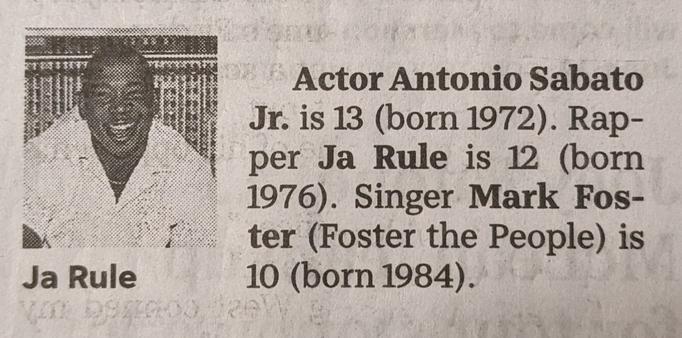
The 'Daily Almanac' wire feature was enjoying the 29 February birthdays.

#LeapDay #29February #February29

Who lives in the Mariana Trench and emerges every four years to trade children’s tears for candy? That's right, it's Leap Day William!

#LeapDay #29February #30Rock

February 29 only occurs in years which are evenly divisible by four, although it's not quite that simple. Century years, eg 1800, 1900 are not leap years, unless unless it is also evenly divisible by 400. So just to confuse everyone, the year 2000 was a leap year.

10 facts about Leap Days:

https://topicaltens.blogspot.com/2016/02/29th-february-leap-day.html

#LeapDay #leapyear #29February #February29

29th February: Leap Day

It's Leap Day. A once in four years opportunity to learn 10 facts about leap days: February 29 only occurs in years which are evenl...

Topical Tens
Deutsche, wenn 29. Februar ist:
#29Februar #29February

In 1288, a law came into effect in Scotland whereby it became a crime for a man to refuse to marry a woman who made a proposal to him. If he refused, he was required to pay a fine.

Happy Leap Day! 10 weird and wonderful things which happened on 29 February:

https://topicaltens.blogspot.com/2024/02/29-february.html

#onthisday #ThisDayInHistory #OnThisDate #29February #February29 #LeapDay #LeapYear

29 February

10 weird and wonderful things that happened on February 29: In 46 BC the first  Leap  Year day happened. The Romans added an extra...

Topical Tens
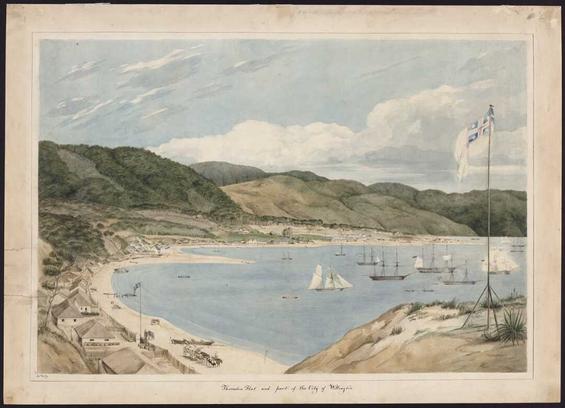
_The Evening Post_, 29 Feb 1924:
UNIQUE BIRTHDAY
PORT NICHOLSON’S FIRST BORN
A twenty-first [leap-year] birthday of considerable interest to #Wellington is being celebrated to-day at Palmerston North, where a large gathering of relatives and friends from all over the province has assembled to celebrate the attainment of his “majority” by Mr. “Tom” Rogers, the first European child born at the Port Nicholson settlement. The “New Zealand Gazette” of 1840 recorded: Birth— At Port Nicholson, on 29th February, 1840, to Mrs. Charles Rogers, late of Waltham Abbey, of a son. It was afterwards established beyond question that this son was the first child born in the settlement, and therefore in the Wellington Province. Despite his 84 years, he is reported as still being hale and hearty.

The event of to-day has been a matter for rejoicing amongst the Early Settlers’ Association, and they have forwarded their congratulations, remarking on the pleasure it has given them to see that Mr. Rogers has at last reached his twenty-first birthday, though his progress towards that end has been so very gradual.
https://paperspast.natlib.govt.nz/newspapers/EP19240229.2.103
#OnThisDay #OTD #PapersPast #Birthdays #29February #LeapDay #LeapYearDay

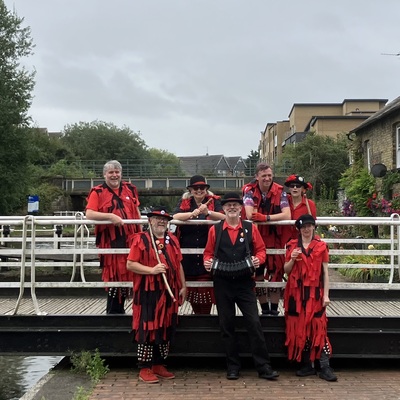
We made this video to promote the #NewTradition called #CaperDay which falls on #29February - only a month away! Are you doing anything to mark the occasion? #RedCuthbertMorris will be morris dancing in one of our local pubs!

Any feedback on the attempt at a meaningful alt text on the video would be welcome before we post any other video on here 🙂

#FolkLife #MorrisDance #MorrisDancing #BorderMorris #FolkDance