Blitz! The thread about WW2 air raids in Edinburgh and Leith

An air raid on Leith on the night of Monday April 7th 1941 saw extensive property damage caused in North Leith. But it wasn’t just bricks and mortar that suffered: three people were killed and 118 injured in the raid which makes it the 10th most deadly such event (by total casualties) in Scotland during the war.

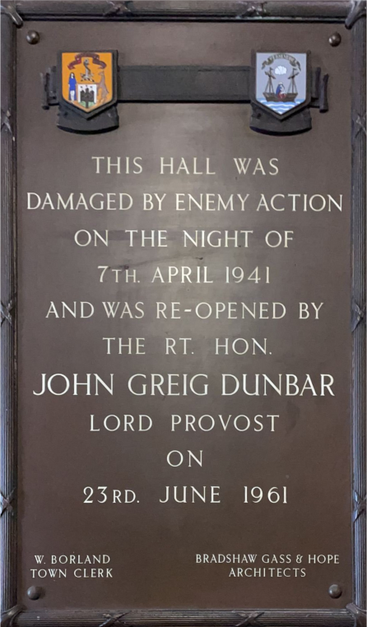
Leith Town Hall (now the Theatre) commemorative plaque marking damage done in the air raid, original picture © Leith Theatre

Note, there was deliberately limited and non-specific press reporting of the details and casualties of air raids during the war itself. Some such reporting only took place, retrospectively, after the war but understandably details were occasionally incorrect or overlooked. For accuracy and out of respect I have endeavoured to cross-reference everything below that refers to individuals with the official civilian war death records of the Commonwealth War Graves Commission and Scotland’s People.

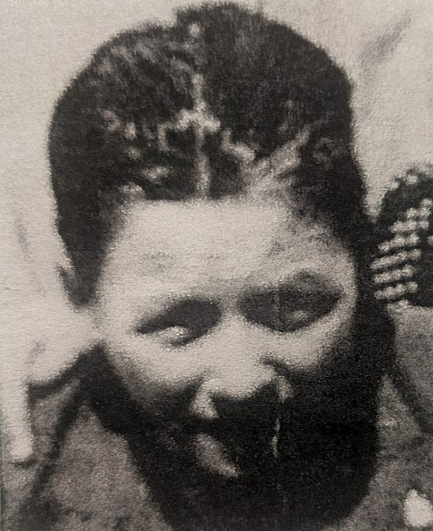
One of those who lost their lives in the raid that night was 17 year old Anstruther (Ernie) Smith, a delivery boy from 15 Graham Street who also worked as a messenger for the Leith ARP (Air Raid Precautions – civil defence). On hearing the sirens he had assisted his elderly neighbours to a shelter before reporting for duty at Leith’s Town hall a few streets away where Ferry Road meets Great Junction and North Junction Streets. It was here that he lost his life when a bomb landed nearby and exploded. He was fondly remembered in his community as someone who freely helped the elderly; checking in on them on his way to work each morning to light their fires and make them a cup of tea, and running errands for them. The Anstruther Pensioner’s Club was formed after the war in his memory, it was held in the very room in the Town Hall where we died and it attracted 300 members and a waiting list of 200.

Anstruther Smith, a photo displayed in Leith Library in his memory

Also killed by the same bomb that claimed Ernie was 85 year-old Jane Notman Young, who died in her house by the Town Hall at 21 North Junction Street. Lastly a 19 year-old apprentice draughtsman and Home Guard volunteer, Kenneth James Anderson, died in hospital the following morning after his house at 5 Largo Place was badly damaged in the blast. This block would later have to be demolished.

https://www.flickr.com/photos/127340508@N05/15989027951/

Mercifully the death-to-injury ratio was substantially lower than other comparable attacks on Scottish cities; Leith had been hit by two bombs known as Luftmines – large weapons that were dropped on a parachute and intended for use against dock areas to attack shipping. These as it turned out were not very effective against other targets such as buildings, despite their size. Never the less, three hundred people in North Leith were rendered homeless due to the damage caused to housing in the neighbourhood. £1,500 was allocated to Leith from the National Air Raid Distress Fund, which provided emergency clothing, bedding and canteens to raid victims.

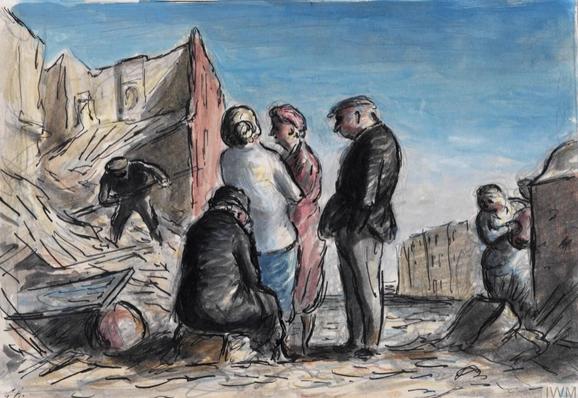
“Bombed Out”, illustration by War Artist Edward Ardizzone in April 1941 who was working in Glasgow and Edinburgh at this time. IWM (Art.IWM ART LD 1344)

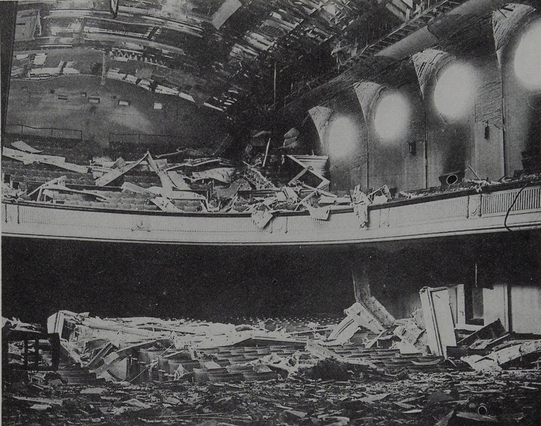
The bombs that hit Leith damaged the three principal public buildings of the burgh; its Town Hall (which included its main public auditorium), its Library – both of which were hardly 10 years old – and the large David Kilpatrick (“DK“) School adjacent. As well as the tenement houses, the Norwegian Seaman’s Lutheran Church, North Leith Parish Church and a railway embankment and signal box of the London and North Eastern Railway (LNER) all suffered varying degrees of damage. The gallery below shows some of these:

A photo showing the wrecked interior of the Leith Town Hall concert theatreDamaged interior of Leith Library during post-war repairs, 1953. © Edinburgh City LibrariesLeith Town Hall in 1957, the damage still not repaired after 16 years. From “The Sphere” magazine.Bomb damage of the “DK” school and annexe, a photo taken in April 1941 but not published until the war’s endBomb damage caused in Leith on April 7th 1941

The main lending room of the library was not fully repaired until 1956 although the reference room had been re-purposed to serve as such in the meantime. The Town Hall and its auditorium had to wait until 1961, a full 20 years after the bombs had fallen. The city’s apparent neglect in restoring the public buildings of Leith after the war caused much local consternation at the time. This damaged caused to the outbuildings of the DK school, which were in use as a nursery school, became known locally as the Bombies and was apparently where pupils would gather to sort out their differences with fists. It would not be replaced until much later and this in turn was demolished, along with the rest of the school, in the 1980s.

Luftwaffe night-time bombing map of Edinburgh, Lothians and south Fife. It is tinted yellow to be better viewed under the night-time cabin lights of an aircraft. Targets (Ziele) were marked in luminescent ink.

Although Leith was marked as a bombing target on German maps, the intended target of this raid had actually been Clydebank almost 50 miles to the west, where 20 souls lost their lives and 313 were injured that same night. This attack was a follow up to the Clydebank Blitz of March 1941 but the raiders had become scattered and twelve other targets across Scotland, including Leith, were hit that night with a total of 49 killed and 456 injured. Most of the deaths night were in Gretna in Dumfriesshire where a lone aircraft jettisoned its bombs and hit a Masonic Lodge, killing 22 and wounding 18. Other bombs were dropped as widely as Bankfoot and Stanley in Perthshire, Loch Nevis in Knoydart, Fife and Arbroath in the east of the country and Greenlaw to the south in the Borders; a huge margin of error. Closer to Leith were the mainline railway leading to the Forth Bridge near Turnhouse and Braehead House in Cramond with thirty four incendiary bombs between these points. These were 1kg aluminium tubes filled with a compound called Thermite which burned at around 2,500°C and were intended to set fire to wooden structures and the timber flooring and roof structures of buildings. These were a far cry from the ineffective rope and tar incendiaries dropped on Edinburgh and Leith by a German Zepellin in 1916.

WW2 German B1E 1kg incendiary, IWM MUN3291

Although this raid caused the greatest damage to property in Leith during the war, it was not the worst in terms of the loss of life. The previous summer, on the evening of July 18th 1940 at 7:45PM, seven people were killed on George Street in North Leith (now known as North Fort Street). At 8 George Street David Lennie Duff (a 33 year-old basket maker) and his sister Lily Duff (a 23 year-old biscuit packer); Catherine Helliwell (a 61 year-old housewife) and her son-in-law Robert Thomson (a 25 year-old baker); Catherine Fallon Baird (74); and Catherine Redpath (41) who had been visiting the address from her home at 20 Gorgie Road were killed. Over the street at number 13, 15 year-old Jane (Jean) Bauld Rutherford from number 17 was killed when the bomb shelter she was in was hit. The fatal damage had been caused by bombs intended for the Victoria Dock, one of which hit the foot of Portland Place where a nearby tramcar was fortunate to miss getting a direct hit that would surely have resulted in more fatalities.

Repairs at Portland Place. © Edinburgh City Libraries

Number 8 George Street, where six people had lost their lives, had to be demolished along with its neighbour at number 10 and was not rebuilt until 1959. The rest of the tenements of George Street – apart from the northern corner blocks – were later levelled by the city planners as part of the Fort Area Comprehensive Redevelopment not long afterwards.

The replacement flats for 8 George Street in Leith, a mid-century building replacing a Victorian tenement.

Four days later, on July 22nd, a raid on Leith Docks killed Robert Hume of 45 Glover Street (aged 33), a fireman with the Auxiliary Fire Service at the Albert Dock. Also on this night Mary Fulton Riach (aged 65) of 23 Woodbine Terrace and Catherine Leishman (aged 68) of 4 Meadowbank Crescent both died from heart failure during the raid, the official cause of death being put down to “war operations“. Two months later, on September 29th, a single stray bomb fell on the block of number 21 – 27 Crewe Place in East Pilton killing the young McArthur children; brother and sister Morag Elizabeth (aged 5) and Ronald Egbert (aged 7) from number 27. Their neighbour Charles Fortune Wilson (aged 69) of number 25 would die the next day in hospital. The landlords and builders of this housing scheme, Mactaggart and Mickel, rehoused the now-homeless survivors and had rebuilt the house at their own expense within 6 weeks. A wartime shortage of timber meant it was given a flat roof, the only such house on the street and the only clue to its sad history.

21-27 Crewe Place, with a flat roof compared to the pitched roof of its neighbours.

Another single, stray bomb dropped that evening hit a bonded whisky warehouse of the Caledonian Distillery on Duff Street in Dalry. The distillery was home to over a million gallons of highly-flammable spirit and an immense fire erupted, so ferocious that the reflection on the clouds in the night sky was apparently visible to German aircrew flying over Middlesborough, 150 miles (240km) away to the south. The bond was totally destroyed, as was one adjoining tenement of fourteen flats at 28 Springwell Place.

Firefighters damping down the remains of the Duff Street whisky bond.

A week later around 745PM on October 7th, five small bombs were dropped in the district of Marchmont, landing at 29 Roseneath Terrace, 20 Meadow Place, 16 Roseneath Place, 13 Marchmont Crescent and 21 Marchmont Road. Eleven people were injured by flying glass and splinters. Three weeks later on the morning of October 26th, Margaret Ridley Stuart (aged 72) died at her flat at 45 Tolbooth Wynd in Leith from a heart attack brought on by another air raid leaving her husband Thomas, a retired dock labourer, a widower.

Unusually, a photograph of the raid that caused damage in Marchmont was published in the newspapers at the time, under the vague caption of “Tenements Resist Bomb Blast… in South-East Scotland”. Notice how many windows have been blown out.

The following month the animal population of Edinburgh Zoo was reduced slightly when, on November 4th, two stray bombs hit the park killing six budgerigars and a wild rabbit (as reported by Zoo Director T. H. Gillespie to The Scotsman, Friday 20 December 1940). The craters were left unfilled and became a visitor attraction. A crater caused by a bomb dropped on the lawn of Holyrood Park was used by enterprising locals to raise money for a Spitfire Fund by charging for access to view it.

The month after the raid on North Leith which had killed Ernie, on the night of 6th May 1941, five lives were lost in the suburban bungalows of Duddingston on the outskirts of the city. One large bomb, three smaller ones and 100 incendiaries fell on Niddrie Road (now called Duddingston Park South), Milton Crescent and the Jewel Cottages at around half past midnight. Leonard Arthur Wilde (aged 39), an Air Raid Warden, was killed in his home at number 27 Milton Crescent along with his neighbours Joseph Watson (aged 40) of the Home Guard and William Dineley (aged 37). Lilias Tait Waterston (aged 69) was killed in her house at 26 Niddrie Road and her neighbour Barbara Thomson (87) was killed at number 30.

The last bombs of the war which caused fatalities in Edinburgh fell on Loaning Road in Craigentinny on the night of August 6th 1942, demolishing the Corporation tenement at number 35. Two people were killed; Elizabeth Veitch (aged 13) at number 35 and Robert Wright (aged 66), the janitor of Craigentinny Community Centre next door. A replacement tenement was built here post-war.

View from the back greensView from the frontPost-war replacementBomb damage at 35 Loaning Road, © Edinburgh City Libraries

You can see in the first picture where the bomb has left a crater (green arrow), upended an “Anderson” shelter (blue) and the entrance to another shelter (orange). Note the white painted poles, so you don’t run into them in the dark

Air raid shelters in the back greens of Loaning Road. © Edinburgh City Libraries

Edinburgh and Leith were mercifully spared most of the horrors of aerial bombing meted out to other cities during WW2. Altogether there were 21 civilian deaths and about 210 injuries caused directly by aerial bombing. At least 5 further deaths were recorded as being due to “war operations” when people had heart attacks brought about by the shock and stress of experiencing an air raid.

Date of Air RaidLocationFatalities18th July 19408 & 13 George Street, North Leith722nd July 1940Albert Dock, Leith1 29th September 194025 & 27 Crewe Place, East Pilton37th April 1941North Leith36th May 194123-27 Milton Crescent & 26-30 Niddrie Road, Duddingston56th August 194235 Loaning Crescent, Craigentinny2Civilian fatalities in Edinburgh and Leith directly due to aerial bombing

If this thread has proved interesting you may be interested in a thread on the first aerial raids and shooting down of German aircraft over the UK in WW2 which took place over the Firth of Forth in view of Edinburgh and Leith or a thread detailing some of the anti-aircraft defences of the city during the conflict.

Note to readers: unfortunately in April 2026, a third-party plug-in more than exceeded its authority and broke many of the image links on this site. No images were lost but I will have to restore them page-by-page, which may take some time. In the meantime please bear with me while I go about rectifying this issue.

If you have found this site useful, informative or amusing then you can help contribute towards its running costs by supporting me on ko-fi. This includes my commitment to keeping it 100% advert and AI free for all time coming, and in helping to find further unusual stories to bring you by acquiring books and paying for research.
Or please do just share this post on social media or amongst friends and like-minded people, sites like this thrive on being shared.

Explore Threadinburgh by map:

Travelers' Map is loading...
If you see this after your page is loaded completely, leafletJS files are missing.

These threads © 2017-2026, Andy Arthur.

NO AI TRAINING: Any use of the contents of this website to “train” generative artificial intelligence (AI) technologies to generate text is expressly prohibited. The author reserves all rights to license uses of this work for generative AI training and development of machine learning language models.

#Lochend #Logan #Restalrig #StMargaret

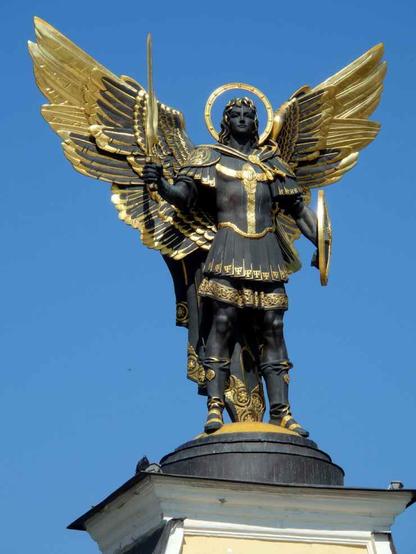
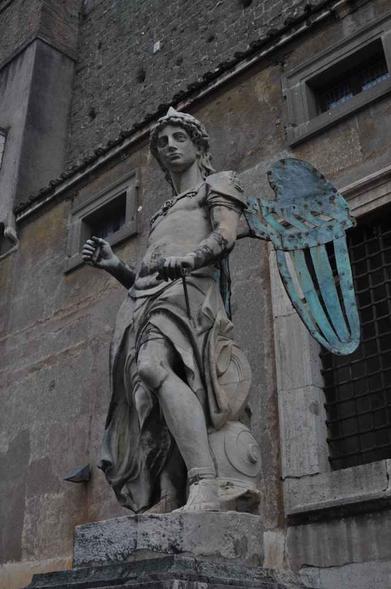
Archangel Michael

Also called Michael the Taxiarch. A taxiarch is used in the Greek language to mean “brigadier,” or a commander of a company. In Greek Orthodoxy, it refers to the Archangels Michael or Gabriel as leaders of the heavenly hosts.

Michael is an archangel & warrior of God in Christianity, Islam, & Judaism. The earliest surviving mentions of his name are in the 2nd or 3rd centuries BC Jewish works, often but not always apocalyptic. In these works, he’s the chief of the angels & archangels. He’s the guardian prince of Israel & is responsible for the care of the people of Israel.

Christianity conserved nearly all of Jewish traditions concerning him. He’s mentioned explicitly in Revelation 12:7-12, where he does battle with Satan, & in the Epistle of Jude, where the archangel & the devil have an argument over the body of Moses.

The Book of Enoch lists Michael as 1 of 7 archangels. The remaining names are: Uriel, Raguel, Raphael, Sariel, Gabriel, & Remiel. He’s mentioned again in the last chapters of the Book of Daniel, a Jewish apocalypse composed in the 2nd century BC, in which a man clothed in linen tells Daniel that he & “Michael, your prince” are engaged in a battle with the “prince of Persia,” after which, at the end-time, “Michael, the great prince who protects your people, will arise.”

Enoch was instrumental in establishing the pre-eminent place of Michael among the angels & archangels. In later Jewish works, he’s said to be their chief, mediating the Torah, & standing at the right hand of the throne of God.

In the traditions of the Qumran community, he defends, or leads, the people of God in the end-time battle. In other writings, he’s responsible for the care of Israel & acts as commander of the heavenly armies. He’s Israel’s advocate, contesting Satan’s claim to the body of Moses.

He intercedes between God & humanity & serves as High Priest in the heavenly sanctuary. (So would this make him Aaron’s equal? We’re sincerely asking. Let us know your take in the comments.) He accompanies the souls of the righteous dead to Paradise.

The 7 archangels (or 4, as traditions differ, but always include Michael) were associated with the branches of the menorah, the sacred 7-branched lamp stand in the Temple, as the 7 spirits before the throne of God. This is reflected in the Book of Revelation 4:5. Michael is mentioned explicitly in Revelation 12:7-12, where he does battle with Satan & casts him out of heaven so that he no longer has that exclusive access to God as accuser (his former role in the Old Testament).

Satan’s fall at the coming of Jesus marks the separation of the New Testament from Judaism. In Luke 22:31, Jesus tells Peter that Satan has asked God for permission to “sift” the disciples, the goal being to accuse them. But the accusation by Jesus, who thus takes on the role played by angels, & especially by Michael, in Judaism.

Michael is mentioned by anem for the 2nd time in the Epistle of Jude, which is an impassioned plea for the believers to engage in battle against the incursion of the error. In verses 9-10, the author denounces the heretics by contrasting them with the archangel Michael, who, in disputing with Satan over the body of Moses.

According to rabbinic tradition, Michael acted as the advocate of Israel. Sometimes he had to fight with the princes of other nations (Daniel 10:13), & particularly with the angel Samael, Israel’s accuser. Their hostility dates from the time Samael was thrown from heaven & tried to drag Michael down with him, requiring God’s intervention.

The rabbis declare that Michael came into his role as defender at the time of the biblical patriarchs. Rabbi Eliezer ben Jacob said Michael rescued Abraham from the furnace into which he’d been thrown by Nimrod. Some say he was the “one that had escaped” (Genesis 14:13), who told Abraham that Lot had been taken captive & who protected Sarah from defilement by Abimelech.

Michael prevented Isaac’s being sacrificed by his dad by substituting a ram in his place. He saved Jacob, while still in his mom’s womb, from death at the hands of Samuel. Michael later prevented Laban from hurting Jacob. The midrash Exodus Rabbah holds that Michael exercised his function as an advocate of Israel at the time of the Exodus & destroyed Sennacherib’s army.

Epiphanius of Salamis (circa 310-circa 320-403), in his Coptic-Arabic Hexaemeron, referred to Michael as a replacement of Satan. Accordingly, after Satan fell, Michael was appointed to the function Satan served when he was still 1 of the noble angels.

A painting of Michael slaying a serpent became a major art piece at the Michaelion after Constantine defeated Licinius near there in 324. This contributed to the standard iconography that developed of Michael as a warrior saint slaying a dragon. The Michaelion was a magnificent church & in time became a model for hundreds of other churches in Eastern Christianity.

In the 4th century, St. Basil the Great’s homily, De Angelis, St. Michael over all the angels. He was called “Archangel” because he heralds other angels, the title archangelos applied to him in Jude 1:9. The angelology of Pseudo-Dionysius, which was widely read as of the 6th century, gave Michael a rank in the hierarchy of angels.

Later, in the 13th century, others such as Bonventure believed him to be Prince of the Seraphim, the 1st of the 9 angelic orders. According to Thomas Aquinas, Michael is the Prince of the last & lowest choir, the Angels.

Catholics often refer to Michael as “Holy Michael, the Archangel” or “St. Michael.” He’s generally referred to in Christian liturgies as “St. Michael,” as in the Litany of the Saints. In a shortened archangel, is mentioned by name, omitting Saints Gabriel & Raphael.

In Roman Catholic teachings, St. Michael has 4 main roles or offices. His 1st role is the leader of the Army of God & the leader of celestial forces in triumphing over the powers of Hell. He’s viewed as the angelic model for the virtues of the “spiritual warrior,” his conflict with evil taken as “the battle within.”

The 2nd & 3rd roles of Michael in Catholic teachings deal with death. In his 2nd role, he’s the angel of death, carrying the souls of Christians to Heaven. In his 3rd role, he weighs souls on his perfectly balanced scales. The scales are a common object he holds in art.

In his 4th role, St. Michael, the special patron of the Chosen People in the Old Testament, is also Guardian of the Church. St. Michael was revered by the military orders of knights during the Middle Ages. The names of villages around the Bay of Biscay reflect this history.

The Eastern Orthodox give Michael the title Archistrategos, or “Supreme Commander of the Heavenly Hosts.” The Eastern Orthodox pray to their guardian angels & above all, to Michael & Gabriel. The Eastern Orthodox have always had a strong devotion to angels. In modern times, they’re referred to by the term “Bodiless Powers.” Several feasts dedicated to Archangel Michael are celebrated by the Eastern Orthodox throughout the year.

In Russia, many monasteries, cathedrals, courts, & merchant churches are dedicated to the Chief Commander Michael. Most Russian cities have a church or chapel dedicated to the archangel Michael. In Ukraine, the archangel Michael is the patron saint of Kyiv. He became popular from the time of Prince Vsevolod of Kyivan Rus’.

While in the Serbian Orthodox Church, St. Sava has a special role as the establisher of its autocephaly & largest Belgrade church devoted to him, the capital Belgrade’s Orthodox cathedral, the see church of the patriarch, is devoted to Michael.

The place of Michael in the Coptic Church of Alexandra is as a saintly intercessor. He’s the 1 who presents to God the prayers of the just, who accompanies the souls of the dead to Heaven, who defeats the devil. He’s celebrated liturgically on the 12th of each Coptic month.

In Alexandria, a church was dedicated to him in the early 4th century on the 12th of the month of Paoni. The 12th month of Hathor is the celebration of Michael’s appointment in Heaven, where Michael became the chief of the angels.

Seventh-Day Adventists believe that “Michael” is but 1 of many titles applied to the pre-existent Christ, or Son of God. According to Adventist theology, Michael was/is considered the “Eternal Word,” & the 1 by whom all things were created. The Word was then born, incarnated as Jesus.

They believe that the name “Michael” signifies “One Who Is Like God” & that, as the “Archangel” or “chief or head of the angels,” he led the angels; thus, the statement in Revelation 12:7-9 refers to Jesus as Michael.

Jehovah’s Witnesses believe that Michael is another name for Jesus in Heaven, in His pre-human & post-resurrection existence. They say the definite article in Jude 9 identifies Michael as the only archangel. They consider Michael to be synonymous with Christ, described in 1 Thessalonians 4:16: “with a cry of command, with the voice of an archangel, & with the sound of the trumpet.”

They believe the prominent roles assigned to Michael in Daniel 12:1, Revelation 12:7, Revelation 16, & Revelation 19:14 are identical to Jesus’ roles, being the 1 chosen to lead God’s people & as the only 1 who “stands up,” identifying the 2 as the same spirit being.

Because they identify Michael with Jesus, he’s considered the 1st & greatest of all God’s heavenly “sons,” God’s chief messenger, who takes the lead in vindicating God’s sovereignty, sanctifying his name, fighting the wicked forces of Satan & protecting God’s covenant people on earth. Jehovah’s Witnesses also identify Michael with the “Angel of the Lord” who led & protected the Israelites in the wilderness.

Members of the Mormon Church believe that Michael is Adam (of Adam & Eve fame), the Ancient of Days (Daniel 7), a prince, & the patriarch of the human family. They also hold that Michael assisted Jehovah (the pre-mortal form of Jesus) in the creation of the world under the direction of God the Father (Elohim). Under the direction of the Father, Michael also cast Satan out of Heaven.

In Islam, Mika’il (Michael) is 1 of 4 archangels along with Jibril (Gabriel, whom he’s often paired with), Israfil (trumpeter angel) & ‘Azra’il (angel of death). In other Islamic literature, Michael is associated with mercy. He asks God for forgiveness for humans & is 1 of the 1st angels who obeyed God’s orders to bow before Adam.

From the tears of Michael, angels of mercy are created as his helpers. Like Gabriel, with whom he’s often mentioned together, Michael is also a messenger. While Gabriel delivers messages from Heaven to humans, Michael delivers messages to the angelic world.

As the angel to execute God’s providence, he’s also associated with natural phenomena & causes rain upon the lands. Unlike Christian traditions, Michael is rarely shown as a warrior-angel, with a few references to the Battle of Badr by Suyuti as an exception.

The Miraj literature on occasion mentions both Gabriel & Michael as 2 angels who showed Muhammad Paradise & Hell. He’s mentioned in Shia supplication (Dua), reportedly handed down by the 6th Imam Ja’far al-Sadiq, in the prayers for blessings for the Bearers of the Throne.

The figures of Michael & Gabriel/Jibril serve as dual pillars of angelology. While they show up in the same texts, their “personalities” & mythological roles are distinct. Michael is the celestial soldier & protector. While Gabriel is the bridge between the divine mind & the human ear.

The name Michael (Mikha’el) translates from Hebrew as a rhetorical question: “Who is like God?” This name is actually a battle cry used during the primordial war in Heaven.

In the Book of Daniel, Michael is described as the “Great Prince” who stands guard over the people of Israel. Jewish Midrash expands on this. It suggests that Michael is the high priest of the Heavenly Temple. When other nations’ guardian angels argue against Israel, Michael acts as the defense in the celestial courtroom. Because after all, God is the judge of all.

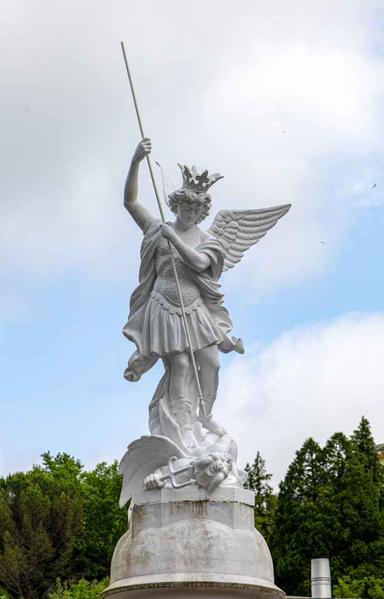
Michael’s most iconic role comes from the Book of Revelation. Here, he leads an army of God against the Dragon (a.k.a. Satan). He’s almost always dressed in Roman/Medieval armor, standing over a defeated demon/dragon, holding a spear/sword.

In Catholic traditions, Michael has a secondary role as the Psychopomp. A Psychopomp is a conductor or a guide of souls. The 1 who “weighs” souls at the moment of death. This is why he’s sometimes shown with scales.

In Islamic tradition, Mikail (Michael) is 1 of 4 archangels. While Jibril feeds the soul (through revelation), Mikail is the Angel of Sustenance. He’s responsible for the forces of nature, specifically rain & lightning. Legends say he’s so moved by the majesty of God that he hasn’t smiled since the creation of Hell.

In the United States, Michael is the patron saint of paratroopers, police officers, & the military.

In the General Roman Calendar, the Anglican Calendar of Saints, & the Lutheran Calendar of Saints, Michael’s feast day is Michaelmas Day (September 29). The day is also the feast day of St. Gabriel & Raphael, in the General Roman Calendar & the Feast of St. Michael & All Angels in the Church of England.

In the Eastern Orthodox Church, St. Michael’s principal feast day is November 8. November 21, if they’re using the Gregorian calendar. Honoring him along with the rest of the “Bodiless Powers of Heaven” (angels) as their Supreme Commander, & the Miracle at Chonae is celebrated on September 6.

In the Coptic Orthodox Church, the main feast day is on 12 Hathor (between November 9 & December 9) & 12 Paoni (between June 8 & July 7). He is celebrated liturgically on the 12th of each Coptic month.

On April 7, the Oriental Orthodox Church commemorates the deliverance of the prophet Jeremiah from prison by Michael.

One-Time Monthly Yearly

Make a one-time donation

Make a monthly donation

Make a yearly donation

Choose an amount

$1.00 $5.00 $10.00 $1.00 $5.00 $10.00 $5.00 $10.00 $15.00

Or enter a custom amount.

$

Your contribution is appreciated.

Your contribution is appreciated.

Your contribution is appreciated.

DonateDonate monthlyDonate yearly #AzraIl #1Thessalonians416 #12Hathor #12Paoni #13thCentury #2ndCenturyBC #324 #3rdCenturyBC #4thCentury #6thCentury #Abimelech #Abraham #Adam #AllAngels #AncientOfDays #AngelOfDeath #AngelOfSustenance #Angelology #AnglicanCalendarOfSaints #Apocalyptic #April7 #ArchangelGabriel #ArchangelMichael #ArchangelRaguel #ArchangelRaphael #ArchangelRemiel #ArchangelSariel #ArchangelUriel #Archangelos #Archistrategos #ArmyOfGod #BattleOfBadr #BayOfBiscay #BearersOfTheThrone #Belgrade #BodilessPowers #BodilessPowersOfHeaven #Bonventure #BookOfDaniel #BookOfEnoch #BookOfRevelation #Catholic #Catholics #ChiefCommanderMichael #Christ #Christianity #ChurchOfEngland #Circa310 #Circa320 #Circa403 #Constantine #CopticChurchOfAlexandria #Daniel #Daniel1013 #Daniel121 #Daniel7 #DeAngelis #December9 #Disciples #Dragon #Dua #EasternChristianity #EasternOrthodox #EasternOrthodoxChurch #Elohim #EpiphaniusOfSalamis #EpistleOfJude #EternalWord #ExodusRabbah #FeastDay #FeastOfStMichael #GeneralRomanCalendar #Genesis1413 #GreatPrince #GreekOrthodoxy #GregorianCalendar #Hathor #Heaven #HeavenlyTemple #Hebrew #Hell #Hexaemeron #HighPriest #Homily #Isaac #Islam #Israel #Jacob #Jehovah #JehovahSWitnesses #Jeremiah #Jesus #Jewish #Jibril #Judaism #Jude19 #Jude9 #July7 #June8 #KievanRus #KingSennacherib #Kyiv #Laban #Licinius #LitanyOfTheSaints #Lot #Luke2231 #LutheranCalendarOfSaints #Menorah #Mercy #MichaelTheTaxiarch #Michaelion #MichaelmasDay #Midrash #Mikail #MikhaEl #MiracleAtChonae #Miraj #MormonChurch #Moses #Muhammad #NewTestament #Nimrod #November21 #November8 #November9 #OldTestament #OrientalOrthodoxChurch #Paoni #Paradise #Patriarchs #PatronSaint #PatronSaints #Persia #PrinceOfTheSeraphim #PrinceVsevolod #Prophet #PseudoDionysius #Psychopomp #Qumran #Rabbis #Revelation127 #Revelation12712 #Revelation1279 #Revelation16 #Revelation1914 #Revelation45 #RomanCatholic #Russia #Samael #Samuel #Sarah #Satan #Scales #September29 #September6 #SerbianOrthodoxChurch #SeventhDayAdventists #Shia #SonOfGod #Spear #StBasilTheGreat #StGabriel #StMichael #StRaphael #StSava #Suyuti #Temple #ThomasAquinas #Torah #Trumpet #Ukraine #UnitedStatesOfAmerica

It's world 🌍 #MercyEke 🍷

#Bbnaija Mercyeke shares beautiful new photos to celebrate her birthday today 💖
BBN S4 winner, #Mercyeke at 32nd birthday #bahdlex #birthday 🍭💜✨🎈#birthdaygirl #birthdaycelebration #birthdaywishes #September29
#bahdlexbirthday #celebrity #Actress

It's world 🌍 #JokeSilva Day 🍷

🎉 Happy 64th birthday to actress Joke Silva
The ever-graceful wife of Nollywood legend Olu Jacobs 💕🎬. #Actress 🌹#NollywoodLegend #OluJacobs #QueenOfScreen #bahdlex #bahdlexbirthday #birthdayvibes #birthdaywishes #hapyybirthday #September29

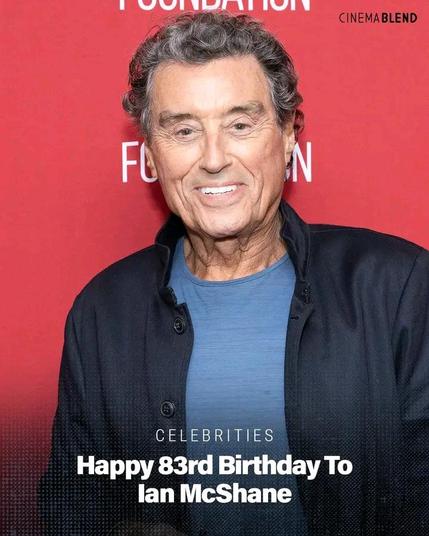
Happy Birthday to #IanMcShane 🍿
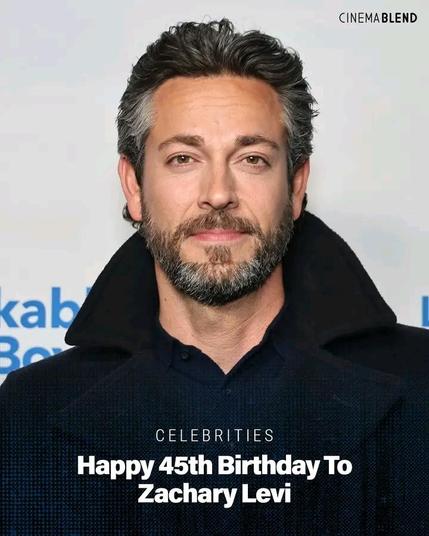
Happy Birthday to #ZacharyLevi!🎊
💕🎬. Wishing you many more years of good health, joy, and inspiration 🌹✨🎂#HappyBirthday #birthdaywishes #king #bahdlex #bahdlexbirthday #birthdayvibes #birthdaywishes #September29 #celebrities 🍸🍾🥂🍿🍭🍬

Massive fire breaks out at Feodosia oil refinery in occupied Crimea: First details

then the shortage of gasoline and diesel in the temporarily annexed Crimea will probably continue for quite some time.

https://newsukraine.rbc.ua/news/massive-fire-breaks-out-at-feodosia-oil-refinery-1759152179.html

#WarOfAggression #Europa #Ukraine #OilRefinery #Crimea #September29 #Frontline #army #Feodosia #war #Russia #WarCriminal #invaders #drones #occupiers #defenders
#перемогаYкраїни

Massive fire breaks out at Feodosia oil refinery in occupied Crimea: First details

Read more

RBC-Ukraine
Ukrainian strikes hit key Russian factory: Neptune missiles target Elektrodetal

Read more

RBC-Ukraine

September 29

This day in history:

  • 1829 – The Metropolitan Police of London, later also known as the Met, is founded.
  • 1940 – Two Avro Ansons collide in mid-air over New South Wales, Australia, remain locked together, then land safely.
  • 1911 – Italy declares war on the Ottoman Empire.
  • 1957 – The Kyshtym disaster is the third-worst nuclear accident ever recorded.

Births:

  • 1915 – Oscar Handlin, American historian and academic (d. 2011)
  • 1986 – Jerome Jordan, Jamaican basketball player
  • 1923 – Stan Berenstain, American author and illustrator (d. 2005)

Deaths:

  • 1364 – Charles I, Duke of Brittany (b. 1319)
  • 2022 – Akissi Kouamé, Ivorian army officer (b. 1955)
  • 2001 – Mabel Fairbanks, American figure skater and coach (b. 1915)

Holidays:

  • World Heart Day
  • Inventors' Day (Argentina)
  • Victory of Boquerón Day (Paraguay)

Random Article of the day:

Jhetunebibi

Jhetunebibi is a Hindu goddess and folk deity in Bengal, worshipped in conjunction with the Goddesses Oladevi (the Goddess of Cholera), Ajgaibibi, Chandbibi, Bahadabibi, Jholabibi and Asanbibi.

September 29 - Wikipedia