Archangel Gabriel
In Judaism, Christianity, & other Abrahamic religions, Gabriel (or even Cebrail (Djebrail) in some cultures) is an archangel with the power to announce God’s will to mankind as the messenger of God. He’s like the Abrahamic Apollo. He’s mentioned in the Hebrew Bible/Christian Old Testament, the New Testament, & the Quran.
In the Book of Daniel, Gabriel appears to the prophet Daniel to interpret his vision. Gabriel also shows up in the Jewish apocryphal 1st Book of Enoch & other Hebrew writings.
Along with the archangel Michael, Gabriel is described as the guardian angel of the Israelites, defending them against the angels of the other peoples. Many sects of Christianity revere Gabriel as a saint.
In the New Testament’s Gospel of Luke, Gabriel appears to Zachariah, predicting the birth of John the Baptist. Gabriel later appears to Mary, mother of Jesus, to announce that she would conceive & bear a son via a virgin birth.
Islam regards Gabriel as an archangel sent by Allah/God to different prophets, including Muhammad (PBUH). The first 5 verses of the Al-Alaq (96th chapter of the Quran) are believed by Muslims to have been the 1st verses of revelations given by Gabriel to Muhammad (PBUH).
The only book in the Hebrew Bible that explicitly mentions Gabriel is the Book of Daniel, & Gabriel appears to the prophet Daniel to explain his visions (Daniel 8:15-26, 9:21-27). In Daniel’s final vision, an unnamed angel appears to him & speaks of receiving help from the archangel Michael in battle against the Prince of Persia (not the video game) & also Michael’s role in times to come. This unnamed angel is thought to be Gabriel.
Though not named specifically, the “man clothed with linen” mentioned in the Book of Ezekiel chapters 9 & 10 is interpreted as Gabriel in Yoma 77a of the Babylonian Talmud.
There are many references to Gabriel in the Book of Enoch. According to this book, Michael, Uriel, Raphael, & Gabriel complain to God about the many wrongs perpetuated by Azazel & Samyaza. Especially the fact that they revealed “eternal secrets” & sins to mankind & defiled themselves with human women who later gave birth to giant offspring. Or, 1 of our fav subjects to circle back to, the Nephilim. (We will be doing the Nephilim in a future post. It’s currently being researched right now. Along with the Watchers, the Nephilim’s dads.)
As a result, God decides to destroy the Earth (which has been corrupted by those pesky fallen angels; these fallen angels were led by Azazel & Samyaza) & all of its inhabitants except for Noah. God sends Gabriel & the other archangels to go after the fallen angels & cast them into the darkness until the day of their judgment.
In Chapter 20, Gabriel is listed as 1 of 7 holy angels who watch. In Chapter 40, Gabriel is listed as 1 of 4 presences who stand on the 4 sides of God. These 4 archangels will be the ones to cast the fallen angels into the abyss of condemnation on Judgment Day.
According to Rabbinic Judaism, Gabriel (along with Michael, Uriel, & Raphael) is 1 of the 4 angels that stand at the 4 sides of God’s throne & serve as guardian angels of the 4 parts of the Earth. Michael stands on/at the right hand of God. While Gabriel (who ranks beneath Michael) stands at the left. Michael & Gabriel often work together. But Michael is mainly occupied in Heaven, while Gabriel (as the messenger of God) typically executes God’s will on earth.
Gabriel is also associated with the metal gold (the color of fire). Alongside Michael, Gabriel is described as the guardian angel of Israel, defending the Israelites against the angels of the other nations.
Gabriel is 1 of God’s archangels in Kabbalah literature. He’s pictured working in concert with Michael as part of God’s court. He’s identified with the sefira (or the Counting of the Omar. It’s a period of 49 days known as sefira(h).) of Yesod (this is a node in the kabbalistic Tree of Life.). Gabriel isn’t to be prayed to because only God can answer & sends Gabriel as his agent/messenger/courier.
According to Jewish mythology, in the Garden of Eden there’s a tree of life or the “tree of souls” that blossoms & produces new souls, which fall into the Guf, the Treasury of souls. This is located in the 7th Heaven. Gabriel reaches into the Treasury & takes out the 1st soul that comes into his hand.
Gabriel’s 1st appearance in the New Testament is found in the 1st part of Chapter 1 of Luke. This is where the annunciation of the birth of John the Baptist is. John’s dad, Zachariah, was childless because John’s mom, Elizabeth, was barren. An angel shows up to Zechariah to announce the birth of his son. When Zechariah questions the angel, the angel names himself as Gabriel (Luke 1:5-25).
Gabriel’s next appearance is in the 2nd part of Luke, chapter 1. This time, to announce the birth of Jesus to Mary (Luke 1:26-38). In the 1st part of the passage, the angel identifies itself as Gabriel; in the 2nd part of the passage, the angel doesn’t. It’s the author of Luke who calls this angel Gabriel.
Gabriel is more frequently referenced in early Christian pseudepigraphic texts (these are texts whose authorship isn’t by who it’s claimed to be or a real author attributed to some bigger name of the past) than in Amy of the canonical Biblical texts.
Gabriel is mentioned in some of the infancy Gospels, like the Nativity Gospel of Mary, Protevangelium of James, & First Gospel of the Infancy of Jesus Christ. Gabriel is also mentioned in some of the early Christian apocalyptic texts, like the Greek Apocalypse of Ezra & Second Book of Enoch.
In Gnosticism, angels are portrayed as belonging to a pantheon of spiritual beings involved in the creation of the world. According to 1 ancient Gnostic manuscript, the Holy Book of the Great Invisible Spirit. (Which we have posted!) Gabriel is a divine being & inhabitant of the pleroma (This refers to the total of divine powers.) that existed before the demiurge (This is an figure who is responsible for fashioning & maintaining the physical universe). There’s also a reference to Gabriel in Chapter 17 of the Gospel of Judas.
In the theology of the Mormon Church, Gabriel is believed to have lived a mortal life as the prophet Noah. The 2 are regarded as the same individual. Noah was his mortal name & Gabriel being his heavenly name.
Gabriel’s fast day was exclusively celebrated on March 18 between 1588 & 1921. The feast of St. Gabriel was included by Pope Benedict XV in the General Roman Calender in 1921 for celebration on March 24.
In 1969, the day was officially transferred to September 29 for celebration in combination with the feasts of Michael & Raphael. Today, the September 29 date (known as Michaelmas) has been adopted by the Catholic Church, Church of England, Lutheran faith, Anglican Communion, & Western Orthodox churches.
The Eastern Orthodox Church & those Eastern Catholic Churches that follow the Byzantine Rite (a.k.a. the Rite of Constantinople is a liturgical rite developed in the Eastern Christian church of Constantinople.) celebrated the Feast of the Archangels (or Synaxis of the Archangel Michael & the Other Bodiless Powers) on November 8.
For the churches that follow the Julian Calendar, November 9 currently falls on November 21 of the modern Gregorian Calendar (a 13-day difference).
The Eastern Orthodox commemorate Gabriel not only at the Feast of the Archangels, but also on 2 other days: March 26 the “Synaxis of the Archangel Gabriel” & celebrates his role in the Annunciation. July 13, a.k.a. the “Synaxis of the Archangel Gabriel.”
The Coptic Orthodox Church celebrates Gabriel’s feast of 13 Paoni, 22 Koiak, & 26 Paoni. The medieval Coptic work Investiture of the Archangel Gabriel, attributes the feast day of 22 Koiak to the day Gabriel was given the rank of archangel in Heaven.
The Ethiopian Church celebrates Gabriel’s feast of December 18 (in the Ethiopian calendar). A sizable number of its believers making a pilgrimage to a church dedicated to “St. Gabriel” in Kulubi & Wonkshet on that day.
Gabriel is in many places in the Quran. He’s revered as 1 of the primary archangels & as the Angel of Revelation in Islam. He’s primarily mentioned in the verses 2:97, 2:98, 66:4 of the Quran. However, the Quranic text doesn’t refer to him as an angel. In the Quran, the archangel Gabriel appears named in 2:97 & 66:4, as well as in 2:98, where he’s mentioned along with the archangel Michael.
Tafsir (this is like the Jewish Midrash) narrates that Muhammad saw the archangel Gabriel in his full angelic splendor only 2x. The 1st time was when he received his 1st revelation. Islamic tradition holds that Gabriel was sent to numerous pre-Islamic Biblical prophets with revelation & divine injunctions, including Adam, whom Muslims believe was consoled by Gabriel sometime after Fall, too. He’s known by many names in Islam, such as “keeper of holiness.” In Hadith traditions, Jibril is said to have 600 wings.
In Islam, the tree of souls is referred to as the Sidrat al-Muntaha. This is identified as a Ziziphus spina-christi. This is also known as Christ’s thorn jujube.
Muslims believe that Gabriel was tasked with transmitting the scriptures from God to the prophets & messengers as Asbab al-Nuzul or revelation. Asbab al-Nuzul is occasions or circumstances of revelation names the historical context in which Quranic verses were revealed from the perspective of traditional Islam. When Muhammad was questioned which angel is revealing the holy scriptures, he told the Jews they’re revealed by Gabriel.
Muslims also Revere Gabriel for several events that predate what they regard as the 1st revelation narrated in the Quran. Muslims believe that Gabriel was the angel who informed Zechariah of the Nativity of John the Baptist. As well as Mary about the future nativity of Jesus.
Gabriel was 1 of 3 angels who had earlier informed Abraham of the birth of Isaac. Gabriel also makes a famous appearance in the Hadith of Gabriel, in which he questions Muhammad on the core tenets of Islam.
Gabriel is also believed to have delivered punishment from God to the Sodomites by leveling the entire city of Sodom with the tip of his wing. According to a Hadith, Gabriel has the ability to regulate feelings or perception in humans. Particularly happiness or sadness.
Gabriel is believed to have helped Muhammad overcome adversaries significantly against an ifrit during the Night Journey. An ifrit is a powerful type of demon in Islamic culture. Gabriel is also believed to have helped Muhammad overcome his adversaries during the Battle of Badr.
The Yazidis worship 7 Archangels, including Gabriel (Jabra’il), Michael (Mikha’il), Raphael (Rapha’il), Dedra’il, Azra’il, Shamka’il, & Azazil. They’re emanations from God with which God entrusted the world. Yazidis associate Gabriel with Tawusi Melek (the “Peacock Angel”).
Mandaeans venerate Ptahil as the “4th Life.” Ptahil is an uthra (a divine messenger of the light), identified with Gabriel, who creates the poorly made material world with the help of Ruha, a sinful & fallen female ruler who inhabits the World of Darkness.
The creation of the material world occurs by God’s command. But is delegated to Ptahil (a subservient emanation or uthra) with the assistance of Gabriel & others.
Make a one-time donation
Your contribution is appreciated.
Donate
Make a monthly donation
Your contribution is appreciated.
Donate monthly
Make a yearly donation
Your contribution is appreciated.
Donate yearly
#1921 #1969 #7thHeaven #Abraham #AbrahamicReligions #AlAlaq #Allah #AnglicanCommunion #Annunciation #Apocryphal #Apollo #Archangel #ArchangelGabriel #ArchangelMichael #Azazel #Azazil #AzraIl #BabylonianTalmud #BattleOfBadr #BookOfDaniel #BookOfEnoch #BookOfEzekiel #BookOfLuke #ByzantineRite #CatholicChurch #Cebrail #ChristSThornJujube #Christian #Christianity #ChurchOfEngland #CopticOrthodoxChurch #CountingOfTheOmar #Daniel81526 #Daniel92127 #December18 #DedraIl #Demiurge #Demon #Djebrail #EasternCatholicChurch #EasternChristianChurch #EasternOrthodox #EasternOrthodoxChurch #Elizabeth #EthiopianCalendar #EthiopianChurch #FallOfMan #FallenAngels #FeastDay #FeastOfTheArchangels #FirstGospelOfTheInfancyOfJesusChrist #Gabriel #GardenOfEden #GeneralRomanCalendar #Gnosticism #GospelOfLuke #GreekApocalypseOfEzra #GregorianCalendar #Hadith #HebrewBible #HolyBookOfTheGreatInvisibleSpirit #Ifrit #InfancyGospels #InvestitureOfTheArchangelGabriel #Isaac #Islam #Israel #Israelites #JabraIl #Jesus #Jibril #JohnTheBaptist #Judaism #JudgmentDay #JulianCalendar #July13 #Kabbalah #Kulubi #Luke12638 #Luke1525 #Lutheran #Mandaeans #March18 #March24 #March26 #Messenger #Michael #Michaelmas #Midrash #MikhaIl #MormonChurch #Muhammad #NativityGospelOfMary #NativityOfJesus #NativityOfJohnOfBaptist #Nephilim #NewTestament #NightJourney #Noah #November21 #November8 #OldTestament #PeacockAngel #Pleroma #PopeBenedictXV #PrinceOfPersia #Prophet #ProtoevangeliumOfJames #Pseudepigrapha #Ptahil #Quran #RabbinicJudaism #RaphIl #Raphael #RiteOfConstantinople #Ruha #Samyaza #SecondBookOfEnoch #Sefira #September29 #ShamkaIl #SidratAlMuntaha #Sodom #SynaxisOfTheArchangelGabriel #SynaxisOfTheArchangelMichael #SynaxisOfTheArchangelMichaelTheOtherBodilessPowers #Tafsir #TawusiMelek #TheGospelOfJudas #TreeOfLife #Uriel #Uthra #VirginBirth #VirginMary #Watchers #WesternOrthodoxChurch #Wonkshet #Yazidis #Yesod #Yoma77a #Zachariah #Zechariah #ZiziphusSpinaChristi Sacred Words Of A Nomad Soul
 Astra Menae 🌙

 Spirituality & Religious Studies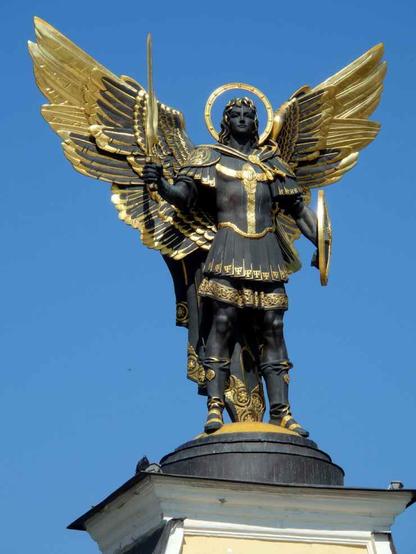

 Craig Constantine


 viNomadic