OpenAI's CFO went to the Wall Street Journal during trial recess. Two sets of revenue numbers. Two sets of spending commitments. A joint denial that made things worse. Musk's lawyers read the Journal. Altman still has to testify.
I cannot make this up.

https://blog.ppb1701.com/two-sets-of-numbers

#friar #altman #openai #trial #bigtech #userhostile #theranasai #blog

Two sets of Numbers - ByteHaven - Where I ramble about bytes

The trial's in recess. Musk has, shockingly, followed the judge's orders so far. The prediction markets are not impressed but the lawyers appear to be...

Curse of Ham

Author’s Note: This post talks about some very racist ideas. We here at Spirituality & Religious Studies DO NOT agree with ANY racist rhetoric at all, EVER! If this post triggers you, please move on to 1 of our other posts. Thank you.

In the Book of Genesis, the curse of Ham is described as a curse that was imposed upon Ham’s son, Canaan, by the patriarch Noah. It happens in the context of Noah’s drunkenness & it’s provoked by a “shameful” act that was perpetrated by Noah’s son, Ham, who “saw the nakedness of his father.”

The exact reason for Ham’s transgressions & the reason Noah cursed Canaan when Ham had sinned has been debated for over 2,000 years.

The story’s original purpose may have been to justify the biblical subjection of the Canaanites to the Israelites, or a land claim to a portion of the New Kingdom of Egypt, which ruled Canaan in the late Bronze Age.

In later centuries, the narrative was interpreted by some Jews, Christians, & Muslims as an explanation for black skin. As well as a justification for the enslavement of black people. Many Christians, Muslims, & Jews now disagree with such interpretations. Because in the biblical text, Ham himself isn’t cursed. Race or skin color isn’t even mentioned in the text at all, anywhere.

The idea of this curse has its beginnings in Genesis 9:20-27. The story goes:

Noah began to be a farmer. He planted a vineyard. He drank some of the wine that the vineyard produced & enjoyed the drink a little too much. Noah was naked in his tent. Ham (the dad of Canaan) saw Noah’s nakedness. Ham told his 2 brothers. Shem & Jepheth took a garment & put the garment on both their shoulders & covered Noah’s nakedness, while they walked backwards. They kept their faces turned away from Noah so they didn’t see him naked.

Noah woke up from his drunken stupor. He knew what Ham had done. “Cursed be Canaan. A servant of servants will be to his brothers. Blessed be the Lord God of Shem. Canaan will be his servant. God will enlarge Japheth. He’ll live in the tents of Shem. Canaan will be his servant,” Noah said. (Genesis 9:20-27)

The objection of the story may have been to justify the subject status of the Canaanites (the descendants of Ham) to the Israelites (the descendants of Shem). The narrative of the curse is replete with difficulties. It’s uncertain what the exact nature of Ham’s offense is.

In verse 25 of the Genesis story, Noah refers to Shem & Japheth as the “brethren” of Canaan. However, in verse 18, they’re identified as his uncles.

The Table of Nations introduces Canaan & Mizraim (Egypt) among the sons of Ham. The Table of Nations is a genealogy of the sons of Noah & their dispersion into many lands after the Flood. In the Psalms, Egypt is identified with Ham.

A land claim on Canaan, which fell under the rule of the New Kingdom of Egypt in the late Bronze Age, has been suggested as a motive for the curse on Canaan & the association with Ham via Ancient Egypt’s rule over Canaan.

It’s important to realize that the curse was placed/made by Noah, not by God. The curse of Ham (& his descendants) wasn’t confirmed by God. Because the text would mention that, or at least you’d think it would if God had confirmed it. And if God had actually confirmed the curse, then why was the “promised land” called Canaan?

A pesher (interpretation) of the Book of Genesis found among the Dead Sea Scrolls, explains that since Ham was already blessed by God, it made Noah’s curse null & void (Genesis 9:1).

The Book of Jubilees also tells the tale. Jubilees gives a bit more info that Ham had assigned to Canaan a land west of the Nile. All of Noah’s sons agreed to invoke a curse on anyone who tries to seize land that wasn’t assigned to them. Well, Canaan violates this agreement & instead chooses to squat in the land set forth to Shem & his descendants. So Canaan brought on himself the full force of this second curse.

In the past, some groups have claimed that the curse of Ham was a biblical justification for imposing slavery & racial discrimination.

In the 15th century, Dominican Friar Annius of Viterbo invoked Ham’s curse to explain the differences between Europeans & Africans in his writings. Annius doubled down on the racism. He claimed that due to the curse imposed on black people, they would inevitably remain permanently subjugated by Arabs & other Muslims.

Similarly, the Catholic mystic Anne Catherine Emmerich said in her visions that she discovered that black people are, in fact, descendants of Ham.

In 1835, Joseph Smith (founder of the Mormon faith) published a work called the Book of Abraham. Get ready, it’s going to be a very bumpy & cringy ride. This is your trigger warning.

This “work” states that the Pharaoh was a descendant of Ham & the Canaanites. Pharaoh ruled justly & was blessed with wisdom, but was barred from getting into the priesthood because of the curse on Ham. According to the Book of Abraham, ALL Egyptians descended from the Canaanite lineage.

The Book of Abraham was eventually made into Scripture by the Mormon Church. And it is still in active use today. This passage is the only 1 found in any Mormon scripture that bars a particular “lineage” of people from holding the priesthood.

While there’s nothing in the Book of Abraham that explicitly states that Noah’s curse was the same curse that is mentioned in the Bible, or that the Egyptians were related to other black Africans. Some leaders later used the verses of this text as justification for the church policy with regard to the priesthood ban.

The 2002 edition of the Doctrine & Covenants Student Manual pointed to Abraham 1:21-27 as the reason why highly melaninated friends of the male gender weren’t given the priesthood until 1978. That’s 148 years, y’all. Really? That’s almost 150 years, guys. We can’t. We just can’t. And here’s the kicker: they also said that those who tried to abolish slavery were going against the decrees of God.

Make a one-time donation

Your contribution is appreciated.

Donate

Make a monthly donation

Your contribution is appreciated.

Donate monthly

Make a yearly donation

Your contribution is appreciated.

Donate yearly #15thCentury #1835 #1978 #2002 #Abraham #Africans #AncientEgypt #AnneCatherineEmmerich #AnniusOfViterbo #Arabs #bible #BookOfAbraham #BookOfGenesis #BookOfJubliees #BronzeAge #Canaan #Canaanites #Catholic #Christians #Curse #CurseOfHam #DeadSeaScrolls #DoctrineCovenantsStudentManuel #DominicanFriar #Egypt #Europeans #Flood #Friar #Genesis91 #Genesis92027 #Ham #Israelites #Jepheth #Jews #JosephSmith #LateBronzeAge #Mizraim #Mormonism #Muslim #Muslims #Mystic #NewKingdom #Noah #Patriarch #Pesher #Pharaoh #Priesthood #PriesthoodBan #Psalms #Shem #Slavery #TableOfNations #vineyard #wine
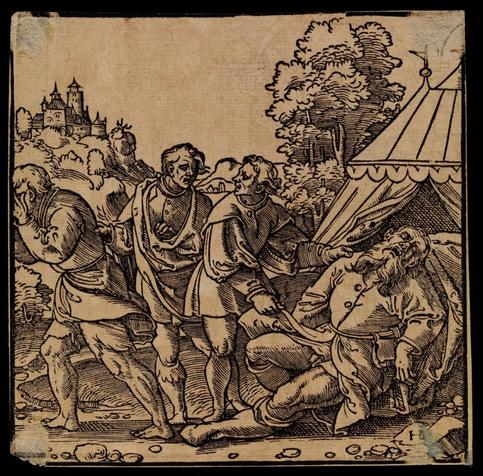
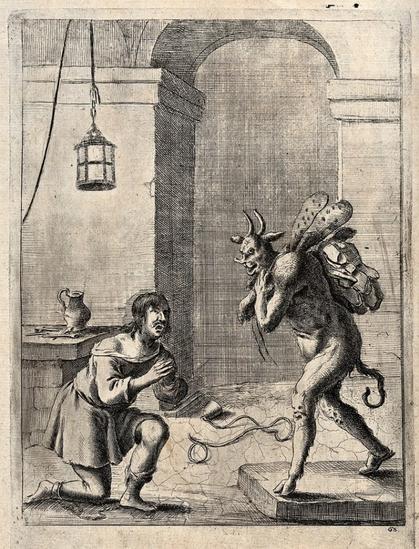

Robert the Devil

In Latin: Robertus Diabolus.

He’s a legend of medieval origin about a Norman knight who finds out he’s the son of… (bum, bum, buuum!) Satan. This story started in France in the 13th century.

The story goes:

A duchess of Normandy who was tormented with a desire to have kids but couldn’t have any. She got tired of waiting on God (who wasn’t listening to her). So she decides to ask the Devil. The Devil compiles.

A son is born! As an infant, he bites his nurse & pulls her hair out. As a “lad,” he knifes his teachers. At age 20, he became a bandit chief. He’s then dubbed a knight. This was because of the belief that the wicked instincts raging in him would be subdued. But this only made him worse than before. No one could surpass him in strength or in courage.

In a tourney, he overthrows & slays 30 opponents. Then he goes roaming about the world. He then goes back to his homeland. He restarts his banditry – robbing, arson, murdering, ravishing. One day, after unaliving all the nuns of a certain abbey, he remembers his mom. He goes looking for her.

The servants scatter in every direction when they see him coming. No one waits around to talk to him to find out what in the world he wants. Right at this time, Robert had an epiphany. For the 1st time ever, he becomes conscious of his own monstrous wickedness. He becomes remorseful for his actions. He wanted to know what made him the way he was.

Robert then goes to his mom. And at literal sword point, he tells her to tell him the truth about his birth. After learning the truth, he freaks out, man! But his sturdy nature isn’t weakened. He doesn’t despair. Instead, the hope of a laborious redemption, of a marvelous victory, urges & spurs on his proud spirit.

He’ll learn to conquer Hell, to subdue himself, to foil the designs of his dad (Satan), who’s made home a docile instrument of destruction & of sin. He makes no delay. He goes straight to Rome, casts himself to the harshest kind of penance, makes confession to be a holy hermit, & swears that henceforth he’ll taste no food that he hasn’t snatched from the jaws of a dog.

On 2 separate occasions, when Rome was besieged by the Saracens, he fought incognito for the Emperor & gained the W for the Christians. Recognized at last, he refused all rewards & honors, the imperial crown, & even the monarch’s own daughter. He goes away to live as a hermit in the wilderness. He dies a saint, blessed by both God & men.

In other accounts, he finally marries the princess who’s deeply in love with him.

The oldest known account of this legend is a Latin prose narrative by a Dominican Friar, Etienne de Bourbon (circa 1250). It then shows up in a French metrical romance of the 13th century. From France, the legend spread to Spain. In England, the subject was treated in the metrical romance Sir Gowther (circa 14th century). In this version, the devil disguises himself as the mom’s husband.

Make a one-time donation

Your contribution is appreciated.

Donate

Make a monthly donation

Your contribution is appreciated.

Donate monthly

Make a yearly donation

Your contribution is appreciated.

Donate yearly #13thCentury #Christians #Circa1250 #Circa14thCentury #devil #Dominican #Duchess #England #EtienneDeBourbon #Friar #Hell #Hermit #Knight #Latin #Norman #RobertTheDevil #RobertusDiabolus #Rome #Saint #Saracens #Satan #Spain #StirGowther

Archangel Uriel

Uriel means “God is my flame.” His name could be spelled Auriel or Oriel. He’s one of the archangels who’s mentioned in Rabbinic tradition & in certain Christian traditions.

He’s well known in the Russian Orthodox tradition & in folk Catholicism (in both he’s considered to be 1 of the 7 major archangels). In Anglicanism, he’s also well known in European esoteric medieval literature.

Uriel is also known as a master of knowledge & archangel of wisdom. He’s associated with the truth.

In apocryphal, kabbalistic, & occult works, Uriel has been equated (or confused) with Urial, Nuriel, Uryan, Jeremiel, Vretil, Sariel, Puruel, Phanuel, Azrael, & Raphael.

In the Secret Book of John (an early Gnostic work), Uriel is placed in control of the demons who help Yaldabaoth create Adam.

Of the 7 Archangels in the angelology of Judaism, only 2 of them (Gabriel & Michael) are mentioned by name in the canonized Jewish scripture. Where a 4th archangel is added to the named 3 (to represent the 4 cardinal points), Uriel is generally the 4th. Uriel is listed as the 4th angel by Christian Gnostics, under the name of Phanuel.

Uriel appears in the 2nd Book of Esdras, which is found in the Biblical apocrypha (called Esdras IV in the Vulgate). In this, the prophet Ezra asks God a series of questions, & God sends Uriel to instruct him. According to the Revelation of Esdras, the angels who will rule at the end of the world are Michael, Gabriel, Uriel, Raphael, Gabuthelon, Beburos, Zebuleion, Aker, & Arphugitonos. The final 5 listed appear only in the book & nowhere else in apocryphal or apocalyptics works.

In Christian apocryphal Gospels, Uriel plays a role (differing between the sources) in the rescue of Jesus’ cousin, John the Baptist, from the Massacre of the Innocents ordered by King Herod. He carries John & his mom, St. Elizabeth, to join the Holy Family after their flight into Egypt. Their reunion is pictured in da Vinci’s Virgin of the Rocks (a.k.a. Madonna of the Rocks).

Uriel is often identified as a cherub & the angel of repentance. He stood at the Garden of Eden with a fiery sword, or as the angel who’s over the world & over Tartarus. In the Apocalypse of Peter, he appears as the angel of repentance, who is graphically represented as being as pitiless as any demon.

In the Life of Adam & Eve, Uriel is regarded as the spirit (1 of the cherubs) of the 3rd chapter of Genesis. He’s also identified as 1 of the angels who helped bury Adam & Abel in Eden. He checked the doors of Egypt for lamb’s blood during the plague. He held the key to the pit during the end times, & led Abraham to the west.

In modern angelology, Uriel is identified variously as a seraph, cherub, regent of the sun, flame of God, angel of the divine presence, presider over Tartarus/Hell, archangel of salvation, & in later scriptures, identified with Phanuel (“God has turned”). He’s often pictured carrying a book or a papyrus scroll representing wisdom. Uriel is a patron of the arts.

In the Eastern Orthodox churches, Uriel is commemorated together with the other archangels & angels with a feast day of the “Synaxis of the Archangel Michael & the Other Bodiless Powers” on November 8 of the liturgical calendar. For those churches which follow the Julian calendar, November 8 & falls on November 21 on the modern Gregorian calendar.

He’s regarded as the patron saint of the arts & sciences. In addition, every Monday throughout the year is dedicated to the angels.

The Anglicans & Coptic Christians of Ethiopia & Eritrea venerate archangel Uriel. According to the latter, July 11 is his feast day. In the Ethiopian Homily on the Archangel Uriel, he’s pictured as 1 of the great archangels & as the angelus interpres who has interpreted prophecies to Enoch & Ezra, & the helper of both of them.

According to the Homily, at the time of the crucifixion of Jesus, Uriel dipped his wing in the blood & water flowing from Christ’s flank & Filled a cup with it. Carrying the cup, he & the archangel Michael rushed into the world & sprinkled it all over Ethiopia.

In every place where a drop of blood fell, a church was built. Thus, Uriel is often pictured carrying a chalice filled with the blood of Christ in Ethiopian Orthodox iconography. Uriel is honored in the Lutheran Churches as well, with churches including statuary of the archangels Gabriel, Uriel, Michael, & Raphael.

At the Council of Rome of 745, Pope Zachary (intending to clarify the church’s teaching on angels & curbs a tendency toward angel worship) condemned obsession with angelic intervention & angelology. But reaffirmed the approval of the practice of the reverence of angels.

This Synod struck many angels’ names from the list of those eligible for veneration in the church of Rome, including Uriel. Only the reverence of the archangels is mentioned in the recognized Catholic canon of scriptures, namely, Michael, Gabriel, & Raphael, remained acceptable.

In the 16th century, Archangel Uriel appeared before the Sicilian friar Antonio Lo Duca & told him to build a church in the Termini area. Lo Duca told Pope Pius IV about the apparition, and the pope then asked Michelangelo to design the church, which became the Basilica of St. Mary of the Angels & of the Martyrs located at the Esedra Plaza.

In the 1st half of the 11th century, Bulgarian followers of the duelist heresy called Bogomilism, who lived in the dukedom of Ahtum in present-day Banat, invoked Uriel in rituals. This was witnessed by Gerard of Csanad, the Catholic bishop of the area after 1028. Uriel was also named in a small exorcism in the 15th century.

The Book of Enoch (which presents itself as written by Enoch) mentions Uriel in many of its component books. In chapter IX, part of “The Book of the Watchers” (2nd century BC), only 4 angels are named. Those angels are Michael, Uriel, Raphael, & Gabriel. Though some versions have a 5th angel: Suryal or Suriel.

However, chapter XX later lists 7 angels’ names & functions. Those angels are “Uriel, 1 of the holy angels, who’s over the world & over Tartarus,” Raphael, Raguel, Michael, Saraqael, Gabriel, & Remiel.

The Book of the Watchers tells us that Uriel, Raphael, & Gabriel were present before God to testify on behalf of humankind. They ask for divine intervention during the reign of the fallen Grigori (fallen watchers). These fallen ones took human wives & had half-“angel,” half-human offspring called the Nephilim.

Uriel was responsible for warning our boy Noah about the upcoming deluge. After judgment has been brought up on the Nephilim & the Fallen Ones, including the 2 main leaders, Samyaza & Azazel. Uriel then acts as a guide for Enoch for the rest of the Book of Watchers.

In the traditions & hagiography of the Episcopal & other Anglican churches, Uriel is mentioned as an archangel. He’s recognized as the patron saint of the sacrament of confirmation. In some Episcopal churches, Uriel is also regarded as the keeper of beauty & light, & regent of the sun & constellations.

In iconography, he’s shown holding in his right hand a Greek Ionic column, which symbolizes perfection in aesthetics & man-made beauty, and in his left hand is a staff topped with the sun. He is celebrated in the Anglican liturgical calendars of the Feast of the Archangels. The Church of St. Uriel the Archangel at Sea Girt, New Jersey, is a testimony to Anglicans’ devotion to Uriel.

In Hermetic Kabbalah, Uriel’s name is commonly spelled Auriel. He’s regarded as the archangel of the North, & of the element of Earth. According to the teaching of the modern Hermetic Order of the Golden Dawn, Uriel is the archangel of North & East, & is associated with the vegetation of the Earth. In iconography, he’s depicted holding stems of ripened wheat & wearing robes of citrine (a medium deep shade of golden yellow), russet (dark brown with a reddish-orange tinge), olive (like green olives), & black.

One-Time Monthly Yearly

Make a one-time donation

Make a monthly donation

Make a yearly donation

Choose an amount

$1.00 $5.00 $10.00 $1.00 $5.00 $10.00 $5.00 $10.00 $15.00

Or enter a custom amount.

$

Your contribution is appreciated.

Your contribution is appreciated.

Your contribution is appreciated.

DonateDonate monthlyDonate yearly #1028 #11thCentury #15thCentury #16thCentury #2ndCenturyBC #745 #Abraham #Adam #Aker #Angelology #Anglican #AntonioLoDuca #ApocalypseOfPeter #Apocryphal #ArchangelGabriel #ArchangelUriel #Arphugitonos #Auriel #Azazel #Azrael #Banat #BasilicaOfStMaryOfTheAngelsOfTheMartyrs #Beburos #Bogomilism #BookOfEnoch #Bulgaria #Cherub #Christian #Christianity #ChurchOfStUrielTheArchangel #Confirmation #Constellations #CopticOrthodoxChurch #CouncilOfRome #Deluge #EasternOrthodoxChurch #Eden #Egypt #Enoch #Episcopal #Eritrea #EsdrasIV #EsedraPlaza #Ethiopia #EthiopianOrthodoxChurch #Ezra #FallenOnes #FeastDay #FeastOfTheArchangels #FolkCatholicism #Friar #Gabuthelon #GardenOfEden #Genesis #GerardOfCsanad #Gnostic #GreekIonicColumn #GregorianCalendar #Grigori #Hell #HermeticKabbalah #HermeticOrderOfTheGoldenDawn #HolyFamily #HomilyOnTheArchangelUriel #Jeremiel #Jesus #JohnTheBaptist #Judaism #JulianCalendar #July11 #Kabbalah #KingHerod #LeonardoDaVinci #LifeOfAdamEve #Lutherians #MadonnaOfTheRocks #MassacreOfTheInnocence #Michael #Michelanglo #Nephilim #NewJersey #Noah #November21 #November8 #Nuriel #Oriel #Phanuel #PopePiusIV #PopeZachary #Prophet #Puruel #RabbinicJudaism #Raphael #RevelationOfEsdras #RussianOrthodox #Samyaza #Saraqael #Sariel #SeaGirt #SecondBookOfEsdras #SecretBookOfJohn #Seraph #Sicily #StElizabeth #SynaxisOfTheArchangelMichaelTheOtherBodilessPowers #Tartarus #Termini #TheBookOfTheWatchers #Urial #Uriel #Uryan #VirginOfTheRocks #Vretil #Vulgate #Yaldabaoth

PRE-ORDER BLITZ – Friar by Harley Wylde

Don’t miss Friar (Reckless Kings MC, Book 7) by Harley Wylde – 8.22.25 Pre-Order Today: @RABTBookTours #RABTBookTours #Friar #HarleyWylde #MCRomance Cheri -- I’ve always been the preacher’s perfect niece, the small-town good girl who never stepped out of line. But one reckless night with a gruff, dangerous biker flipped my world upside down. Now I’m eighteen, unexpectedly pregnant, and kicked out of my home for breaking the…

https://echosofbooks.wordpress.com/2025/08/16/pre-order-blitz-friar-by-harley-wylde/

PRE-ORDER BLITZ – Friar by Harley Wylde

Don’t miss Friar (Reckless Kings MC, Book 7) by Harley Wylde – 8.22.25 Pre-Order Today: @RABTBookTours #RABTBookTours #Friar #HarleyWylde #MCRomance Cheri — I’ve always been the preacher’s pe…

Echos Of Books

PRE-ORDER BLITZ – Friar by Harley Wylde

Don’t miss Friar (Reckless Kings MC, Book 7) by Harley Wylde – 8.22.25 Pre-Order Today: @RABTBookTours #RABTBookTours #Friar #HarleyWylde #MCRomance Cheri -- I’ve always been the preacher’s perfect niece, the small-town good girl who never stepped out of line. But one reckless night with a gruff, dangerous biker flipped my world upside down. Now I’m eighteen, unexpectedly pregnant, and kicked out of my home for breaking the…

https://echoingbooks.wordpress.com/2025/08/16/pre-order-blitz-friar-by-harley-wylde/

PRE-ORDER BLITZ – Friar by Harley Wylde

Don’t miss Friar (Reckless Kings MC, Book 7) by Harley Wylde – 8.22.25 Pre-Order Today: @RABTBookTours #RABTBookTours #Friar #HarleyWylde #MCRomance Cheri — I’ve always been the preacher’s pe…

Echoing Books

Friar Laurence - a man of peace and humility - advised the rash: "Wisely and slow; they stumble that run fast." But by Act 3, when his reckless actions caused tragedy, he became the rash one, "I do spy a kind of hope... if thou darest, I’ll give thee remedy." #mastoart #charcoal #shakespeare #illustration #friar

https://syuzhet.com/2025/06/08/art-charcoal-friar

Saverio Cannistrà, OCD named Archbishop of Pisa

https://twitter.com/ocdcuria/status/1887471085836280150

The Vatican announces…

Resignation and Appointment of the Metropolitan Archbishop of Pisa (Italy)

The Holy Father has accepted the resignation from the pastoral governance of the Metropolitan Archdiocese of Pisa (Italy) presented by His Excellency Bishop Giovanni Paolo Benotto.

The Holy Father has appointed as Metropolitan Archbishop of Pisa (Italy) the Reverend Father Saverio Cannistrà, O.C.D., former Superior General of the Discalced Carmelites and currently Parochial Vicar of San Pancrazio in Rome.

Curriculum Vitae

His Excellency Bishop Saverio Cannistrà, O.C.D., was born in Catanzaro on October 3, 1958. After earning a degree in Romance Literature from the Scuola Normale Superiore of Pisa, he worked as an editor for a publishing house. On September 17, 1985, he entered the novitiate of the Italian Province of Tuscany of the Order of Discalced Carmelites and made his Solemn Profession on September 14, 1990. He was ordained a priest on October 24, 1992.

He has held the following positions and pursued further studies: Doctorate in Dogmatic Theology from the Pontifical Gregorian University in Rome (1998); Lecturer in Trinitarian Theology at the Pontifical Theological Faculty and Institute of Spirituality Teresianum in Rome (1995–2003); Professor of Christology and Theological Anthropology at the Theological Faculty of Central Italy in Florence (2003–2009). In 2007, he was elected a member of the Presidential Council of the Italian Theological Association.

In the Tuscany Province of the Discalced Carmelites, he served as Provincial Councilor (1996–2002); Master of Postulants and Students (1999–2008); and Provincial (since 2008). He also served as Superior General of the Order of Discalced Carmelites (2009–2021). He is a member of the Presbyteral Council of the Metropolitan Archdiocese of Florence and currently serves as Parochial Vicar at the Church of San Pancrazio in Rome.

Translation from the Italian text is the blogger’s own work product and may not be reproduced without permission.

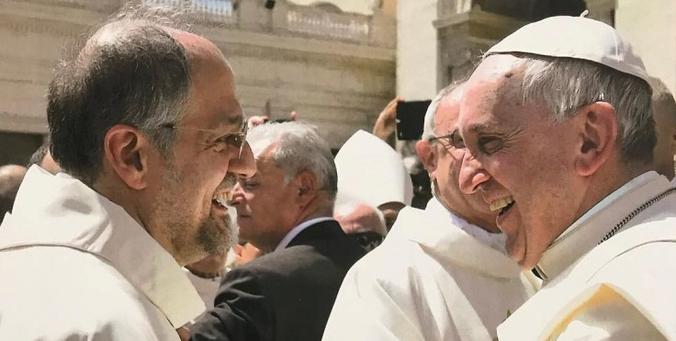
Featured image: Discalced Carmelite Superior General Saverio of the Sacred Heart Cannistrà, O.C.D. greets Pope Francis in St. Peter’s Square at the Mass for the canonization of St. Mary of Jesus Crucified Baouardy. Image credit: Discalced Carmelites

#archbishop #DiscalcedCarmelite #friar #nomination #SaverioCannistràOCD

Curia Generalizia dei Carmelitani Scalzi (@ocdcuria) on X

Annuncio dal Padre Generale.

X (formerly Twitter)

Blessed Marie-Eugene: Contemplation and Mission

Why are we in this world? The great reason is that God is love and that He has loved us. He created you out of love, He called you out of love, and this love remains alive. What He has loved, He still loves; what He has given, He will never take away. As St. Paul, who deeply understood God’s nature, reminds us: “The gifts of God are irrevocable” (Rom 11:29), and what He has begun, He will bring to completion!

God cannot let us go, He cannot abandon us, because He loves us. Our great hope is God; our great hope is eternity! He sees all things in truth and clarity, while we only see appearances. He sees us in our eternal reality. He longs to share His vision with us, to awaken our hope in this eternal reality.

Blessed Marie-Eugene of the Child Jesus

Homily, 1 December 1963 (excerpt)

Blessed Marie Eugene of the Child Jesus dedicated his life to helping souls discover and respond to God’s love. Born Henri Grialou in 1894 in Le Gua, France, he discerned his call to Carmel while still a seminarian but was delayed by military service during World War I.

Ordained in 1922 for the Diocese of Rodez, he soon followed his call to the Discalced Carmelites, taking the name Marie-Eugene of the Child Jesus. His life was marked by a deep trust in the Holy Spirit and an unwavering commitment to the teachings of St. Teresa of Avila and St. John of the Cross.

One of his greatest contributions was the foundation of the Secular Institute Notre Dame de Vie in 1932. He envisioned a path where secular laity and diocesan priests could integrate deep contemplative prayer with their daily lives in the world, living out Carmelite spirituality while remaining in their respective vocations.

As Vicar General of the Discalced Carmelites, he was also instrumental in restoring unity among the Discalced Carmelite nuns in France, fostering their collaboration and guiding them in implementing Pope Pius XII’s Sponsa Christi. His efforts laid the groundwork for the federations that continue to support Carmelite nuns today.

Discover more about Blessed Marie Eugene’s life and spiritual wisdom in our latest podcast episode, embedded below. Listen in as we reflect on his teachings and explore how his legacy continues to inspire us today.

https://youtu.be/pI4LVrSt5fM

Translation from the French text is the blogger’s own work product and may not be reproduced without permission.

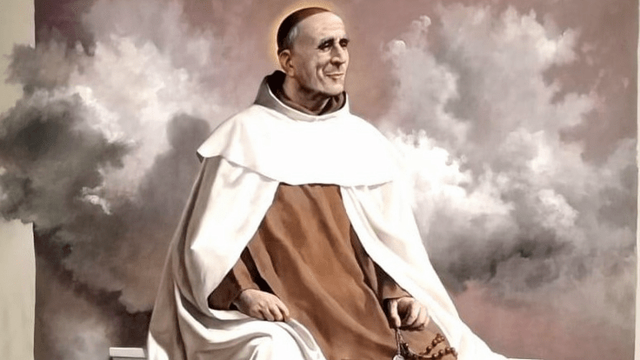
Featured image: Blessed Marie-Eugene of the Child Jesus is featured in this vault painting by Maltese artist Manuel Farrugia in the Church of St. Teresa, administered by the Discalced Carmelite friars in Cospicua, Malta. Image credit: Discalced Carmelites

#BlessedMarieEugeneOfTheChildJesus #DiscalcedCarmelites #eternity #founder #friar #God #hope #love #NotreDameDeVie #Podcast

Romans 11:29 - Bible Gateway

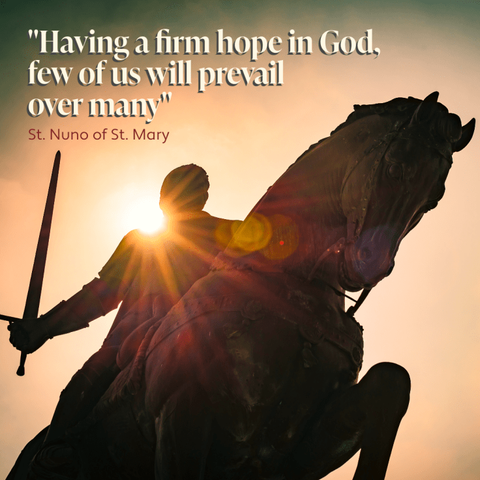
Do not fear because they are many, nor because of the threats they make with their gestures and clamor, for it is all just a bit of wind, which will soon pass.

Saint Nuno of Saint Mary

Saint Nuno of Saint Mary, once known as the renowned military leader Nuno Alvares Pereira, embraced a life of humility and service, leaving behind the glories of earthly renown. Celebrated for his courage and decisive role in securing Portugal’s independence, Saint Nuno ultimately heard a higher call. This post reflects on his journey from battlefield hero to Carmelite friar, exemplifying the transformative power of faith.

Born in 1360, Nuno Alvares Pereira became a pivotal figure in Portugal’s struggle to safeguard its independence from Castile. His leadership at the Battle of Aljubarrota in 1385 not only ensured Portugal’s freedom but also established his legacy as a noble and valiant defender of his homeland. Despite the wealth and titles bestowed upon him, Nuno’s heart remained anchored in faith, attuned to the true source of strength and peace.

In his later years, Nuno began to sense an invitation to a deeper communion with God—a call that beckoned him beyond the victories of the battlefield. At 63, he took the courageous step of renouncing his titles, distributing his wealth to those in need, and entering the Carmelite Order as Brother Nuno of Saint Mary. Within the silence and simplicity of the cloister, he found a lasting peace that transcended his worldly accomplishments, dedicating himself wholly to prayer, penance, and humble service.

Saint Nuno’s life is a profound testament to the Christian paradox: that true greatness is found not in power, but in surrender to God’s will. His journey from warrior to humble friar invites us to reflect on our own attachments and to seek the grace to respond freely to God’s call, wherever it may lead. Saint Nuno’s legacy endures as an example of how the heights of worldly glory pale in comparison to the life hidden in Christ.

Discover more about Saint Nuno in our latest podcast episode, Saint Nuno: Fabled Hero, Humble Friar. Join us as we reflect on the depths of humility and strength that define a life dedicated to God.

https://www.youtube.com/watch?v=uUcM5gBMWpU

https://carmelitequotes.blog/2024/11/06/s2-ep30-nuno/

#Carmelite #friar #heroic #humility #military #Podcast #Portugal #StNunoÁlvaresPereira #StNunoOfStMary

S2 Ep30 Saint Nuno: Fabled Hero, Humble Friar

YouTube