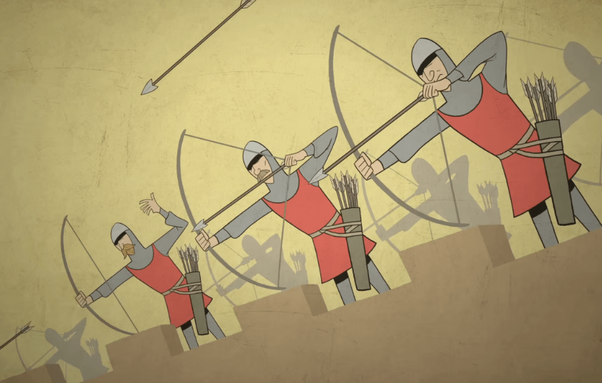
💁🏻‍♀️ ICYMI: 🏰🛡️ In 1315 #Scotland's King Robert the Bruce decided to lay siege to #England's Carlisle Castle but retreated after just 11 days.

The siege is a prime example of how #medieval European #castles could stand firm against enemy onslaughts with concentric walls, round flanking towers, and active gatehouse defenses.

👉 Learn more: https://seethis.tv/post/how-to-attack-and-defend-a-medieval-castle

#12thcentury #13thcentury #14thcentury #15thcentury #16thcentury #8thcentury #9thcentury #architecture #culture #defense #design #engineering #europe #government #history #money #politics #royalty #stone #tech #technology #tedEd #middleages #war #weapons #wood #tksst #video

💁🏻‍♀️ ICYMI: 🏰🛡️ In 1315 #Scotland's King Robert the Bruce decided to lay siege to #England's Carlisle Castle but retreated after just 11 days.

The siege is a prime example of how #medieval European #castles could stand firm against enemy onslaughts with concentric walls, round flanking towers, and active gatehouse defenses.

👉 Learn more: https://seethis.tv/post/how-to-attack-and-defend-a-medieval-castle

#12thcentury #13thcentury #14thcentury #15thcentury #16thcentury #8thcentury #9thcentury #architecture #culture #defense #design #engineering #europe #government #history #money #politics #royalty #stone #tech #technology #tedEd #middleages #war #weapons #wood #tksst #video

💁🏻‍♀️ NEW: 🏰🛡️ In 1315 #Scotland's King Robert the Bruce decided to lay siege to #England's Carlisle Castle but retreated after just 11 days.

The siege is a prime example of how #medieval European #castles could stand firm against enemy onslaughts with concentric walls, round flanking towers, and active gatehouse defenses.

👉 Learn more: https://seethis.tv/post/how-to-attack-and-defend-a-medieval-castle

#12thcentury #13thcentury #14thcentury #15thcentury #16thcentury #8thcentury #9thcentury #architecture #culture #defense #design #engineering #europe #government #history #money #politics #royalty #stone #tech #technology #tedEd #middleages #war #weapons #wood #tksst #video

Immaculate Conception

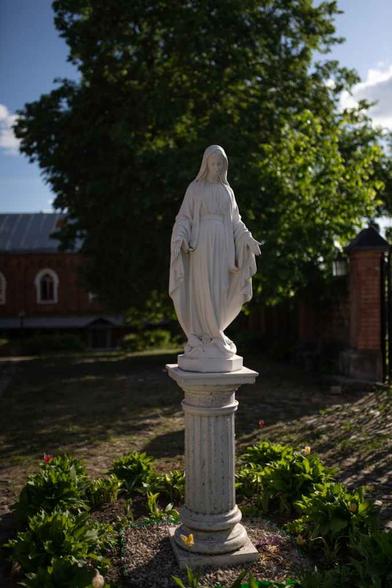
This is the doctrine that the Virgin Mary was/is free from original sin from the moment of her conception. It’s 1 of the 4 Marian dogmas of the Catholic Church. The feast day of the Immaculate Conception is December 8.

It wasn’t defined as a dogma until 1854, by Pope Pius IX in the papal bull Ineffabilis Deus. While the Immaculate Conception asserts Mary’s freedom from original sin, the Council of Trent (1545-1563) had previously affirmed her freedom from personal sin non-dogmatically.

Many Protestant churches reject this doctrine as unscriptural. Some Anglicans accept this as a pious devotion. The teaching of the Immaculate Conception among Oriental Orthodoxy varies. The Eritrean Orthodox Tewahedo Church & the Ethiopian Orthodox Tewahedo Church accept it.

Anne (who eventually becomes a saint), the mom of the Virgin Mary & Jesus’ maternal grandma, shows up for the 1st time in the 2nd-century apocryphal Gospel of James. Anne & her husband Joachim (who also became a saint) were infertile. But God heard their prayers. Mary was then conceived.

Within the Gospel of James, Mary’s conception happens without physical sexual intercourse between Anne & Joachim. This is to demonstrate Mary’s purity. The Eastern Orthodox Church believes that Mary was conceived by her parents like we all were.

Justin Martyr, Irenaeus, & Cyrus of Jerusalem came up with the idea of Mary as the new Eve. While yet immaculate & incorrupt, she wasn’t subject to original sin. Ephraim the Syrian said she was as innocent as Eve before the Fall.

Ambrose asserted Mary’s incorruptibility, attributing her virginity to grace & immunity from sin. Severus, the Bishop of Antioch, agreed to affirm Mary’s purity & immaculateness. John of Damascus extended the supernatural influence of God to Mary’s parents. This suggests they were purified by the Holy Spirit during her generation. According to John of Damascus, even the material of Mary’s origin was deemed pure & holy.

By the 4th century, the idea of Mary being free from sin was more widespread. But her being free from original sin, passed down from the OGs Adam & Eve, raised questions. The question became more acute when the feast of Mary’s conception brought the objection that, as adult spicy time is sinful, & to celebrate Mary’s conception was to celebrate a sinful act. (Let’s get 1 thing straight: God doesn’t make married adult spicy time between 2 consenting MARRIED adults a sin! He (God) in fact encourages a healthy marital sex life. “Be fruitful & multiply,” ring any bells! And how exactly do we multiply? This is the conclusion of our TED talk.)

The feast of Mary’s conception came from the Eastern Church in the 7th century. It reached England in the 11th century. From there, it spread out to Europe. It was given official approval in 1477 & extended to the whole church in 1693. The word “immaculate” wasn’t used until 1854.

This doctrine caused a “civil war” between the Franciscans & the Dominicans during the Middle Ages. The Franciscan “Scotists” were in favor & the Dominican “Thomists” against it.

The English ecclesiastic & scholar Eadmer (circa 1060-circa 1126) reasoned that Mary might have been conceived without original sin because of God’s omnipotence. It was also appropriate for her role as Mother of God. Potuit, decuit, fecit: “it was possible, it was fitting, therefore it was done.”

Others, like St. Bernard of Clairvaux (of the St. Bernard dog breed fame, 1090-1153) & Thomas Aquinas (1225-1274) objected because if Mary were free of original sin at her superfluous conception. Then she would have no need of redemption. Thus making Christ’s saving redemption unneeded.

In 1439, the Council of Basel, in schism with Pope Eugene IV (who lived at the Council of Florence), declared the Immaculate Conception a “pious opinion” consistent with faith & Scripture. The Council of Trent made no explicit declaration on the topic. But did exempt her from the universality of original sin.

They also affirmed that she remained free from all stains of sin during her life, even the venial ones. By 1571, the revised Roman Breviary set out an elaborate celebration of the Feast of the Immaculate Conception on December 8.

Some devotees go so far as to hold that Anne had conceived Mary just by kissing her husband. They also believe that (St.) Anne’s dad & grandma had likewise been conceived without spicy adult time. However, (St.) Bridget of Sweden (circa 1303-1373) told how Mary herself had revealed to her that Anne & Joachim conceived their daughter through a spicy adult time, which was sinless because it was pure & free of sexual lust.

In the 16th & 17th centuries, Spain exploded with Immaculatist devotion. This led the Habsburg monarchs to demand the Holy See elevate this belief to the status of dogma.

In France in 1830, Catherine Laboure (May 2, 1806-December 31, 1876) saw a vision of Mary standing on a globe while a voice commanded her to have a medal made in imitation of what she saw. The medal said, “O Mary, conceived without sin, pray for us who have recourse to thee,” which was a confirmation from Mary herself that she was conceived without sin. Laboure’s vision marked the beginning of a great 19th-century Marian revival.

In 1849, Pope Pius IX issued the encyclical Ubi primum, soliciting the bishops of the church for their views on whether the doctrine should be defined as dogma. 90% of those who responded were supportive. Although the Archbishop of Paris, Marie-Dominique-Auguste Sibour, warned that the Immaculate Conception “could be proved neither from the Scriptures nor from tradition.”

In 1854, the Immaculate Conception dogma was proclaimed with the bull Ineffabilis Deus. Ineffabilis Deus found the Immaculate Conception in the Ark of Salvation (Noah’s Ark), Jacob’s Ladder, the Burning Bush at Sinai, the Enclosed Garden from the Song of Song/Song of Solomon, & many more passages.

The pope’s advisors singled out 2 Bible passages: Genesis 3:15 – “I’ll put enmity between you & the woman.” This is a prophecy which reached fulfillment in the figure of the Woman in Revelation, crowned with stars & trampling the Dragon underfoot. Luke 1:28 – Specifically the phrase “full of grace” by which Gabriel greeted Mary was another reference to her Immaculate Conception: “she was never subject to the curse & was, together with her Son, the only partaker of perpetual benediction.”

Four years after the proclamation of the dogma, in 1858, the young Bernadette Soubirous (of the Lourdes grotto fame) said that Mary appeared to her at Lourdes in southern France, to announce that she was the Immaculate Conception. The Catholic Church later endorsed the apparition as authentic. There are other “approved” Marian apparitions in which Mary identified herself as the Immaculate Conception. For example, Our Lady of Gietrzwald in 1877, Poland.

The feast day of the Immaculate Conception is December 8. The Roman Missal (which contains texts & rubrics (a set of rules)) & the Roman Rite Liturgy of the Hours (a set of Catholic prayers) include references to Mary’s Immaculate Conception in the feast of the Immaculate Conception.

Its celebration seems to have begun in the Eastern church in the 7th century & may have spread to Ireland by the 8th century. The earliest well-attested record in the Western Church is from England early in the 11th century. It was suppressed there after the Norman Conquest (1066). The 1st thorough exposition of the doctrine was a response to this suppression. It continued to spread through the 15th century despite accusations of heresy from the Thomists & strong objections from several prominent theologians.

Beginning around 1140, St. Bernard of Clairvaux (Yes, like the dog breed. That’s where the dog breed got its name.), a Cistercian monk (This is a religious order of monks & nuns that branched off from the Benedictines.), wrote to Lyons Cathedral to express his surprise & dissatisfaction that it had recently begun to be observed there.

But in 1477, Pope Lixtus IV, who was a devoted Immaculist, put it on the Roman calendar via the papal bull called Cum praexcelsa. In 1481 & 1483, Pope Sixtus IV published 2 more bulls which prohibited anyone from preaching or teaching against the Immaculate Conception, or for either side to accuse the other of heresy, under threats of excommunication.

Pope Pius V kept the Feast on the Tridentine calendar. But suppressed the word “Immaculate.” Pope Gregory XV, in 1622, prohibited any public or private assertion that Mary was conceived in sin. In 1624, Pope Urban VIII allowed the Franciscans to establish a military order dedicated to the Virgin of the Immaculate Conception.

The Ethiopian Orthodox Tewahedo & Eritrean Orthodox Tewahed Churches believe in the Immaculate Conception of the Theotokos. The Ethiopian Orthodox Tewahedo Church celebrates the Feast of the Immaculate Conception on August 13 (Nehasie 7).

Eastern Orthodoxy does not exempt Mary from original sin. But they do affirm Mary’s purity & preservation from personal sin.

In the mid-1800s, some Catholics who were unable to accept the doctrine of papal infallibility left the Roman Church & formed the Old Catholic Church. They reject the Immaculate Conception.

Protestants overwhelmingly condemned the announcement of Ineffabilis Deus. Protestants teach that Mary was a sinner, saved through grace, like everyone else.

One-Time Monthly Yearly

Make a one-time donation

Make a monthly donation

Make a yearly donation

Choose an amount

$1.00 $5.00 $10.00 $1.00 $5.00 $10.00 $5.00 $10.00 $15.00

Or enter a custom amount.

$

Your contribution is appreciated.

Your contribution is appreciated.

Your contribution is appreciated.

Donate Donate monthly Donate yearly #1066 #1090 #1140 #1153 #11thCentury #1439 #1477 #1481 #1483 #1545 #1563 #1571 #15thCentury #1622 #1624 #16thCentury #17thCentury #1830 #1849 #1854 #1858 #19thCentury #2May1806 #2ndCentury #31December1876 #4thCentury #7thCentury #8thCentury #Adam #Ambrose #Anglicans #Apocryphal #ArchbishopOfParis #ArkOfSalvation #August13 #Benedictines #BernadetteSoubirous #BishopOfAntioch #BurningBush #CatherineLaboure #CatholicChurch #Circa1060 #Circa1126 #Circa1303 #Circa1373 #Cistercian #CouncilOfBasel #CouncilOfFlorence #CouncilOfTrent #CumPraexcelsa #CyrusOfJerusalem #December8 #Dogma #Dominicans #Dragon #Eadmer #EasternChurch #EasternOrthodoxChurch #EnclosedGarden #England #EphraimTheSyrian #EritreanOrthodoxTewahedoChurch #EthiopianOrthodoxTewahedo #EthiopianOrthodoxTewahedoChurch #Europe #Eve #Excommunication #FallOfMan #FeastDay #FeastOfTheImmaculateConception #France #Franciscans #Gabriel #Genesis315 #GospelOfJames #HapsburgMonarchs #HolySee #HolySpirit #ImmaculateConception #ImmaculateConceptionOfTheTheotokos #Immaculist #IneffabilisDeus #Ireland #Irenaeus #JacobSLadder #Jesus #JohnOfDamascus #JustinMartyr #Lourdes #LourdesGrotto #Luke128 #LyonsCathedral #MarianApparition #MarianDogmas #MarieDominiqueAugusteSibour #Medal #Mid1800s #MiddleAges #monk #MotherOfGod #Nehasie7 #NoahSArk #NormanConquest #OldCatholicChurch #OrientalOrthodoxChurch #OriginalSin #OurLadyOfGietrzwald #papalBull #PapalInfallibility #PersonalSin #Poland #PopeEugeneIV #PopeGregoryXV #PopePiusIX #PopePiusV #PopeSixtusIV #PopeUrbanVIII #Protestant #Revelation #RomanBreviary #RomanCalendar #RomanChurch #RomanMissal #RomanRiteLiturgy #RomanRiteLiturgyOfTheHours #Rubrics #Scotists #Severus #Sin #Sinai #SongOfSolomon #SongOfSongs #SouthernFrance #Spain #StAnne #StBernard #StBernardOfClairvaux #StBridgetOfSweden #StJoachim #Thomists #TridentineCalendar #UbiPrimum #VirginMary #VirginOfTheImmaculateConception

Tengrism

Also known as Tengriism, Tengerism, or Tengrianism.

This is a belief system that originated in the Eurasian steppes. It’s based on shamanism & animism. It usually involves the sky god, Tengri.

It was the predominant religion of the Gokturks, Xianbei, Bulgars, Xiongnu, Yeniseian, Mongolic peoples, & the Huns. It was the state religion of several medieval states, including the 1st Turkic Khaganate, the Western Turkic Khaganate, the Eastern Turkic Khaganate, Old Great Bulgaria, the 1st Bulgarian Empire, Volga Bulgaria, Khazaria, & the Mongol Empire.

In the Irk Bitig, a 9th-century manuscript on divination, Tengri is referred to as Turuk Tangrisi (“God of Turks”).

The forms of the name Tengri (Old Turkic: Tanri), among the ancient & modern Turkic & Mongolic, are: Tengeri, tanagra, Tangri, Tanri, Tangre, Tegri, Tingir, Tenkri, Tangra, Ter, & Ture.
The name “Tengri” (“the Sky”)is derived from Old Turkic: Tenk (“daybreak”) or Tan (“dawn”).

The name of the important deity Dangun (also Tangol, God of the Mountains) of the Korean folk religion is related to the Siberian Tengri (“Heaven”), while the bear is a symbol of the Big Dipper (Ursa Major).

It was originally polytheistic. But a monotheistic branch with the sky god Kok-Tengri as the supreme being evolved as a dynastic legitimation. Tengrism was a monotheistic religion only at the imperial level in aristocratic circles.

Tengri itself was never an Absolute. But only 1 of many gods of the upper world, the sky deity, of polytheistic shamanism, later known as Tengrism.

The 1st time the name Tengri was recorded in Chinese Chronicles was in the 4th century BC as the sky god of the Xiongnu.

Tengrism played a large part in the religion of the Mongol Empire as the primary state spirituality. Genghis Khan & several generations after him were Tengrian believers & “shaman-king(s)” until Genghis’ 5th-generation descendant, Ozbeg Khan, converted to Islam in the 14th century.

Tengrists view their existence as sustained by the eternal blue sky (Tengri), the fertile mother-earth spirit (Eje), & a ruler regarded as the chosen one by the holy spirit of the sky.

Heaven, earth, spirits of nature, & ancestors provide for every need & protect all humans. By living an upright, respectful life, a human will keep his world in balance & perfect his personal Wind Horse, or spirit.

The Huns of the northern Caucasus reportedly believed in 2 gods: Tangri Han (or Tengri Khan), considered identical to the Persian Esfandiyar & for whom horses were sacrificed, & Kuar (whose victims are struck by lightning).

Traditional Tengrism was more embraced by the nomadic Turks than by those residing in the lower mountains or forests. This belief influenced Turkic & Mongol religious history since ancient times until the 14th century, when the Golden Horde converted to Islam. The Golden Horde was a Mongol/Turkicized Khanate.

From then on, Tengrism was mostly submerged by other religious ideas. Traditional Tengrism persists among the Mongols & in some Turkic & Mongolic-influenced regions of Russia (Sakah, Buryatia, & Tuva), in parallel with other religions.

According to the Orkhon inscriptions, Tengri played a big role in the choices of the Khaghan & in guiding his actions. Many of these were performed because “Heaven so ordained.” The Orkhon inscriptions are bilingual texts in Middle Chinese & Old Turkic carved into 2 memorial steles erected in the 8th century by the Gokturks in modern-day Mongolia.

A revival of Tengrism has played a role in the search for native spiritual roots & a Pan-Turkish ideology since the 1990s. Especially in some autonomous republics of the Russian Federation (Tatarstan, Bashkortostan, Buryatia, Yakutia, etc.). As well as among the Crimean Karaites & Crimean Tatars.

In 2003, in Bishkek, Kyrgyzstan, Tengir Ordo held the 1st international scientific symposium on Tengrism. In 2005, the French Institute for Central Asia Studies organized a conference on Tengrism in Almaty, Kazakhstan. Since 2007, biennial scientific conferences on Tengrism have been held in Russia, Mongolia, & other countries.

The Tengrist cosmology proposes a division between the upper worlds (heaven), the Earth, & the world of darkness (underworld). These worlds are inhabited by different beings, often spirits or deities. A shaman (kam) can communicate with these spirits using mental powers. The worlds aren’t entirely separated, & they have a constant influence on the Earth.

In Turkic mythology within Siberian Asian religious systems, there is the “celestial world,” the ground to which “earth-water” (yer-su) belongs, & the “underworld,” ruled by spirits beneath the earth. They’re connected through the world tree in the center of the worlds.

The celestial & subterranean worlds are divided into 7 layers. Although there are variations, the underworld sometimes has 9 layers & the celestial world 17.

Shamans are able to find entries to travel into these realms. In the multiple realms, beings live just like humans on Earth. They also have their own respected souls & shamans & nature spirits. Sometimes, these beings visit the Earth but are invisible to people. They manifest themselves only in a strange sizzling fire or a bark to the shaman.

The heavens are inhabited by righteous souls, the Creator, & protector deities. The celestial world has many similarities with the Earth. But it’s undefiled by humans. It contains a pristine, untouched nature, & the natives have never deviated from the traditions of their ancestors.
This realm is much brighter than the Earth & is under the auspices of Ulgen, a son of Tengri. Shamans can also visit this world.

On some days, the doors of this heavenly world are opened, & the light shines through the clouds. During this moment, the prayers of the shamans are most influential. A shaman performs his imaginary journey, which takes him to the heavens, by riding a black bird, a deer, or a horse, or by changing into the shape of these animals. Otherwise, he may scale the world tree or cross a rainbow.

The underworld is the home of wicked souls, devils, & evil deities. There are many similarities between the Earth & the underworld, & its inhabitants resemble humans. Though they’ve only 2 souls instead of 3. They lack the “Ami soul,” which produces body temperature & allows breathing. Therefore, they’re pale, & their blood is dark. The sun & the moon of the underworld give far less light than the sun & the moon of the Earth. There are also forests, rivers, & settlements underground.

Erlik Khan (In Mongolian: Erleg Khan), 1 of the sons of Tengri, is the ruler of the underworld. He controls the souls there. Some of them are waiting to be reborn. Extremely evil souls are believed to be extinguished forever here. If a sick human isn’t dead yet, a shaman can move to the underworld to negotiate with Erlik to bring the person back to life. If the shaman fails, the person dies.

It’s believed that people & animals have many souls. Generally, each person is considered to have 3 souls. But the names, characteristics, & numbers of the souls may differ among tribes.
Humans are the product of (father) Heaven & (mother) Earth. Tangrism sanctifies human relationships with nature & their relationship with the sky. Tengrism doesn’t place humans above nature. Rather, it considers mankind as part of nature, without any rank assigned by God.

Make a one-time donation

Your contribution is appreciated.

Donate

Make a monthly donation

Your contribution is appreciated.

Donate monthly

Make a yearly donation

Your contribution is appreciated.

Donate yearly #14thCentury #1990s #2003 #2007 #4thCenturyBC #8thCentury #9thCentury #Almaty #AmiSoul #Asia #Bashkortostan #BigDipper #Bishkek #Bulgars #Buryatia #CrimeanKaraites #CrimeanTatars #Dangun #EasternTurkicKhaganate #Eje #ErlegKhan #ErlikKhan #Esfandiyar #EurasianSteppes #FirstBulgarianEmpire #FrenchInstituteForCentralAsiaStudies #GenghisKhan #Gokturks #GoldenHorde #Huns #IrkBitig #Islam #Kam #Kazakhstan #Khazaria #KokTengri #Korea #Kuar #Kyrgyzstan #MiddleChinese #MongolEmpire #Mongolia #MongolicPeoples #monotheistic #NomadicTurks #NorthernCaucasus #OldGreatBulgaria #OldTurkic #OrkhonInscriptions #OzbegKhan #PanTurkish #Persia #polytheistic #Russia #RussianFederation #Sakha #ShamanKings #Siberia #SkyGod #Steles #Tangol #TangriHan #Tanri #Tatarstan #Tengerism #TengirOrdo #Tengri #TengriKhan #Tengrianism #Tengriism #Tengrism #Tenk #TurkicKhagnate #TurukTangrisi #Tuva #Ulgen #Underworld #UrsaMajor #VolgaBulgaria #WesternTurkicKhaganate #WindHorse #Xianbei #Xiongnu #Yakutia #Yeniseian #YerSu

Balinese Hinduism

Officially known as Agama Hindu Dharma. Balinese Hinduism is a deeply localized blend of Shaivite Hinduism, Buddhism, & indigenous Austronesian animism.

This is practiced by the majority of the population of Bali. This is particularly associated with the Balinese people residing on the island. It represents a distinct form of Hindu worship incorporating local animism, ancestor worship (Pirtu Paksha), & reverence for Buddhist saints (Bodhisattava).

Hindu influences reached the Indonesian Archipelago as early as the 1st century CE. Java legends refer to Saka-era, traced to 78 CE. Stories from the Mahabharata have been traced in Indonesian islands to the 1st century. This version mirrors those found in Tamil Nadu.

Ancient Chinese records of Fa Hien on his return voyage from Ceylon to China in 414 CE mentioned 2 schools of Hinduism in Java. while Chinese documents from the 8th century refer to the Hindu kingdom of King Sanjaya as Holing, calling it “exceedingly wealthy,” & say that it coexisted peacefully with the Buddhist people & Sailendra ruler in the Kedu Plain of the Java island.

Upon independence from Dutch colonial rule, Article 29 of the 1945 Constitution of Indonesia guaranteed freedom of religion to all its citizens. In 1952, the Indonesian Ministry of Religion came under the control of Islamists who severely constrained the acceptable definition of a “religion.” To be acceptable as an official Indonesian religion, the ministry defined “religion” as 1 that’s monotheistic, has codified religious law, possesses a prophet & a Holy Book, among other requirements.

Balinese Hindus were declared as “people without religion,” & available to be converted. Balinese Hinduism disagreed, debated, adapted, & declared their form of Hinduism to be monotheistic, & presented it in a form to be eligible for the status of “agama” under the 1952 amended articles.

The central pillar of Balinese life is the philosophy of Tri Hita Karana. This dictates that prosperity & harmony can only be achieved through 3 specific relationship:

  • Parhyangan:
    • Harmony between humans & the Divine
  • Pawongan:
    • Harmony between humans & fellow humans
  • Palemahan:
    • Harmony between humans & nature

This governs the island’s physical layout. Every village, home, & rice filled is organized according to a sacred axis between the mountains (the realm of the gods) & the sea (the realm of spirits).

Balinese Hinduism is an amalgamation of Hinduism with elements from Buddhism & the indigenous customs that imbued in the Indonesian archipelago before Hinduism’s arrival.

It combines many of the core beliefs of Hinduism with the arts & rituals of the Balinese people. In modern times, Hinduism in Bali is officially referred to by the Indonesian Ministry of Religion as: Agama Hindu Dharma. But the religion was called by many names: Tirta, Trimurti, Hindu, Agama Tirta, Siwa, Buda, & Siwa-Buda.

A major distinction in Balinese Hinduism in the spotlight on Acintya (a.k.a. Sang Hyang Widhi Wasa). While Hinduism based in India has a vast pantheon, the Balinese system was codified in the 20th century to emphasize a monotheistic foundation to align with Indonesia’s state philosophy (Pancasila).

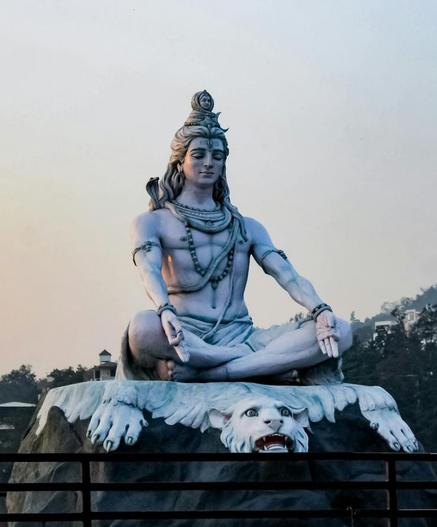
A belief that all of the gods are manifestations of this supreme being. This belief is the same as the belief of Smartism. This also holds that the different forms of gods & goddesses (Vishnu, Siva, Shakti (Devi)) are different aspects of the same Supreme Being. Shiva is also worshipped in other forms such a as “Batara Guru” & “Maharaja Dewa” (Mahadeva).

Acintya represents the “Unthinkable” or the “Void.” All other deities (including the Trimurti) are viewed as manifestations of this single, supreme entity. In Balinese temples, you’ll see an empty stone called the Padmasana, which is dedicated specifically to Acintya.

Balinese Hinduism includes the Indian Trinity called Trimurti. In Balinese Hindu texts, the alternate tripartite concept of Shiva of Indian Shaivism is also found. This is usually referred to in Balinese as “Siwa-Sadasiwa-Paramasiwa,” where Shiva is the creator, the maintainer, & the destroyer of cyclic existence.

Along with the traditional Hindu Trinity, Balinese Hindus worship a range of gods & goddesses (Hyang, Dewata, & Batara-Batari). As well as others that are unique & not found in Indian Hinduism. Sang Hyang Widhi (literally meaning “Divine Order”), a.k.a. Acintya or Sang Hyang Tunggal (“Divine Oneness”), is the concept parallels the metaphysical concept of Brahman among Indian Hindus.

To understand Balinese Hinduism, 1 must look at the figure who shaped its modern form: the 16th century Javanese priest Dang Hyang Nirartha. As the Majapahit Empire in Java collapsed under the rise of Islamic sultanates, Nirartha fled to Bali.

He didn’t just bring Javanese Hinduism. He refined it. He established the Padmasana architecture & the priesthood system that existed today. He’s credited with founding many of Bali’s iconic “Sea Temples,” (Including Uluwatu & Tanah Lot) strategically placed to create a spiritual “chain” of protection around the island.

There are a total of 13 ceremonies concerned with life from conception until, but not including death, each of which has 4 elements: placation of evil spirits, purification with holy water, wafting of the essence, & prayer. These ceremonies mark major events in a person’s life, including birth, puberty, grain feeding, & marriage.

A newborn baby is believed to represent the soul of an ancestor & is regarded as a god for the 1st 42 days of life. The mom, however, is regarded as impure & isn’t allowed to participate in any religious activities during this period. A baby can’t touch the “impure” ground until its 105 days old, which is half-way to the celebration of its 1st birthday, according to the 210-day Balinese Pawukon calendar.

Once it reaches its 1st birthday, the family will celebrate the Otonan birthday ceremony. Once the kid reaches puberty, the 6 upper canine teeth are filed until they’re even.

Religious life in Bali is defined by Rua Bineda, the idea of “Two Opposites.” It’s the belief that the world exists in a state of equilibrium between opposing forces: good/evil, joy/sorrow, clean/unclean.

The Balinese seek balance. That’s why you see:

  • The Barong & Rangda:
    • A ritual dance-drama showing the battle between the Barone (a lion-like creature representing health/good) & Rangda (the demon queen). The battle never truly ends, an eternal stalemate.
  • Canang Sari:
    • The ubiquitous daily offerings of flowers, rice, & incense placed on the ground & on shrines. These are meant to appease both the gods & lower spirits to maintain the cosmic balance.

The Saka is a solar calendar from India. This calendar determines Nyepi, the “Day of Silence.” On Nyepi, the entire island (including the airport) shuts down. No lights, no work, no travel, & no sound is permitted. This is to trick passing demons into thinking the island is uninhabited.

The most important ceremonies happen after death & result in the soul being freed to be eventually reincarnated. The physical body isn’t the focus. It’s seen as a temporary container of the soul & fit only for expedient disposal. In fact, the body must be cremated/burned before the soul can leave the body completely.

The cremation ceremony can be VERY expensive because an elaborate ceremony is a way of showing respect for a soul destined to become a god with considerable powers over those left behind. So sometimes the deceased’s body is buried, temporarily, until the family can get together enough $$$ for the cremation ceremony. However, the bodies of priests, or high-class, families are preserved above ground (Think like in New Orleans.).

Balinese Hindus, under no circumstances, may eat the flesh of people, cats, monkeys, dogs, crocodiles, mouse(s), snakes, frogs, certain poisonous fish, leeches, stinging insects, crows, eagles, owls, or any other bird of prey.

Chicken, fruits, veggies, & seafood are widely eaten. Hindus, especially those of varna (caste) of Brahmin & Kshatriya, are forbidden to eat/consume, or even touch, beef. Rarely pork is touched. Also, they mustn’t eat on the street, drink alcohol, or taste offerings of such items.

One-Time Monthly Yearly

Make a one-time donation

Make a monthly donation

Make a yearly donation

Choose an amount

$1.00 $5.00 $10.00 $1.00 $1.00 $10.00 $5.00 $10.00 $15.00

Or enter a custom amount

$

Your contribution is appreciated.

Your contribution is appreciated.

Your contribution is appreciated.

DonateDonate monthlyDonate yearly

#1945 #1952 #1stCentury #20thCentury #414CE #78CE #8thCentury #Acintya #Agama #AgamaHinduDharma #AgamaTirta #AncestorWorship #Animism #AustronesianAnimism #Bali #BalineseHinduism #Barong #BataraGuru #BataraBatari #Bodhisattava #Brahman #Brahmin #Buda #Buddhism #CanangSari #Caste #Ceylon #China #ConstitutionOfIndonesia #Cremation #DangHyangNirartha #Dewata #DietaryRestrictions #Dutch #FaHien #Hindu #HinduTrinity #Hinduism #Holing #India #IndianHinduism #IndianShaivism #IndonesianArchipelago #IndonesianIslands #IndonesianMinsitryOfReligion #IslamicSultanates #Java #JavaneseHinduism #KeduPlain #KingSanjaya #Kshatriya #Mahabharata #Mahadeva #MaharajaDewa #MajapahitEmpire #monotheistic #NewOrleans #Nirartha #Nyepi #OtonanBirthdayCeremony #Padmasana #Palemahan #Pancasila #Parhyangan #Pawongan #PawukonCalendar #PitruPaksha #Rangda #Reincarnation #RuaBineda #Sailendra #Saka #SakaEra #SangHyangTunggal #SangHyangWidhi #SeaTemples #ShaiviteHinduism #ShaktiDevi #Siva #SiwaBuda #SiwaSadasiwaParamasiwa #Smartism #SolarCalendar #TamilNadu #TanahLot #Tirta #TriHitaKarana #Trimurti #Uluwatu #Varna #Vishnu

St. Anne

According to Christian tradition, St. Anne was the mom of the Virgin Mary, wife of St. Joachim, & was Jesus’ maternal grandma.

Her name isn’t in the Bible’s canonical Gospels. In writing, Anne’s name, & Joachim’s come from New Testament apocrypha. The Gospel of Thomas (written circa 150 AD) seems to be the earliest that mentions them. She’s mentioned in the Quran, but not by name.

The Immaculate Conception was eventually made dogma by the Catholic Church following an increased devotion to Anne in the 12th century. In Eastern Christianity dedications start as early as 6th century.

In the Eastern Orthodox tradition, Anne & Joachim are attributed to the title Ancestor of God. Both the Nativity of Mary & the Presentation of Mary are celebrated as 2 of the 12 Great Feasts of the Orthodox Church.

The Dormition of Anne is also a minor feast in Eastern Christianity. In Lutheranism, it’s believed that Martin Luther chose to enter religious life as an Augustinian friar after invoking St. Anne was jeopardized by lightning.

In the 4th century, & in the 15th century, a belief arose that Mary was conceived of Anne without original sin. The Immaculate Conception is often confused with the Annunciation of the Incarnation (Mary’s virgin birth of Jesus). The 13th century Speculum Maius includes information regarding the life of St. Anne.

In the Eastern church, the veneration of Anne herself may go back as far as circa 550, when Justinian built a church in Constantinople in her honor. The earliest pictorial sign of her veneration in the West in an 8th century fresco in the church of Santa Maria Antique, Rome.

The Feast of the Conception of the Virgin Mary had reached southern Italy by the 9th century. In the Latin Church, St. Anne wasn’t venerated. Except, perhaps, in the south of France, before the 13th century. A shrine at Douai (in northern France) was 1 of the early centers of devotion to St. Anne in the West.

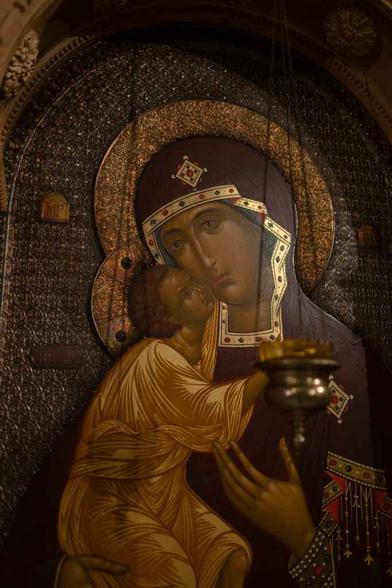
The Anna Selbdritt was a type of iconography showing 3 generations of the “Holy Family,” St. Anne, the Virgin Mary, & Jesus (grandma, mom, son). This style of iconography emphasized the humanity of Jesus. It drew on the earlier conventions of the Seat of Wisdom. (The Seat of Wisdom is/are icons/sculptures that shows the Virgin Mary is seated on a throne with Jesus, as a kid, on her lap.) This was popular in northern Germany in the 1500s.

Two well-known shrines to St. Anne is that of Ste-Anne-d’Auray in Brittany (France) & that of Ste.-Anne-de-Beaupre near the city of Quebec. The number of pilgrims to the Basilica of Ste.-Anne-de-Beaupre is the greatest of St. Anne’s Feast Day (July 26), & the Sunday before the Nativity of the Virgin Mary (September 8). In 1892, Pope Leo XIII sent a relic of St. Anne to the church.

By the middle of the 7th century, a distinct feast day, the Conception of St. Anne (Maternity of Holy Anne) celebrating Mary by St. Anne, was observed at the Monastery of St. Sabas.

It’s now known in the Greek Orthodox Church as the feast of “The Conception by St. Anne of the Most Holy Theotokos.” It’s celebrated on December 9th. In the Catholic Church, the Feast of Saints Anne & Joachim is celebrated on July 26. The alleged relics of St. Anne was brought from the Holy Land to Constantinople in 710 & was kept there in the church of St. Sophia as late as 1333.

During the 12th & 13th centuries, returning crusaders & pilgrims from the East brought St. Anne’s relics to some churches, including most famously those at Apt, in Provence, Ghent, & Chartres. St. Anne’s relics have been preserved & venerated in the many cathedrals & monasteries dedicated to her name.

For example, in Austria, Canada, Germany, Italy, & Greece in the semi-autonomous Mount Athos, & the city of Katerini. Duren has been the main place of pilgrimage for Anne since 1506, when Pope Julius II decreed that her relics should be kept there, after they were stolen from the church of St. Stephen in Mainz.

The Church of St. Anne in Beit Guvrin National Park was built by the Byzantines & the crusaders in the 12th century. This is known in Arabic as Khirbet Sandahanna, the mound of Maresha being called Tell Sandahanna.

St. Anne is the patroness of unmarried women, housewives, women in labor or who want to be pregnant, grandmothers, moms, & educators. She’s also a patroness of horseback riders, cabinet-makers, & miners.

As the mom of Mary, this devotion to St. Anne as the patron of miners arises from the medieval comparison between Mary & Jesus & the precious metals: gold & silver. Anne’s womb was considered the source from which these precious metals were mined.

St. Anne is the patron saint of Brittany (France); Cuenca (Ecuador); Chinandega (Nicaragua); the Mi’kmaq people of Canada; Castelbuono (Sicily); Quebec (Canada); Santa Ana (California); Norwich (Connecticut); Detroit (Michigan); Adjunta (Puerto Rico); Santa Ana & Jucuaran (El Salvador); Berlin (New Hampshire); Santa Ana Pueblo, Seama, & Taos (New Mexico); Chiclana de la Frontera, Marsaskala, Tuadela, Atarfe & Fasnia (Spain); Town of Sta Ana Province of Pampanga, Molo, Iloilo City, Balasan; Iloilo, Hagnoy, Santa Ana, Taguig City, St. Anne Shrine, Malicboy, Pagbilao, Quezon, & Malinao, Albay (Philippines); Santana (Brazil); St. Anne (Illinois); Sainte Anne Island; Baie Sainte Anne & Praslin Island (Seychelles); Bukit Mertajam & Port Klang (Malaysia); Kl’ucove (Slovakia) & South Vietnam.

The parish church of Vatican City is Sant’ Anna dei Palafrenieri. There’s a shrine dedicated to St. Anne in the Woods in Bristol, United Kingdom.

Anne is also revered in Islam, recognized as a highly spiritual woman & as the mom of Mary. She’s not named in the Quran. She’s called “the wife of Imran.” The Quran describes her remaining childless until old age. One day, Anne saw a bird feeding its young while sitting in the shade of a tree, which awakened her desire to have kids of her own.

She prayed for a kid & eventually conceived. Imran, her husband, died before the kid was born. Anne expected the unborn kid to be a boy, so she vowed to dedicate “him” to isolation & service in the Second Temple.

Anne had a daughter (Mary) instead. Anne named her: Mary. Anne’s words upon delivering Mary reflect as a great mystic, realizing that while she’d had wanted a son, this daughter was God’s gift to her.

Make a one-time donation

Your contribution is appreciated.

Donate

Make a monthly donation

Your contribution is appreciated.

Donate monthly

Make a yearly donation

Your contribution is appreciated.

Donate yearly

#12thCentury #12thCenturyAD #13thCentury #1500s #1506 #15thCentury #1892 #4thCentury #710 #7thCentury #8thCentury #9thCentury #Adjunta #Albay #AncestorsOfGod #AnnaSelbdritt #AnnunciationOfTheIncarnation #Apocrypha #Apt #Arabic #Atarfe #Augustinian #Austria #BaieSainteAnne #Balasan #BasilicaOfSteAnneDeBeaupre #BeitGuvrinNationalPark #Berlin #bible #Brazil #Bristol #Brittany #BukitMertajam #Byzantines #California #Canada #Castelbuono #CatholicChurch #Chartres #Chiclana #ChiclanaDeLaFrontera #Chinandega #Christianity #Circa150AD #Circa550 #ConceptionOfStAnne #Connecticut #Constantinople #Crusaders #Cuenca #December9 #Detroit #DormitionOfAnne #Douai #Duren #EasternChristianity #Ecuador #ElSalvador #Fasnia #FeastOfSaintsAnneJoachim #FeastOfTheConceptionOfTheVirginMary #France #Germany #GospelOfThomas #GreatFeastsOfTheOrthodoxChurch #Greece #GreekOrthodoxChurch #Hagnoy #HolyFamily #HolyLand #Iloilo #IloiloCity #ImmaculateConception #Imran #Islam #Italy #Jesus #Jucuaran #July26 #Justinian #KhirbetSandahanna #KlUcove #LatinChurch #Lutheranism #Mainz #Malaysia #Malicboy #Malinao #Maresha #MartinLuther #MaternityOfHolyAnne #MiKmaqPeople #MonasteryOfStSabas #MountAthos #NativityOfMary #NativityOfTheVirginMary #NewHampshire #NewMexico #NewTestament #Nicaragua #NorthernFrance #Pagbilao #Philippines #PopeJuliusII #PopeLeoXIII #PortKlang #PraslinIsland #PresentationOfMary #Provence #PuertoRico #Quebec #Quran #Rome #SainteAnneIsland #SantAnnaDeiPalafrenieri #SantaAna #SantaAnaPueblo #SantaMariaAntique #SeatOfWisdom #September8 #Sicily #Slovakia #SouthVietnam #SouthernItaly #Spain #SpeculumMaius #StAnne #StAnneInTheWoods #StAnneShrine #StAnneSFeastDay #StJoachim #StSophia #StStephen #SteAnneDAuray #SteAnneDeBeaupre #TaguigCity #Taos #TellSandahanna #TheChurchOfStAnne #TheConceptionByStAnneOfTheMostHolyTheotokos #TownOfStaAnaProvinceOfPampanga #Tudela #UnitedKingdom #VaticanCity #VirginMary

Mariology

This is the Christian theological study of the Virgin Mary, mother of Jesus. Mariology looks to relate doctrine/dogma about Mary to other doctrine of the faith, like those concerning Jesus & notions about redemption, intercession, & grace.

Christian Mariology looks to place the role of the historic Mary in the context of Scripture, tradition, & the teachings of the Church of Mary. In terms of social history, Mariology may be broadly defined as the study of devotion to & thinking about Mary throughout the history of Christianity.

There’s a variety of Christian, & non-Christian, views on Mary as a figure ranging from the focus on the veneration of Mary in Roman Catholic Mariology to criticism of “mariolatry” as a form of idolatry.

As a field of theology, the most substantial developments in Mariology, & the founding of specific centers devoted to its study. In recent centuries, it’s taken place within the Roman Catholic Mariology.

The Eastern Orthodox ideas, & veneration, of Mary are integral to the rite as a whole (theotokos). They’re mostly expressed in liturgy. The veneration of Mary is said to permeate, in a way, the entire life of the Church as a “dimension” of dogma, as well as piety, of Christology as well as of Ecclesiology.

While similar to the Roman Catholic view, barring some minor differences, the Orthodox don’t see a need for a separate academic discipline of Mariology, as the Mother of God is seen as the self-evident apogee of God’s human creation. Apogee is the highest point in the development of something.

A significant number of Marian publications were written in the 20th century. Theologians Raimondo Spiazzi & Gabriel Roschini produced 2,500 & 900 publications respectively.

Over the centuries, Roman Catholic Mariology has been shaped by various forces ranging from sensus fidelium to Marian apparitions to the writing of saints to reflection by theologians & papal encyclicals. Encyclicals are papal letters sent to all bishops of the Roman Catholic Church.

Eastern Orthodox theology calls Mary “the Theotokos” or the God bearer. The virginal motherhood of Mary is at the center of Orthodox Mariology. The title of Ever Virgin is/was given to Mary. The Orthodox Mariology approach emphasizes the sublime holiness of Mary, her share in redemption, & her role as a mediator of grace.

Eastern Orthodox mariological thought goes back as far as St. John Damascene, who in the 8th century, wrote on the mediative role of Mary & one the Dormition of the Mother of God. Dormition is from the Latin “dormine” meaning to sleep. This is in reference to the death & subsequent assumption into Heaven to Mary, the mother of Jesus, in Eastern Christianity & some other churches.

In the 14th century, Orthodox Mariology began to flourish among Byzantine theologians who held a cosmic view of Mariology. This puts Jesus & Mary together at the center of the cosmos & saw them as the goal of world history.

More recently, the Eastern Orthodox Mariology achieved a renewal among 20th century theologians in Russia. Mary is the heart of the Church & the center of creation. Unlike the Catholic approach, Eastern Orthodox Mariology doesn’t support the Immaculate Conception Mary. Before the 20th century, Eastern Orthodox Mariology was almost entirely liturgical. It didn’t have any systematic presentation similar to Roman Catholic Mariology.

Protestant views on Mary differ between different denominations. Focus is generally on interpretations of Mary in the Bible, the Apostles’ Creed (which professes the Virgin Birth), & the Ecumenical Council of Ephesus in 431, which called Mary the Mother of God. Some early Protestants created Marian art & allowed limited forms of Marian veneration. Most Protestants today don’t share the veneration of Mary as practiced by Roman Catholics & Eastern Orthodox. Martin Luther, John Calvin, & Karl Barth’s views on Mary, & others have contributed to modern Protestant views.

Anglican Marian theology varies greatly from the Anglo-Catholic, which are very close to Roman Catholic views. The Anglican Church formally celebrates 6 Marian feast days: the Annunciation (March 25), Visitation (May 31), Day of Mary/Assumption or dormition (August 15), Nativity of Mary (September 8), Our Lady of Walsingham (October 15), & Mary’s Conception (December 8). Anglicans, with some other Protestants, teach the Marian dogmas of divine maternity & the virgin birth of Jesus. Even though there’s no systematic agreed upon Mariology among diverse parts of the Anglican Communion. The role of Mary as a mediator is accepted by some groups of modern Anglican theology.

Lutheran Mariology is informed by the Augsburg Confession & honors Mary as “the most blessed Mother of God, the most blessed Virgin Mary, & the Mother of Christ.” The Lutheran Churches, asserts the doctrine of the perpetual virginity of Mary.

The Oriental Orthodox Churches regard Mary as the highest of saints & the Theotokos. They also celebrated a variety of Marian feast days.

In the Islamic perception of the Virgin Mary (known as Maryam in Arabic), she’s an extremely pious & chaste woman who miraculously gave birth, while still a virgin, to the prophet Jesus (called Isa in Arabic). Mary is the only woman named specifically in the Quran. The 19th chapter of the Quran, which is named after her, begins with 2 narrations of a “miraculous birth.”

The First Council of Ephesus, in 431, formally approved devotion to Mary as the Theotokos. Its use implies that Jesus, whom Mary gave birth to, is God. Nestorians preferred Christotokos, meaning “Christ-bearer” or “Mother of the Messiah”, not because they denied Jesus’ divinity. But because they believed that since God the Son, or Logos, existed before time & before Mary. Jesus took divinity from God the Father & humanity from His mom. So calling her “Mother of God” was confusing & perhaps heretical. Others at the council believed that denying the Theotokos title would carry with it the implication that Jesus wasn’t divine.

The Council of Ephesus also approved the creation of icons having the images of the Virgin & child. Devotion to Mary was already widespread before this point. This is reflected in the fresco depictions of Mother & child win the Roman catacombs.

Mary, as the 1st Christian saint & Mother of Jesus, was deemed to be a compassionate mediator between suffering mankind & her son, Jesus, who’s seen as a king & judge.

In the East, devotion to Mary blossomed in the 6th century under official patronage & imperial promotion of the Court of Constantinople. The popularity of Mary as an individual object of devotion only became in the 5th century with the appearance of apocryphal versions of her life, interest in her relics, & the 1st churches dedicated in her name. Like St. Maria Maggiore in Rome.

Since the writing of the apocryphal Protoevangelium of James, various beliefs have circulated concerning Mary’s own conception. This led, eventually, to the Roman Catholic Church dogma. It was formally established in the 19th century of Mary’s Immaculate Conception. This exempts her from original sin. This story goes: When Mary’s mom got pregnant with her, it was an Immaculate Conception. So when Mary was born, she was free from original sin. After Mary was born, she was sent to the Temple to live, so she wouldn’t get corrupted by the world. So Mary could be pure to have Jesus.

Roman Catholic & Eastern Orthodox teaching also extends to the end of Mary’s life ending with the Assumption of Mary. This was formally established as dogma in 1950 & the Dormition of the Mother of God respectively.

One-Time Monthly Yearly

Make a one-time donation

Make a monthly donation

Make a yearly donation

Choose an amount

$1.00 $5.00 $10.00 $1.00 $5.00 $10.00 $5.00 $10.00 $15.00

Or enter a custom amount

$

Your contribution is appreciated.

Your contribution is appreciated.

Your contribution is appreciated.

DonateDonate monthlyDonate yearly

#19thCentury #20thCentury #431 #5thCentury #6thCentury #8thCentury #Anglican #AnglicanCommunion #Apocryphal #Apogee #ApostlesCreed #Arabic #Assumption #AssumptionOfMary #AugsburgConfession #August15 #bible #Bishops #Byzantine #ChristBearer #Christian #Christianity #Christotokos #Churches #CourtOfConstantinople #December8 #Dogma #Dormition #EasternOrthodox #Ecclesiology #EcumenicalCouncilOfEphesus #Encyclical #EverVirgin #FirstCouncilOfEphesus #GabrielRoschini #GodBearer #Idolatry #ImmaculateConception #Isa #Islam #Jesus #JohnCalvin #KarlBarth #King #Liturgy #Logos #Lutheran #March25 #Mariology #MartinLuther #MarySImmaculateConception #Maryam #May31 #MotherOfGod #MotherOfTheMessiah #Nativity #Nestorians #October15 #OrientalOrthodoxChurch #OriginalSin #Papal #PerpetualVirginityOfMary #Prophet #Protestant #Quran #RaimondoSpiazzi #relics #RomanCatholicChurch #Rome #Russia #Saint #Saints #SensusFidelium #September8 #StJohnDamascene #TheAnnunciation #TheProtoevangeliumOfJames #Theolgians #Theotokos #Veneration #VirginBirth #VirginMary #Walsingham