 Spirituality & Religious Studies
Immaculate Conception
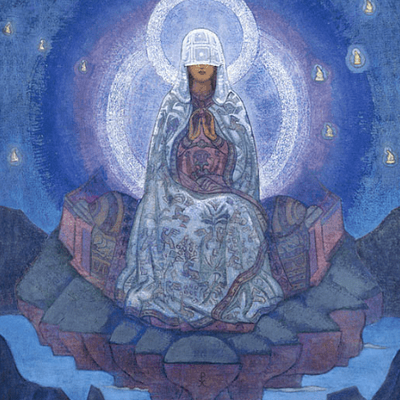
This is the doctrine that the Virgin Mary was/is free from original sin from the moment of her conception. It’s 1 of the 4 Marian dogmas of the Catholic Church. The feast day of the Immaculate Conception is December 8.
It wasn’t defined as a dogma until 1854, by Pope Pius IX in the papal bull Ineffabilis Deus. While the Immaculate Conception asserts Mary’s freedom from original sin, the Council of Trent (1545-1563) had previously affirmed her freedom from personal sin non-dogmatically.
Many Protestant churches reject this doctrine as unscriptural. Some Anglicans accept this as a pious devotion. The teaching of the Immaculate Conception among Oriental Orthodoxy varies. The Eritrean Orthodox Tewahedo Church & the Ethiopian Orthodox Tewahedo Church accept it.
Anne (who eventually becomes a saint), the mom of the Virgin Mary & Jesus’ maternal grandma, shows up for the 1st time in the 2nd-century apocryphal Gospel of James. Anne & her husband Joachim (who also became a saint) were infertile. But God heard their prayers. Mary was then conceived.
Within the Gospel of James, Mary’s conception happens without physical sexual intercourse between Anne & Joachim. This is to demonstrate Mary’s purity. The Eastern Orthodox Church believes that Mary was conceived by her parents like we all were.
Justin Martyr, Irenaeus, & Cyrus of Jerusalem came up with the idea of Mary as the new Eve. While yet immaculate & incorrupt, she wasn’t subject to original sin. Ephraim the Syrian said she was as innocent as Eve before the Fall.
Ambrose asserted Mary’s incorruptibility, attributing her virginity to grace & immunity from sin. Severus, the Bishop of Antioch, agreed to affirm Mary’s purity & immaculateness. John of Damascus extended the supernatural influence of God to Mary’s parents. This suggests they were purified by the Holy Spirit during her generation. According to John of Damascus, even the material of Mary’s origin was deemed pure & holy.
By the 4th century, the idea of Mary being free from sin was more widespread. But her being free from original sin, passed down from the OGs Adam & Eve, raised questions. The question became more acute when the feast of Mary’s conception brought the objection that, as adult spicy time is sinful, & to celebrate Mary’s conception was to celebrate a sinful act. (Let’s get 1 thing straight: God doesn’t make married adult spicy time between 2 consenting MARRIED adults a sin! He (God) in fact encourages a healthy marital sex life. “Be fruitful & multiply,” ring any bells! And how exactly do we multiply? This is the conclusion of our TED talk.)
The feast of Mary’s conception came from the Eastern Church in the 7th century. It reached England in the 11th century. From there, it spread out to Europe. It was given official approval in 1477 & extended to the whole church in 1693. The word “immaculate” wasn’t used until 1854.
This doctrine caused a “civil war” between the Franciscans & the Dominicans during the Middle Ages. The Franciscan “Scotists” were in favor & the Dominican “Thomists” against it.
The English ecclesiastic & scholar Eadmer (circa 1060-circa 1126) reasoned that Mary might have been conceived without original sin because of God’s omnipotence. It was also appropriate for her role as Mother of God. Potuit, decuit, fecit: “it was possible, it was fitting, therefore it was done.”
Others, like St. Bernard of Clairvaux (of the St. Bernard dog breed fame, 1090-1153) & Thomas Aquinas (1225-1274) objected because if Mary were free of original sin at her superfluous conception. Then she would have no need of redemption. Thus making Christ’s saving redemption unneeded.
In 1439, the Council of Basel, in schism with Pope Eugene IV (who lived at the Council of Florence), declared the Immaculate Conception a “pious opinion” consistent with faith & Scripture. The Council of Trent made no explicit declaration on the topic. But did exempt her from the universality of original sin.
They also affirmed that she remained free from all stains of sin during her life, even the venial ones. By 1571, the revised Roman Breviary set out an elaborate celebration of the Feast of the Immaculate Conception on December 8.
Some devotees go so far as to hold that Anne had conceived Mary just by kissing her husband. They also believe that (St.) Anne’s dad & grandma had likewise been conceived without spicy adult time. However, (St.) Bridget of Sweden (circa 1303-1373) told how Mary herself had revealed to her that Anne & Joachim conceived their daughter through a spicy adult time, which was sinless because it was pure & free of sexual lust.
In the 16th & 17th centuries, Spain exploded with Immaculatist devotion. This led the Habsburg monarchs to demand the Holy See elevate this belief to the status of dogma.
In France in 1830, Catherine Laboure (May 2, 1806-December 31, 1876) saw a vision of Mary standing on a globe while a voice commanded her to have a medal made in imitation of what she saw. The medal said, “O Mary, conceived without sin, pray for us who have recourse to thee,” which was a confirmation from Mary herself that she was conceived without sin. Laboure’s vision marked the beginning of a great 19th-century Marian revival.
In 1849, Pope Pius IX issued the encyclical Ubi primum, soliciting the bishops of the church for their views on whether the doctrine should be defined as dogma. 90% of those who responded were supportive. Although the Archbishop of Paris, Marie-Dominique-Auguste Sibour, warned that the Immaculate Conception “could be proved neither from the Scriptures nor from tradition.”
In 1854, the Immaculate Conception dogma was proclaimed with the bull Ineffabilis Deus. Ineffabilis Deus found the Immaculate Conception in the Ark of Salvation (Noah’s Ark), Jacob’s Ladder, the Burning Bush at Sinai, the Enclosed Garden from the Song of Song/Song of Solomon, & many more passages.
The pope’s advisors singled out 2 Bible passages: Genesis 3:15 – “I’ll put enmity between you & the woman.” This is a prophecy which reached fulfillment in the figure of the Woman in Revelation, crowned with stars & trampling the Dragon underfoot. Luke 1:28 – Specifically the phrase “full of grace” by which Gabriel greeted Mary was another reference to her Immaculate Conception: “she was never subject to the curse & was, together with her Son, the only partaker of perpetual benediction.”
Four years after the proclamation of the dogma, in 1858, the young Bernadette Soubirous (of the Lourdes grotto fame) said that Mary appeared to her at Lourdes in southern France, to announce that she was the Immaculate Conception. The Catholic Church later endorsed the apparition as authentic. There are other “approved” Marian apparitions in which Mary identified herself as the Immaculate Conception. For example, Our Lady of Gietrzwald in 1877, Poland.
The feast day of the Immaculate Conception is December 8. The Roman Missal (which contains texts & rubrics (a set of rules)) & the Roman Rite Liturgy of the Hours (a set of Catholic prayers) include references to Mary’s Immaculate Conception in the feast of the Immaculate Conception.
Its celebration seems to have begun in the Eastern church in the 7th century & may have spread to Ireland by the 8th century. The earliest well-attested record in the Western Church is from England early in the 11th century. It was suppressed there after the Norman Conquest (1066). The 1st thorough exposition of the doctrine was a response to this suppression. It continued to spread through the 15th century despite accusations of heresy from the Thomists & strong objections from several prominent theologians.
Beginning around 1140, St. Bernard of Clairvaux (Yes, like the dog breed. That’s where the dog breed got its name.), a Cistercian monk (This is a religious order of monks & nuns that branched off from the Benedictines.), wrote to Lyons Cathedral to express his surprise & dissatisfaction that it had recently begun to be observed there.
But in 1477, Pope Lixtus IV, who was a devoted Immaculist, put it on the Roman calendar via the papal bull called Cum praexcelsa. In 1481 & 1483, Pope Sixtus IV published 2 more bulls which prohibited anyone from preaching or teaching against the Immaculate Conception, or for either side to accuse the other of heresy, under threats of excommunication.
Pope Pius V kept the Feast on the Tridentine calendar. But suppressed the word “Immaculate.” Pope Gregory XV, in 1622, prohibited any public or private assertion that Mary was conceived in sin. In 1624, Pope Urban VIII allowed the Franciscans to establish a military order dedicated to the Virgin of the Immaculate Conception.
The Ethiopian Orthodox Tewahedo & Eritrean Orthodox Tewahed Churches believe in the Immaculate Conception of the Theotokos. The Ethiopian Orthodox Tewahedo Church celebrates the Feast of the Immaculate Conception on August 13 (Nehasie 7).
Eastern Orthodoxy does not exempt Mary from original sin. But they do affirm Mary’s purity & preservation from personal sin.
In the mid-1800s, some Catholics who were unable to accept the doctrine of papal infallibility left the Roman Church & formed the Old Catholic Church. They reject the Immaculate Conception.
Protestants overwhelmingly condemned the announcement of Ineffabilis Deus. Protestants teach that Mary was a sinner, saved through grace, like everyone else.
One-Time Monthly YearlyMake a one-time donation
Make a monthly donation
Make a yearly donation
Choose an amount
$1.00 $5.00 $10.00 $1.00 $5.00 $10.00 $5.00 $10.00 $15.00Or enter a custom amount.
$Your contribution is appreciated.
Your contribution is appreciated.
Your contribution is appreciated.
Donate Donate monthly Donate yearly #1066 #1090 #1140 #1153 #11thCentury #1439 #1477 #1481 #1483 #1545 #1563 #1571 #15thCentury #1622 #1624 #16thCentury #17thCentury #1830 #1849 #1854 #1858 #19thCentury #2May1806 #2ndCentury #31December1876 #4thCentury #7thCentury #8thCentury #Adam #Ambrose #Anglicans #Apocryphal #ArchbishopOfParis #ArkOfSalvation #August13 #Benedictines #BernadetteSoubirous #BishopOfAntioch #BurningBush #CatherineLaboure #CatholicChurch #Circa1060 #Circa1126 #Circa1303 #Circa1373 #Cistercian #CouncilOfBasel #CouncilOfFlorence #CouncilOfTrent #CumPraexcelsa #CyrusOfJerusalem #December8 #Dogma #Dominicans #Dragon #Eadmer #EasternChurch #EasternOrthodoxChurch #EnclosedGarden #England #EphraimTheSyrian #EritreanOrthodoxTewahedoChurch #EthiopianOrthodoxTewahedo #EthiopianOrthodoxTewahedoChurch #Europe #Eve #Excommunication #FallOfMan #FeastDay #FeastOfTheImmaculateConception #France #Franciscans #Gabriel #Genesis315 #GospelOfJames #HapsburgMonarchs #HolySee #HolySpirit #ImmaculateConception #ImmaculateConceptionOfTheTheotokos #Immaculist #IneffabilisDeus #Ireland #Irenaeus #JacobSLadder #Jesus #JohnOfDamascus #JustinMartyr #Lourdes #LourdesGrotto #Luke128 #LyonsCathedral #MarianApparition #MarianDogmas #MarieDominiqueAugusteSibour #Medal #Mid1800s #MiddleAges #monk #MotherOfGod #Nehasie7 #NoahSArk #NormanConquest #OldCatholicChurch #OrientalOrthodoxChurch #OriginalSin #OurLadyOfGietrzwald #papalBull #PapalInfallibility #PersonalSin #Poland #PopeEugeneIV #PopeGregoryXV #PopePiusIX #PopePiusV #PopeSixtusIV #PopeUrbanVIII #Protestant #Revelation #RomanBreviary #RomanCalendar #RomanChurch #RomanMissal #RomanRiteLiturgy #RomanRiteLiturgyOfTheHours #Rubrics #Scotists #Severus #Sin #Sinai #SongOfSolomon #SongOfSongs #SouthernFrance #Spain #StAnne #StBernard #StBernardOfClairvaux #StBridgetOfSweden #StJoachim #Thomists #TridentineCalendar #UbiPrimum #VirginMary #VirginOfTheImmaculateConception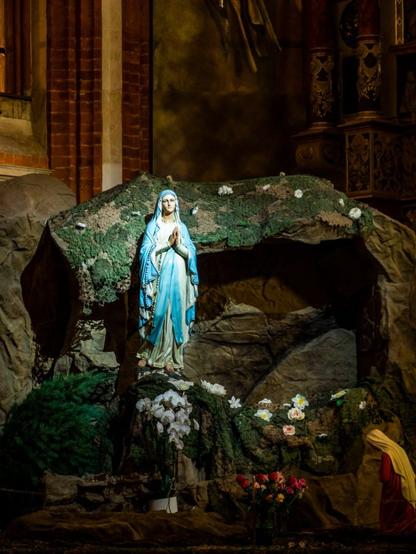
 phillipmedhurst
 quangobaud
 Andrew Shields
 OCTADE
 Claire McNab
 Timo Grün
 Light for the Last Days
 Stephen Gutknecht