St. George

St. George (Romanized: Georgios), a.k.a. George of Lydda, was a Christian martyr. He’s venerated as a saint. He was born in the late 3rd century (circa 270-281 AD) in Cappadocia in Anatolia (modern-day Turkey), to Christian parents of noble Greek descent.

According to tradition, he was a soldier in the Roman army. He became a soldier in the Roman army. He became a soldier after his dad passed away. He became a Tribunus (a high-ranking officer). He eventually became a member of the Diocletian at Nicomedia.

But he was later executed, as part of the Diocletianic Persecution. In 303 AD, Diocletian issued an edict allowing the persecution of Christians. George was ordered to renounce his faith & offer sacrifices to the Roman gods. He refused. He also tore up the emperor’s edict.

He was beheaded on April 23, 303 AD. His courage was so admired (in some traditions) that it led to Empress Alxandra of Rome to be martyred also.

He’s 1 of the most venerated saints, heroes, & megalomartyrs in Christianity. He has been especially venerated as a military saint since the Crusades. He’s also prominently venerated by the Druze (& by some Muslim groups) as a martyr of monotheistic faith.

In hagiography, he was immortalized in the legend(s) of St. George & the dragon & as 1 of the most prominent military saints. In a famous tale of George rescuing a princess from a dragon in Silene (Libya) 1st appeared in Georgian texts in the 11th century.

It was popularized in the West by the Lombardic “Golden Legend” in the 13th century. In religious iconography, the dragon represents the devil or Paganism, & the princess represents the Church.

In Roman Catholicism, he is also venerated as 1 of the 14 Holy Helpers. His feast day, St. George’s Day, is traditionally celebrated on April 23. The Church of St. George in Lydda (now Lod, Israel) has a sarcophagus traditionally believed to contain George’s relics.

According to tradition, a fierce dragon was causing panic in the city of Silene in Libya when our guy George arrived there. To keep the creature from ravaging the city, the inhabitants gave it 2 sheep each day. But when the sheep were no longer enough, they were forced to sacrifice people chosen by the townesfolk themselves.

Eventually, the king’s daughter was selected, & no one was willing to take her place. Georger saved her by slaying the dragon with a lance. The king was so grateful that he offered George treasures as a reward for saving his daughter’s life.

But George refused & urged him to give to the poor instead. The townspeople were so astonished by what they saw that they all became Christians & were baptised.

George (In Arabic, Jirjis or Girgus) is included in some Muslim texts as a prophetic figure. The Islamic sources state that he loved a group of believers who were in direct contact with the last apostles of Jesus. He was described as a rich merchant who opposed Dadan, the king of Mosul, in his reaction to Apollo’s stature.

After confronting the king, George was tortured many times to 0 effect, was imprisoned, & was aided, allegedly, by angels. Eventually, he was exposed to the fact that the idols were possessed by Satan. But was martyred when the city was destroyed by God in a rain of fire. (This is giving serious Sodom & Gomorrah vibes.)

According to Muslim legends, he was martyred under the rule of Diocletian & was killed 3x. But was resurrected every time. The legend is more developed in the Persian version of al-Tabari, wherein he resurrects the dead, makes trees sprout, & pillars bear flowers.

After 1 of his deaths, the world is covered by darkness, which is lifted only when he’s resurrected. He’s able to convert the queen, but she’s put to death. Then he prays to God to allow him to die, which is granted.

Al-Tah’labi says that George was from Palestine & lived in the times of some disciples of Jesus. He was killed many times by the king of Mosul, & resurrected each time. When the king tried to starve him, he touched a piece of dry wood brought by a woman & turned it green, with varieties of fruits & veggies growing from it. After his 4th death, the city was burnt along with him.

English soldiers under Richard the Lionheart invoked St. George at the Siege of Acre. They brought his “cult” back to Britain, where he replaced Edward the Confessor as the nation’s primary patron because he represented “active” chivalry rather than “passive” monasticism.

In 1348, King Edward III founded the Order of the Garter (the oldest and highest order of chivalry in England), putting it under the patronage of St. George. The current British monarch, King Charles III, is the head of the order today.

In the General Roman Calendar, George’s feast day is on April 23. In the Tridentine calendar of 1568, it was given the rank of “Semi double.” In Pope Pius XII’s calendar, the rand was reduced to “Simple.” In Pope Paul VI’s 1969 revision, it appears as an “optional memorial.”

In some countries, like England, the rank is higher. It’s a Solemnity (Roman Catholic) or Feast (Church of England): if it falls between Palm Sunday & the Second Sunday of Easter inclusive, it’s transferred to the Monday after the Second Sunday of Easter.

The Russian Orthodox Church also celebrates 2 additional feasts in honor of St. George. One is on November 3, commemorating the consecration of a cathedral dedicated to him in Lydda during the reign of Constantine the Great (305-337). When the church was consecrated, George’s relics were transferred there. The other feast day is on November 26 for a church dedicated to him in Kyiv (or Kiev, Ukraine), circa 1054.

In Bulgaria, St. George’s Day is celebrated on May 6. It’s customary to slaughter & roast a lamb. George’s Day is also a public holiday.

In Serbia & Bosnia & Herzegovina, the Serbian Orthodox Church celebrates St. George on May 6. It’s a common slava (patron saint day) among ethnic Serbs.

In Egypt, the Coptic Orthodox Church of Alexandria calls St. George the “Prince of Martyrs.” They celebrate his martyrdom on the 23rd of Paremhat of the Coptic Calendar (equal to May 1). The Copts also celebrate the consecration of the 1st church dedicated to him on the 7th of the month of Hatour of the Coptic calendar (equal to November 17).

George is the patron saint of England. His cross forms the national flag of England. By the 14th century, he was declared both the patron saint & protector of the British royal family. He’s also the patron saint of Georgia (the country), Ethiopia, Iberia, Russia, & Bulgaria.

One-Time Monthly Yearly

Make a one-time donation

Make a monthly donation

Make a yearly donation

Choose an amount

$5.00 $10.00 $15.00 $1.00 $5.00 $10.00 $5.00 $10.00 $15.00

Or enter a custom amount

$

Your contribution is appreciated.

Your contribution is appreciated.

Your contribution is appreciated.

DonateDonate monthlyDonate yearly #11thCentury #1348 #13thCentury #14HolyHelpers #1568 #1955 #1969 #23April303 #23rdOfParemhat #281AD #303 #305 #337 #7thOfHatour #alTabari #AlThaLabi #Anatolia #Angels #Apollo #Apostles #April23 #BosniaHerzegonvina #Britain #British #BritishMonarchy #BritishRoyalFamily #Bulgaria #Cappadocia #ChivalricOrder #Christian #Christianity #ChurchOfEngland #ChurchOfStGeorge #Circa1054 #Circa270AD #ConstantineTheGreat #CopticCalendar #CopticOrthodoxChurchOfAlexandria #Crusades #CultOfStGeorge #devil #DiocletianicPersecution #Disciples #Druze #EdwardTheConfessor #Egypt #EmperorDiocletian #EmpressAlexandraOfRome #England #English #Ethiopia #EthnicSerbs #FeastDay #GeneralRomanCalendar #GeorgeOfLydda #Georgia #Georgios #Girgus #Greek #Hagiography #Iberia #Islam #Israel #Jesus #Jirjis #Kiev #KingCharlesIII #KingDadanOfMosul #KingEdwardIII #Kyiv #Late3rdCentury #Libya #Lombardic #Lydda #Martyr #Martyrdom #May1 #May6 #Megalomartyrs #MilitarySaint #monotheistic #Mosul #Muslim #Nicomedia #November17 #November26 #November3 #OrderOfTheGarter #Paganism #Palestine #PalmSunday #PatronSaint #Persia #PopePaulVI #PopePiusXII #PraetorianGuard #PrinceOfMartyrs #relics #Resurrection #RichardTheLionheart #Roman #RomanCatholicism #Russia #RussianOrthodoxChurch #Sacrophagus #Saint #Satan #SecondSundayOfEaster #Semidouble #Serbia #SerbianOrthodoxChurch #Serbs #SiegeOfAcre #Silene #Slava #Solemnity #StGeorge #StGeorgeTheDragon #StGeorgeSDay #Tribunus #TridentineCalendar #Turkey #Ukraine
Balinese Hinduism

Officially known as Agama Hindu Dharma. Balinese Hinduism is a deeply localized blend of Shaivite Hinduism, Buddhism, & indigenous Austronesian animism.

This is practiced by the majority of the population of Bali. This is particularly associated with the Balinese people residing on the island. It represents a distinct form of Hindu worship incorporating local animism, ancestor worship (Pirtu Paksha), & reverence for Buddhist saints (Bodhisattava).

Hindu influences reached the Indonesian Archipelago as early as the 1st century CE. Java legends refer to Saka-era, traced to 78 CE. Stories from the Mahabharata have been traced in Indonesian islands to the 1st century. This version mirrors those found in Tamil Nadu.

Ancient Chinese records of Fa Hien on his return voyage from Ceylon to China in 414 CE mentioned 2 schools of Hinduism in Java. while Chinese documents from the 8th century refer to the Hindu kingdom of King Sanjaya as Holing, calling it “exceedingly wealthy,” & say that it coexisted peacefully with the Buddhist people & Sailendra ruler in the Kedu Plain of the Java island.

Upon independence from Dutch colonial rule, Article 29 of the 1945 Constitution of Indonesia guaranteed freedom of religion to all its citizens. In 1952, the Indonesian Ministry of Religion came under the control of Islamists who severely constrained the acceptable definition of a “religion.” To be acceptable as an official Indonesian religion, the ministry defined “religion” as 1 that’s monotheistic, has codified religious law, possesses a prophet & a Holy Book, among other requirements.

Balinese Hindus were declared as “people without religion,” & available to be converted. Balinese Hinduism disagreed, debated, adapted, & declared their form of Hinduism to be monotheistic, & presented it in a form to be eligible for the status of “agama” under the 1952 amended articles.

The central pillar of Balinese life is the philosophy of Tri Hita Karana. This dictates that prosperity & harmony can only be achieved through 3 specific relationship:

  • Parhyangan:
    • Harmony between humans & the Divine
  • Pawongan:
    • Harmony between humans & fellow humans
  • Palemahan:
    • Harmony between humans & nature

This governs the island’s physical layout. Every village, home, & rice filled is organized according to a sacred axis between the mountains (the realm of the gods) & the sea (the realm of spirits).

Balinese Hinduism is an amalgamation of Hinduism with elements from Buddhism & the indigenous customs that imbued in the Indonesian archipelago before Hinduism’s arrival.

It combines many of the core beliefs of Hinduism with the arts & rituals of the Balinese people. In modern times, Hinduism in Bali is officially referred to by the Indonesian Ministry of Religion as: Agama Hindu Dharma. But the religion was called by many names: Tirta, Trimurti, Hindu, Agama Tirta, Siwa, Buda, & Siwa-Buda.

A major distinction in Balinese Hinduism in the spotlight on Acintya (a.k.a. Sang Hyang Widhi Wasa). While Hinduism based in India has a vast pantheon, the Balinese system was codified in the 20th century to emphasize a monotheistic foundation to align with Indonesia’s state philosophy (Pancasila).

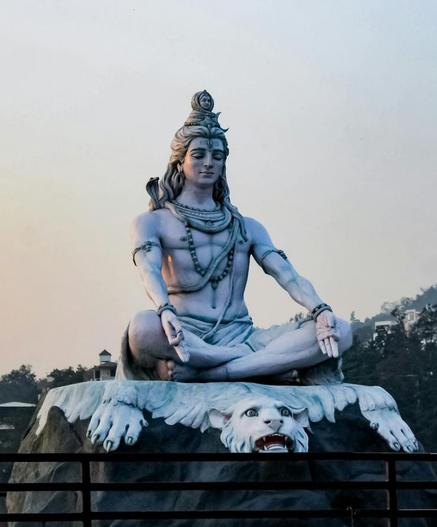
A belief that all of the gods are manifestations of this supreme being. This belief is the same as the belief of Smartism. This also holds that the different forms of gods & goddesses (Vishnu, Siva, Shakti (Devi)) are different aspects of the same Supreme Being. Shiva is also worshipped in other forms such a as “Batara Guru” & “Maharaja Dewa” (Mahadeva).

Acintya represents the “Unthinkable” or the “Void.” All other deities (including the Trimurti) are viewed as manifestations of this single, supreme entity. In Balinese temples, you’ll see an empty stone called the Padmasana, which is dedicated specifically to Acintya.

Balinese Hinduism includes the Indian Trinity called Trimurti. In Balinese Hindu texts, the alternate tripartite concept of Shiva of Indian Shaivism is also found. This is usually referred to in Balinese as “Siwa-Sadasiwa-Paramasiwa,” where Shiva is the creator, the maintainer, & the destroyer of cyclic existence.

Along with the traditional Hindu Trinity, Balinese Hindus worship a range of gods & goddesses (Hyang, Dewata, & Batara-Batari). As well as others that are unique & not found in Indian Hinduism. Sang Hyang Widhi (literally meaning “Divine Order”), a.k.a. Acintya or Sang Hyang Tunggal (“Divine Oneness”), is the concept parallels the metaphysical concept of Brahman among Indian Hindus.

To understand Balinese Hinduism, 1 must look at the figure who shaped its modern form: the 16th century Javanese priest Dang Hyang Nirartha. As the Majapahit Empire in Java collapsed under the rise of Islamic sultanates, Nirartha fled to Bali.

He didn’t just bring Javanese Hinduism. He refined it. He established the Padmasana architecture & the priesthood system that existed today. He’s credited with founding many of Bali’s iconic “Sea Temples,” (Including Uluwatu & Tanah Lot) strategically placed to create a spiritual “chain” of protection around the island.

There are a total of 13 ceremonies concerned with life from conception until, but not including death, each of which has 4 elements: placation of evil spirits, purification with holy water, wafting of the essence, & prayer. These ceremonies mark major events in a person’s life, including birth, puberty, grain feeding, & marriage.

A newborn baby is believed to represent the soul of an ancestor & is regarded as a god for the 1st 42 days of life. The mom, however, is regarded as impure & isn’t allowed to participate in any religious activities during this period. A baby can’t touch the “impure” ground until its 105 days old, which is half-way to the celebration of its 1st birthday, according to the 210-day Balinese Pawukon calendar.

Once it reaches its 1st birthday, the family will celebrate the Otonan birthday ceremony. Once the kid reaches puberty, the 6 upper canine teeth are filed until they’re even.

Religious life in Bali is defined by Rua Bineda, the idea of “Two Opposites.” It’s the belief that the world exists in a state of equilibrium between opposing forces: good/evil, joy/sorrow, clean/unclean.

The Balinese seek balance. That’s why you see:

  • The Barong & Rangda:
    • A ritual dance-drama showing the battle between the Barone (a lion-like creature representing health/good) & Rangda (the demon queen). The battle never truly ends, an eternal stalemate.
  • Canang Sari:
    • The ubiquitous daily offerings of flowers, rice, & incense placed on the ground & on shrines. These are meant to appease both the gods & lower spirits to maintain the cosmic balance.

The Saka is a solar calendar from India. This calendar determines Nyepi, the “Day of Silence.” On Nyepi, the entire island (including the airport) shuts down. No lights, no work, no travel, & no sound is permitted. This is to trick passing demons into thinking the island is uninhabited.

The most important ceremonies happen after death & result in the soul being freed to be eventually reincarnated. The physical body isn’t the focus. It’s seen as a temporary container of the soul & fit only for expedient disposal. In fact, the body must be cremated/burned before the soul can leave the body completely.

The cremation ceremony can be VERY expensive because an elaborate ceremony is a way of showing respect for a soul destined to become a god with considerable powers over those left behind. So sometimes the deceased’s body is buried, temporarily, until the family can get together enough $$$ for the cremation ceremony. However, the bodies of priests, or high-class, families are preserved above ground (Think like in New Orleans.).

Balinese Hindus, under no circumstances, may eat the flesh of people, cats, monkeys, dogs, crocodiles, mouse(s), snakes, frogs, certain poisonous fish, leeches, stinging insects, crows, eagles, owls, or any other bird of prey.

Chicken, fruits, veggies, & seafood are widely eaten. Hindus, especially those of varna (caste) of Brahmin & Kshatriya, are forbidden to eat/consume, or even touch, beef. Rarely pork is touched. Also, they mustn’t eat on the street, drink alcohol, or taste offerings of such items.

One-Time Monthly Yearly

Make a one-time donation

Make a monthly donation

Make a yearly donation

Choose an amount

$1.00 $5.00 $10.00 $1.00 $1.00 $10.00 $5.00 $10.00 $15.00

Or enter a custom amount

$

Your contribution is appreciated.

Your contribution is appreciated.

Your contribution is appreciated.

DonateDonate monthlyDonate yearly

#1945 #1952 #1stCentury #20thCentury #414CE #78CE #8thCentury #Acintya #Agama #AgamaHinduDharma #AgamaTirta #AncestorWorship #Animism #AustronesianAnimism #Bali #BalineseHinduism #Barong #BataraGuru #BataraBatari #Bodhisattava #Brahman #Brahmin #Buda #Buddhism #CanangSari #Caste #Ceylon #China #ConstitutionOfIndonesia #Cremation #DangHyangNirartha #Dewata #DietaryRestrictions #Dutch #FaHien #Hindu #HinduTrinity #Hinduism #Holing #India #IndianHinduism #IndianShaivism #IndonesianArchipelago #IndonesianIslands #IndonesianMinsitryOfReligion #IslamicSultanates #Java #JavaneseHinduism #KeduPlain #KingSanjaya #Kshatriya #Mahabharata #Mahadeva #MaharajaDewa #MajapahitEmpire #monotheistic #NewOrleans #Nirartha #Nyepi #OtonanBirthdayCeremony #Padmasana #Palemahan #Pancasila #Parhyangan #Pawongan #PawukonCalendar #PitruPaksha #Rangda #Reincarnation #RuaBineda #Sailendra #Saka #SakaEra #SangHyangTunggal #SangHyangWidhi #SeaTemples #ShaiviteHinduism #ShaktiDevi #Siva #SiwaBuda #SiwaSadasiwaParamasiwa #Smartism #SolarCalendar #TamilNadu #TanahLot #Tirta #TriHitaKarana #Trimurti #Uluwatu #Varna #Vishnu

Druze

The Druze, who call themselves al-Muwahhidun, are an Arab esoteric religious group from West Asia who adhere to the Druze faith. This is an Abrahamic, monotheistic, & syncretic religion whose main tenets assert the unity of God, reincarnation, & the eternity of the soul.

Although the Druze faith developed from Isma’ilism, the Druze don’t identify as Muslim. Isma’ilism is a sect of Shia Islam. They use the Arabic language & culture as integral parts of their identity, with Arabic being their primary language.

Most Druze religious practices are kept secret. Conversion to their religion isn’t permitted for outsiders. Interfaith marriages are rare & strongly discouraged. They make a difference between spiritual individuals, known as “uqqal,” who hold the faiths secrets, & secular ones, known as “juhhal,” who focus on worldly matters.

Druze believes that, after completing the cycle of rebirth through successive reincarnations, the soul reunites with the Cosmic Mind (al-‘aql al-kulli).

The Epistles of Wisdom is the central text of the Druze faith. The Druze faith came out of Isma’ilism & has been influenced by a diverse range of traditions (Christianity, Gnosticism, Neoplatonism, Zoroastrianism, Manichaeism, & Pythagoreanism).

Druze holds Shuaib in high regard. They believe him to be the same person as the biblical Jethro. Shuaib is an ancient Midianite prophet in Islam. Jethro is Moses’ father-in-law. Shuaib is mentioned 11x in the Quran.

They regard Adam (of Adam & Eve fame), Noah, Abraham, Moses, Jesus, Muhammad (PBUH), & the Isma’ili Imam Muhammad ibn Isma’il as prophets. Also the Druze tradition honor figures such as Salman the Persian, al-Khidr (who they identify with Elijah, John the Baptist, & St. George), Job, Luke the Evangelist, & others as mentors & prophets.

The Druze faith is 1 of the major religious groups in the Levant with between 800,000 & 1 million followers. They’re mainly located in Lebanon, Syria, & Israel. They make up 5.5% of Lebanon’s population, 3% of Syria’s, & 1.6% of Israel’s.

The oldest, & most densely populated, Druze communities exist in Mount Lebanon & in the south of Syria around Jabal al-Druze (literally the “Mountain of the Druze”). The name “Druze” is likely derived from the name of: Muhammad bin Ismail Nashtakin ad-Darazi (from the Persian darzi, “seamster”) who was an early preacher.

The Druze consider ad-Darazi a heretic, the name has been used to identify them. This is possibly because their historical opponents have a way to attack their community with ad-Darazi’s poor reputation.

Before becoming public, the movement was secretive & held closed meetings in what was known as Sessions of Wisdom. During this period, a dispute occurred between ad-Darazi & Hamza bin Ali mainly concerned ad-Darazi’s ghuluww (“exaggeration”), which refers to the belief that God was incarnated in human beings to ad-Darazi naming himself “The Sword of the Faith,” which led Hamza to write an Epistle refuting the need for the sword to spread the faith & several epistles refuting the beliefs of the ghulat.

In 1061, ad-Darazi, & his followers, openly proclaimed their beliefs & put out the call for people to join them. This caused riots in Cairo against the Unitarian movement, including Hamza bin Ali & his followers. This led to the suspension of the movement for 1 year & the expulsion of ad-Darazi & his supporters.

In 1081, ad-Darazi was assassinated for his teachings. Some claim that he was executed by Al-Hakim bi-Amr Allah.

The number of the Druze people worldwide is between 800,000 & 1 million. The vast majority reside in the Levant. The main countries with Druze communities are Syria, Lebanon, Israel, & Jordan. Outside the Middle East, significant Druze communities exist in Australia, Canada, Europe, Latin America (mainly Venezuela, Colombia, & Brazil), the US, & West Africa. They are Arabs who speak Levantine Arabic.

The story of the creation of the Druze faith between 1017 & 1018 is dominated by 3 men & their struggle for influence. Hamza ibn Ali ibn Ahmad was an Ismaili mystic & scholar from Khorasan, who arrived in Fatimid Egypt in 1014 or 1016, & began to teach a Muwahhidun (“Unitarian”) doctrine.

al-Hakim bi-Amr Allah, the 6th Fatimid caliph, became a central figure in the faith being preached by Hamza ibn Ali ibn Ahmad. Muhammad bin Ismail Nashtakin ad-Darazi arrived in Cairo in 1015 or 1017, possibly from Bukhara, joined the movement & became an important preacher.

Hama ibn Ali ibn Ahmad, an Ismaili mystic & scholar from Zozan, Khorasan, in the Samanid Empire, arrived in Fatimid Egypt in 1014 or 1016. He assembled a group of scholars that met regularly in the Raydan Mosque, near the Al-Hakim Mosque. In 1017, Hamza began to preach a Muwahhidun (Unitarian) doctrine.

Hamza got the support of the Fatimid caliph al-Hakim bi-Amr Allah, who gave a decree promoting religious freedom & eventually became a central figure in the Druze faith.

Little is known about the early life of al-Darazi. He is believed to have been of Persian origins & his title al-Darazi is Persian in origin, meaning “the tailor.” He got to Cairo in 1015 or 1017, after which he joined the newly emerged Druze movement. al-Darazi converted early to the Unitarian faith & became 1 of its early preachers.

At that time, the movement enlisted a large number of followers. As the number of his followers grew, he became obsessed with his leadership & gave himself the title “The Sword of the Faith.” al-Darazi argued that he should be the leader of the da’wah rather than Hamza ibn Ali & gave himself the title: “Lord of the Guides” because Caliph al-Hakim referred to Hamza as “Guide of the Consented.” It’s said that al-Darazi allowed wine, forbidden marriages, & taught metempsychosis. Metempsychosis is the belief that after death, a soul leaves its body & enters a new one, either human, animal, or even plant, in a continuous cycle of rebirth (reincarnation). This is also known as the transmigration of souls.

The divine call, or Unitarian call, is the Druze period of time that was opened at sunset on May 30, 1017 by ad-Darazi. The call summoned people to a true Unitarian belief that removed all attributes from God.

It promoted absolute monotheism & the concepts of supporting your fellow man, true speech & pursuit of doneness with God. These concepts superseded all ritual, law & dogma & requirements for pilgrimage, fasting, holy days, prayer, charity, devotion, Creed, & particular worship of any prophet, or person, was downplayed.

Sharia was opposed & Druze traditions started during the call continue today, such as meeting for reading, prayer, & social gathering on a Thursday instead of a Friday at Khalwats instead of mosques. Such gatherings & traditions weren’t mandatory. People were encouraged to pursue a state of compliance with the real law of nature governing the universe.

By 1018, al-Darazi had gathered around him that partisans who believed that universal reason became incarnated in Adam at the beginning of the world, were then passed to the prophets. Then into Ali, & then into his descendants, the Fatimid Caliphs. al-Darazi wrote a book laying out his doctrine. But when he read from his book in the principal mosque in Cairo. It caused riots, & protests against his claims & many of his followers were killed.

Hamza ibn Ali rejected al-Darazi’s ideology, calling him “the insolent one & Satan.” The controversy led Caliph al-Hakim to suspend the Druze da’wah in 1018.

In an attempt to gain the support of al-Hakim, al-Darazi started preaching that al-Hakim didn’t believe that he was God, & felt al-Darazi was trying to show himself as a new prophet. In 1018, al-Hakim had al-Darazi executed, leaving Hamza the sole leader of the new faith & al-Darazi considered to be a renegade.

Al-Hakim disappeared 1 night while on his evening ride. Druze believes he went into Occultation with Hamza ibn Ali & 3 other prominent preachers. He left the “Unitarian missionary movement” to a new leader, al-Muqtana Baha’uddin.

The call was suspended briefly between May 19, 1018 & May 9, 1019 during the apostasy of al-Darazi & again between 1021 & 1026 during a period of persecution by the Fatimid caliph al-Zahir li-I’zaz Din Allah for those who had sworn the oath, to accept the call.

Persecutions started 40 days after the disappearance into Occultation of al-Hakim, who was thought to have been converting people to the Unitarian faith for over 20 years prior. Al-Hakim convinced some heretical followers such as al-Darazi of his soteriological divinity & officially declared the Divine call after issuing a decree promoting religious freedom. This eventually became a central figure in the Druze faith.

Little is known about the early life of al-Darazi. According to most sources, he was born in Bukhara (located in Uzbekistan). He got to Cairo in 1015 (or 1017), after he joined the newly formed Druze movement.

Al-Darazi was an early convert to the Unitarian faith. He became 1 of its early preachers. At that time, the movement enlisted a large number of followers. As the number of his followers grew, he got obsessed with his leadership. He gave himself the title: “The Sword of the Faith.”

Al-Darazi argued that he should be the leader of the da’wah rather than Hamza ibn Ali & gave himself the title: “Lord of the Guides.” Because Caliph al-Hakim referred to Hamza as: “Guide of the Consented.” It’s said that al-Darazi allowed wine, forbidden marriages, & taught metempsychosis.

This led to conflicts between Ad-Darazi & Hamza ibn Ali, who disliked his behavior & arrogance. In the Epistles of Wisdom, Hamza ibn Ali ibn Ahmad warns al-Darazi: “Faith doesn’t need a sword to aid it.” But al-Darazi ignored Hamza’s warnings & continued to challenge the Imam.

The unitarian call, or divine call, is the Druze period of time that was opened at sunset on May 30, 1017 by Ad-Darazi. The call summoned people to a true unitarian belief that removed all attributes (wise, just, outside, inside, etc.) from God.

It promoted absolute monotheism & the concepts of supporting your fellow man, true speech & pursuit of oneness with God. These concepts superseded all ritual, law & dogma, & the requirement for pilgrimage (like the Hajj), fasting, holy days, prayer, charity, devotion, Creed & particular worship of any prophet or person was downplayed.

Sharia was opposed. Druze traditions during the call continued today, such as meeting for reading, prayer, & social gathering on a Thursday instead of Friday at Khalwats instead of mosques. Khalwats are sanctuaries & theological schools of the Druze.

Such gatherings & traditions weren’t mandatory & people were encouraged to pursue a state of compliance with the real law of nature governing the universe. Epistle 13 of the Epistles of Wisdom called it “A spiritual doctrine without any ritualistic imposition.”

The time of the call was seen as a revolution of truth, with missionaries preaching its message all around the Middle East. These messages were sent out with the believers, whose souls are thought to still exist in the Druze of today.

The souls of those who took the vows during the call are believed to be continuously reincarnating in successive generations of Druze until the return of al-Hakim to proclaim a 2nd Divine call & establish a Golden Age of justice & peace of all.

By 1018, al-Darazi had gathered around him partisans (“Darazites”) who believed that universal reason became incarnated in Adam at the beginning of the world, was then passed to the prophets, then into Ali, & then into his descendants, the Fatimid Caliphs.

In an attempt to gain the support of al-Hakim, al-Darazi started preaching that al-Hakim & his ancestors were the incarnation of God. A modest man, al-Hakim didn’t believe that he was God, & felt al-Darazi was trying to depict himself as a new prophet. In 1018, al-Hakim had al-Darazi executed, leaving Hamza the sole leader of the new faith & al-Darazi considered to be renegade.

Al-Hakim disappeared 1 night whilst on his nightly ride. He was presumed assassinated. His “assassination” was allegedly at his elder sister Sitt al-Mulk.

Druze believe he went into Occultation with Hamza ibn Ali & 3 other prominent preachers, leaving the care of the “Unitarian missionary movement” to a new leader, al-Muqtana Baha’uddin.

In 1043, Baha al-Din al-Muqtana said that the sect would no longer take new “pledges.” Since that time, proselytism has been banned awaiting al-Hakim’s return at the Last Judgment to usher in a new Golden Age.

In Lebanon, Syria, Israel, & Jordan, the Druzites have official recognition as a separate religious community with its own religious court system.

Make a one-time donation

Your contribution is appreciated.

Donate

Make a monthly donation

Your contribution is appreciated.

Donate monthly

Make a yearly donation

Your contribution is appreciated.

Donate yearly

#1014 #1015 #1016 #1017 #1018 #1021 #1026 #1061 #1081 #19May1018 #30May1017 #9May1019 #Abraham #AbrahamicFaiths #Adam #alHakimBiAmrAllah #AlHakimMosque #alKhidr #alMuqtanaBahaUddin #alMuwahhidun #alZahirLiIZazDinAllah #Ali #Arabic #Arabs #Australia #BahaAlDinAlMuqtana #Brazil #Bukhara #Cairo #CaliphAlHakim #Canada #Christianity #Colombia #CosmicMind #DaWah #Darazites #Druze #Elijah #EpistlesOfWisdom #Europe #Eve #FatimidCaliph #FatimidCaliphs #FatimidEgypt #Ghulat #Ghuluww #Gnosticism #HamzaBinAli #HamzaIbnAliIbnAhmad #ImamMuhammadIbnIsmaIl #Islam #IsmaIli #IsmaIlism #Ismaili #Israel #JabalAlDruze #Jesus #Jethro #Job #JohnTheBaptist #Jordan #Juhhal #Khalwats #Khorasan #LastJudgment #LatinAmerica #Lebanon #Levant #LevantineArabic #LukeTheEvangelist #Manichaeism #Metempsychosis #MiddleEast #Midianite #monotheistic #Moses #MountLebanon #Muhammad #MuhammadBinIsmailNashtakinAdDarazi #MuhammadBinIsmailNasshtakinAdDarazi #Muslim #Muwahhidun #Neoplatonism #Noah #Prophet #Pythagoreanism #Quran #RaydanMosque #Reincarnation #SalmanThePersian #SamanidEmpire #SessionsOfWisdom #Sharia #Shia #Shuaib #SittAlMulk #StGeorge #Syria #UnitarianMovement #UnitedStatesOfAmerica #Uqqal #Uzbekistan #Venezuela #WestAfrica #WestAsia #Zoroastrianism #Zozan

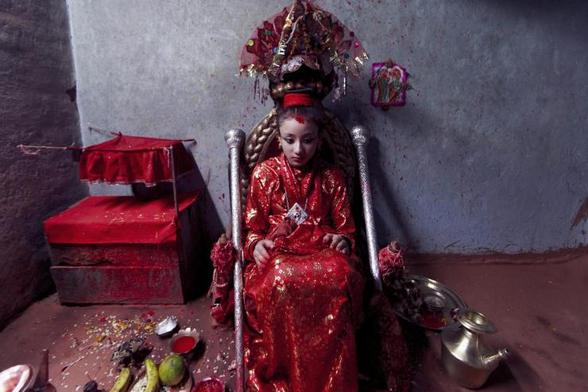
The Kumari

Also known as Kumari Devi, or the Living Goddess. Kumari means young girl or unmarried in Sanskrit.

This is a uniquely Hindu & Buddhist practice. It’s primarily observed in Nepal & parts of adjacent India, which centers on the worship of a prepubescent girl as a living goddess & a manifestation of the divine feminine energy.

Shakti, the Indian religious worship monotheistic god’s multi-morphic avatar manifestation of genderless formless god into human forms including worshipping women as goddess in various forms such as worship of daughters as Kumari, wife as Lakshmi, women as skilled Saraswati & empowered Durga (who as Kali exterminates evil).

A key concept in Hinduism’s Shaktism tradition which venerates the feminine aspect of the genderless formless Absolute God Brahma. A Kumari is considered to be the living embodiment of the goddess Taleju Bhawani (a form of devi Durga), the venerable powerful manifestation of divine woman power, ingraining Hindus & Buddhists to treat their females, moms, sisters, wife, & daughters with respect as goddesses.

A Kumari is a prepubescent girl chosen from the Shakya clan of the Napali Newari Buddhist community. It’s believed that the girl is possessed by the goddess Taleju or Durga.

When her 1st period starts, it’s thought that the deity leaves her body. Serious illness or a major loss of blood from an injury also causes loss of deity. The chosen female child is typically worshipped from a prepubescent age, with her tenure as the divine vessel concluding with her 1st period, or a significant loss of blood (like from an injury). This signifies the departure of the goddess’s spirit.

The veneration of the young girl reflects the Hindu reverence for women as embodiments of the goddess. This girl is often chosen from the Newar Buddhist Shakya community, in the Kathmandu Valley.

There are several Kumaris throughout Nepal. Some cities have several, but the best known 1 is the Royal Kumari of Kathmandu. This particular Kumari lives in the Kumari Ghar, a palace in the center of the city.

The selection process for the Royal Kumari is especially rigorous. As of 2025, the Royal Kumari of Kathmandu is Aryatara Shakya, aged 2. She was selected in September 2025. Unika Bajracharya, was selected in April 2014 as the Kumari of Patan, is the 2nd most important living goddess.

The Kumari tradition is a particularly prevalent practice in the Kathmandu Valley. It is followed in the cities of Kathmandu, Lalitpur (a.k.a. Patan), Bhaktapur (a.k.a. Bhadgaun), Sankhu, & Bungamati.

This tradition is primarily rooted in the Malla Dynasty (12th-18th centuries), which ruled the Kathmandu Valley. The most prominent legend involves King Jaya Prakash Malla, the last Malla king of Kathmandu.

It’s said that the goddess Taleju would visit the king in his chamber to play a game of dice (tripasa). One night, the king looked at the goddess with lustful intent. Enraged, she disappeared, saying she wouldn’t ever return in her divine form. After the king begged for forgiveness, she agreed to return. But only by manifesting in a young, “pure” girl from the Shakya clan.

Historically, the Kumari was the source of a king’s right to rule. During the annual Indra Jatra festival, the king of Nepal would kneel before the Kumuri to get a tika (a forehead mark of blessing). Without this blessing, the king’s authority was considered spiritual void.

Even after the Shah dynasty overthrew the Mallas in 1768. Even after Nepal abolished its monarchy in 2008, the tradition persists, with the President of Nepal now receiving the blessing.

The word “Kumari” is derived from Sanskrit meaning “princess.” The festival is celebrated during Kumari Jatra, which follows the Indra Jatra religious ceremony. The procession is similar to Indra or Sakra, taking Indrani to his celestial home as his bride. The Kumari is also reversed & worshipped by some of Nepal’s Hindus.

The Kumari tradition is a rare bridge between Vajrayana Buddhism & Hinduism. The Kumari always chose the Newar community (the indigenous people of the Kathmandu Valley), specifically from the Shakya or Bajracharya class. Both of which are high-caste Buddhist lineages.

The worship of the goddess in a young girl represents the worship of divine consciousness spread over all creation. As the supreme goddess is thought to have manifested this entire cosmos out of her womb, she exists equally in animate as well as inanimate objects.

While worship of an idol represents the worship & recognition of supreme through inanimate materials, worship of a human represents veneration & recognition of the same supreme in conscious beings.

In the Shakta text Devi Mahatmyam, or Chandi, the goddess is said to have declared that she resides in all female living beings in this universe. The ritual of Kumari is based on this verse. But for the purpose of worshipping a goddess, a young girl is chosen over a mature woman because of her inherent purity & chastity.

The selection of a “Royal Kumari” (the most senior of the several Kumaris in the valley) is an exhaustive process led by high priests. The candidate must be between 3 & 5 years old & process the Battis Lakshan, or 32 physical perfections, which include:

  • A neck like a conch shell
  • Eyelashes like a cow
  • Thighs like a deer
  • A voice as clear as duck’s
  • A body like a banyan tree
  • Unblemished skin & no history of serious illness

During the festival of Dashain, the potential goddess must pass a “test of fearlessness.” She’s placed in a darkened room filled with the severed heads of 108 sacrificed buffaloes & goats. While men in masks dance & make terrifying noises. If the child stays calm & serene, it’s believed the spirit of Taleju has truly inhabited her.

Once chosen, the girl’s life changes immediately. She first moves into the Kumari Ghar. She must wear red, her hair is tied into a top knot, & a “fire eye” (agni chakchuu) is painted on her forehead. Her feet must never touch the “impure” ground. She’s carried on a palanquin or on the arms of her caretakers. While she grants darshan (divine glimpse) to followers, she has to stay expressionless. It’s believed that if she cries, laughs, or trembles, it portends disaster, illness, or death, for the person seeking the blessing.

Hindu scriptures, like the Jnanarnava Rudrayamala tantra, assigns names to a Kumari depending on her age:

  • 1 year old: Sandhya, consort of Surya, the Sun god
  • 2 years old: Saraswati, 1/3 part of the Tridevi
  • 3 years old: Tridhamurti
  • 4 years old: Kalika, a.k.a. Kali, consort of Shiva
  • 5 years old: Subhaga
  • 6 years old: Parvati/Uma, 1/3 part of the Tridevi
  • 7 years old: Malini
  • 8 years old: Kubjika
  • 9 years old: Kaalasandarbha
  • 10 years old: Aparajita
  • 11 years old: Rudrani, consort of Rudra
  • 12 years old: Bhairavi, 1 of the 10 avatars of the mother goddess
  • 13 years old: Mahalakshmi, 1/3 part of the Tridevi
  • 14 years old: Pithanayika
  • 15 years old: Kshetragya
  • 16 years old: Ambika, form of the supreme goddess of Hinduism

In Nepal, Kumaris are only worshipped for a day. The above names are only assigned while the ritual lasts, often a few hours. Usually one can’t be a Kumari after 16 years old because of their 1st period(s). In Bungamati, the Kumari reigns until her 1st baby teeth/tooth falls out.

Even today, a mom’s dream of a red serpent is believed to be an omen of her daughter’s future position as the Royal Kumari. The power of the Kumari is perceived to be strong that even a glimpse of her is thought to bring good fortune.

Crowds of people wait below the Kumari’s window in the Kumari Chowk, or courtyard, of her palace, hoping that she’ll pass by & glace down at them.

Some petitioners visit the Kumari in her chambers, where she sits on a gilded lion throne. Many visiting her are people suffering from blood or menstrual disorders since the Kumari is believed to have special power over such illnesses.

Petitioners usually bring gifts & food offerings to the Kumari, who gets them in silence. Upon arrival, the Kumari offers the petitioners her feet to touch, or kiss, as an act of devotion. During these audiences, the Kumari is watched closely.

Her actions interpreted as a prediction of the petitioners’ lives, such as:

  • Crying or loud laughter: Serious illness or death
  • Weeping or rubbing eyes: Impending death
  • Trembling: Imprisonment
  • Hand clapping: Reason to fear the king
  • Picking at food offering: Financial losses

If the Kumari stays quiet & impassive throughout the audience, her followers leave elated.

Traditionally, the Kumari received no formal, mainstream education. This is because she’s widely considered to be omniscient. Modernization has made it necessary for her to have an education because she re-enters mortal life.

Kumaris are now allowed to attend public school & have a life inside the classroom that’s no different from that of other students. Many kumaris, like the Kumari of Bhaktapur, attend school. Others, like the main Kumari in Kathmandu, get their education through private tutors.

Make a one-time donation

Your contribution is appreciated.

Donate

Make a monthly donation

Your contribution is appreciated.

Donate monthly

Make a yearly donation

Your contribution is appreciated.

Donate yearly

#12thCentury #1768 #18thCentury #2008 #2025 #Ambika #Aparajita #April2014 #AryataraShakya #Bajracharya #BattisLakshan #Bhadgaun #Bhairavi #Brahma #Buddhist #Bungamati #Chandi #Darshan #Dashain #Devi #DeviMahatmyam #haktapur #Hindu #Hinduism #Indian #IndraJatraFestival #Indrani #JnanarnavaRudrayamala #Kaalasandrabha #Kali #Kalika #Kathmandu #KathmanduValley #KingJayaPrakashMalla #Kshetragya #Kubjika #Kumari #KumariDevi #KumariGhar #KumariOfPatan #Lakshmi #Lalitpur #LivingGoddess #Mahalakshmi #Malini #MallaDynasty #monotheistic #Nepal #Newar #Parvati #Patan #Pithanayika #RedSerpent #RoyalKumariOfKathmandu #Rudra #Rudrani #Sandhya #Sanskrit #September2025 #ShahDynasty #Shakti #Shaktism #Subhaga #Surya #Taleju #TalejuBhawani #Tika #Tridevi #Tridhamurti #Uma #VajrayanaBuddhism

Sikhism

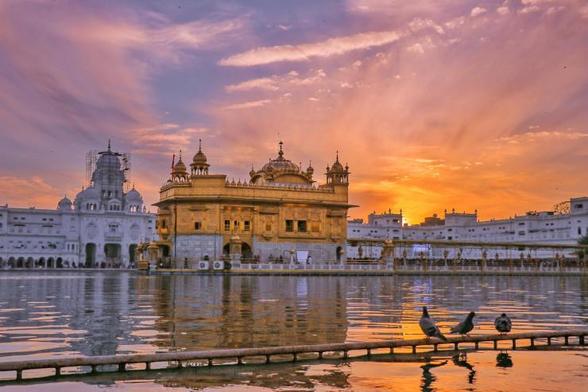
Sikhism is an Indian religion & philosophy that started in the Punjab Region of the Indian subcontinent around the end of the 15th century. It’s 1 of the most recently founded major religions & is followed by 25-30 million followers, known as Sikhs. The Golden Temple in Amritsar, Punjab, India is the holiest site in Sikhism.

Sikhism developed from the spiritual teachings of Guru Nanak (1469-1539), the faith’s 1st guru, & the 9 Sikh gurus who succeeded him. The 10th guru, Guru Granth Sahib (which is the central religious scripture in Sikhism), was his successor. This brought the line of human gurus to a close. Sikhs regard the Guru Granth Sahib as the 11th & eternally living guru.

The core beliefs & practices of Sikhism, articulated in the Guru Granth Sahib & other Sikh scriptures, include faith & meditation in the name of the 1 creator (Ik Onkar), the divine unity & equality of all humankind, engaging in selfless service of to others (seva), striving for justice for the benefit & prosperity of all (sarbat da bhala), & honest conduct & livelihood.

Following this standard, Sikhism rejects claims that any particular religious tradition has a monopoly on absolute truth. Because of this, Sikhs don’t actively proselytise, although victory converts are generally accepted.

Sikhism emphasizes meditation & remembrance as a means to feel God’s presence (simran), which can be expressed musically through kirtan, or internally through naam japna (“meditation on God’s name).

Baptised Sikhs are obliged to wear the 5 K’s, which are 5 articles of faith which physically distinguish Sikhs from non-Sikh. The 5 K’s are: kesh, uncut hair & beards (Thus wearing a turban.); kangka, a comb for the kesh, usually made of wood; kara, a bracelet, usually made of iron or steel; kachhera, an undergarment; & kirpan, a small curved sword or knife made of iron or steel.

The region developed & evolved in time of religious persecution, gaining converts from both Hinduism & Islam.

The Mughal emperors of India tortured & executed 2 of the Sikh gurus, Guru Arjan (1563-1605) & Guru Tegh Bahadur (1621-1675), after they refused to convert to Islam. The persecution of the Sikhs triggered the founding of the Khalsa by Guru Gobind Singh in 1699 as an order to protect the freedom of conscience & religion, with members expressing the qualities of a sant-sipahi (“saint-soldier”).

The majority of Sikh scriptures were originally written in the alphabet of Gurmukhi. A script that was standardized by Guru Angad (he’s the 2nd of the 10 gurus of Sikhism) out of Landa scripts, historically used in present-day Pakistan & North India, specifically in the Punjabi region.

Sikh followers of Sikhism are known as Sikhs (pronounced Sicks or Six or Seeks), meaning “students” or “disciples” of the guru.

The definition of a Sikh (according to their code of conduct called the Rehat Maryada) is ANY human being who faithfully believes in the following:

  • 1 Immortal Being
  • 10 Gurus, from Guru Nanak Sahib to Guru Gobind Singh Sahib
  • The Guru Granth Sahib
  • The utterances & teachings of the 10 Gurus &
  • The baptism bequeathed by the 10 Gurus.
  • And those who don’t owe allegiance to any other religion.

The basis of Sikhism lies in the teachings of Guru Nanak & his successors. Sikhs emphasize the balance between spiritual development & everyday moral conduct.

The founder summarized this by saying, “Truth is the highest virtue, but higher still is truthful living.” Sikhism emphasizes Ek nur te sab jag upjia, “From the one light, the entire universe welled up.”

Sikhism is a monotheistic & panentheistic religion. A panentheistic religion is the belief that the divine intersects every part of the universe & also extends beyond space & time.

Sikhs believe that one 1 God exists & that God is simultaneously within everything & is all-encompassing. The oneness of God is reflected by the phrase Ik Oakar.

In Sikhism, God is named Waheguru (“wonderous teacher”). The Waheguru is considered to be “Nirankar” (shapeless), Akal (“timeless”), Karta Purakh (“the creator being”), Akaal Purkh (“beyond time & death”), & Agam A gochar (“incomprehensible & invisible”).

In a literal sense, God is genderless in Sikhism. Metaphorically, however, God is presented as masculine & God’s power as feminine. For example, Guru Gobind Singh refers to God as his dad & God’s creative power as his mom.

Another example is that the Guru Granth Sahib, the main Sikh Scripture, says that all humans are the soul-brides who long to unite with their husband Lord. Also the gurus wrote in the Guru Granth Sahib that there are many worlds on which the transcendental God has created life.

Maya, explained as a temporary illusion, or “unreality,” is 1 of the core deviations from the pursuit of God & salvation: where worldly attractions give only illusory, temporary satisfaction & pain that distracts from the process of the devotion of God.

In Sikhism, the influences of ego, anger, greed, attachment, & lust, known as the panj chor (“Five Thieves”), are believed to be particularly distracting & hurtful. Sikhs believe the world is currently in a state of Kali Yuga (“age of darkness”) because the world is led astray by the love of & attachment to maya. The fate of people vulnerable to the 5 Thieves is separation from God, & the situation may be remedied only after intensive & relentless devotion.

Make a one-time donation

Your contribution is appreciated.

Donate

Make a monthly donation

Your contribution is appreciated.

Donate monthly

Make a yearly donation

Your contribution is appreciated.

Donate yearly

#10Gurus #1469 #1539 #1563 #15thCentury #1605 #1621 #1666 #1675 #1699 #1708 #AgamAGochar #AkaalPurkh #Akal #Amritsar #EkNurTeSabJagUpjia #FiveKS #FiveThieves #GoldenTemple #Gurmukhi #GuruAngad #GuruArjan #GuruGobindSingh #GuruGranthSahib #GuruNanak #GuruTeghBahadur #Hinduism #IkOnkar #India #IndianSubcontinent #Islam #Kachhera #KaliYuga #Kangka #Kara #KartaPurakh #Kesh #Khalsa #Kirpan #Kirtan #LandaScripts #Maya #monotheistic #MughalEmperors #NaamJapna #Nirankar #NorthIndia #Pakistan #Panentheistic #PanjChor #Punjab #PunjabRegion #PunjabiRegion #RehatMaryada #SantSipahi #SikhGurus #Sikhism #Sikhs #Simran #SoulBride #Turban #Waheguru

The Monotheistic Roots of Nationalism Part I 

What Is The Relationship Between Nationalism and Religion?  Do religion and nationalism compete with each other? Do they replace each other? Do they amplify each other and drive each other forward? Do they exist in symbiosis? Theorists of nationalism have struggled with this question. At one extr

Socialist Planning Beyond Capitalism

#aethernaut #aetherian #pagan

How we belief in gods and shape our worldview depends on the deeper understanding on the term god, in the #monotheistic traditions alike the #polytheistic traditions. God.dess can be understood in various ways, for example: