Nephilim

The Nephilim are mysterious beings or humans mentioned in the Bible. Traditionally understood as beings of great size & strength, or alternatively as beings of great power & authority.

The 1st biblical reference to them happens in Genesis 6:4. According to Numbers 13:33, 10 of the 12 spies reported the existence of Nephilim in Canaan before its conquest by the Israelites.

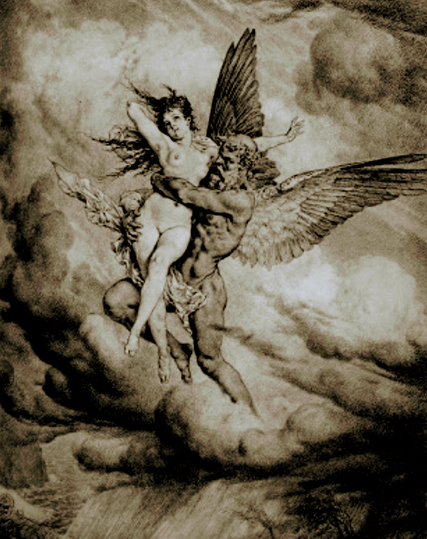
Interpretations vary vastly across traditions. Second Temple texts like 1st Enoch & Jubilees picture the Nephilim as offspring of fallen angels (Watchers) & of human women, portraying them as evil giants whose corruption led to the flood that’s told in the book of Genesis.

Some viewed the Nephilim as the descendants of Seth intermarrying with Cain’s lineage. Just to put this into perspective, Seth & Cain are biological brothers (half or whole, depending on the story). Their descendants married each other. It would be like marrying your cousins. Not 1st or 2nd cousins. But cousins nonetheless.

While others support the fallen angel theory. This was later supported by the Dead Sea Scrolls. Islamic tradition links them to the giant tribe of ‘Ad. While other theories link them with the Sumerian Apkallu myths or elite Canaanite warriors.

Over time, the Nephilim have been reimagined in popular culture: they appear in novels, films, video games, & conspiracy theories unrelated to religion. They are often pictured as powerful hybrids, ancient gods, or remnants of a lost superhuman race. Or the race of giants that Goliath descended from.

In the Bible, 3 interconnected passages refer to the Nephilim. 2 of them are in the Torah (Old Testament). The 1st appearance in Genesis 6:1-4. This is immediately before the Noah’s Ark story. Genesis 6:4 says: The Nephilim were in the earth in those days, & also after that when the sons of God came in unto the daughters of men & they bore children to them; the same were the mighty men that were of old, the men of renown.

A few things hit differently in this passage:

  • Heavenly beings can have biological human children? How is this physically possible? If, after all, they’re spiritual beings?
  • Why would God give/allow these “angels” the ability to even have kids in the 1st place? In modern times, we don’t think of angels as having the ability to have kids. Even the fallen ones. We do tend to think that Satan himself is the only 1 that can somehow have kids (the Antichrist).
  • Who, exactly, were these “men of renown”? Like we, personally, just want 2-3 of the names. Is it some guys we’ve never even heard of? Or would it confirm some names we already know? Like yep, our fav demigod Hercules made the short list. But some decisions happened on the editing room floor. Sorry Herc!

“Those days” were a period when the human population on the earth had started to really take off. This was when people began “to be plentiful on the Earth.”

The 2nd is Numbers 13:32-33, where 10 of the 12 spies describe the Anakites (a Rephaite tribe) as descendants of the Nephilim. Outside the Pentateuch, there are 1 more passage indirectly referencing nephilim & this is Ezekiel 32:17-32.

The earliest translation of the Bible (the Septuagint), which was composed in the 3rd or 2nd century BC, gives the said word as gigantes. In Greek mythology, the gigantes were beings of great strength & aggression. But not necessarily of great size.

The Vulgate (compiled in the 4th or 5th century AD) transcribes the Greek term rather than translating the Hebrew nefilim. From there, the tradition of the giant progeny of the sons of God & the daughters of men spread to later medieval translations of the Bible.

From the 3rd century onwards, references are found in Enochic literature, the Dead Sea Scrolls, the Jubilees, the Testament of Reuben, 2 Baruch, Josephus, & the Book of Jude.

The New American Bible commentary draws parallels between the Epistle of Jude & the statements in Genesis. This suggests that Jude refers implicitly to the paternity of the Nephilim as heavenly beings who came to earth & had spicy adult time with human women.

The story of the Nephilim is elaborated in the Book of Enoch. The Greek, Aramaic, & main Ge’ez manuscripts of 1 Enoch & Jubilees acquired in the 19th century (held in the British Museum & the Vatican Library) connect the origin of the Nephilim with the fallen angels, & in particular with the egregoroi (watchers).

In this tradition, the kids of the Nephilim are called the Elioud. They’re considered a separate race from the Nephilim. But they end up sharing the same fate as the Nephilim.

Some believe the fallen angels who sired the Nephilim were cast into Tartarus (II Peter 2:4, Jude 1:6), a place of “total darkness.” An interpretation is that God granted 10% of the disembodied spirits of the Nephilim to remain after Noah’s deluge, as demons, to try to lead the human race astray until the Final Judgment.

The Book of Jubilees also says that ridding the Earth of these pesky Nephilim was 1 of God’s purposes for flooding the Earth in Noah’s day. It describes the Nephilim as being evil giants.

A long-held view in some Christian sects is that the “sons of God” were the formerly righteous descendants of Seth (Adam & Eve’s 3rd kid) who rebelled. While the “daughters of men” were the unrighteous descendants of Cain. The Nephilim were their offspring. This view dates to at least the 1st century AD in Jewish literature. It was found in Christian sources from the 3rd century.

Some individuals & groups (including St. Augustine, John Chrysostom, & John Calvin) take the view of Genesis 6:2 that the “angels” who fathered the Nephilim referred to certain human males from Seth’s lineage. They were called sons of God in reference to their prior covenant with Yahweh (Deut. 14:1, 32:5). In these sources, these men had begun to pursue bodily interests, & so took wives of “the daughters of men.”

This view is also held by the Ethiopian Orthodox Church. This is supported by their own Ge’ez manuscripts & Amharic translation of the Haile Selassie Bible (1 Enoch & Jubilees also), which count as canonical by this church. The “Sons of Seth” view is the view presented in a few extra-biblical, yet ancient texts.

In these sources, these kids of Seth were said to have disobeyed God by breeding with the Cainites & producing wicked kids “who were all unlike.” This angered God into bringing about our boy Noah’s flood.

If you subscribe to the ancient alien theory, then you’ll be familiar with Zacharia Sitchin. In his The Earth Chronicles series, Mr. Sitchin makes the claim that the Nephilim were an extraterrestrial race called the Anunnaki. The Anunnaki came down from the 12th Planet (Nibiru) & mated with (or at least genetically messed with) human women. They also gave humanity a few things: civilization, makeup, weapons, warfare, & farming. (Our founder is currently reading The 12th Planet right now, as of the date this posts. They are about done with it, like 2 more chapters!)

Make a one-time donation

Your contribution is appreciated.

Donate

Make a monthly donation

Your contribution is appreciated.

Donate monthly

Make a yearly donation

Your contribution is appreciated.

Donate yearly #Ad #19thCentury #1stCenturyAD #2Baruch #2ndCenturyBC #3rdCentury #3rdCenturyBC #4thCenturyAD #5thCenturyAD #Amharic #Anakites #Apkallu #Aramaic #bible #BookOfEnoch #BookOfJude #BritishMuseum #Cain #Cainites #Canaan #Canaanite #DaughtersOfMen #DeadSeaScrolls #Deluge #Deuteronomy141 #Deuteronomy325 #Egregoroi #Elioud #EpistleOfJude #EthiopianOrthodoxChurch #Eve #Ezekiel321732 #FinalJudgment #GeEz #Genesis #Genesis614 #Genesis62 #Genesis64 #giants #Goliath #GreatFlood #Greek #HaileSelassieBible #Hebrew #Hercules #IIPeter24 #Islam #Israelites #JohnCalvin #JohnChrysostom #Josephus #Jubilees #Jude16 #Nephilim #NewAmericanBible #NoahSArk #Numbers133233 #Numbers1333 #OldTestament #Pentateuch #Rephaites #SecondTemple #Septuagint #Seth #SonsOfGod #StAugustine #Sumeria #Sumerian #Tartarus #TestamentOfReuben #The12thPlanet #Torah #VaticanLibrary #Vulgate #Watchers #ZechariaSitchin
Mariology

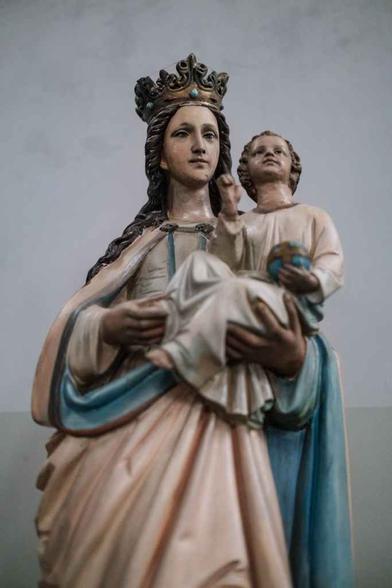
This is the Christian theological study of Mary, mother of Jesus. Mariology looks to relate doctrine/dogma about Mary to other doctrines of faith, for example, concerning Jesus & ideas about redemption, intercession, & grace. Christian Marisolgy seeks to place the role of the historical Mary in the context of scripture, tradition, & the teachings of the Church of Mary.

In social history terms, Mariology may be broadly defined as the study of devotion to & thinking about Mary throughout the history of Christianity. There exists a range of Christian and non-Christian views from the veneration of Mary in Roman Catholicism to accusations of idolatry. The idolatry “accusation” includes certain Protestant objections to Marian devotion.

As a field of theology, the most significant developments in Mariology (& the founding of specific centers devoted to its study) in the more recent centuries have taken place within the Catholic Church.

Eastern Orthodox concepts & versions of Mary are integral to the rite as a whole, & are mostly expressed in liturgy. The veneration of Mary is said to permeate, in a way, the entire life of the Church as a dimension of dogma as well as piety, of Christology as well as of Ecclesiology.

While similar to the Roman Catholic view, barring some minor differences, the Orthodox don’t see a need for a separate academic discipline of Mariology. As the Mother of God is seen as the self-evident peak of God’s human creation.

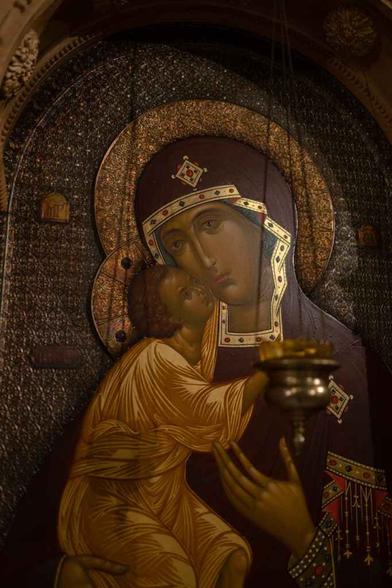
Eastern Orthodoxy calls Mary “The Theotokos,” “God-bearer.” The virginal motherhood of Mary is at the center of Orthodox Mariology. The title Ever Virgin is often used. Virginal motherhood is also known as the perpetual virginity of Mary. The Orthodox approach of Mariology underscores the sublime holiness of Mary, her share in redemption, & her role as a mediator of grace.

Eastern Orthodox mariological thought goes back as far as St. John Damascene (a.k.a. our boy, John of Damascus). In the 8th century, John of Damascus wrote on the meditative role of Mary & on the Dormition of the Mother of God. In the 14th century, Orthodox Mariology began to flourish among Byzantine theologians.

They believed in a cosmic view of Mariology, putting Mary & Jesus together at the center of the cosmos & see them as the goal of world history. More recently, Eastern Orthodox Mariology achieved a renewal among 20th-century theologians in Russia, for whom Mary is the heart of the Church & the center of creation. Eastern Orthodox Mariology doesn’t hold to the belief of the Immaculate Conception of…Mary.

Protestant views on Mary vary significantly from 1 denomination to another. Generally, they focus on various interpretations of Mary in the Bible, the Apostles’ Creed (which professes the Virgin Birth), & the Ecumenical Council of Ephesus in 431, which called Mary, the Mother of God.

Most Protestants don’t venerate Mary like Catholics or Eastern Orthodox do. Martin Luther’s, John Calvin’s, & Karl Barth’s views on Mary have contributed to modern Protestant views.

Anglican Marian theology varies. The Anglican Church formally celebrates 6 Marian feasts: Annunciation (Mar. 25), Visitation (May 31), Day of St. Mary (Assumption or Dormition, Aug. 15), Nativity of Mary (Sept. 8), Our Lady of Walsingham (Oct. 15), & Mary’s Conception (Dec. 8).

The Oriental Orthodox Churches regard Mary as the highest of saints & the Theotokos. It celebrates various Marian feast days.

One-Time Monthly Yearly

Make a one-time donation

Make a monthly donation

Make a yearly donation

Choose an amount

$1.00 $5.00 $10.00 $1.00 $5.00 $10.00 $5.00 $10.00 $15.00

Or enter a custom amount

$

Your contribution is appreciated.

Your contribution is appreciated.

Your contribution is appreciated.

DonateDonate monthlyDonate yearly #14thCentury #431 #AnglicanChurch #AnglicanMarianTheology #Annunciation #Apogee #ApostlesCreed #Assumption #August15 #bible #Byzantine #Catholics #Christian #Christianity #Christology #DayOfStMary #December8 #Dormition #DormitionOfTheMotherOfGod #EasternOrthodox #EasternOrthodoxy #Ecclesiology #EcumenicalCouncilOfEphesus #Idolatry #Jesus #JohnCalvin #JohnOfDamascus #KarlBarth #March25 #Mariology #MartinLuther #MarySConception #MarySImmaculateConception #May31 #MotherOfGod #NativityOfMary #October15 #OrientalOrthodoxChurch #OrthodoxMariology #OurLadyOfWalsingham #PerpetualVirginityOfMary #Protestant #RomanCatholicism #Russia #Saints #September8 #StJohnOfDamascene #TheTheotokos #VirginBirth #VirginMary #Visitation

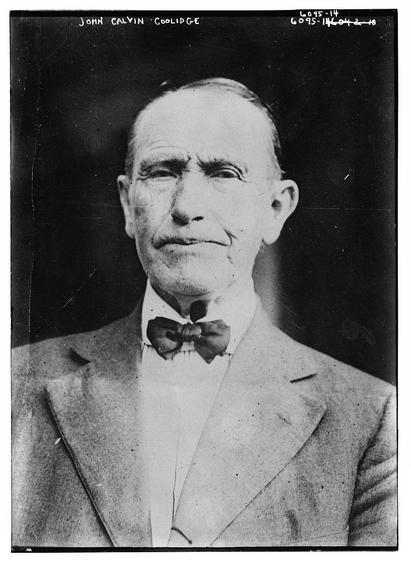
John Calvin Coolidge [no date recorded on caption card]
Bain News Service
1 negative : glass ; 5 x 7 in. or smaller.

John Calvin was a French theologian, pastor and reformer in Geneva during the Protestant Reformation. He was a principal figure in the development of the system of Christian theology later called Calvinism, including its doctrines of predestination and of God's absolute sovereignty in the salvation of the human soul from death and eternal damnation. Calvinist doctrines were influenced by and elaborated upon Augustinian and other Christian traditions. Various Reformed Church movements, including Continental Reformed, Congregationalism, Presbyterianism, Waldensians, Baptist Reformed, Calvinist Methodism, and Reformed Anglican Churches, which look to Calvin as the chief expositor of their beliefs, have spread throughout the world. https://en.wikipedia.org/wiki/John_Calvin

John Calvin Coolidge Sr. was an American politician and businessman from Vermont, and the father of Calvin Coolidge, the 30th president of the United States. The senior Coolidge administered the presidential oath of office to his son at their family homestead in the early morning hours of August 3, 1923, following the death of President Warren G. Harding. https://en.wikipedia.org/wiki/John_Calvin_Coolidge_Sr.

#JohnCalvinCoolidge #Portrait #President #Photograph #Archive #FormalPortrait #BainNewsService #glassnegatives #news #photography #JohnCalvin
https://www.loc.gov/item/2014716673/

Mariology

This is the Christian theological study of the Virgin Mary, mother of Jesus. Mariology looks to relate doctrine/dogma about Mary to other doctrine of the faith, like those concerning Jesus & notions about redemption, intercession, & grace.

Christian Mariology looks to place the role of the historic Mary in the context of Scripture, tradition, & the teachings of the Church of Mary. In terms of social history, Mariology may be broadly defined as the study of devotion to & thinking about Mary throughout the history of Christianity.

There’s a variety of Christian, & non-Christian, views on Mary as a figure ranging from the focus on the veneration of Mary in Roman Catholic Mariology to criticism of “mariolatry” as a form of idolatry.

As a field of theology, the most substantial developments in Mariology, & the founding of specific centers devoted to its study. In recent centuries, it’s taken place within the Roman Catholic Mariology.

The Eastern Orthodox ideas, & veneration, of Mary are integral to the rite as a whole (theotokos). They’re mostly expressed in liturgy. The veneration of Mary is said to permeate, in a way, the entire life of the Church as a “dimension” of dogma, as well as piety, of Christology as well as of Ecclesiology.

While similar to the Roman Catholic view, barring some minor differences, the Orthodox don’t see a need for a separate academic discipline of Mariology, as the Mother of God is seen as the self-evident apogee of God’s human creation. Apogee is the highest point in the development of something.

A significant number of Marian publications were written in the 20th century. Theologians Raimondo Spiazzi & Gabriel Roschini produced 2,500 & 900 publications respectively.

Over the centuries, Roman Catholic Mariology has been shaped by various forces ranging from sensus fidelium to Marian apparitions to the writing of saints to reflection by theologians & papal encyclicals. Encyclicals are papal letters sent to all bishops of the Roman Catholic Church.

Eastern Orthodox theology calls Mary “the Theotokos” or the God bearer. The virginal motherhood of Mary is at the center of Orthodox Mariology. The title of Ever Virgin is/was given to Mary. The Orthodox Mariology approach emphasizes the sublime holiness of Mary, her share in redemption, & her role as a mediator of grace.

Eastern Orthodox mariological thought goes back as far as St. John Damascene, who in the 8th century, wrote on the mediative role of Mary & one the Dormition of the Mother of God. Dormition is from the Latin “dormine” meaning to sleep. This is in reference to the death & subsequent assumption into Heaven to Mary, the mother of Jesus, in Eastern Christianity & some other churches.

In the 14th century, Orthodox Mariology began to flourish among Byzantine theologians who held a cosmic view of Mariology. This puts Jesus & Mary together at the center of the cosmos & saw them as the goal of world history.

More recently, the Eastern Orthodox Mariology achieved a renewal among 20th century theologians in Russia. Mary is the heart of the Church & the center of creation. Unlike the Catholic approach, Eastern Orthodox Mariology doesn’t support the Immaculate Conception Mary. Before the 20th century, Eastern Orthodox Mariology was almost entirely liturgical. It didn’t have any systematic presentation similar to Roman Catholic Mariology.

Protestant views on Mary differ between different denominations. Focus is generally on interpretations of Mary in the Bible, the Apostles’ Creed (which professes the Virgin Birth), & the Ecumenical Council of Ephesus in 431, which called Mary the Mother of God. Some early Protestants created Marian art & allowed limited forms of Marian veneration. Most Protestants today don’t share the veneration of Mary as practiced by Roman Catholics & Eastern Orthodox. Martin Luther, John Calvin, & Karl Barth’s views on Mary, & others have contributed to modern Protestant views.

Anglican Marian theology varies greatly from the Anglo-Catholic, which are very close to Roman Catholic views. The Anglican Church formally celebrates 6 Marian feast days: the Annunciation (March 25), Visitation (May 31), Day of Mary/Assumption or dormition (August 15), Nativity of Mary (September 8), Our Lady of Walsingham (October 15), & Mary’s Conception (December 8). Anglicans, with some other Protestants, teach the Marian dogmas of divine maternity & the virgin birth of Jesus. Even though there’s no systematic agreed upon Mariology among diverse parts of the Anglican Communion. The role of Mary as a mediator is accepted by some groups of modern Anglican theology.

Lutheran Mariology is informed by the Augsburg Confession & honors Mary as “the most blessed Mother of God, the most blessed Virgin Mary, & the Mother of Christ.” The Lutheran Churches, asserts the doctrine of the perpetual virginity of Mary.

The Oriental Orthodox Churches regard Mary as the highest of saints & the Theotokos. They also celebrated a variety of Marian feast days.

In the Islamic perception of the Virgin Mary (known as Maryam in Arabic), she’s an extremely pious & chaste woman who miraculously gave birth, while still a virgin, to the prophet Jesus (called Isa in Arabic). Mary is the only woman named specifically in the Quran. The 19th chapter of the Quran, which is named after her, begins with 2 narrations of a “miraculous birth.”

The First Council of Ephesus, in 431, formally approved devotion to Mary as the Theotokos. Its use implies that Jesus, whom Mary gave birth to, is God. Nestorians preferred Christotokos, meaning “Christ-bearer” or “Mother of the Messiah”, not because they denied Jesus’ divinity. But because they believed that since God the Son, or Logos, existed before time & before Mary. Jesus took divinity from God the Father & humanity from His mom. So calling her “Mother of God” was confusing & perhaps heretical. Others at the council believed that denying the Theotokos title would carry with it the implication that Jesus wasn’t divine.

The Council of Ephesus also approved the creation of icons having the images of the Virgin & child. Devotion to Mary was already widespread before this point. This is reflected in the fresco depictions of Mother & child win the Roman catacombs.

Mary, as the 1st Christian saint & Mother of Jesus, was deemed to be a compassionate mediator between suffering mankind & her son, Jesus, who’s seen as a king & judge.

In the East, devotion to Mary blossomed in the 6th century under official patronage & imperial promotion of the Court of Constantinople. The popularity of Mary as an individual object of devotion only became in the 5th century with the appearance of apocryphal versions of her life, interest in her relics, & the 1st churches dedicated in her name. Like St. Maria Maggiore in Rome.

Since the writing of the apocryphal Protoevangelium of James, various beliefs have circulated concerning Mary’s own conception. This led, eventually, to the Roman Catholic Church dogma. It was formally established in the 19th century of Mary’s Immaculate Conception. This exempts her from original sin. This story goes: When Mary’s mom got pregnant with her, it was an Immaculate Conception. So when Mary was born, she was free from original sin. After Mary was born, she was sent to the Temple to live, so she wouldn’t get corrupted by the world. So Mary could be pure to have Jesus.

Roman Catholic & Eastern Orthodox teaching also extends to the end of Mary’s life ending with the Assumption of Mary. This was formally established as dogma in 1950 & the Dormition of the Mother of God respectively.

One-Time Monthly Yearly

Make a one-time donation

Make a monthly donation

Make a yearly donation

Choose an amount

$1.00 $5.00 $10.00 $1.00 $5.00 $10.00 $5.00 $10.00 $15.00

Or enter a custom amount

$

Your contribution is appreciated.

Your contribution is appreciated.

Your contribution is appreciated.

DonateDonate monthlyDonate yearly

#19thCentury #20thCentury #431 #5thCentury #6thCentury #8thCentury #Anglican #AnglicanCommunion #Apocryphal #Apogee #ApostlesCreed #Arabic #Assumption #AssumptionOfMary #AugsburgConfession #August15 #bible #Bishops #Byzantine #ChristBearer #Christian #Christianity #Christotokos #Churches #CourtOfConstantinople #December8 #Dogma #Dormition #EasternOrthodox #Ecclesiology #EcumenicalCouncilOfEphesus #Encyclical #EverVirgin #FirstCouncilOfEphesus #GabrielRoschini #GodBearer #Idolatry #ImmaculateConception #Isa #Islam #Jesus #JohnCalvin #KarlBarth #King #Liturgy #Logos #Lutheran #March25 #Mariology #MartinLuther #MarySImmaculateConception #Maryam #May31 #MotherOfGod #MotherOfTheMessiah #Nativity #Nestorians #October15 #OrientalOrthodoxChurch #OriginalSin #Papal #PerpetualVirginityOfMary #Prophet #Protestant #Quran #RaimondoSpiazzi #relics #RomanCatholicChurch #Rome #Russia #Saint #Saints #SensusFidelium #September8 #StJohnDamascene #TheAnnunciation #TheProtoevangeliumOfJames #Theolgians #Theotokos #Veneration #VirginBirth #VirginMary #Walsingham

Eternal Security

This is also known as “once saved, always saved.” It’s the belief giving Christian believers with an absolute assurance of their final salvation.

Its development, especially in Protestantism, has given rise to a plethora of different interpretations. Especially when defining aspects of determinism, libertarian free will & the significance of personal perseverance.

In the early 5th century, Augustinian soteriology views of predestination by predetermination came about, they didn’t validate Eternal Security. Soteriology is the doctrine of salvation.

By the 16th century, this idea became meshed into the theology of John Calvin & other reformers. Calvinist circles initially embraced Eternal Security under the name of “perseverance of the saints.” Eventually, the name became a synonym of the Calvinist doctrine of perseverance independent of its practical interpretations.

Then in the early 20th century, Eternal Security started to become a defining doctrine of Southern Baptist traditionalism. Around the same time, it also became a part of Plymouth Brethren theology. In this, the 2 forms represents its main form today.

In the 1980s, the Free Grace movement voiced that Eternal Grace was independent of the idea of the “Hyper-Grace” idea.

Eternal Security is based on the faith that the believer is an elect by divine determination. This is in Calvinist circles & has the minority worldview.

In some non-Calvinist circles & the prevailing worldview, Eternal Security is based on the faith that regeneration leads to unconditional perseverance & then salvation.

In other non-Calvinist circles & currently growing in the Free Grace views, Eternal Security is based on the faith that regeneration leads to salvation independent of perseverance.

One-Time Monthly Yearly

Make a one-time donation

Make a monthly donation

Make a yearly donation

Choose an amount

$1.00 $5.00 $10.00 $5.00 $10.00 $15.00 $5.00 $10.00 $15.00

Or enter a custom amount

$

Your contribution is appreciated.

Your contribution is appreciated.

Your contribution is appreciated.

DonateDonate monthlyDonate yearly

#16thCentury #1980s #5thCentury #Augustinians #Calvinist #Christian #Determinism #DivineDetermination #Early20thCentury #EternalSecurity #FreeGraceMovement #HyperGrace #JohnCalvin #LibertarianFreeWill #Perseverance #PerseveranceOfTheSaints #PlymouthBrethen #Predestination #Protestantism #Reformers #Regeneration #Salvation #Soteriology #SouthernBaptist #SouthernBaptistTraditionalism

Predestination

Predestination is the doctrine that all events have been willed by God. This usually references to the eventual fate of an individual soul.

Predestination often seeks to address the contradiction of free will. God’s omniscience seems to conflict with human free will.

In this way, predestination can be regarded as a form of religious determinism/predeterminism. Also known as theological determinism. Determinism is a metaphysical view that all events within the universe can occur in only 1 possible way.

Josephus wrote, during the 1st century, that there were 3 main Jewish sects. They differed on this subject. Josephus argued that the Essenes & Pharisees thought that God’s Providence orders all human events. The Pharisees still maintained that people were able to choose between right & wrong. Josephus wrote that the Sadducees didn’t have a doctrine of Providence.

In the New Testament, Romans 8-11 speaks on a statement of predestination, in Romans 8:28-30. People have interpreted this passage in some different ways. Some say this only has to do with service & not about salvation.

Others say that this passage should be interpreted to the Christian community as a group rather than individuals. While some Catholics believe that this passage teaches that God has predestined the salvation of all humanity.

Some Protestants believe that this passage is teaching that God has predestined a certain set of people to salvation, & the remainder of humanity is predestined to reprobation. Reprobation is a doctrine that teaches that a person can reject the Gospel to a point where God can, in turn, reject them & curses their conscience.

Origen when writing in the 3rd century taught that God’s Providence extends to every single person. He believed God’s predestination is based on God’s foreknowledge of every human being’s merits, whether in their current life, or a previous one.

Valentinus believed in a form of predestination. In his opinion, people are born into 1 of 3 natures. This depended on which elements prevailed in a person. In Valentinus’ view, a person born with a bad nature can NEVER be saved because they’re too inclined to evil.

Some people have a nature that’s a combo of good & evil. They can choose salvation. The 3rd type of person has a good nature & will be saved because they’re inclined to be good.

Irenaeus attacked predestination that Valentinus set out. Irenaeus argued that it was unfair. For Irenaeus, people were free to choose salvation or not.

In the 4th & 5th century, Augustine of Hippo also taught that God orders all things whilst preserving human freedom. Prior to 396, Augustine believed that predestination was based on God’s foreknowledge of whether people would believe, that God’s grace was “a reward for human assent.”

In response to Pelagius, Augustine said the sin of pride consists in assuming that “we are the ones who choose God or that God chooses us (in His foreknowledge) because of something worthy in us.” Augustine argued that it’s God’s grace that causes the individual act of faith.

Scholars are divided over whether Augustine’s teaching implies double predestination, or the belief that God chooses some people for damnation, as well as some for salvation.

Catholic scholars tend to deny that Augustine held this view. Some Protestants & secular scholars believe that Augustine did indeed believe in double predestination.

Augustine’s view raised some objection. Julian of Eclanum said that Augustine was bringing Manichean ideals into the Church. Tensions became obvious, eventually, with the confrontation between Augustine & Pelagius culminating in the condemnation of Pelagianism. As interpreted by Augustine, at the Council of Ephesus in 431. Pelagius denied Augustine’s view of predestination in order to affirm that salvation is achieved by an act of free will.

The Council of Arles, in the late 5th century, condemned the position “that some have been condemned to death, others have been predestined to life.” This seems to follow Augustine’s teaching.

The Second Council of Orange in 529 also condemned the position that “some have been truly predestined to evil by divine power.”

In the 8th century, John of Damascus emphasized the freedom of the human will in his doctrine of predestination. He argued that acts arising from peoples’ wills aren’t part of God’s Providence at all. Damascene teaches that people’s good actions are done in cooperation with God, but aren’t caused by Him.

Cassian believed that despite predestination being a work that God does, God only decides to predestinate based on how people will respond.

In the 13th century, Thomas Aquinas taught that God predestines certain people to the beatific vision based solely on his own goodness rather than that of creatures. Aquinas also thought that people are free in their choices, fully cause their own sin, & are solely responsible for it. According to Aquinas, there are a few ways in which God wills actions.

Again in the 13th century, William of Ockham (Of Occam’s Razor fame.) taught that God doesn’t cause human choices & associated predestination with divine foreknowledge. Ockham/Occam taught that God predestines based on people’s foreseen works, he sustained that God’s will wasn’t constrained to do this.

John Calvin repudiated the idea that God allows rather than actively decrees the damnation of sinners, as well as other evil. Calvin didn’t believe God to be guilty of sin. But rather he considered God imposing sin on His creation to be an enigmatic mystery.

Though he maintained God’s predestination applies to damnation is caused by their sin. but that the salvation of the saved is solely caused by God.

In Roman Catholicism, free will isn’t denied. Predestination plays a very small role in Roman Catholicism. The “heretical” 17th & 18th century sect within Roman Catholicism known as Jansenism preached the doctrine of double predestination.

Although Jansenism claimed that even members of the saved elect could lose their salvation by doing sinful, un-repented deeds, implied in Ezekiel 18:21-28. According to the Roman Catholic Church, God doesn’t will anyone to mortally sin & so to deserve punishment in Hell.

The Mormons (LDS church) rejects predestination. But they believe in foreordination. Foreordination teaches that during the pre-mortal existence, God selected (foreordained) particular people to fulfill certain missions (“callings”) during their mortal lives.

For example, prophets were foreordained to be God’s/the Lord’s servants (Jeremiah 1:5), all who receive the priesthood were foreordained to that calling & Jesus was foreordained to enact the atonement.

However, all such people foreordained to retain their agency in mortality to fulfill that foreordination or not. The Mormon church (LDS church) teaches the doctrine of mortal agency, the ability to choose & act for oneself, & decide whether to accept Christ’s atonement.

One-Time Monthly Yearly

Make a one-time donation

Make a monthly donation

Make a yearly donation

Choose an amount

$5.00 $10.00 $15.00 $5.00 $10.00 $15.00 $5.00 $15.00 $20.00

Or enter a custom amount

$

Your contribution is appreciated.

Your contribution is appreciated.

Your contribution is appreciated.

DonateDonate monthlyDonate yearly

#13thCentury #17thCentury #18thCentury #396 #3rdCentury #431 #4thCentury #529 #5thCentury #Cassian #ChurchOfLatterDaySaints #CouncilOfArles #CouncilOfEphesus #CouncilOfOrange #Damascene #Determinism #Essenes #Ezekiel182128 #Foreordained #IrenaeusOfLyons #Jansenism #Jeremiah15 #Jewish #JohnCalvin #JohnOfDamascus #Josephus #JulianOfEclanum #Late8thCentury #Manichean #Mormons #NewTestament #OccamSRazor #Origen #Pelagius #Pharisees #Predestination #Predeterminism #Protestants #Reprobation #RomanCatholicChurch #RomanCatholicism #Romans811 #Romans82830 #Sadducees #SecondCouncilOfOrange #StAugustineOfHippo #TheologicalDeterminism #ThomasAquinas #Valentinus #WilliamOfOckham

The Whore of Babylon

This name refers to a female figure which is symbolic & an actual place of hostility. This phrase is mentioned in the Book of Revelation. Her full “title” is: Mystery, Babylon the Great, the Mother of Harlots & Abominations of the Earth.” She’s also identified as a representation of “the great city which reigns over the kings of the earth.” (Rev. 17:18) Her Bible passages are: Revelations 17:1-18.

She’s associated with the Beast of Revelation with a connection of equally evil kingdoms. Her apocalyptic downfall is prophesied to take place in the hands of the image of the Beast with 7 heads & 10 horns.

In I Peter 5:13, Babylon is code for Rome. Because at the time, the pagan Roman Empire persecuted Christians, before the Edict of Milan in 313. In Revelations 17:9, she sits on “7 mountains,” which are interpreted as Rome.

Others believe that Babylon, in this context, refers to an apostate false queen. A former “bride” who’s faithful, & who continues to falsely claim to be the “queen” of the spiritual realm, even though divorced & cast out. Believers of this think the “7 mountains” are the 7 hills of Jerusalem. The “fall of Babylon” in Revelations 18 is the fall & destruction of Jerusalem in 70 AD.

A few Old Testament prophets refer to Jerusalem as a spiritual harlot & the mother of such harlotry. (Isaiah 1:21; Jeremiah 2:20, 3:1-11; & Ezekiel 16:1-43, 23) John of Patmos may have known these prophesies.

An example in Matthew (23:34-37) & Luke (11:47-51), Jesus gave all the bloodguilt to the Jerusalem Pharisees. In Revelations 17:6 & 18:20, similar phrasing is used in charging the bloodguilt to Babylon. This is also bolstered by Jesus saying, “It’s not possible for a prophet to be killed outside of Jerusalem.” (Luke 13:33)

The Whore of Babylon has long been assigned to different people or places. Some uber traditionalist Catholics believe that the post-conciliar church is the Whore. (Post-conciliar is known as Vatican II or the 2nd Vatican Council.)

Historicists believe that the Whore is the Catholic Church in its entirety. Martin Luther & John Calvin taught this. Some believe the Whore is a church. The 7 hills of Rome are suggested to locate the church. An image from the 1545 edition of Luther’s Bible depicts the Whore wearing the papal tiara.

Some think that the Whore represents the fallen state of traditional Christianity, especially the Catholic Church. Some think the Whore represents the world empire of false religion. In Thelema, the Whore is a goddess. Yes, the religion that Aleister Crowley founded.

Make a one-time donation

Your contribution is appreciated.

Donate

Make a monthly donation

Your contribution is appreciated.

Donate monthly

Make a yearly donation

Your contribution is appreciated.

Donate yearly

Rate this:

#1Peter513 #313 #70AD #AleisterCrowley #CatholicChurch #Christians #EdictOfMilan #Ezekiel16143 #Ezekiel23 #Isaiah121 #Jeremiah220 #Jeremiah3111 #Jerusalem #Jesus #JohnCalvin #JohnOfPatmos #Luke114751 #Luke1333 #LutherSBible #MartinLuther #Matthew233437 #NewTestament #OldTestament #PapalTiara #Pharisees #PostConciliar #Revelations #Revelations17118 #Revelations176 #Revelations179 #Revelations18 #Revelations1820 #RomanEmpire #Rome #SecondVaticanCouncil #SevenMountains #TheBeast #TheWhoreOfBabylon #Thelema #VaticanII

« There is not one little blade of grass, there is no color in this world that is not intended to make men rejoice. »

— John Calvin

🔗 · https://poligraf.tumblr.com/post/734547815030784000/there-is-not-one-little-blade-of-grass-there-is

#quotes #JohnCalvin #joy #diversity #colourful

Poligraf · The Artistic Impulse

There is not one little blade of grass, there is no color in this world that is not intended to make men rejoice. — John Calvin

Tumblr
Poligraf · The Artistic Impulse

All events whatsoever are governed by the secret counsel of God. — John Calvin

Tumblr

« There is not one little blade of grass, there is no color in this world that is not intended to make men rejoice. »

— John Calvin

🔗 · https://poligraf.tumblr.com/post/734547815030784000/there-is-not-one-little-blade-of-grass-there-is

#quotes #JohnCalvin #joy #diversity #colourful

Poligraf · The Artistic Impulse

There is not one little blade of grass, there is no color in this world that is not intended to make men rejoice. — John Calvin

Tumblr