Nephilim

The Nephilim are mysterious beings or humans mentioned in the Bible. Traditionally understood as beings of great size & strength, or alternatively as beings of great power & authority.

The 1st biblical reference to them happens in Genesis 6:4. According to Numbers 13:33, 10 of the 12 spies reported the existence of Nephilim in Canaan before its conquest by the Israelites.

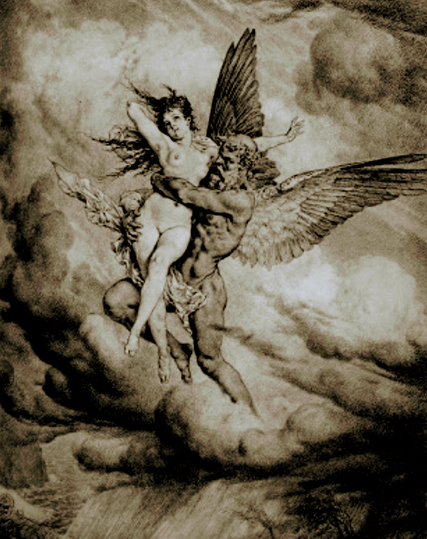
Interpretations vary vastly across traditions. Second Temple texts like 1st Enoch & Jubilees picture the Nephilim as offspring of fallen angels (Watchers) & of human women, portraying them as evil giants whose corruption led to the flood that’s told in the book of Genesis.

Some viewed the Nephilim as the descendants of Seth intermarrying with Cain’s lineage. Just to put this into perspective, Seth & Cain are biological brothers (half or whole, depending on the story). Their descendants married each other. It would be like marrying your cousins. Not 1st or 2nd cousins. But cousins nonetheless.

While others support the fallen angel theory. This was later supported by the Dead Sea Scrolls. Islamic tradition links them to the giant tribe of ‘Ad. While other theories link them with the Sumerian Apkallu myths or elite Canaanite warriors.

Over time, the Nephilim have been reimagined in popular culture: they appear in novels, films, video games, & conspiracy theories unrelated to religion. They are often pictured as powerful hybrids, ancient gods, or remnants of a lost superhuman race. Or the race of giants that Goliath descended from.

In the Bible, 3 interconnected passages refer to the Nephilim. 2 of them are in the Torah (Old Testament). The 1st appearance in Genesis 6:1-4. This is immediately before the Noah’s Ark story. Genesis 6:4 says: The Nephilim were in the earth in those days, & also after that when the sons of God came in unto the daughters of men & they bore children to them; the same were the mighty men that were of old, the men of renown.

A few things hit differently in this passage:

  • Heavenly beings can have biological human children? How is this physically possible? If, after all, they’re spiritual beings?
  • Why would God give/allow these “angels” the ability to even have kids in the 1st place? In modern times, we don’t think of angels as having the ability to have kids. Even the fallen ones. We do tend to think that Satan himself is the only 1 that can somehow have kids (the Antichrist).
  • Who, exactly, were these “men of renown”? Like we, personally, just want 2-3 of the names. Is it some guys we’ve never even heard of? Or would it confirm some names we already know? Like yep, our fav demigod Hercules made the short list. But some decisions happened on the editing room floor. Sorry Herc!

“Those days” were a period when the human population on the earth had started to really take off. This was when people began “to be plentiful on the Earth.”

The 2nd is Numbers 13:32-33, where 10 of the 12 spies describe the Anakites (a Rephaite tribe) as descendants of the Nephilim. Outside the Pentateuch, there are 1 more passage indirectly referencing nephilim & this is Ezekiel 32:17-32.

The earliest translation of the Bible (the Septuagint), which was composed in the 3rd or 2nd century BC, gives the said word as gigantes. In Greek mythology, the gigantes were beings of great strength & aggression. But not necessarily of great size.

The Vulgate (compiled in the 4th or 5th century AD) transcribes the Greek term rather than translating the Hebrew nefilim. From there, the tradition of the giant progeny of the sons of God & the daughters of men spread to later medieval translations of the Bible.

From the 3rd century onwards, references are found in Enochic literature, the Dead Sea Scrolls, the Jubilees, the Testament of Reuben, 2 Baruch, Josephus, & the Book of Jude.

The New American Bible commentary draws parallels between the Epistle of Jude & the statements in Genesis. This suggests that Jude refers implicitly to the paternity of the Nephilim as heavenly beings who came to earth & had spicy adult time with human women.

The story of the Nephilim is elaborated in the Book of Enoch. The Greek, Aramaic, & main Ge’ez manuscripts of 1 Enoch & Jubilees acquired in the 19th century (held in the British Museum & the Vatican Library) connect the origin of the Nephilim with the fallen angels, & in particular with the egregoroi (watchers).

In this tradition, the kids of the Nephilim are called the Elioud. They’re considered a separate race from the Nephilim. But they end up sharing the same fate as the Nephilim.

Some believe the fallen angels who sired the Nephilim were cast into Tartarus (II Peter 2:4, Jude 1:6), a place of “total darkness.” An interpretation is that God granted 10% of the disembodied spirits of the Nephilim to remain after Noah’s deluge, as demons, to try to lead the human race astray until the Final Judgment.

The Book of Jubilees also says that ridding the Earth of these pesky Nephilim was 1 of God’s purposes for flooding the Earth in Noah’s day. It describes the Nephilim as being evil giants.

A long-held view in some Christian sects is that the “sons of God” were the formerly righteous descendants of Seth (Adam & Eve’s 3rd kid) who rebelled. While the “daughters of men” were the unrighteous descendants of Cain. The Nephilim were their offspring. This view dates to at least the 1st century AD in Jewish literature. It was found in Christian sources from the 3rd century.

Some individuals & groups (including St. Augustine, John Chrysostom, & John Calvin) take the view of Genesis 6:2 that the “angels” who fathered the Nephilim referred to certain human males from Seth’s lineage. They were called sons of God in reference to their prior covenant with Yahweh (Deut. 14:1, 32:5). In these sources, these men had begun to pursue bodily interests, & so took wives of “the daughters of men.”

This view is also held by the Ethiopian Orthodox Church. This is supported by their own Ge’ez manuscripts & Amharic translation of the Haile Selassie Bible (1 Enoch & Jubilees also), which count as canonical by this church. The “Sons of Seth” view is the view presented in a few extra-biblical, yet ancient texts.

In these sources, these kids of Seth were said to have disobeyed God by breeding with the Cainites & producing wicked kids “who were all unlike.” This angered God into bringing about our boy Noah’s flood.

If you subscribe to the ancient alien theory, then you’ll be familiar with Zacharia Sitchin. In his The Earth Chronicles series, Mr. Sitchin makes the claim that the Nephilim were an extraterrestrial race called the Anunnaki. The Anunnaki came down from the 12th Planet (Nibiru) & mated with (or at least genetically messed with) human women. They also gave humanity a few things: civilization, makeup, weapons, warfare, & farming. (Our founder is currently reading The 12th Planet right now, as of the date this posts. They are about done with it, like 2 more chapters!)

Make a one-time donation

Your contribution is appreciated.

Donate

Make a monthly donation

Your contribution is appreciated.

Donate monthly

Make a yearly donation

Your contribution is appreciated.

Donate yearly #Ad #19thCentury #1stCenturyAD #2Baruch #2ndCenturyBC #3rdCentury #3rdCenturyBC #4thCenturyAD #5thCenturyAD #Amharic #Anakites #Apkallu #Aramaic #bible #BookOfEnoch #BookOfJude #BritishMuseum #Cain #Cainites #Canaan #Canaanite #DaughtersOfMen #DeadSeaScrolls #Deluge #Deuteronomy141 #Deuteronomy325 #Egregoroi #Elioud #EpistleOfJude #EthiopianOrthodoxChurch #Eve #Ezekiel321732 #FinalJudgment #GeEz #Genesis #Genesis614 #Genesis62 #Genesis64 #giants #Goliath #GreatFlood #Greek #HaileSelassieBible #Hebrew #Hercules #IIPeter24 #Islam #Israelites #JohnCalvin #JohnChrysostom #Josephus #Jubilees #Jude16 #Nephilim #NewAmericanBible #NoahSArk #Numbers133233 #Numbers1333 #OldTestament #Pentateuch #Rephaites #SecondTemple #Septuagint #Seth #SonsOfGod #StAugustine #Sumeria #Sumerian #Tartarus #TestamentOfReuben #The12thPlanet #Torah #VaticanLibrary #Vulgate #Watchers #ZechariaSitchin

You Can Stop Running Now

On Second Thought

The Lord’s Day always invites us to slow down, breathe deeply, and remember the God who sees us—fully, lovingly, and without illusion. It is a day when grace calls out to us, reminding us that we do not have to outrun the past or hide our failures behind hurried busyness. On this holy day, our hearts are asked to return to the One who already knows everything about us and still invites us near.

As I read the story of George Mulholland, the Australian escapee who fled prison for 58 years, I was struck not by the brilliance of his escape but by the exhaustion of living that long with something unresolved. After nearly six decades of staying out of sight, George walked into a jail at eighty years old and turned himself in—only to be quickly pardoned. All those years running, all those years hiding, all those years fearing the consequences… and in the end, he was met with mercy.

It is a strangely human story. We may not pick locks or flee across continents, but we have all tried to hide from something—our past, our guilt, our decisions, our failings, our grief. We may not call it running, but our hearts know the truth. We bury what we fear will catch up with us. We keep secrets from others. Sometimes we even try to keep secrets from God.

Today’s devotional reminds us that hiding may work for a time, but it does not last forever. Scripture goes even further: there will come a day when every person, righteous or wicked, willing or unwilling, will stand before the Lord. Revelation paints a sobering picture:

“The sea gave up the dead… Death and Hades gave up the dead… and each one was judged according to his works.”
(Revelation 20:13)

Nothing hidden. Nothing lost. Nothing overlooked.

This is not said to terrify us but to awaken us. The point is not to make us fear that God is hunting us down but to remind us that He already knows where we are—and He still wants us.


When the Running Stops

One of the most sobering details in Scripture is that even death cannot hide us from God. The sea releases its dead, graves open, and every life is brought before the throne. As your ARTICLE pointed out, this “Hades” in Revelation is not a burning hell but the grave—the place where all human bodies rest until the Lord calls them forth. And call them forth He will.

On the Lord’s Day, when Christians around the world remember Jesus’ resurrection, this truth should pierce our hearts with reverence. The Christ who rose from the grave holds authority over every grave. He calls forth the righteous to eternal life—and He summons the unrighteous to judgment.

That is not meant to paralyze us. It is meant to re-center us.

The vision of judgment does not exist to make us hide in fear. It exists to invite us into grace—to bring us to the moment where, like George Mulholland, we stop running and surrender ourselves to the mercy of the One who alone can pardon us.


The God Who Already Knows

There is a moment in Genesis 3 when Adam and Eve hear the sound of the Lord walking in the garden. Instead of running to Him, they run from Him. They hide behind trees, trembling with shame. Then the Lord speaks the question heard across history:

“Where are you?”

It was not a question of location—it was a question of relationship. God already knew where they were. The question was an invitation to come out of hiding.

David understood the same truth when he wrote:

“Where can I go from Your Spirit?
Where can I flee from Your presence?”

(Psalm 139:7)

When Jesus described the final judgment in Luke 13:28, He showed us that those who reject God will ultimately stand before Him—even if they spent a lifetime avoiding Him. But for the believer, the God who sees all is the God who loves all, redeems all, restores all, and covers all.

There is no stain Jesus cannot cleanse.
No failure He cannot forgive.
No past He cannot redeem.
No shame He cannot cover.

The robe of righteousness described in Isaiah 61:10 is not given to the deserving but to the desperate—those willing to stop running and let Jesus cover them.


Shame Exposed, Grace Offered

Revelation says the wicked stand before God in “naked shame.” Nothing hidden. No excuses left. No disguises to cover the truth.

But that same imagery becomes a doorway of hope when applied to those who come to Jesus now. When I stand before Him today—in prayer, confession, humility—it is not for condemnation but for cleansing. I may feel exposed before His holiness, but He responds with mercy. I may see my sin clearly, but He covers me in His righteousness.

The Scriptures remind us that judgment is not meant to push us away from God but to draw us toward Him. These visions whisper to our hearts:

“Come out of hiding.
Stop running.
Let Christ forgive you.
Let Him clothe you.
Let Him make you whole.”

When we face the reality of judgment, we discover the beauty of grace. And as the ARTICLE so wisely concludes, these prophetic pictures are meant to move us—not into fear—but into repentance, humility, and trust.


A New Way Forward

On this Lord’s Day, let me ask you gently:

What have you been running from?
What shame from your past still shadows your steps?
What secrets weigh down your heart?
Where do you fear God’s judgment because you haven’t yet embraced His mercy?

Today, you can stop running.

Jesus Christ—the One who holds the keys of death and the grave—invites you into forgiveness, cleansing, and restoration. There is no courtroom dread for those who belong to Him. There is only grace.

When you confess your sin, you are not dragged before a judge—you are welcomed by a Savior.
When you surrender your past, you are not condemned—you are washed clean.
When you let Jesus cover you, your shame is replaced with dignity.
And when you walk in His righteousness, you no longer fear the day when all secrets are revealed, because you have already brought them to Him.

Mulholland ran 58 years before he learned what mercy could have taught him much earlier: there is freedom in surrender. For the believer, that freedom is deeper, stronger, and eternal.


A Blessing for Your Journey

May this Lord’s Day soften your heart and strengthen your faith.
May you lay down every burden you’ve carried alone.
May you step out of hiding and into the light of Christ’s love.
And may you know, beyond all doubt, that the God who sees you also welcomes you, forgives you, and clothes you in righteousness.

You can stop running now—grace has found you.


FEEL FREE TO COMMENT SHARE SUBSCRIBE

#christianEncouragement #finalJudgment #godsMercyAndForgiveness #revelation20Devotional #spiritualSurrender

When Power Meets Powerlessness

On Second Thought

There is something strangely humbling about watching the downfall of a giant. History is full of towering figures who believed themselves invincible—only to discover that greatness, when built on human strength alone, eventually collapses under its own weight. Napoleon, the master strategist, learned this at Waterloo. His brilliance, his ambition, and his carefully calculated maneuvers could not conquer the rain-soaked fields, the soft soil, the misread terrain, or the unexpected failures in timing. The greatest general of his age was defeated not simply by an opposing army, but by factors utterly beyond his control.

When I revisit that moment in history, I’m reminded that humanity—even at its most powerful—remains small before forces it cannot tame. On second thought, perhaps what appears to be the collapse of a hero is really the unveiling of a truth we tend to forget: no human strength, no matter how celebrated, can stand against the sovereign power of God.

This reality rises even more clearly in the Scriptures, perhaps nowhere as dramatically as in Revelation 20:7–10, where Satan gathers the largest army imaginable. John describes it as a host “whose number is as the sand of the sea.” The picture is designed to overwhelm the imagination. This is a global uprising led by the most deceptive force in the universe, backed by the collective fury of every rebellious heart.

And yet, with chilling clarity, Scripture reminds us that even the most intimidating mass of human and demonic power is no match for the God who speaks worlds into being.

When the Darkness Makes Its Final Push

The imagery in Revelation can feel heavy, especially when we read of Satan positioning this vast army around “the camp of the saints and the beloved city.” It is a moment that looks, from the outside, very much like Waterloo—a seemingly unstoppable force surrounding what appears vulnerable and outmatched.

But the difference between Napoleon’s defeat and Satan’s final downfall is not merely in scale—it’s in sovereignty.

Napoleon fell because he met conditions he couldn’t control. Satan falls because he meets a God who controls everything.

Even the most brilliant military minds—those who might stand at Satan’s side—cannot alter what God has ordained. Satan’s ambition has always been the same. Isaiah tells us that he desired to “ascend,” to take God’s throne, to exalt himself. But Scripture records the truth with unmistakable finality:

“You are brought down to Sheol, to the lowest depths of the Pit.” (Isaiah 14:15)

It doesn’t matter how many armies he gathers. It doesn’t matter how many rebel hearts he recruits. It doesn’t matter how strategic or overwhelming his forces appear.

He still loses.

That is the comfort Revelation offers believers: evil’s final stand is not a battle of equals. It is a brief unveiling of evil’s pride—and God’s victory.

The Moment Every Heart Must Face

Before the fire falls, John describes a moment of stunning spiritual significance. The wicked—those who have rejected Christ, resisted grace, and refused to repent—are suddenly face-to-face with the Son of Man. They can no longer escape His presence, deny His authority, or pretend they were sovereign over their own lives.

For the first time since Eden, every rebellious impulse is stripped away, and every heart must confront the truth: Jesus Christ is Lord.

Paul echoes this in Romans 14:11:
“Every knee shall bow to Me, and every tongue shall confess to God.”

This is not forced worship. This is undeniable reality. In that moment, acknowledgment becomes unavoidable.

I’m struck by this: even at the end of history, God provides a moment of reflection. He gives every unrepentant heart a final awareness that what they rejected was love—not domination. Grace—not condemnation. A Savior—not an enemy.

On second thought, this might be the saddest moment in Scripture—not because of what God does, but because of what the lost refused to receive.

Justice Falls, But Grace Always Came First

Fire then comes down from heaven—not a fire that burns eternally but one whose consequences are eternal. The text says simply, “It devoured them.” Final judgment is swift. This is not a God losing His patience; this is a God fulfilling His promise.

He has pleaded.
He has warned.
He has invited.
He has forgiven.
He has offered Himself again and again.

God takes no delight in the demise of the wicked (Ezekiel 33:11). His heart always leans toward mercy. But mercy rejected becomes judgment received.

And this is why the Gospel must be preached. Because before the end comes, God desires that every man and woman be given the opportunity to choose life.

What This Means for You Today

On second thought, perhaps the most pressing question is not what happens to the armies of evil—but what happens in your heart. Revelation’s purpose is not to terrify the believer but to strengthen them. It reminds us that God wins. Righteousness wins. Love wins.

And if God wins in the end, God can also win in you today.

You may feel surrounded.
You may feel like the terrain is not in your favor.
You may feel like the weather is against you.
You may feel like every misstep is catching up with you.

But you are not Napoleon at Waterloo.
You are a child of God in the care of a risen Savior.
Your victory does not depend on your strength but His.

And no enemy—spiritual or earthly—can overcome His power.

A Prayer for Today

Mighty God,
Thank You for giving every soul a chance to turn, to repent, and to receive Your love. Thank You that You are never defeated, never surprised, and never overpowered. I receive You into my heart today. Shape my faith. Strengthen my hope. And remind me that no matter the battles I face, I belong to the God who will one day bring all evil to an end. Amen.


FEEL FREE TO COMMENT SHARE SUBSCRIBE


#christianHope #finalJudgment #revelation20Devotional #sovereigntyOfGod #spiritualWarfare

When Love Stands Before the Throne

A Day in the Life of Jesus

Scripture Reading: Matthew 25:31–46

There are moments in the teachings of Jesus when His words cut straight through all pretense and leave us with only one question: What kind of person am I becoming? The parable of the sheep and the goats is one of those moments. It is not merely a story about judgment; it is a revelation of the heart of God and the nature of His Kingdom.

When Jesus speaks of the final judgment, He gives us a picture that feels both majestic and intimate. The Son of Man comes in glory, surrounded by angels, seated upon His throne, and before Him stand all the nations. It’s a breathtaking vision—the culmination of history. Yet the criteria for judgment are not based on status, intellect, or even public confession. They hinge upon something startlingly simple: acts of mercy.

For I was hungry and you fed Me; I was thirsty and you gave Me drink; I was a stranger and you welcomed Me…” (Matthew 25:35). These words remind us that the Kingdom of God is revealed in the smallest gestures of love. The test of our faith is not what we say we believe but how our belief shapes the way we treat others—especially the ones who can offer us nothing in return.


The Hidden Presence of Christ

It’s easy to read this passage and think of it as a distant event—a final sorting at the end of the age. But Jesus’ point is much more immediate. Every encounter we have with another human being is, in some way, an encounter with Him. The hungry neighbor, the lonely widow, the weary worker, the prisoner forgotten by the world—all bear the hidden presence of Christ.

Ezekiel 34:17–24 echoes this imagery when God speaks of separating the sheep from the goats, promising to judge between the “fat and the lean” sheep—between those who have cared for others and those who have trampled them. Jesus takes that Old Testament vision and makes it personal. We are no longer passive observers of divine justice; we are participants in it.

I often think of how startling this revelation must have been to the disciples. The King they followed, the Messiah they adored, would one day sit in judgment—but the measure of that judgment would be love. “When you did it to one of the least of these My brothers, you did it to Me.” Love is the truest evidence of faith because it mirrors the heart of God Himself.


The Great Pretenders

There’s a sobering contrast in Jesus’ words: not everyone who claims to follow Him truly does. He speaks of those who cry “Lord!” but fail to recognize Him in the suffering around them. These are “the great pretenders”—those who know the language of faith but not the life of it.

True discipleship cannot be reduced to doctrine alone. As the apostle James later wrote, “Faith by itself, if it is not accompanied by action, is dead.” (James 2:17). Jesus demands our personal involvement in the pain of others, not because He needs our works but because love authenticates our faith.

How we respond to the needs of others—whether through compassion, generosity, or presence—reveals the condition of our hearts. When we refuse to act, we not only neglect people, we reject Christ Himself. And that rejection, Jesus says, carries eternal consequence.

It’s uncomfortable, isn’t it? Yet in that discomfort, there is also grace. The call to care for the “least of these” is not an accusation but an invitation—to live as citizens of the Kingdom here and now.


Faith with Work Clothes On

Isaiah 58:7 challenges us in much the same way: “Share your food with the hungry, provide the poor wanderer with shelter; when you see the naked, clothe them.” The prophet’s vision and Christ’s parable converge to remind us that genuine worship is expressed through compassion.

This doesn’t require wealth or status. The acts Jesus names are within reach of every believer—feeding, visiting, welcoming, clothing. These are not dramatic gestures reserved for saints; they are daily opportunities for love to take on flesh.

Sometimes we think of holiness as something lofty, distant, or mystical. But in truth, holiness often looks like carrying a meal to a sick friend, visiting someone in a nursing home, or sitting beside a neighbor who feels forgotten. When love becomes action, the ordinary becomes sacred.

Charles Spurgeon once said, “Faith and works are bound up in the same bundle. He that obeys God trusts God; and he that trusts God obeys God.” In other words, faith and compassion are inseparable—they are the twin signs of a redeemed heart.


The Measure of the Kingdom

The judgment Jesus describes is not about surprise punishment but about revealed reality. Those who loved freely will discover that they were loving Him all along. Those who withheld mercy will realize they were turning away from Him.

Our faith is not measured in how many sermons we’ve heard, how many verses we’ve memorized, or how eloquently we pray—it is measured in love. The sheep are those whose lives reflect the Shepherd’s heart, whose hands have served as His own.

I think of how C.S. Lewis framed it: “The only things we can keep are the things we freely give to God.” When we give love to others, it is never lost—it is stored in eternity. Every act of kindness, every unseen gesture of mercy, is a seed that will bear fruit in the life to come.

The beauty of this passage lies not in fear of judgment but in the hope of recognition. One day, Jesus will look upon those small, faithful acts we thought unnoticed and say, “You did it to Me.”


Walking with Jesus Today

If we’re honest, this parable forces us to look inward. Do I see Christ in the marginalized, the overlooked, the broken? Do I choose compassion when apathy feels easier? Jesus doesn’t ask for perfection—He asks for presence.

When we open our eyes to see Him in others, our entire day changes. The office coworker who irritates us becomes a person to serve with patience. The neighbor struggling with loss becomes someone to comfort with presence. The poor and the forgotten cease to be statistics—they become sacred encounters with the living Christ.

Every day we walk with Jesus, we are given another chance to love in His name. And every act of love, no matter how small, shapes eternity.


A Blessing for the Journey

May the Lord open your eyes today to see His face in the faces around you.
May He soften your heart to respond to need with compassion instead of judgment.
May He remind you that the true evidence of your faith is not found in words, but in love that moves, gives, and heals.
And when you stand before His throne one day, may you hear those long-awaited words: “Come, blessed of My Father.”


Read More:
For further reflection, read “The Least of These: Following Jesus Through Acts of Mercy” from Crosswalk.com .


FEEL FREE TO COMMENT SHARE SUBSCRIBE


#ADayInTheLifeOfJesus #actsOfMercy #ChristianCompassion #discipleship #faithAndWorks #finalJudgment #Matthew253146 #sheepAndGoats #theLeastOfThese