Predestination
Predestination is the doctrine that all events have been willed by God. This usually references to the eventual fate of an individual soul.
Predestination often seeks to address the contradiction of free will. God’s omniscience seems to conflict with human free will.
In this way, predestination can be regarded as a form of religious determinism/predeterminism. Also known as theological determinism. Determinism is a metaphysical view that all events within the universe can occur in only 1 possible way.
Josephus wrote, during the 1st century, that there were 3 main Jewish sects. They differed on this subject. Josephus argued that the Essenes & Pharisees thought that God’s Providence orders all human events. The Pharisees still maintained that people were able to choose between right & wrong. Josephus wrote that the Sadducees didn’t have a doctrine of Providence.
In the New Testament, Romans 8-11 speaks on a statement of predestination, in Romans 8:28-30. People have interpreted this passage in some different ways. Some say this only has to do with service & not about salvation.
Others say that this passage should be interpreted to the Christian community as a group rather than individuals. While some Catholics believe that this passage teaches that God has predestined the salvation of all humanity.
Some Protestants believe that this passage is teaching that God has predestined a certain set of people to salvation, & the remainder of humanity is predestined to reprobation. Reprobation is a doctrine that teaches that a person can reject the Gospel to a point where God can, in turn, reject them & curses their conscience.
Origen when writing in the 3rd century taught that God’s Providence extends to every single person. He believed God’s predestination is based on God’s foreknowledge of every human being’s merits, whether in their current life, or a previous one.
Valentinus believed in a form of predestination. In his opinion, people are born into 1 of 3 natures. This depended on which elements prevailed in a person. In Valentinus’ view, a person born with a bad nature can NEVER be saved because they’re too inclined to evil.
Some people have a nature that’s a combo of good & evil. They can choose salvation. The 3rd type of person has a good nature & will be saved because they’re inclined to be good.
Irenaeus attacked predestination that Valentinus set out. Irenaeus argued that it was unfair. For Irenaeus, people were free to choose salvation or not.
In the 4th & 5th century, Augustine of Hippo also taught that God orders all things whilst preserving human freedom. Prior to 396, Augustine believed that predestination was based on God’s foreknowledge of whether people would believe, that God’s grace was “a reward for human assent.”
In response to Pelagius, Augustine said the sin of pride consists in assuming that “we are the ones who choose God or that God chooses us (in His foreknowledge) because of something worthy in us.” Augustine argued that it’s God’s grace that causes the individual act of faith.
Scholars are divided over whether Augustine’s teaching implies double predestination, or the belief that God chooses some people for damnation, as well as some for salvation.
Catholic scholars tend to deny that Augustine held this view. Some Protestants & secular scholars believe that Augustine did indeed believe in double predestination.
Augustine’s view raised some objection. Julian of Eclanum said that Augustine was bringing Manichean ideals into the Church. Tensions became obvious, eventually, with the confrontation between Augustine & Pelagius culminating in the condemnation of Pelagianism. As interpreted by Augustine, at the Council of Ephesus in 431. Pelagius denied Augustine’s view of predestination in order to affirm that salvation is achieved by an act of free will.
The Council of Arles, in the late 5th century, condemned the position “that some have been condemned to death, others have been predestined to life.” This seems to follow Augustine’s teaching.
The Second Council of Orange in 529 also condemned the position that “some have been truly predestined to evil by divine power.”
In the 8th century, John of Damascus emphasized the freedom of the human will in his doctrine of predestination. He argued that acts arising from peoples’ wills aren’t part of God’s Providence at all. Damascene teaches that people’s good actions are done in cooperation with God, but aren’t caused by Him.
Cassian believed that despite predestination being a work that God does, God only decides to predestinate based on how people will respond.
In the 13th century, Thomas Aquinas taught that God predestines certain people to the beatific vision based solely on his own goodness rather than that of creatures. Aquinas also thought that people are free in their choices, fully cause their own sin, & are solely responsible for it. According to Aquinas, there are a few ways in which God wills actions.
Again in the 13th century, William of Ockham (Of Occam’s Razor fame.) taught that God doesn’t cause human choices & associated predestination with divine foreknowledge. Ockham/Occam taught that God predestines based on people’s foreseen works, he sustained that God’s will wasn’t constrained to do this.
John Calvin repudiated the idea that God allows rather than actively decrees the damnation of sinners, as well as other evil. Calvin didn’t believe God to be guilty of sin. But rather he considered God imposing sin on His creation to be an enigmatic mystery.
Though he maintained God’s predestination applies to damnation is caused by their sin. but that the salvation of the saved is solely caused by God.
In Roman Catholicism, free will isn’t denied. Predestination plays a very small role in Roman Catholicism. The “heretical” 17th & 18th century sect within Roman Catholicism known as Jansenism preached the doctrine of double predestination.
Although Jansenism claimed that even members of the saved elect could lose their salvation by doing sinful, un-repented deeds, implied in Ezekiel 18:21-28. According to the Roman Catholic Church, God doesn’t will anyone to mortally sin & so to deserve punishment in Hell.
The Mormons (LDS church) rejects predestination. But they believe in foreordination. Foreordination teaches that during the pre-mortal existence, God selected (foreordained) particular people to fulfill certain missions (“callings”) during their mortal lives.
For example, prophets were foreordained to be God’s/the Lord’s servants (Jeremiah 1:5), all who receive the priesthood were foreordained to that calling & Jesus was foreordained to enact the atonement.
However, all such people foreordained to retain their agency in mortality to fulfill that foreordination or not. The Mormon church (LDS church) teaches the doctrine of mortal agency, the ability to choose & act for oneself, & decide whether to accept Christ’s atonement.
One-Time Monthly Yearly
Make a one-time donation
Make a monthly donation
Make a yearly donation
Choose an amount
$5.00 $10.00 $15.00 $5.00 $10.00 $15.00 $5.00 $15.00 $20.00
Or enter a custom amount
$
Your contribution is appreciated.
Your contribution is appreciated.
Your contribution is appreciated.
DonateDonate monthlyDonate yearly
#13thCentury #17thCentury #18thCentury #396 #3rdCentury #431 #4thCentury #529 #5thCentury #Cassian #ChurchOfLatterDaySaints #CouncilOfArles #CouncilOfEphesus #CouncilOfOrange #Damascene #Determinism #Essenes #Ezekiel182128 #Foreordained #IrenaeusOfLyons #Jansenism #Jeremiah15 #Jewish #JohnCalvin #JohnOfDamascus #Josephus #JulianOfEclanum #Late8thCentury #Manichean #Mormons #NewTestament #OccamSRazor #Origen #Pelagius #Pharisees #Predestination #Predeterminism #Protestants #Reprobation #RomanCatholicChurch #RomanCatholicism #Romans811 #Romans82830 #Sadducees #SecondCouncilOfOrange #StAugustineOfHippo #TheologicalDeterminism #ThomasAquinas #Valentinus #WilliamOfOckham
 Spirituality & Religious Studies
 TheoBlog.de [Unofficial]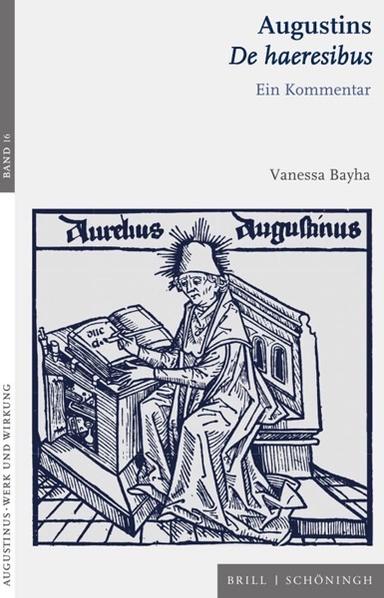


 Irish Philosophy