How bad #science is becoming big business
"te emergence of an #organised, systematic approach to #scientific #fraud. Tis incls #papermills churn'g out formulaic #research articles, brokerages guarantee'g publication for a fee & predatory journals tt bypass quality assurance entirely. These orgn's disguise themselves behind respectable sound'g labels eg “editing services” or “academic consultants”. In reality their biz model depends on corrupting te #scientificprocess" 1/2
https://theconversation.com/how-bad-science-is-becoming-big-business-262821?ref=inline-article
How bad science is becoming big business

Fraudulent science is becoming an industry.

The Conversation

The failure of Redflow, an Australian battery maker, highlights a few things: #Australia has innovative technically capable people, hardware/manufacturing is particularly hard, and, Australians don't understand innovation.

#Innovation, in the sense I'm using it here, is basically the #scientificprocess applied to solving real world problems. That basically means taking our current understanding of what should work, trying it (experiment), and then learning from the probable failures. Repeat.

What Brian Cox LOVES about SCIENCE

#science #scientificprocess #podcast #joerogan #jre

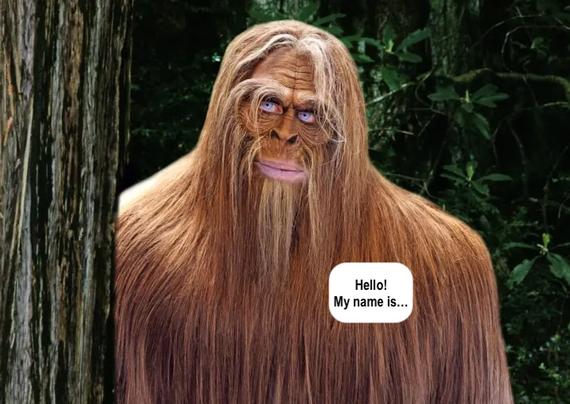
Modern problems with scientific naming: Example – Bigfoot

An article advanced-published on 14 November 2024 in the Journal of Mammalogy calls out the problem with poor naming practices of proposed new species in our internet age. One of the most famous examples of poor practice was that of Melba Ketchum, et al., who not only did a terrible job analyzing DNA from “Bigfoot” but also used a pop-up journal to give Bigfoot another useless name.

The “Perspective” piece by Ruedas, Norris, and Timm, titled “Best practices for the naming of species“, explains that there are set rules to effectively naming new species. Naming is governed by the International Commission on Zoological Nomenclature (ICZN) based on the 10th edition of Linnaeus’s Systema Naturæ published likely in 1758. Linnaeus’s system of nature called a consistent use of two Greek or Latin words to denote genus and species.

A person who wishes to designate an organism as a new species must publish the name and description according to the rules in the code of the ICZN. But that frequently does not happen as it should leading to “descriptions that fail to meet standards outlined in the Code” that “can create problems for years afterwards, with any number of unfortunate—and often unforeseen—consequences.”

For example, when authors propose new names that fail to meet the standards in the Code, these names are unavailable. They are called “naked names” (singular = nomen nudum; plural = nomina nuda). The description and name is invalid. The real world effect of these errors is that, if we cannot clearly define the organism we are talking about, we can’t effectively study or protect it.

Ruedas, et al. goes on to describe what makes a good naming process. Additionally, they note issues with electronic publications, which are more prevalent now than in… uh… 1758. The ICZN Code addresses that. It might be argued, they say, that an HTML version of the description can never be the version of record because it’s impermanent.

When you don’t have an actual Bigfoot

There is also a problem with not having a holotype specimen when we now have photographic, video, and DNA evidence instead of a collected sample. While it’s not prohibited, things can get messy if you only have a photo or video to document the find. The example given of an “absurd situation” is that of Bigfoot/Sasquatch. I don’t think the paper’s authors were aware of (or maybe they chose not to go down that hole) of the many instances of people proposing names for Bigfoot and other cryptids on a whim and thinking those names would be valid. This happened before that of the infamous Melba Ketchum and her Bigfoot DNA/Sasquatch Genome debacle. But Ketchum was name-checked in this article because, out of all the rules she didn’t follow, she DID register Homo sapiens cognatus with the ZooBank, the official registry of the ICZN. The name is a nomen nudem because it was missing every other requirement, including a description. Not mentioned in the article is the fact that the Denovo journal that she created herself to publish this one paper (after failing to get it into Nature because the science was so bad), has now disappeared from the internet. It no longer exists.

A second example related to Bigfoot is that of the Patterson-Gimlin Film which is the visual of this creature that everyone recognizes, seemingly from childhood. If a name was given to the creature based on this film, and it turned out that it was a man in horsehide suit as suspected, the name would apply possibly either to the man or to the horsehide as a holotype! That spirals even further into nomenclature chaos, but you can read the article if you want to hear what would happen regarding synonyms.

Unsurprisingly, this tactic has been attempted! In 2017, an alternative healer, Dr. Erich Hunter, described and named the animal based on the 1967 film. He self-published a document on CreateSpace calling the creature Kryptopithecus gimlinpattersonorum (Hunter 2017). The document, “Kryptopithecus gimlinpattersoni, A New Species of Bipedal Primate (Primates: Hominidae) From Humboldt County, California USA” (later edited to “gimlinpattersonorum” as noted above), is a legitimate way to declare a species – since it was printed and could be archived. But Hunter couldn’t follow the rules, either. The original species name was “gimlinpattersoni” which appeared on the cover and in the released print/Kindle copy. That is incorrect Latinization and there is no legitimate way to fix it. Sloppy Latin was just one of the problems in this Bigfoot naming ceremony.

Like Ketchum, Hunter registered the name in ZooBank. That makes no difference. The Code or the registration of the name includes no judgment on the validity of the species description or characterization. The ICZN code, however, explicitly prohibits naming hypothetical concepts. Until a part of a body is found and clearly documented by a professional who knows what they are doing, Bigfoot remains hypothetical. No past used name would legitimately apply unless (I think) it could be proven that the previous name was referring to the same creature. Considering all the things out there that are called a Bigfoot, but aren’t, that’s a heavy lift.

Finally, this process reminds me of the ridiculous stunt pulled as part of the Lost Monster Files show where they named a chupacabra by plucking fun, cool words out of the air. That was just idiotic. There have been past attempts to name the Loch Ness Monster and Cadborosaurus, too. Some of those names are still circulating in the cryptid literature today, misleading the audience to assume that such names are valid and represent a creature yet to be captured. Since there is no distinct description of what the creature was (they possibly could have been just a wave or an already named big fish), the suggested name means nothing without the definitive description. Don’t let amateurs play the zoological name game.

#Bigfoot #binomialNomenclature #Cryptozoology #howToNameNewSpecies #ICZN #MelbaKetchum #newSpecies #Sasquatch #science #scientific #scientificName #scientificProcess #zoology

https://sharonahill.com/?p=8948

The Ketchum Project: What to Believe about Bigfoot DNA ‘Science’ (2013) | Sharon A. Hill

Reprint of 2013 article detailing the proposed but illegitimate publication of Bigfoot DNA results by Melba Ketchum, and her circus of pseudoscience.

Sharon A. Hill
Why AI can't replace science

We shouldn't overstate the impact of machine learning on the scientific process.

Fast Company

Tassal in Cone Bay, Western Australia;
farmed Barramundi:

Until Tassal Group Limited (Cooke Inc) becomes more transparency via comprehensive monitoring and Open Data,
then it’s probably impossible for the brand to ever restore its reputation.

It needs to go above and beyond government requirements:
1. Public confidence in government has been falling;
2. Past reputation of industries lobbying and setting standards for its convenience;
3. Trust is harder to restore once broken.

https://www.abc.net.au/news/2024-04-13/tassal-seafood-takes-charge-cone-bay-barramundi-fish-farm-wa/103576936

#AusPol #AusBiz #Aquaculture #WaterManagement #WaterQuality #FoodQuality #EnvironmentalSustainability #ScientificProcess #OpenData #Transparency #Accountability #PublicRelations

Kimberley residents apprehensive as seafood giant Tassal takes charge of Cone Bay Barramundi

The seafood company comes to the area to run Cone Bay Barramundi with a controversial reputation, but insists it wants to build a healthy relationship with the community.

ABC News

Independent verification of results is an important part of the #scientific process. However - in #physics at least - #replication and #verification studies rarely seem to be published. Despite this, I decided to attempt to verify the results of a groundbreaking Nature Physics paper from 2012, in which the authors describe the first dynamical #quantum #simulator. You can read the fruits of my labour in my #arxiv preprint: "Classical verification of a quantum simulator: local relaxation of a 1D Bose gas". I hope you find it interesting.

https://scirate.com/arxiv/2401.05301

#ScientificProcess #QuantumSimulator #QuantumSimulation #QuantumAdvantage #science #ClassicalVerification #ComputationalPhysics #ParallelComputing #HPC #HighPerfomanceComputing #supercomputer #TensorNetworks #MatrixProductStates #TEBD

Classical verification of a quantum simulator: local relaxation of a 1D Bose gas

In [Nat. Phys. 8, 325-330 (2012)], Trotzky et al. utilize ultracold atoms in an optical lattice to simulate the local relaxation dynamics of a strongly interacting Bose gas "for longer times than present classical algorithms can keep track of". Here, I classically verify the results of this analog quantum simulator by calculating the evolution of the same quasi-local observables up to the time at which they appear "fully relaxed". Using a parallel implementation of the time-evolving block decimation (TEBD) algorithm to simulate the system on a supercomputer, I show that local densities and currents can be calculated in a matter of days rather than weeks. The precision of these numerics allows me to observe deviations from the conjectured power-law decay and to determine the effects of the harmonic trapping potential. As well as providing a robust benchmark for future experimental, theoretical, and numerical methods, this work serves as an example of the independent verification process.

SciRate

#WX fediverse users -

Been stuck in a hotel that has cable for 5 days, so I've been watching the #Weather channel. I have an idea to advance weather programming and general population's understanding of the scientific process, mainly interplay between models and observations. A #MultiSolution if you will.

Just after prime time, why not run a feature on "How did our models do?" Forecasts now involve interpreting complex models into shapes of warning areas. Every night, you can show the warning/forecast areas vs. the actual observations, patting yourselves on the back when the models do well and discussing what changed when the models don't do well. This could be useful for forecasts of severe weather outbreaks, rainfall totals, snowfall amounts, warning and watch areas, and of course tropical cyclone paths and intensities.

#multisolving
#climate
#weather
#ScientificProcess
#forecast

#introduction

I fight for the users.

I love programming and thinking and talking about thinking. I have an education (BS, MS, PhD) focused on artificial intelligence and neuroscience.

I'm an advocate of the public academic pursuit of knowledge, the scientific process, peer review, and I see open source software and hardware as an essential part of the scientific process.

I see software user rights, including security and privacy, to be protected mainly by free open source software, specifically software with a copyleft license, i.e. GPL or Mozilla.

I see the democratizing effects of the Internet, including distributed journalism and social networking, to be largely the effect of the collaborative development of free and open source software.

I am interested in free and open source manufacturing, including open source 3D printers and CNC machines. I believe open source manufacturing will be important for distributed manufacturing, allowing local manufacturing and local labor.

I see worker-owned coops as the way to safely transition from a non-democratic authoritarian top-down power structure of a traditional corporation to a democratic work environment, where the workers own the company and elect the board of directors, transitioning to democracy in the workplace.

I believe that socialism is a regulatory response to capitalism.

I believe that laws, money, corporations, and government are social agreements, and I'm in favor of democratic social agreements.

I believe in the organized non-violent boycott as a way to control capitalists and change corrupt systems.

I am a pacifist. I am against violence. I am against citizens keeping guns in cities and towns with children. I am against war.

I try to eat plant-based / vegan foods to boycott the animal industry, to help with the climate crisis, to improve my health, to avoid animal cruelty, and to avoid the extinction of species of plants, animals and ecosystems.

I have been diagnosed with Retinitus Pigmentosa, which is a disease of progressive retinal degeneration. I am legally blind, although I have about 5-degrees of vision remaining in my fovea. I'm interested in researching and developing BCIs (Brain-Computer Interfaces), specifically BCIs that function as vision prostheses that may help with conditions like RP, or the more common degenerative retinal disease AMD (Age-related Macular Degeneration).

I enjoy playing computer games like Age of Empires and Rimworld. I used to program computer games when I was younger and would like to get back to it one day.

I love playing music, especially bass guitar. I've been listening to a lot of Rage Against the Machine and Enya recently.

I enjoy reading books, mostly non-fiction.

I enjoy studying religions. I've found a lot of value in Buddhism, and I meditate often daily.

Nina and I have recently had our first baby, a boy we call Tyoma.

I'm currently working at Brain Computer Enterprises, Cooperative Inc. on FOSH assistive consumer electronics.

I'm sober.

#users #fightforusers #userrights #programming #thinking #thinkingaboutthinking #ai #artificialintelligence #neuroscience #journalism #science #scientificprocess #peerreview #foss #fosh #flosh #floss #freeandopensource #freedomsoftware #libresoftware #copyleft #gpl #agpl #mozilla #license #ls #academia #privacy #security #democracy #internet #socialnetwork #distributed #cnc #3dprinting #locallabor #localmanufacturing #coop #workerowned #democracyatwork #regulation #laws #money #corporations #government #socialagreement #boycott #controlcapital #nonviolent #pacifist #antivolence #antigun #noguns #schoolshooting #antiwar #plantbased #vegan #climatecrisis #animalindustry #animalcruelty #extinction #animal #plant #ecosystem #environment #retinituspigmentosa #rp #agerelatedmaculardegeneration #amd #blind #lowvision #bci #games #computergames #ageofempires #rimworld #gamedev #music #bassguitar #rageagainstthemachine #enya #religion #reading #books #readingbooks #buddhism #baby #sober

“It would have been better to use a phrase like “trust the #scientificprocess which would imply that science is what we know now, the product of the work of many people over time, and principles that have reached consensus in the scientific community through established processes of peer review and transparent disclosure. “ #Science https://www.science.org/content/blog-post/it-matters-who-does-science
It matters who does science