Well, even before LLMs writing papers, even before the internet & digital publishing, we were already in deep problems w/ #science-publishing + peer review + #replication & quality. That's why it's so big now that it cannot be ignored any longer. Among the changes needed are mentioned in the OP.

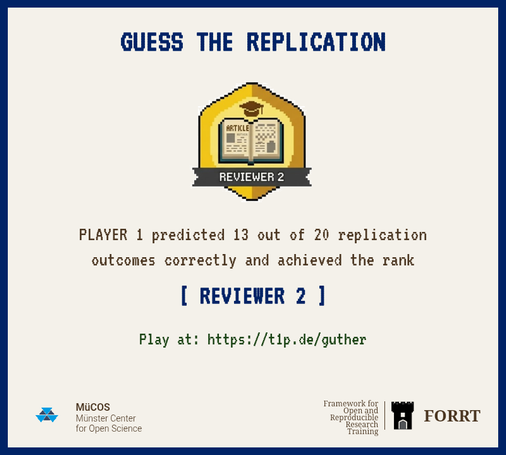
Of all three reviews of a recent Science Advances submission, mine was the one that was paricularly critical of the methods, with numerous questions about documentation, references, data, sample sizes, etc.
Guess which reviewer was the only one not invited for a second round of reviews and now the paper is accepted?

Point in case why GlamMagz are the main driver of the #replication crisis and not paper mills or AI slop. The latter are just convenient distractors from the actual problem.

#Tropism and #Replication Competence of #Cattle #Influenza #H5N1 Genotype B3.13 Virus in #Human Bronchus and #Lung Tissue

How to Batch INSERTs to Slash Replication Lag

One bulk insert instead of a thousand tiny ones.

#mysql #insert #replication #howto #batch #performance

https://www.youtube.com/watch?v=zS8u3pk-p4k

How to Batch INSERTs to Slash Replication Lag #insert

YouTube

There you have it:

"Together, these dynamics suppress replication and cumulative verification, distort the visible scientific record, and misdirect expert attention away from epistemically stabilizing review."

https://link.springer.com/article/10.1186/s41073-026-00193-3

#replicationcrisis #replication #reproducibility

"While economists pride themselves on the robustness of their seminars, what actually matters is publication in just five journals. The editors have immense power. Peer review is closed and anonymous. Virtually nothing is ever retracted. Post-publication peer review is minimal. Instead, my experience suggests that there is a culture of not publicly criticizing anything that has been published. If you do, you are viewed as too aggressive, possibly due to some kind of personality defect. Meanwhile, the original authors can use their right to reply for deflection and ad hominem attacks. The fear of upsetting one’s superiors is palpable.

The machines will perhaps bring about some changes. They are massively useful for replication. Without asking a robot to explain it to me repeatedly as if I were a five-year-old, I never would have understood the SCM or Borusyak et al.’s critique of Autor et al.; I never would have done all the coding my replications required; I never would have been able to search for errors in German-language source materials. The cost of doing replication studies has dropped dramatically, even if the institutions and the culture of economics are still hostile to them. Perhaps the system will catch up.

Ultimately, however, human experts are still needed to determine the truth. "

https://thepoorrichworld.substack.com/p/reflections-on-my-adventures-in-replication

#Economics #SocialSciences #Replication #PeerReview #AcademicPublishing

Reflections on My Adventures in Replication

My attempts to demonstrate the problems in the knowledge production system have led me to a Damascene conversion on the need for peer review

The Poor Rich World

🧵 n/n 👀 see thread, above

Mistral small 3, via duck.ai / #duckduckgo seems to produce similarly useful results.

ZFS compression seems to be a localhost kinda matter, regardless of the role of localhost in the network - zfs set compression on ALL the localhosts, i guess! 😉

#Linux #ZFS #replication #compression

🧵 2/n this is actually rather undesirable, because tank on elitedesk is a spinning HDD mirror, which would greatly benefit from writing compressed data!

Oof, re-writing 900+GB will take a while, but i think it'll be worth it, @allanjude.

I think i'll have to create the backup DS, then SET compression (perhaps on its parent?), and THEN replicate.

EDIT: would -w/-W RAW help? It's not encrypted, but would it help?

#ZFS #Linux #replication #backup

Tiny, 45 base long RNA can make copies of itself

Self-copying RNAs may have been a key stop along the pathway to life.

Ars Technica