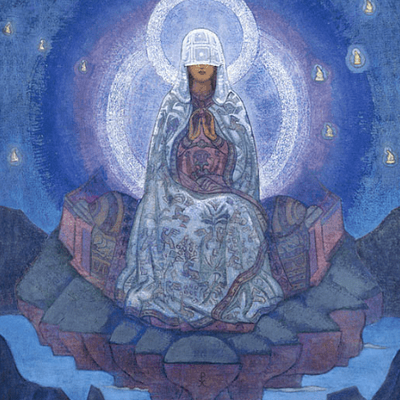
The Watchers

A watcher is a type of biblical angel. It shows up in both plural & singular forms in the Book of Daniel. This is where reference is made to the holiness of the beings. The Book of Enoch (2nd-1st century BC) refer to both good & bad Watchers, with a mani focus on the rebellious ones.

In Daniel 4:13, 17, & 23, there’s 3 references to the class of “watcher, holy ones.” The term was intro’ed by Nebuchaddnezzar who said he saw ” a watcher, a holy cone come down from Heaven.” He described how in his dream the watcher said that Nebuchdnezzzar will eat grass & be crazy. This punishment is “by the decree of the watchers, the demand by the word of the holy ones…” “that the living may know that the Most High rules in the kingdom of men.”

The 1st Book of Enoch devotes a lot of attention to the fall of the Watchers. The 2nd Book of Enoch addresses the Watchers who are in the 5th Heaven where the fall took place. The 3rd Book of Enoch gives attention to the unfallen watchers.

In the Book of Enoch, the Watchers are angels sent to Earth to watch over the humans. They soon begin to lust for/after human women, & at the prodding of their leader, Samyaza, defect to illicitly instruct mankind & have kids with them, arriving at Mount Hermon. The offspring of these unions are the Nephilim savage giants who pillage the earth & endanger humanity.

Samyaza & his associates further taught their human “charges” arts & tech such as weaponry, cosmetics, mirrors, sorcery, & other techniques that would otherwise be discovered gradually over time by humans, not foisted upon them all at once.

Eventually, God allows a Great Flood to rid the earth of the Nephilim. But 1st sends the archangel Uriel to warn Noah so as not to completely destroy the human race. The watchers are bound “in the valley of the Earth” until Judgment Day (Jude 1:6). This is where some theories pop up. Like they’re in the Marianus Trench or in the depths of the Grand Canyon or in a mountain base.

The Book of Enoch also lists the leaders of the 200 fallen angels who married & consummated unnatural unions with human women, & who taught forbidden knowledge. Some are listed in the Book of Raziel (Sefer Raziel Hamalakh), the Zohar, & Jubilees. Here’s a short list of them:

  • Araqiel: Taught humans the signs of the earth (geomancy). However, in the Sibylline Oracles, Araqiel is referred to not as a fallen angel (or watcher) but as 1 of the 5 angels who lead the souls of humans to judgment.
  • Armaros: In I Enoch, taught humanity the resolving of enchantments.
  • Azazel: Taught humans to make knives, swords, shields, & how to devise ornaments & cosmetics, metallurgy (specifically in the context of war)
  • Gadreel: Taught the art of cosmetics (camouflage), the use of weapons & killing blows (martial arts & weaponry).
  • Baraqel: Taught the signs of the stars (astrology)
  • Chazaqiel: Taught humans the signs of the clouds (meteorology)
  • Kokabiel: In the Book of Raziel, he’s a high-ranking, holy angel. In I Enoch, he’s a fallen watcher, resident of Hell, & commands 365,000 surrogate spirits to do his bidding.
  • Penemue: Taught mankind the art of writing with ink & paper, & taught the kids of men the bitter & the sweet & the secrets of wisdom.
  • Sariel: Taught mankind about the courses of the moon.
  • Samyaza: 1 of the leaders of the fall from Heaven in Vocabulaire de l’Angelolgie.
  • Shamsiel: Once a guardian of Eden as stated in the Zohar, served as 1 of the 2 chief aides to the archangel Uriel, when Uriel bore his standard into battle, & is the head of 365 legions of angels & also crowns prayers, accompanying them into the 5th Heaven. In Jubilees, he’s referred to as 1 of the Watchers. He’s a fallen angel who teaches the signs of the sun.
  • Yeqon/Jeqon: He was the ringleader who 1st tempted the other Watchers into having adult spicy naked time with humans. His accomplices were: Asbeel, Gadreel, Penemue, & Kasdaye, who were all identified as individual “Satans.”

The Jewish pseudepigraphon 2nd Book of Enoch (Slavonic Enoch) referred to the Grigori. They’re the same as the Watchers in 1st Enoch. Chapter 18 presents the Grigori as countless soldiers with human appearance.

They’re located in the 5th Heaven. They’re identified as “the Grigori, who with their prince Satanail (Yes, you are reading that correctly) rejects the Lord of light.” One version of 2 Enoch adds that their number was/is 200 myriads (2 million).

Chapter 29, referring to the 2nd day of creation, before the creation of human beings, says that “One from out the order of angels” or “one of the ranks of the archangels” “conceived an impossible thought, to place his throne higher than the clouds above the earth, that he might become equal in rank to the Lord’s power. And the Lord threw him out from the height with his angels, & he was flying in the air continuously above the bottomless.”

The Mercer Dictionary of the Bible makes a distinction between the Grigori & the fallen angels by stating that in the 5th Heaven, Enoch sees “the giants whose brothers were the fallen angels.”

The longer recension of 2 Enoch 18:3 identifies the prisoners of the 2nd Heaven as the angels of Satanail.

First Corinthians 11:10, according to early Church Father Tertullian, refers to the Watchers. He taught that the lust of the Watchers was the reason for St. Paul’s directive to Christian women to wear a head covering. Tertullian referenced the case of a woman who was touched on the neck by an angel “who found her to be a temptation.”

According to Philo of Byblos, Sanchuniathon mentioned “some living beings who had no perception, out of whom intelligent beings came into existence, & they were called Zophasemin (In Hebrew: “Watchers of Heaven”). And they were formed like the shape of an egg.”

In the 1999 movie Dogma, the character Bartleby (played by Ben Affleck) is mentioned to have formerly been a Watcher. In the TV show Supernatural (season 10), the Grigori with 1 Tamiel (under the name “Peter Holloway”) appears as the main enemy of the episode. At 1 point, a picture is shown that is implied to be a painting of a Grigori. In the original Dragon’s Dogma, the dragon is called Grigori.

In the 1998 movie City of Angels (this is 1 of our founders’ favorite movies), Nicolas Cage plays a watcher angel who falls in love with a human woman (played by Meg Ryan).

Make a one-time donation

Your contribution is appreciated.

Donate

Make a monthly donation

Your contribution is appreciated.

Donate monthly

Make a yearly donation

Your contribution is appreciated.

Donate yearly #1998 #1999 #1stCenturyBC #1stCorinthians1110 #2ndCenturyBC #5thHeaven #Angel #Araqiel #Armaros #Asbeel #Astrology #Azazel #Baraqel #BenAffleck #BookOfDaniel #BookOfEnoch #BookOfRaziel #Camouflage #Chazaqiel #ChurchFather #CityOfAngels #Cosmetics #Daniel17 #Daniel23 #Daniel413 #Dogma #DragonSDogma #Eden #FallenAngels #Gadreel #Geomancy #GrandCanyon #GreatFlood #Grigori #Heaven #Hebrew #Hell #Jeqon #JewishPseudepigraphon #Jubilees #Jude16 #JudgmentDay #Kasdaye #KingNebuchadnezzar #Kokabiel #MarianisTrench #MartialArts #MegRyan #MercerDictionaryOfTheBible #Metallurgy #Meteorology #MountHermon #Nephilim #NicolasCage #Noah #Penemue #PhiloOfByblos #Raziel #Samyaza #Sanchuniathon #Sariel #Satan #Satanail #SeferRazielHaMalakh #Shamsiel #SibyllineOracles #SlavonicEnoch #StPaul #Stars #Supernatural #Tertullian #theWatchers #Uriel #Watchers #Weaponry #Yeqon #Zohar #Zophasemin
Archangel Gabriel

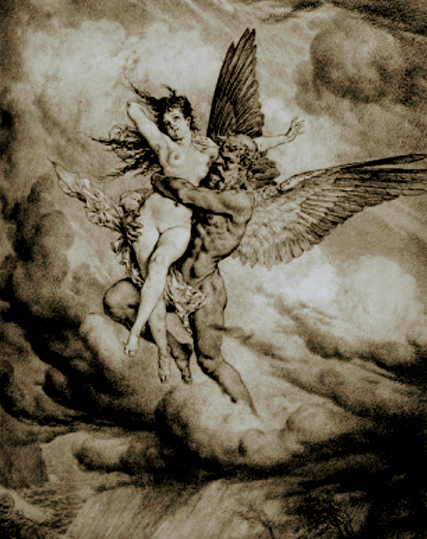
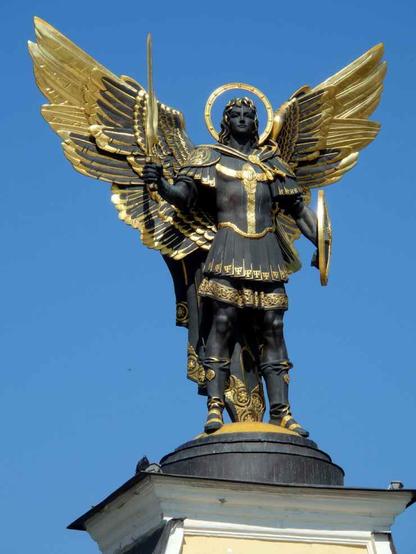
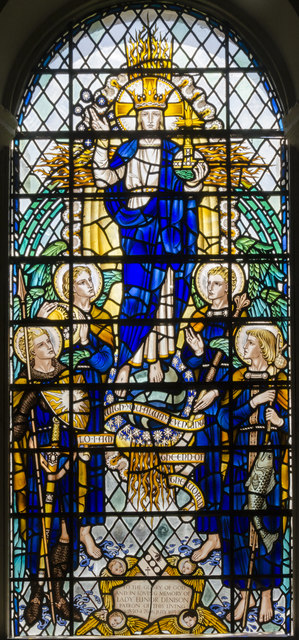
In Judaism, Christianity, & other Abrahamic religions, Gabriel (or even Cebrail (Djebrail) in some cultures) is an archangel with the power to announce God’s will to mankind as the messenger of God. He’s like the Abrahamic Apollo. He’s mentioned in the Hebrew Bible/Christian Old Testament, the New Testament, & the Quran.

In the Book of Daniel, Gabriel appears to the prophet Daniel to interpret his vision. Gabriel also shows up in the Jewish apocryphal 1st Book of Enoch & other Hebrew writings.

Along with the archangel Michael, Gabriel is described as the guardian angel of the Israelites, defending them against the angels of the other peoples. Many sects of Christianity revere Gabriel as a saint.

In the New Testament’s Gospel of Luke, Gabriel appears to Zachariah, predicting the birth of John the Baptist. Gabriel later appears to Mary, mother of Jesus, to announce that she would conceive & bear a son via a virgin birth.

Islam regards Gabriel as an archangel sent by Allah/God to different prophets, including Muhammad (PBUH). The first 5 verses of the Al-Alaq (96th chapter of the Quran) are believed by Muslims to have been the 1st verses of revelations given by Gabriel to Muhammad (PBUH).

The only book in the Hebrew Bible that explicitly mentions Gabriel is the Book of Daniel, & Gabriel appears to the prophet Daniel to explain his visions (Daniel 8:15-26, 9:21-27). In Daniel’s final vision, an unnamed angel appears to him & speaks of receiving help from the archangel Michael in battle against the Prince of Persia (not the video game) & also Michael’s role in times to come. This unnamed angel is thought to be Gabriel.

Though not named specifically, the “man clothed with linen” mentioned in the Book of Ezekiel chapters 9 & 10 is interpreted as Gabriel in Yoma 77a of the Babylonian Talmud.

There are many references to Gabriel in the Book of Enoch. According to this book, Michael, Uriel, Raphael, & Gabriel complain to God about the many wrongs perpetuated by Azazel & Samyaza. Especially the fact that they revealed “eternal secrets” & sins to mankind & defiled themselves with human women who later gave birth to giant offspring. Or, 1 of our fav subjects to circle back to, the Nephilim. (We will be doing the Nephilim in a future post. It’s currently being researched right now. Along with the Watchers, the Nephilim’s dads.)

As a result, God decides to destroy the Earth (which has been corrupted by those pesky fallen angels; these fallen angels were led by Azazel & Samyaza) & all of its inhabitants except for Noah. God sends Gabriel & the other archangels to go after the fallen angels & cast them into the darkness until the day of their judgment.

In Chapter 20, Gabriel is listed as 1 of 7 holy angels who watch. In Chapter 40, Gabriel is listed as 1 of 4 presences who stand on the 4 sides of God. These 4 archangels will be the ones to cast the fallen angels into the abyss of condemnation on Judgment Day.

According to Rabbinic Judaism, Gabriel (along with Michael, Uriel, & Raphael) is 1 of the 4 angels that stand at the 4 sides of God’s throne & serve as guardian angels of the 4 parts of the Earth. Michael stands on/at the right hand of God. While Gabriel (who ranks beneath Michael) stands at the left. Michael & Gabriel often work together. But Michael is mainly occupied in Heaven, while Gabriel (as the messenger of God) typically executes God’s will on earth.

Gabriel is also associated with the metal gold (the color of fire). Alongside Michael, Gabriel is described as the guardian angel of Israel, defending the Israelites against the angels of the other nations.

Gabriel is 1 of God’s archangels in Kabbalah literature. He’s pictured working in concert with Michael as part of God’s court. He’s identified with the sefira (or the Counting of the Omar. It’s a period of 49 days known as sefira(h).) of Yesod (this is a node in the kabbalistic Tree of Life.). Gabriel isn’t to be prayed to because only God can answer & sends Gabriel as his agent/messenger/courier.

According to Jewish mythology, in the Garden of Eden there’s a tree of life or the “tree of souls” that blossoms & produces new souls, which fall into the Guf, the Treasury of souls. This is located in the 7th Heaven. Gabriel reaches into the Treasury & takes out the 1st soul that comes into his hand.

Gabriel’s 1st appearance in the New Testament is found in the 1st part of Chapter 1 of Luke. This is where the annunciation of the birth of John the Baptist is. John’s dad, Zachariah, was childless because John’s mom, Elizabeth, was barren. An angel shows up to Zechariah to announce the birth of his son. When Zechariah questions the angel, the angel names himself as Gabriel (Luke 1:5-25).

Gabriel’s next appearance is in the 2nd part of Luke, chapter 1. This time, to announce the birth of Jesus to Mary (Luke 1:26-38). In the 1st part of the passage, the angel identifies itself as Gabriel; in the 2nd part of the passage, the angel doesn’t. It’s the author of Luke who calls this angel Gabriel.

Gabriel is more frequently referenced in early Christian pseudepigraphic texts (these are texts whose authorship isn’t by who it’s claimed to be or a real author attributed to some bigger name of the past) than in Amy of the canonical Biblical texts.

Gabriel is mentioned in some of the infancy Gospels, like the Nativity Gospel of Mary, Protevangelium of James, & First Gospel of the Infancy of Jesus Christ. Gabriel is also mentioned in some of the early Christian apocalyptic texts, like the Greek Apocalypse of Ezra & Second Book of Enoch.

In Gnosticism, angels are portrayed as belonging to a pantheon of spiritual beings involved in the creation of the world. According to 1 ancient Gnostic manuscript, the Holy Book of the Great Invisible Spirit. (Which we have posted!) Gabriel is a divine being & inhabitant of the pleroma (This refers to the total of divine powers.) that existed before the demiurge (This is an figure who is responsible for fashioning & maintaining the physical universe). There’s also a reference to Gabriel in Chapter 17 of the Gospel of Judas.

In the theology of the Mormon Church, Gabriel is believed to have lived a mortal life as the prophet Noah. The 2 are regarded as the same individual. Noah was his mortal name & Gabriel being his heavenly name.

Gabriel’s fast day was exclusively celebrated on March 18 between 1588 & 1921. The feast of St. Gabriel was included by Pope Benedict XV in the General Roman Calender in 1921 for celebration on March 24.

In 1969, the day was officially transferred to September 29 for celebration in combination with the feasts of Michael & Raphael. Today, the September 29 date (known as Michaelmas) has been adopted by the Catholic Church, Church of England, Lutheran faith, Anglican Communion, & Western Orthodox churches.

The Eastern Orthodox Church & those Eastern Catholic Churches that follow the Byzantine Rite (a.k.a. the Rite of Constantinople is a liturgical rite developed in the Eastern Christian church of Constantinople.) celebrated the Feast of the Archangels (or Synaxis of the Archangel Michael & the Other Bodiless Powers) on November 8.

For the churches that follow the Julian Calendar, November 9 currently falls on November 21 of the modern Gregorian Calendar (a 13-day difference).

The Eastern Orthodox commemorate Gabriel not only at the Feast of the Archangels, but also on 2 other days: March 26 the “Synaxis of the Archangel Gabriel” & celebrates his role in the Annunciation. July 13, a.k.a. the “Synaxis of the Archangel Gabriel.”

The Coptic Orthodox Church celebrates Gabriel’s feast of 13 Paoni, 22 Koiak, & 26 Paoni. The medieval Coptic work Investiture of the Archangel Gabriel, attributes the feast day of 22 Koiak to the day Gabriel was given the rank of archangel in Heaven.

The Ethiopian Church celebrates Gabriel’s feast of December 18 (in the Ethiopian calendar). A sizable number of its believers making a pilgrimage to a church dedicated to “St. Gabriel” in Kulubi & Wonkshet on that day.

Gabriel is in many places in the Quran. He’s revered as 1 of the primary archangels & as the Angel of Revelation in Islam. He’s primarily mentioned in the verses 2:97, 2:98, 66:4 of the Quran. However, the Quranic text doesn’t refer to him as an angel. In the Quran, the archangel Gabriel appears named in 2:97 & 66:4, as well as in 2:98, where he’s mentioned along with the archangel Michael.

Tafsir (this is like the Jewish Midrash) narrates that Muhammad saw the archangel Gabriel in his full angelic splendor only 2x. The 1st time was when he received his 1st revelation. Islamic tradition holds that Gabriel was sent to numerous pre-Islamic Biblical prophets with revelation & divine injunctions, including Adam, whom Muslims believe was consoled by Gabriel sometime after Fall, too. He’s known by many names in Islam, such as “keeper of holiness.” In Hadith traditions, Jibril is said to have 600 wings.

In Islam, the tree of souls is referred to as the Sidrat al-Muntaha. This is identified as a Ziziphus spina-christi. This is also known as Christ’s thorn jujube.

Muslims believe that Gabriel was tasked with transmitting the scriptures from God to the prophets & messengers as Asbab al-Nuzul or revelation. Asbab al-Nuzul is occasions or circumstances of revelation names the historical context in which Quranic verses were revealed from the perspective of traditional Islam. When Muhammad was questioned which angel is revealing the holy scriptures, he told the Jews they’re revealed by Gabriel.

Muslims also Revere Gabriel for several events that predate what they regard as the 1st revelation narrated in the Quran. Muslims believe that Gabriel was the angel who informed Zechariah of the Nativity of John the Baptist. As well as Mary about the future nativity of Jesus.

Gabriel was 1 of 3 angels who had earlier informed Abraham of the birth of Isaac. Gabriel also makes a famous appearance in the Hadith of Gabriel, in which he questions Muhammad on the core tenets of Islam.

Gabriel is also believed to have delivered punishment from God to the Sodomites by leveling the entire city of Sodom with the tip of his wing. According to a Hadith, Gabriel has the ability to regulate feelings or perception in humans. Particularly happiness or sadness.

Gabriel is believed to have helped Muhammad overcome adversaries significantly against an ifrit during the Night Journey. An ifrit is a powerful type of demon in Islamic culture. Gabriel is also believed to have helped Muhammad overcome his adversaries during the Battle of Badr.

The Yazidis worship 7 Archangels, including Gabriel (Jabra’il), Michael (Mikha’il), Raphael (Rapha’il), Dedra’il, Azra’il, Shamka’il, & Azazil. They’re emanations from God with which God entrusted the world. Yazidis associate Gabriel with Tawusi Melek (the “Peacock Angel”).

Mandaeans venerate Ptahil as the “4th Life.” Ptahil is an uthra (a divine messenger of the light), identified with Gabriel, who creates the poorly made material world with the help of Ruha, a sinful & fallen female ruler who inhabits the World of Darkness.

The creation of the material world occurs by God’s command. But is delegated to Ptahil (a subservient emanation or uthra) with the assistance of Gabriel & others.

Make a one-time donation

Your contribution is appreciated.

Donate

Make a monthly donation

Your contribution is appreciated.

Donate monthly

Make a yearly donation

Your contribution is appreciated.

Donate yearly #1921 #1969 #7thHeaven #Abraham #AbrahamicReligions #AlAlaq #Allah #AnglicanCommunion #Annunciation #Apocryphal #Apollo #Archangel #ArchangelGabriel #ArchangelMichael #Azazel #Azazil #AzraIl #BabylonianTalmud #BattleOfBadr #BookOfDaniel #BookOfEnoch #BookOfEzekiel #BookOfLuke #ByzantineRite #CatholicChurch #Cebrail #ChristSThornJujube #Christian #Christianity #ChurchOfEngland #CopticOrthodoxChurch #CountingOfTheOmar #Daniel81526 #Daniel92127 #December18 #DedraIl #Demiurge #Demon #Djebrail #EasternCatholicChurch #EasternChristianChurch #EasternOrthodox #EasternOrthodoxChurch #Elizabeth #EthiopianCalendar #EthiopianChurch #FallOfMan #FallenAngels #FeastDay #FeastOfTheArchangels #FirstGospelOfTheInfancyOfJesusChrist #Gabriel #GardenOfEden #GeneralRomanCalendar #Gnosticism #GospelOfLuke #GreekApocalypseOfEzra #GregorianCalendar #Hadith #HebrewBible #HolyBookOfTheGreatInvisibleSpirit #Ifrit #InfancyGospels #InvestitureOfTheArchangelGabriel #Isaac #Islam #Israel #Israelites #JabraIl #Jesus #Jibril #JohnTheBaptist #Judaism #JudgmentDay #JulianCalendar #July13 #Kabbalah #Kulubi #Luke12638 #Luke1525 #Lutheran #Mandaeans #March18 #March24 #March26 #Messenger #Michael #Michaelmas #Midrash #MikhaIl #MormonChurch #Muhammad #NativityGospelOfMary #NativityOfJesus #NativityOfJohnOfBaptist #Nephilim #NewTestament #NightJourney #Noah #November21 #November8 #OldTestament #PeacockAngel #Pleroma #PopeBenedictXV #PrinceOfPersia #Prophet #ProtoevangeliumOfJames #Pseudepigrapha #Ptahil #Quran #RabbinicJudaism #RaphIl #Raphael #RiteOfConstantinople #Ruha #Samyaza #SecondBookOfEnoch #Sefira #September29 #ShamkaIl #SidratAlMuntaha #Sodom #SynaxisOfTheArchangelGabriel #SynaxisOfTheArchangelMichael #SynaxisOfTheArchangelMichaelTheOtherBodilessPowers #Tafsir #TawusiMelek #TheGospelOfJudas #TreeOfLife #Uriel #Uthra #VirginBirth #VirginMary #Watchers #WesternOrthodoxChurch #Wonkshet #Yazidis #Yesod #Yoma77a #Zachariah #Zechariah #ZiziphusSpinaChristi

Samyaza

Also known as Shamhazai, Aza, Ouza, Semjaza, or Amezyarak.

He’s a fallen angel of apocryphal Abrahamic traditions & also Manichaeism as the leader of the Watchers.

According to the Book of the Watchers (1st section of 1 Enoch), Samyaza was a high-ranking angel who got caught up with the “daughter of men.” He talked 200 other angels to come down to Earth to marry some mortal/human women. Samyaza knew fully the severity of these actions. He was afraid that he was going to suffer the consequences alone & be held solely responsible.

To make absolutely sure that everyone equally shared in the consequences, Samyaza made his comrades swear an oath on Mt. Hermon. This was to make absolutely sure that everyone would share the same fate. While Samyaza is the actual leaders, he & his Watcher associates (like Azazel) taught humans a lot of things that weren’t meant for human beings to know:

  • Sorcery & Incantations:
    • Samyaza specifically taught the “cutting of roots” & the “resolving of enchantments.”
  • Comsmetology & Warfare:
    • Other Watchers taught the making of swords, jewelry, & cosmetics makeup.
  • Astrology:
    • Humans were taught the signs of the sun, moon, & stars.

The “side effects” of the spicy adult time between the Watfhers & human women were called the Nephilim/Giants.

In the Enochian tradition, these “giants” were massive beings who consumed the earth’s resources. Eventually, they began to prey on humanity. The resulting chaos & bloodshedis given as the Great Flood, as the Earth cried out to the Archangels for intervention.

In the Book of Giants, Shemyaza (or Sahmizad in the Manichaean version) sires 2 sons, they battled Leviathan together. They’re not portrayed as heroic. But boasting about their own victory. A symbol of royal failure to keep one’s power in this world. After the defeat of the Leviathan, Shemyaza & his kids are slain by the 4 punishing angels.

The Babylonian Tulmud has 1 singular mention of the name Samyaza. The text portrays him as the grandpa of King Og, the king of Bashan & the last of the Raphaim known for his gigantic height & strength (Deuteronomy 3:11).

Upon the command of God, the Archangel Michael was sent to bind Samyaza & his associates. According to 1 Enoch 10: Samyaza was forced to watch the Nephilim (his kids) slaughter 1 another. He was bound/tied up & thrown into “the valleys of the earth” (or under the hills) to remain in darkness until the day of Final Judgment. At the end of time, he’s to be led away to the “abyss of fire.”

In some Midrashic traditions, Samyaza is portrayed with a touch of tragedy or repentance. One legend suggests he repented & suspended himself between Heaven & Earth – forming the constellation Orion.

In legend, Azza (another name for Samyaza) is the seraph tempted by the maiden Ishtar to reveal to her the Explicit Name of God. In Solomonic lore, the story is that Azza was the angel who revealed to the Jewish king the heavenly arcana. Thus making Solomon the wisest man on earth.

Of the 2 groups of angels headed by Metatron, 1 of the groups (the angels justice) were under the ruleship of Azza, who had this time hadn’t yet fallen.

According to rabbinic tradition, Azza is suspended between Heaven & Earth with Azazel as punishment for having had carnal knowledge of human women. He’s said to be constantly falling, with 1 eye open & the other closed, to see his plight & suffer the more. It’s said that he now hangs head down, & is the constellation of Orion.

Uzza (another name for Samyaza) is the guardian angel of the Egyptians. Before the Fall, Ouza (another name for Samyaza) was the rank of Seraphim.

Make a one-time donation

Your contribution is appreciated.

Donate

Make a monthly donation

Your contribution is appreciated.

Donate monthly

Make a yearly donation

Your contribution is appreciated.

Donate yearly #Abrahamic #Amezyarak #Apocryphal #ArchangelMichael #Aza #Azazel #Azza #BabylonianTalmud #Bashan #BookOfGiants #BookOfTheWatchers #Constellation #Cosmetology #Deluge #Deuteronomy311 #Egyptians #Enchantments #Enochian #FallOfMan #FallenAngels #FinalJudgment #giants #GreatFlood #IEnoch #Incantations #Ishtar #Jewelry #KingOg #Leviathan #Manichaeism #Metatron #Michael #Midrash #MountHermon #Nephilim #Orion #OUza #Raphain #Sahmizad #Samyaza #Semjaza #Seraph #Seraphim #Shamhazai #Shemyaza #Solomon #sorcery #Uzza #Warfare #Watchers

Archangel Uriel

Uriel means “God is my flame.” His name could be spelled Auriel or Oriel. He’s one of the archangels who’s mentioned in Rabbinic tradition & in certain Christian traditions.

He’s well known in the Russian Orthodox tradition & in folk Catholicism (in both he’s considered to be 1 of the 7 major archangels). In Anglicanism, he’s also well known in European esoteric medieval literature.

Uriel is also known as a master of knowledge & archangel of wisdom. He’s associated with the truth.

In apocryphal, kabbalistic, & occult works, Uriel has been equated (or confused) with Urial, Nuriel, Uryan, Jeremiel, Vretil, Sariel, Puruel, Phanuel, Azrael, & Raphael.

In the Secret Book of John (an early Gnostic work), Uriel is placed in control of the demons who help Yaldabaoth create Adam.

Of the 7 Archangels in the angelology of Judaism, only 2 of them (Gabriel & Michael) are mentioned by name in the canonized Jewish scripture. Where a 4th archangel is added to the named 3 (to represent the 4 cardinal points), Uriel is generally the 4th. Uriel is listed as the 4th angel by Christian Gnostics, under the name of Phanuel.

Uriel appears in the 2nd Book of Esdras, which is found in the Biblical apocrypha (called Esdras IV in the Vulgate). In this, the prophet Ezra asks God a series of questions, & God sends Uriel to instruct him. According to the Revelation of Esdras, the angels who will rule at the end of the world are Michael, Gabriel, Uriel, Raphael, Gabuthelon, Beburos, Zebuleion, Aker, & Arphugitonos. The final 5 listed appear only in the book & nowhere else in apocryphal or apocalyptics works.

In Christian apocryphal Gospels, Uriel plays a role (differing between the sources) in the rescue of Jesus’ cousin, John the Baptist, from the Massacre of the Innocents ordered by King Herod. He carries John & his mom, St. Elizabeth, to join the Holy Family after their flight into Egypt. Their reunion is pictured in da Vinci’s Virgin of the Rocks (a.k.a. Madonna of the Rocks).

Uriel is often identified as a cherub & the angel of repentance. He stood at the Garden of Eden with a fiery sword, or as the angel who’s over the world & over Tartarus. In the Apocalypse of Peter, he appears as the angel of repentance, who is graphically represented as being as pitiless as any demon.

In the Life of Adam & Eve, Uriel is regarded as the spirit (1 of the cherubs) of the 3rd chapter of Genesis. He’s also identified as 1 of the angels who helped bury Adam & Abel in Eden. He checked the doors of Egypt for lamb’s blood during the plague. He held the key to the pit during the end times, & led Abraham to the west.

In modern angelology, Uriel is identified variously as a seraph, cherub, regent of the sun, flame of God, angel of the divine presence, presider over Tartarus/Hell, archangel of salvation, & in later scriptures, identified with Phanuel (“God has turned”). He’s often pictured carrying a book or a papyrus scroll representing wisdom. Uriel is a patron of the arts.

In the Eastern Orthodox churches, Uriel is commemorated together with the other archangels & angels with a feast day of the “Synaxis of the Archangel Michael & the Other Bodiless Powers” on November 8 of the liturgical calendar. For those churches which follow the Julian calendar, November 8 & falls on November 21 on the modern Gregorian calendar.

He’s regarded as the patron saint of the arts & sciences. In addition, every Monday throughout the year is dedicated to the angels.

The Anglicans & Coptic Christians of Ethiopia & Eritrea venerate archangel Uriel. According to the latter, July 11 is his feast day. In the Ethiopian Homily on the Archangel Uriel, he’s pictured as 1 of the great archangels & as the angelus interpres who has interpreted prophecies to Enoch & Ezra, & the helper of both of them.

According to the Homily, at the time of the crucifixion of Jesus, Uriel dipped his wing in the blood & water flowing from Christ’s flank & Filled a cup with it. Carrying the cup, he & the archangel Michael rushed into the world & sprinkled it all over Ethiopia.

In every place where a drop of blood fell, a church was built. Thus, Uriel is often pictured carrying a chalice filled with the blood of Christ in Ethiopian Orthodox iconography. Uriel is honored in the Lutheran Churches as well, with churches including statuary of the archangels Gabriel, Uriel, Michael, & Raphael.

At the Council of Rome of 745, Pope Zachary (intending to clarify the church’s teaching on angels & curbs a tendency toward angel worship) condemned obsession with angelic intervention & angelology. But reaffirmed the approval of the practice of the reverence of angels.

This Synod struck many angels’ names from the list of those eligible for veneration in the church of Rome, including Uriel. Only the reverence of the archangels is mentioned in the recognized Catholic canon of scriptures, namely, Michael, Gabriel, & Raphael, remained acceptable.

In the 16th century, Archangel Uriel appeared before the Sicilian friar Antonio Lo Duca & told him to build a church in the Termini area. Lo Duca told Pope Pius IV about the apparition, and the pope then asked Michelangelo to design the church, which became the Basilica of St. Mary of the Angels & of the Martyrs located at the Esedra Plaza.

In the 1st half of the 11th century, Bulgarian followers of the duelist heresy called Bogomilism, who lived in the dukedom of Ahtum in present-day Banat, invoked Uriel in rituals. This was witnessed by Gerard of Csanad, the Catholic bishop of the area after 1028. Uriel was also named in a small exorcism in the 15th century.

The Book of Enoch (which presents itself as written by Enoch) mentions Uriel in many of its component books. In chapter IX, part of “The Book of the Watchers” (2nd century BC), only 4 angels are named. Those angels are Michael, Uriel, Raphael, & Gabriel. Though some versions have a 5th angel: Suryal or Suriel.

However, chapter XX later lists 7 angels’ names & functions. Those angels are “Uriel, 1 of the holy angels, who’s over the world & over Tartarus,” Raphael, Raguel, Michael, Saraqael, Gabriel, & Remiel.

The Book of the Watchers tells us that Uriel, Raphael, & Gabriel were present before God to testify on behalf of humankind. They ask for divine intervention during the reign of the fallen Grigori (fallen watchers). These fallen ones took human wives & had half-“angel,” half-human offspring called the Nephilim.

Uriel was responsible for warning our boy Noah about the upcoming deluge. After judgment has been brought up on the Nephilim & the Fallen Ones, including the 2 main leaders, Samyaza & Azazel. Uriel then acts as a guide for Enoch for the rest of the Book of Watchers.

In the traditions & hagiography of the Episcopal & other Anglican churches, Uriel is mentioned as an archangel. He’s recognized as the patron saint of the sacrament of confirmation. In some Episcopal churches, Uriel is also regarded as the keeper of beauty & light, & regent of the sun & constellations.

In iconography, he’s shown holding in his right hand a Greek Ionic column, which symbolizes perfection in aesthetics & man-made beauty, and in his left hand is a staff topped with the sun. He is celebrated in the Anglican liturgical calendars of the Feast of the Archangels. The Church of St. Uriel the Archangel at Sea Girt, New Jersey, is a testimony to Anglicans’ devotion to Uriel.

In Hermetic Kabbalah, Uriel’s name is commonly spelled Auriel. He’s regarded as the archangel of the North, & of the element of Earth. According to the teaching of the modern Hermetic Order of the Golden Dawn, Uriel is the archangel of North & East, & is associated with the vegetation of the Earth. In iconography, he’s depicted holding stems of ripened wheat & wearing robes of citrine (a medium deep shade of golden yellow), russet (dark brown with a reddish-orange tinge), olive (like green olives), & black.

One-Time Monthly Yearly

Make a one-time donation

Make a monthly donation

Make a yearly donation

Choose an amount

$1.00 $5.00 $10.00 $1.00 $5.00 $10.00 $5.00 $10.00 $15.00

Or enter a custom amount.

$

Your contribution is appreciated.

Your contribution is appreciated.

Your contribution is appreciated.

DonateDonate monthlyDonate yearly #1028 #11thCentury #15thCentury #16thCentury #2ndCenturyBC #745 #Abraham #Adam #Aker #Angelology #Anglican #AntonioLoDuca #ApocalypseOfPeter #Apocryphal #ArchangelGabriel #ArchangelUriel #Arphugitonos #Auriel #Azazel #Azrael #Banat #BasilicaOfStMaryOfTheAngelsOfTheMartyrs #Beburos #Bogomilism #BookOfEnoch #Bulgaria #Cherub #Christian #Christianity #ChurchOfStUrielTheArchangel #Confirmation #Constellations #CopticOrthodoxChurch #CouncilOfRome #Deluge #EasternOrthodoxChurch #Eden #Egypt #Enoch #Episcopal #Eritrea #EsdrasIV #EsedraPlaza #Ethiopia #EthiopianOrthodoxChurch #Ezra #FallenOnes #FeastDay #FeastOfTheArchangels #FolkCatholicism #Friar #Gabuthelon #GardenOfEden #Genesis #GerardOfCsanad #Gnostic #GreekIonicColumn #GregorianCalendar #Grigori #Hell #HermeticKabbalah #HermeticOrderOfTheGoldenDawn #HolyFamily #HomilyOnTheArchangelUriel #Jeremiel #Jesus #JohnTheBaptist #Judaism #JulianCalendar #July11 #Kabbalah #KingHerod #LeonardoDaVinci #LifeOfAdamEve #Lutherians #MadonnaOfTheRocks #MassacreOfTheInnocence #Michael #Michelanglo #Nephilim #NewJersey #Noah #November21 #November8 #Nuriel #Oriel #Phanuel #PopePiusIV #PopeZachary #Prophet #Puruel #RabbinicJudaism #Raphael #RevelationOfEsdras #RussianOrthodox #Samyaza #Saraqael #Sariel #SeaGirt #SecondBookOfEsdras #SecretBookOfJohn #Seraph #Sicily #StElizabeth #SynaxisOfTheArchangelMichaelTheOtherBodilessPowers #Tartarus #Termini #TheBookOfTheWatchers #Urial #Uriel #Uryan #VirginOfTheRocks #Vretil #Vulgate #Yaldabaoth

“… ma ora che è arrivato chi dissolve lo pneuma, cosa farete?”

Ora avete lo Zohar e Tolkien per capire #Azazel, #Abraxas, #Hexabor, #YHWH, #Dionso, #Shiva, #Krishna, #EntitàX, ecc….

Fraternità & LVX!

O Manuscrito Voynich: Traduzido

O livro "Traduzindo o Manuscrito Voynich" propõe uma interpretação sombria do documento, descrevendo-o não como um tratado medicinal, mas como um manual de crimes rituais e magia transgressora. Em suma, o texto apresenta o Voynich como um "tribunal sombrio" onde a natureza é manipulada para executar sentenças de morte rituais. #Enharót, #Azazel, #Naibbe, #Pharmakon,

https://eternidade1.blogspot.com/2026/01/o-manuscrito-voynich-traduzido.html

Visite nosso Blog!😍

O Manuscrito Voynich: Traduzido

Através da técnica de Hebraico Invertido, o autor decifra fórmulas que detalham a preparação de venenos, abortivos e invocações demoníacas ligadas à figura de Azazel. A obra mapeia as seções do manuscrito — botânica, astronómica e biológica — como etapas de um protocolo para destruir a vida e extrair essências espirituais. #Enharót, #Azazel, #Naibbe, #Pharmakon,

https://eternidade1.blogspot.com/2026/01/o-manuscrito-voynich-traduzido.html

Visite nosso Blog!😍

Shedim

Romanized name: Sedim; singular: Sed.

These are spirits or demons in Tanakh & Jewish mythology. Shedim weren’t considered evil demigods. But the gods of foreigners. They were envisaged as evil only in the sense that they weren’t THE Hebrew god.

They show up 2x in the Tanakh (Psalm 106:37 & Deuteronomy 32:17). In both passages, the text deals with child or animal sacrifices. With the translation of Hebrew texts into Greek, with the influence of Zoroastrian dualism, shedim was translated into Greek as daimonia with negative connotations. Later, in Judeo-Islamic culture, shedim became the Hebrew word for jinn.

According to 1 legends, the shedim are descendants of serpents, or of demons in serpent form. This may be an allusion to the story of the serpent in Eden as told in Genesis. Another view is that they’re the offspring of Lilith. This is from her union with Adam or with other men.

While a 3rd version says that God created them on the 6th day, starting to fashion their bodies but failed to finish the job because he was observing the Sabbath. Even after the Sabbath, He left them as they were to show that when the Sabbath comes, all work still unfinished at the beginning of the Sabbath must afterward be viewed as complete.

As a result, the shedim have souls like humans, but don’t have bodies to contain them. Yet a 4th story says that the shedim have their origins with the builders of the Tower of Babel. In this 4th story, these beings were divided by their motivations into 3 groups of which the 3rd & worst comprised of those who sought actively to wage war against God & were punished for their sacrilegious hubris by transforming into the shedim. Finally, the Zohar describes them as offspring of the demons Azazel & Naamah.

According to Rashi, shedim like lillin (We mentioned these entities in our post about Lilith.), has a human form. Although no human body. They eat & drink as mortals do. They can cause sickness & misfortune, follow the dead, & fly around graves.

1 is admonished not to do anything that could invoke the shedim, such as whistling or even saying the word: shedim. The shedim aren’t always malicious creatures. They can be helpful. Some are said to be even able to live according to the Torah, like Asmodeus.

Conjuring shedim isn’t necessarily forbidden. Depending on whether the theologian discusses the topic views such as summoning to constitute sorcery. Even if summoning shedim is an act of sorcery & thus forbidden, consulting shedim conjured by a non-Jew would be permissible.

In early midrashim, shedim are corporeal beings. They take the form of men, but have no shadow, 7-headed dragons. If a man could see them, he would see them he would lack the strength to face them.

Although he can see them by throwing the ashes of the fetus of a black cat around his eyes, or by scattering ashes around his bed he can trace their footprints similar to those of roosters in the morning.

To see if the shedim were present, ashes were thrown to the ground or floor, which rendered their footsteps visible. Shedim can shape shift. Sometimes assuming a human form, the Talmud tells how Asmodeus assumed King Solomon’s form & ruled in his place for a time.

Make a one-time donation

Your contribution is appreciated.

Donate

Make a monthly donation

Your contribution is appreciated.

Donate monthly

Make a yearly donation

Your contribution is appreciated.

Donate yearly

#Adam #Asmodeus #Azazel #Demons #Deuteronomy3217 #Dualism #Eden #Genesis #Greek #Hebrew #Jewish #Jinn #JudeoIslamic #KingSolomon #Lilith #Midrashim #Naamah #Psalm10637 #Rashi #Sabbath #Sed #Sedim #Serpents #Shedim #Talmud #Tanakh #Torah #TowerOfBabel #Zohar #Zoroastrian