Druze
The Druze, who call themselves al-Muwahhidun, are an Arab esoteric religious group from West Asia who adhere to the Druze faith. This is an Abrahamic, monotheistic, & syncretic religion whose main tenets assert the unity of God, reincarnation, & the eternity of the soul.
Although the Druze faith developed from Isma’ilism, the Druze don’t identify as Muslim. Isma’ilism is a sect of Shia Islam. They use the Arabic language & culture as integral parts of their identity, with Arabic being their primary language.
Most Druze religious practices are kept secret. Conversion to their religion isn’t permitted for outsiders. Interfaith marriages are rare & strongly discouraged. They make a difference between spiritual individuals, known as “uqqal,” who hold the faiths secrets, & secular ones, known as “juhhal,” who focus on worldly matters.
Druze believes that, after completing the cycle of rebirth through successive reincarnations, the soul reunites with the Cosmic Mind (al-‘aql al-kulli).
The Epistles of Wisdom is the central text of the Druze faith. The Druze faith came out of Isma’ilism & has been influenced by a diverse range of traditions (Christianity, Gnosticism, Neoplatonism, Zoroastrianism, Manichaeism, & Pythagoreanism).
Druze holds Shuaib in high regard. They believe him to be the same person as the biblical Jethro. Shuaib is an ancient Midianite prophet in Islam. Jethro is Moses’ father-in-law. Shuaib is mentioned 11x in the Quran.
They regard Adam (of Adam & Eve fame), Noah, Abraham, Moses, Jesus, Muhammad (PBUH), & the Isma’ili Imam Muhammad ibn Isma’il as prophets. Also the Druze tradition honor figures such as Salman the Persian, al-Khidr (who they identify with Elijah, John the Baptist, & St. George), Job, Luke the Evangelist, & others as mentors & prophets.
The Druze faith is 1 of the major religious groups in the Levant with between 800,000 & 1 million followers. They’re mainly located in Lebanon, Syria, & Israel. They make up 5.5% of Lebanon’s population, 3% of Syria’s, & 1.6% of Israel’s.
The oldest, & most densely populated, Druze communities exist in Mount Lebanon & in the south of Syria around Jabal al-Druze (literally the “Mountain of the Druze”). The name “Druze” is likely derived from the name of: Muhammad bin Ismail Nashtakin ad-Darazi (from the Persian darzi, “seamster”) who was an early preacher.
The Druze consider ad-Darazi a heretic, the name has been used to identify them. This is possibly because their historical opponents have a way to attack their community with ad-Darazi’s poor reputation.
Before becoming public, the movement was secretive & held closed meetings in what was known as Sessions of Wisdom. During this period, a dispute occurred between ad-Darazi & Hamza bin Ali mainly concerned ad-Darazi’s ghuluww (“exaggeration”), which refers to the belief that God was incarnated in human beings to ad-Darazi naming himself “The Sword of the Faith,” which led Hamza to write an Epistle refuting the need for the sword to spread the faith & several epistles refuting the beliefs of the ghulat.
In 1061, ad-Darazi, & his followers, openly proclaimed their beliefs & put out the call for people to join them. This caused riots in Cairo against the Unitarian movement, including Hamza bin Ali & his followers. This led to the suspension of the movement for 1 year & the expulsion of ad-Darazi & his supporters.
In 1081, ad-Darazi was assassinated for his teachings. Some claim that he was executed by Al-Hakim bi-Amr Allah.
The number of the Druze people worldwide is between 800,000 & 1 million. The vast majority reside in the Levant. The main countries with Druze communities are Syria, Lebanon, Israel, & Jordan. Outside the Middle East, significant Druze communities exist in Australia, Canada, Europe, Latin America (mainly Venezuela, Colombia, & Brazil), the US, & West Africa. They are Arabs who speak Levantine Arabic.
The story of the creation of the Druze faith between 1017 & 1018 is dominated by 3 men & their struggle for influence. Hamza ibn Ali ibn Ahmad was an Ismaili mystic & scholar from Khorasan, who arrived in Fatimid Egypt in 1014 or 1016, & began to teach a Muwahhidun (“Unitarian”) doctrine.
al-Hakim bi-Amr Allah, the 6th Fatimid caliph, became a central figure in the faith being preached by Hamza ibn Ali ibn Ahmad. Muhammad bin Ismail Nashtakin ad-Darazi arrived in Cairo in 1015 or 1017, possibly from Bukhara, joined the movement & became an important preacher.
Hama ibn Ali ibn Ahmad, an Ismaili mystic & scholar from Zozan, Khorasan, in the Samanid Empire, arrived in Fatimid Egypt in 1014 or 1016. He assembled a group of scholars that met regularly in the Raydan Mosque, near the Al-Hakim Mosque. In 1017, Hamza began to preach a Muwahhidun (Unitarian) doctrine.
Hamza got the support of the Fatimid caliph al-Hakim bi-Amr Allah, who gave a decree promoting religious freedom & eventually became a central figure in the Druze faith.
Little is known about the early life of al-Darazi. He is believed to have been of Persian origins & his title al-Darazi is Persian in origin, meaning “the tailor.” He got to Cairo in 1015 or 1017, after which he joined the newly emerged Druze movement. al-Darazi converted early to the Unitarian faith & became 1 of its early preachers.
At that time, the movement enlisted a large number of followers. As the number of his followers grew, he became obsessed with his leadership & gave himself the title “The Sword of the Faith.” al-Darazi argued that he should be the leader of the da’wah rather than Hamza ibn Ali & gave himself the title: “Lord of the Guides” because Caliph al-Hakim referred to Hamza as “Guide of the Consented.” It’s said that al-Darazi allowed wine, forbidden marriages, & taught metempsychosis. Metempsychosis is the belief that after death, a soul leaves its body & enters a new one, either human, animal, or even plant, in a continuous cycle of rebirth (reincarnation). This is also known as the transmigration of souls.
The divine call, or Unitarian call, is the Druze period of time that was opened at sunset on May 30, 1017 by ad-Darazi. The call summoned people to a true Unitarian belief that removed all attributes from God.
It promoted absolute monotheism & the concepts of supporting your fellow man, true speech & pursuit of doneness with God. These concepts superseded all ritual, law & dogma & requirements for pilgrimage, fasting, holy days, prayer, charity, devotion, Creed, & particular worship of any prophet, or person, was downplayed.
Sharia was opposed & Druze traditions started during the call continue today, such as meeting for reading, prayer, & social gathering on a Thursday instead of a Friday at Khalwats instead of mosques. Such gatherings & traditions weren’t mandatory. People were encouraged to pursue a state of compliance with the real law of nature governing the universe.
By 1018, al-Darazi had gathered around him that partisans who believed that universal reason became incarnated in Adam at the beginning of the world, were then passed to the prophets. Then into Ali, & then into his descendants, the Fatimid Caliphs. al-Darazi wrote a book laying out his doctrine. But when he read from his book in the principal mosque in Cairo. It caused riots, & protests against his claims & many of his followers were killed.
Hamza ibn Ali rejected al-Darazi’s ideology, calling him “the insolent one & Satan.” The controversy led Caliph al-Hakim to suspend the Druze da’wah in 1018.
In an attempt to gain the support of al-Hakim, al-Darazi started preaching that al-Hakim didn’t believe that he was God, & felt al-Darazi was trying to show himself as a new prophet. In 1018, al-Hakim had al-Darazi executed, leaving Hamza the sole leader of the new faith & al-Darazi considered to be a renegade.
Al-Hakim disappeared 1 night while on his evening ride. Druze believes he went into Occultation with Hamza ibn Ali & 3 other prominent preachers. He left the “Unitarian missionary movement” to a new leader, al-Muqtana Baha’uddin.
The call was suspended briefly between May 19, 1018 & May 9, 1019 during the apostasy of al-Darazi & again between 1021 & 1026 during a period of persecution by the Fatimid caliph al-Zahir li-I’zaz Din Allah for those who had sworn the oath, to accept the call.
Persecutions started 40 days after the disappearance into Occultation of al-Hakim, who was thought to have been converting people to the Unitarian faith for over 20 years prior. Al-Hakim convinced some heretical followers such as al-Darazi of his soteriological divinity & officially declared the Divine call after issuing a decree promoting religious freedom. This eventually became a central figure in the Druze faith.
Little is known about the early life of al-Darazi. According to most sources, he was born in Bukhara (located in Uzbekistan). He got to Cairo in 1015 (or 1017), after he joined the newly formed Druze movement.
Al-Darazi was an early convert to the Unitarian faith. He became 1 of its early preachers. At that time, the movement enlisted a large number of followers. As the number of his followers grew, he got obsessed with his leadership. He gave himself the title: “The Sword of the Faith.”
Al-Darazi argued that he should be the leader of the da’wah rather than Hamza ibn Ali & gave himself the title: “Lord of the Guides.” Because Caliph al-Hakim referred to Hamza as: “Guide of the Consented.” It’s said that al-Darazi allowed wine, forbidden marriages, & taught metempsychosis.
This led to conflicts between Ad-Darazi & Hamza ibn Ali, who disliked his behavior & arrogance. In the Epistles of Wisdom, Hamza ibn Ali ibn Ahmad warns al-Darazi: “Faith doesn’t need a sword to aid it.” But al-Darazi ignored Hamza’s warnings & continued to challenge the Imam.
The unitarian call, or divine call, is the Druze period of time that was opened at sunset on May 30, 1017 by Ad-Darazi. The call summoned people to a true unitarian belief that removed all attributes (wise, just, outside, inside, etc.) from God.
It promoted absolute monotheism & the concepts of supporting your fellow man, true speech & pursuit of oneness with God. These concepts superseded all ritual, law & dogma, & the requirement for pilgrimage (like the Hajj), fasting, holy days, prayer, charity, devotion, Creed & particular worship of any prophet or person was downplayed.
Sharia was opposed. Druze traditions during the call continued today, such as meeting for reading, prayer, & social gathering on a Thursday instead of Friday at Khalwats instead of mosques. Khalwats are sanctuaries & theological schools of the Druze.
Such gatherings & traditions weren’t mandatory & people were encouraged to pursue a state of compliance with the real law of nature governing the universe. Epistle 13 of the Epistles of Wisdom called it “A spiritual doctrine without any ritualistic imposition.”
The time of the call was seen as a revolution of truth, with missionaries preaching its message all around the Middle East. These messages were sent out with the believers, whose souls are thought to still exist in the Druze of today.
The souls of those who took the vows during the call are believed to be continuously reincarnating in successive generations of Druze until the return of al-Hakim to proclaim a 2nd Divine call & establish a Golden Age of justice & peace of all.
By 1018, al-Darazi had gathered around him partisans (“Darazites”) who believed that universal reason became incarnated in Adam at the beginning of the world, was then passed to the prophets, then into Ali, & then into his descendants, the Fatimid Caliphs.
In an attempt to gain the support of al-Hakim, al-Darazi started preaching that al-Hakim & his ancestors were the incarnation of God. A modest man, al-Hakim didn’t believe that he was God, & felt al-Darazi was trying to depict himself as a new prophet. In 1018, al-Hakim had al-Darazi executed, leaving Hamza the sole leader of the new faith & al-Darazi considered to be renegade.
Al-Hakim disappeared 1 night whilst on his nightly ride. He was presumed assassinated. His “assassination” was allegedly at his elder sister Sitt al-Mulk.
Druze believe he went into Occultation with Hamza ibn Ali & 3 other prominent preachers, leaving the care of the “Unitarian missionary movement” to a new leader, al-Muqtana Baha’uddin.
In 1043, Baha al-Din al-Muqtana said that the sect would no longer take new “pledges.” Since that time, proselytism has been banned awaiting al-Hakim’s return at the Last Judgment to usher in a new Golden Age.
In Lebanon, Syria, Israel, & Jordan, the Druzites have official recognition as a separate religious community with its own religious court system.
Make a one-time donation
Your contribution is appreciated.
Donate
Make a monthly donation
Your contribution is appreciated.
Donate monthly
Make a yearly donation
Your contribution is appreciated.
Donate yearly
#1014 #1015 #1016 #1017 #1018 #1021 #1026 #1061 #1081 #19May1018 #30May1017 #9May1019 #Abraham #AbrahamicFaiths #Adam #alHakimBiAmrAllah #AlHakimMosque #alKhidr #alMuqtanaBahaUddin #alMuwahhidun #alZahirLiIZazDinAllah #Ali #Arabic #Arabs #Australia #BahaAlDinAlMuqtana #Brazil #Bukhara #Cairo #CaliphAlHakim #Canada #Christianity #Colombia #CosmicMind #DaWah #Darazites #Druze #Elijah #EpistlesOfWisdom #Europe #Eve #FatimidCaliph #FatimidCaliphs #FatimidEgypt #Ghulat #Ghuluww #Gnosticism #HamzaBinAli #HamzaIbnAliIbnAhmad #ImamMuhammadIbnIsmaIl #Islam #IsmaIli #IsmaIlism #Ismaili #Israel #JabalAlDruze #Jesus #Jethro #Job #JohnTheBaptist #Jordan #Juhhal #Khalwats #Khorasan #LastJudgment #LatinAmerica #Lebanon #Levant #LevantineArabic #LukeTheEvangelist #Manichaeism #Metempsychosis #MiddleEast #Midianite #monotheistic #Moses #MountLebanon #Muhammad #MuhammadBinIsmailNashtakinAdDarazi #MuhammadBinIsmailNasshtakinAdDarazi #Muslim #Muwahhidun #Neoplatonism #Noah #Prophet #Pythagoreanism #Quran #RaydanMosque #Reincarnation #SalmanThePersian #SamanidEmpire #SessionsOfWisdom #Sharia #Shia #Shuaib #SittAlMulk #StGeorge #Syria #UnitarianMovement #UnitedStatesOfAmerica #Uqqal #Uzbekistan #Venezuela #WestAfrica #WestAsia #Zoroastrianism #Zozan
 Intentional Faith
 SpiritualKhazaana

 RJT
RJT misryoum global news network
 Kpop News Hub
 WrestlingNewsSource.Com
 ArtBible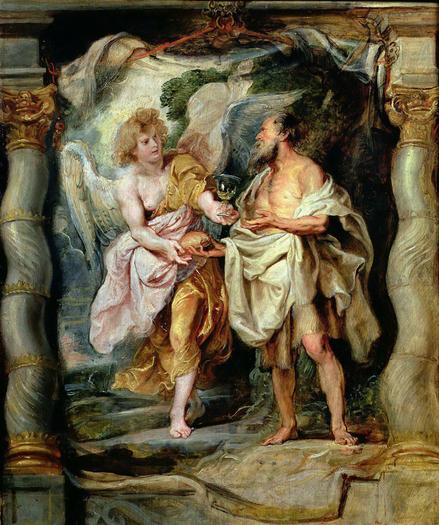
 Crispy Toast
 Spirituality & Religious Studies