When Law Becomes Loyalty: How Trump Turned ICE Into His Praetorian Guard
By Cliff Potts, WPS News
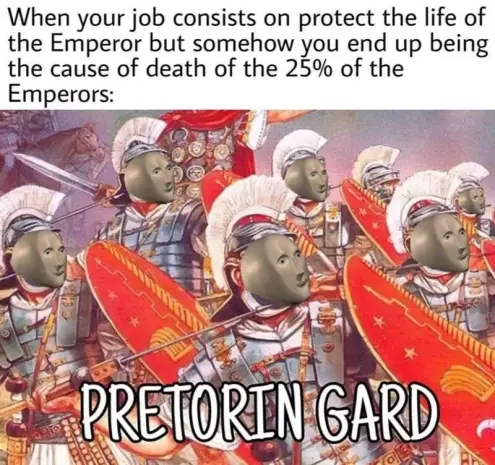
On January 20, 2025, when Donald Trump returned to the White House, immigration enforcement was no longer a matter of federal bureaucracy or statutory mandate. It became, almost overnight, a vessel for presidential will. The Department of Homeland Security had always been sprawling, politically charged, and at times dangerously vague in its scope, but Trump’s second administration accelerated a far more profound shift: the transformation of Immigration and Customs Enforcement (ICE) from a civil enforcement agency into what increasingly resembles a modern Praetorian Guard—an inner circle force loyal not to law, but to one man.
To call this evolution unprecedented is not hyperbole. Never before in modern American history has a federal agency with arrest powers, detention authority, and broad discretionary latitude been so tightly folded into the personality of a single leader. Trump ensured loyalty through leadership purges, policy directives bypassing Congress, and informal signals that the primary mission of ICE was no longer immigration enforcement, but political enforcement. The resulting machinery echoes not the Gestapo—a term overloaded with imagery and inaccuracy—but the far more precise historical parallel: the Praetorian Guard of Imperial Rome, whose job was to protect the emperor’s rule, silence dissent, and intimidate rivals while operating under a veneer of legality (Shotter, 2015).
Administrative Warrants: The New Imperial Seal
ICE’s most powerful tool under Trump has not been military hardware or specialized training, but paperwork. Administrative warrants, known as Forms I-200 and I-205, were designed to authorize immigration arrests without judicial oversight. That authority was always controversial (Capps & Gelatt, 2020), but under Trump’s second term, the warrants became political instruments—stamped internally, approved quickly, and deployed against targets far beyond undocumented immigrants.
These warrants bypass the Fourth Amendment’s traditional requirement of a neutral magistrate. When wielded against journalists covering immigration raids, sanctuary city officials who defied federal pressure, or activists monitoring ICE conduct, the resulting legal fog created harassment that was difficult to challenge in real time (DHS Office of Inspector General, 2023). Functionally, administrative warrants became the Praetorian Guard signet: a symbol of the emperor’s will disguised as legal authorization.
“Knock-and-Talks” and the Politics of Fear
The Praetorian Guard was infamous for its psychological operations. They rarely needed to draw swords; presence alone bent reality. ICE has mirrored this with the “knock-and-talk” strategy—appearing at homes without judicial warrants, implying consequences, and extracting compliance through ambiguity. These tactics were expanded in 2025 into neighborhoods with high concentrations of political opposition, immigrant-rights groups, or city councils resisting federal pressure.
The legal premise is thin. Residents are free not to open the door. But fear, uncertainty, and the aura of federal power often override rights. The erosion of civil liberties here is subtle, cumulative, and corrosive—exactly the type of soft-authoritarian tactic used by Roman guards to define the limits of acceptable dissent (Goldsworthy, 2016).
Targeting Dissent and Expanding the Mandate
Under Trump’s second administration, ICE’s scope expanded beyond immigration. That shift came through two mechanisms: interagency “fusion” teams and ideological labeling. Fusion teams—joint task forces involving ICE, U.S. Marshals, and select state police—blurred jurisdictional boundaries, often operating where local governments refused cooperation. Anti-commandeering principles became obstacles to be skirted, not constitutional limits to be respected.
Parallel to this, Trump’s rhetoric about “domestic enemies” created a permissive environment for ICE to treat certain political groups as potential threats. The logic followed a familiar authoritarian arc: align the executive’s political narrative with agency-level enforcement priorities. While ICE lacked statutory authority to police ideology, the wide discretion built into immigration law provided a pathway. People with tenuous status—Temporary Protected Status holders, asylum seekers, or long-term residents with pending cases—suddenly found themselves under scrutiny not because of immigration violations, but because of activism adjacent to their communities (Migration Policy Institute, 2025).
The Praetorian Guard analogy fits not because ICE is secretly plotting coups, but because the structure of loyalty and discretion now trends away from institutional neutrality and toward personal allegiance. Rome’s guard did not protect the empire; it protected the emperor’s interpretations of threat.
Surveillance: The Data Panopticon
Perhaps the most worrying development is ICE’s surveillance expansion. Through partnerships with Palantir, Clearview AI, DMV databases, and even utility records, ICE now maintains one of the most extensive domestic intelligence webs in federal government (Kosseff, 2021). This apparatus, originally sold as tools for tracking criminal networks, has increasingly been used to map activist groups and political critics.
Surveillance alone does not create a Praetorian Guard, but surveillance integrated with political loyalty does. The Praetorian Guard in Rome kept detailed assessments of rival factions, whispered networks, and dissident senators. ICE’s database overlaps create a modern equivalent: a constantly updated awareness of who stands where, who attends what, and who organizes around resistance. Not all of it is used punitively—but the potential has become the danger.
Detention as Discipline
ICE’s detention power is unique. Few federal agencies can legally detain individuals for civil violations. Under Trump’s second term, extended detentions, remote facility transfers, and denial of timely legal access became more common. Although not framed as punishment, the practical effect is unmistakable: a deterrent to dissent.
The Praetorian Guard once used temporary detention to send messages. ICE, intentionally or not, now operates similarly. Families separated through bureaucratic inertia, individuals moved hundreds of miles away from counsel, and asylum seekers held in private facilities illustrate how civil enforcement becomes political pressure when shielded from oversight (Human Rights First, 2024).
A Warning, Not an Epitaph
What we are witnessing is not the rise of a Nazi-style secret police. It is older, quieter, and in some ways more dangerous: the centralization of enforcement around personal power rather than constitutional limits. The U.S. is not Rome, but the patterns of authority, loyalty, and intimidation are uncomfortably recognizable.
A Praetorian Guard does not seize control of a nation.
It ensures that the leader who does seize control remains unchallenged.
This is the direction ICE has been pulled—through political appointments, rhetorical cues, administrative authorities ripe for abuse, and a culture increasingly calibrated toward loyalty. The legal scaffolding remains, but the mission has shifted.
And once a Praetorian Guard forms, history shows it rarely dissolves on its own.
#AmericanDemocracy #Authoritarianism #CivilLiberties #CivilRights #DHS #ICE #immigrationEnforcement #PoliticalPower #PraetorianGuard #Surveillance #TrumpAdministration Praetorian
 PugJesus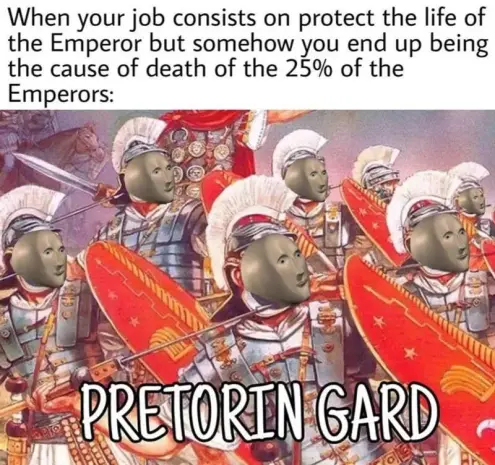


 WPS News



 Playaction