St. Vincent de Paul

Author’s Note: This post contains mentions of slavery. If this triggers you, you may go to the next post. We understand.

Vincent de Paul (April 24, 1581-September 27, 1660; 79 years old at the time of his passing) was a French Catholic priest who dedicated himself to serving the poor & is best known for founding the Congregation of the Mission & Daughters of Charity.

After being ordained a priest in 1600, de Paul was kidnapped/adult-napped (he was 19 years old at the time) & enslaved for 2 years in Tunis (This was a semi-autonomous territory of the Ottoman Empire; it’s in modern-day Tunisia). He returned to Europe after escaping in 1607 (26 years old at the time).

He then served as a parish priest & in the French royal court before dedicating himself to the poor, founding the Ladies of Charity in 1617 (36 years old at the time). In 1622, de Paul was appointed as chaplain to the galley slaves in Paris.

De Paul founded the Congregation of the Mission (a.k.a. the Vincentians or Lazarists) in 1625 (44 years old). Having vowed poverty, chastity, obedience, & stability, they were to devote themselves entirely to people in smaller towns/villages.

He was a pioneer in seminary education & also founded the Daughters of Charity in 1633 (52 years old). He’s the namesake of the Vincentian Family of organizations, which includes the religious order he founded, among others.

He was renowned for his compassion, humility, & generosity. He was canonized in 1737. He was venerated as a saint in both the Catholic Church & the Anglican Communion.

Vincent de Paul was born on April 24, 1581, in the village of Pouy, in the province of Guyenne & Gascony, Kingdom of France, to peasant farmers. His dad was Jean de Paul & his mom was Bertrande de Moras. He wrote the name on 1 word, Depaul, but none of his correspondents did so.

He had 3 brothers & 2 sisters. He was the 3rd child & demonstrated a talent for literacy early in life. He worked as a child, herding his family’s livestock. At age 15, his dad sent him to a seminary. He paid for this by selling the family’s oxen.

For 3 years, he studied at a college in Dax, Aquitaine. It adjoined a monastery of the Friars Minor (a.k.a. the Franciscans), where he resided. In 1597, he enrolled in theology at the University of Toulouse. The atmosphere at the university was rough. Fights broke out between various factions of students, which escalated into armed battles. An official was murdered by 2 students. Vincent continued his studies, financing them by tutoring others.

Vincent was ordained subdeacon & deacon at Tarbes Cathedral in the French Great South-West, near Périgueux. This was against the regulations established by the Council of Trent, which required a minimum of 24 years old for ordination. So when he was appointed parish priest in Tilh. An appeal against the appointment was made to the Roman Curia.

Rather than respond to a lawsuit in which he would probably not have prevailed, he resigned from the position & continued his studies. On October 12, 1604, he received his Bachelor of Theology from the University of Toulouse. Later, he received a Licentiate in Canon Law from the University of Paris.

Vincent wrote a letter in July 1607 & a postscript in February 1608 that described his experience of abduction & slavery. In 1605, he sailed from Marseille on his way back from Castres, where he had gone to sell property he’d inherited from a wealthy patron in Toulouse. He was taken captive by Barbary pirates, who took him to Tunis. Vincent was auctioned off as a slave, & spent 2 years in bondage.

His 1st “master” was a fisherman. But this wasn’t the life for Vincent because he got seasick. He soon was sold. His next “master” was a spagyric physician (this is a modern medical movement based on the theories & therapies of Paracelsus), alchemist, & inventor. Vincent became fascinated by his art & was taught how to prepare the attention of men who summoned him to Istanbul.

During the passage, the old man died & Vincent was sold once again. His new “master” was a former Catholic priest & Franciscan from Nice, Guillaume Gautier. Gautier had converted to Islam to gain his freedom from slavery & was living in the mountains with 3 wives.

The 2nd wife, a Muslim by birth, was drawn to & visited Vincent in the fields to question him about his faith. She became convinced that his faith was true & admonished her husband for renouncing his Christianity. Her husband became remorseful & decided to escape back to France with his slave.

They had to wait 10 months. But finally they secretly boarded a small boat & crossed the Mediterranean, landing in Aigues-Mortes on June 29, 1607. After returning to France, Vincent went to Rome. There he continued his studies until 1609, when he was sent back to France on a mission to King Henry IV.

Once in France, he made the acquaintance of Pierre de Berulle, whom he took as his spiritual advisor. Andre Duval, of the Sorbonne, introduced him to Canfield’s Rule of Perfection.

In 1612, he was sent as a parish priest to the Church of Saint-Medard in Clichy. In less than a year, Berulle recalled him to Paris to serve as a chaplain & tutor to the Gondi family. The Gondi family was a prominent Florentine banking family and a financial partner of the Medici family.

Although Vincent had initially begun his priesthood with the intention of securing a life of leisure for himself, he underwent a change of heart after hearing the confession of a dying peasant. It was the Countess de Gondi who persuaded her husband to endow & support a group of able & zealous missionaries who would work among poor tenant farmers & country people in general.

On May 23, 1643, after King Louis XIII had passed away, Queen Anne had her husband’s will annulled by the Parlement de Paul (a judicial body composed mostly of nobles & high clergymen), thereby making her the sole Regent. Anne appointed Vincent de Paul as her spiritual advisor.

He helped her deal with religious policy & the Jansenist issue. Jansenism is/was a 17th-18th century Christian theological movement within the Catholic Church, rooted in the writings of Dutch bishop Cornelius Jansen.

Vincent is the patron of all works of charity. Several organizations inspired by his work & teaching & which claim Vincent as their founder or patron saint are grouped in a loose federation known as the Vincentian Family.

Vincent died in Paris on September 27, 1660. Vincent’s body was exhumed in 1712, 53 years after his death. The written account of an eyewitness states that “the eyes & nose alone showed some decay.” However, when the body was exhumed again during the canonization in 1737, it was found to have decomposed due to an underground flood.

According to the custom of the time, his bones were encased in a waxen figure, which is displayed in a glass reliquary in the chapel of the mother house of the Vincentian fathers in Paris (the St. Vincent de Paul Chapel). His heart is still incorrupt & is displayed separately in a reliquary in the chapel of the mother house of the Daughters of Charity.

Make a one-time donation

Your contribution is appreciated.

Donate

Make a monthly donation

Your contribution is appreciated.

Donate monthly

Make a yearly donation

Your contribution is appreciated.

Donate yearly

Rate this:

#12October1604 #1597 #1600 #1605 #1607 #1612 #1617 #1622 #1625 #1633 #1712 #1737 #17thCentury #18thCentury #23May1643 #24April1581 #27September1660 #29June1607 #AiguesMortes #AndreDuval #AnglicanCommunion #Aquitaine #Barbary #BertrandeDeMoras #Canfield #CanonLaw #Castres #Catholic #CatholicChurch #CatholicPriest #Christian #Christianity #Clichy #CongregationOfTheMission #CorneliusJansen #CouncilOfTrent #CountessDeGondi #DaughtersOfCharity #Dax #Dutch #Europe #February1608 #France #Franciscan #Franciscans #FriarsMinor #GondiFamily #GuillaumeGautier #Guyenne #GuyenneGascony #Islam #Istanbul #Jansenism #JeanDePaul #July1607 #KingHenryIV #KingLouisXIII #KingdomOfFrance #LadiesOfCharity #Lazarists #Licentiate #Marseille #MediciFamily #Mediterranean #Motherhouse #Muslim #Nice #OttomanEmpire #Paracelsus #Paris #ParlementDePaul #Perigueux #PierreDeBerulle #QueenAnne #RomanCuria #Rome #RuleOfPerfection #Sorbonne #StVincentDePaul #StVincentDePaulChapel #TarbesCathedral #Tilh #Toulouse #Tunis #Tunisia #UniversityOfParis #UniversityOfToulouse #VincentianFamily #Vincentians

Immaculate Conception

This is the doctrine that the Virgin Mary was/is free from original sin from the moment of her conception. It’s 1 of the 4 Marian dogmas of the Catholic Church. The feast day of the Immaculate Conception is December 8.

It wasn’t defined as a dogma until 1854, by Pope Pius IX in the papal bull Ineffabilis Deus. While the Immaculate Conception asserts Mary’s freedom from original sin, the Council of Trent (1545-1563) had previously affirmed her freedom from personal sin non-dogmatically.

Many Protestant churches reject this doctrine as unscriptural. Some Anglicans accept this as a pious devotion. The teaching of the Immaculate Conception among Oriental Orthodoxy varies. The Eritrean Orthodox Tewahedo Church & the Ethiopian Orthodox Tewahedo Church accept it.

Anne (who eventually becomes a saint), the mom of the Virgin Mary & Jesus’ maternal grandma, shows up for the 1st time in the 2nd-century apocryphal Gospel of James. Anne & her husband Joachim (who also became a saint) were infertile. But God heard their prayers. Mary was then conceived.

Within the Gospel of James, Mary’s conception happens without physical sexual intercourse between Anne & Joachim. This is to demonstrate Mary’s purity. The Eastern Orthodox Church believes that Mary was conceived by her parents like we all were.

Justin Martyr, Irenaeus, & Cyrus of Jerusalem came up with the idea of Mary as the new Eve. While yet immaculate & incorrupt, she wasn’t subject to original sin. Ephraim the Syrian said she was as innocent as Eve before the Fall.

Ambrose asserted Mary’s incorruptibility, attributing her virginity to grace & immunity from sin. Severus, the Bishop of Antioch, agreed to affirm Mary’s purity & immaculateness. John of Damascus extended the supernatural influence of God to Mary’s parents. This suggests they were purified by the Holy Spirit during her generation. According to John of Damascus, even the material of Mary’s origin was deemed pure & holy.

By the 4th century, the idea of Mary being free from sin was more widespread. But her being free from original sin, passed down from the OGs Adam & Eve, raised questions. The question became more acute when the feast of Mary’s conception brought the objection that, as adult spicy time is sinful, & to celebrate Mary’s conception was to celebrate a sinful act. (Let’s get 1 thing straight: God doesn’t make married adult spicy time between 2 consenting MARRIED adults a sin! He (God) in fact encourages a healthy marital sex life. “Be fruitful & multiply,” ring any bells! And how exactly do we multiply? This is the conclusion of our TED talk.)

The feast of Mary’s conception came from the Eastern Church in the 7th century. It reached England in the 11th century. From there, it spread out to Europe. It was given official approval in 1477 & extended to the whole church in 1693. The word “immaculate” wasn’t used until 1854.

This doctrine caused a “civil war” between the Franciscans & the Dominicans during the Middle Ages. The Franciscan “Scotists” were in favor & the Dominican “Thomists” against it.

The English ecclesiastic & scholar Eadmer (circa 1060-circa 1126) reasoned that Mary might have been conceived without original sin because of God’s omnipotence. It was also appropriate for her role as Mother of God. Potuit, decuit, fecit: “it was possible, it was fitting, therefore it was done.”

Others, like St. Bernard of Clairvaux (of the St. Bernard dog breed fame, 1090-1153) & Thomas Aquinas (1225-1274) objected because if Mary were free of original sin at her superfluous conception. Then she would have no need of redemption. Thus making Christ’s saving redemption unneeded.

In 1439, the Council of Basel, in schism with Pope Eugene IV (who lived at the Council of Florence), declared the Immaculate Conception a “pious opinion” consistent with faith & Scripture. The Council of Trent made no explicit declaration on the topic. But did exempt her from the universality of original sin.

They also affirmed that she remained free from all stains of sin during her life, even the venial ones. By 1571, the revised Roman Breviary set out an elaborate celebration of the Feast of the Immaculate Conception on December 8.

Some devotees go so far as to hold that Anne had conceived Mary just by kissing her husband. They also believe that (St.) Anne’s dad & grandma had likewise been conceived without spicy adult time. However, (St.) Bridget of Sweden (circa 1303-1373) told how Mary herself had revealed to her that Anne & Joachim conceived their daughter through a spicy adult time, which was sinless because it was pure & free of sexual lust.

In the 16th & 17th centuries, Spain exploded with Immaculatist devotion. This led the Habsburg monarchs to demand the Holy See elevate this belief to the status of dogma.

In France in 1830, Catherine Laboure (May 2, 1806-December 31, 1876) saw a vision of Mary standing on a globe while a voice commanded her to have a medal made in imitation of what she saw. The medal said, “O Mary, conceived without sin, pray for us who have recourse to thee,” which was a confirmation from Mary herself that she was conceived without sin. Laboure’s vision marked the beginning of a great 19th-century Marian revival.

In 1849, Pope Pius IX issued the encyclical Ubi primum, soliciting the bishops of the church for their views on whether the doctrine should be defined as dogma. 90% of those who responded were supportive. Although the Archbishop of Paris, Marie-Dominique-Auguste Sibour, warned that the Immaculate Conception “could be proved neither from the Scriptures nor from tradition.”

In 1854, the Immaculate Conception dogma was proclaimed with the bull Ineffabilis Deus. Ineffabilis Deus found the Immaculate Conception in the Ark of Salvation (Noah’s Ark), Jacob’s Ladder, the Burning Bush at Sinai, the Enclosed Garden from the Song of Song/Song of Solomon, & many more passages.

The pope’s advisors singled out 2 Bible passages: Genesis 3:15 – “I’ll put enmity between you & the woman.” This is a prophecy which reached fulfillment in the figure of the Woman in Revelation, crowned with stars & trampling the Dragon underfoot. Luke 1:28 – Specifically the phrase “full of grace” by which Gabriel greeted Mary was another reference to her Immaculate Conception: “she was never subject to the curse & was, together with her Son, the only partaker of perpetual benediction.”

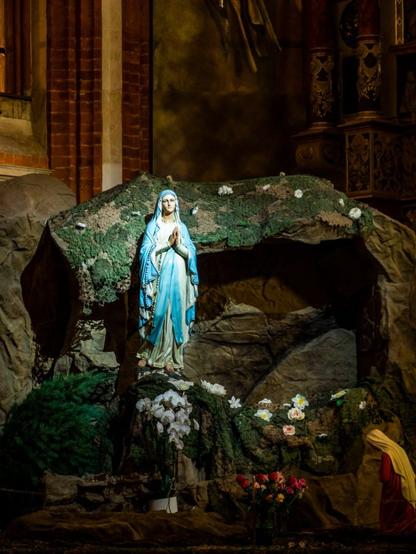
Four years after the proclamation of the dogma, in 1858, the young Bernadette Soubirous (of the Lourdes grotto fame) said that Mary appeared to her at Lourdes in southern France, to announce that she was the Immaculate Conception. The Catholic Church later endorsed the apparition as authentic. There are other “approved” Marian apparitions in which Mary identified herself as the Immaculate Conception. For example, Our Lady of Gietrzwald in 1877, Poland.

The feast day of the Immaculate Conception is December 8. The Roman Missal (which contains texts & rubrics (a set of rules)) & the Roman Rite Liturgy of the Hours (a set of Catholic prayers) include references to Mary’s Immaculate Conception in the feast of the Immaculate Conception.

Its celebration seems to have begun in the Eastern church in the 7th century & may have spread to Ireland by the 8th century. The earliest well-attested record in the Western Church is from England early in the 11th century. It was suppressed there after the Norman Conquest (1066). The 1st thorough exposition of the doctrine was a response to this suppression. It continued to spread through the 15th century despite accusations of heresy from the Thomists & strong objections from several prominent theologians.

Beginning around 1140, St. Bernard of Clairvaux (Yes, like the dog breed. That’s where the dog breed got its name.), a Cistercian monk (This is a religious order of monks & nuns that branched off from the Benedictines.), wrote to Lyons Cathedral to express his surprise & dissatisfaction that it had recently begun to be observed there.

But in 1477, Pope Lixtus IV, who was a devoted Immaculist, put it on the Roman calendar via the papal bull called Cum praexcelsa. In 1481 & 1483, Pope Sixtus IV published 2 more bulls which prohibited anyone from preaching or teaching against the Immaculate Conception, or for either side to accuse the other of heresy, under threats of excommunication.

Pope Pius V kept the Feast on the Tridentine calendar. But suppressed the word “Immaculate.” Pope Gregory XV, in 1622, prohibited any public or private assertion that Mary was conceived in sin. In 1624, Pope Urban VIII allowed the Franciscans to establish a military order dedicated to the Virgin of the Immaculate Conception.

The Ethiopian Orthodox Tewahedo & Eritrean Orthodox Tewahed Churches believe in the Immaculate Conception of the Theotokos. The Ethiopian Orthodox Tewahedo Church celebrates the Feast of the Immaculate Conception on August 13 (Nehasie 7).

Eastern Orthodoxy does not exempt Mary from original sin. But they do affirm Mary’s purity & preservation from personal sin.

In the mid-1800s, some Catholics who were unable to accept the doctrine of papal infallibility left the Roman Church & formed the Old Catholic Church. They reject the Immaculate Conception.

Protestants overwhelmingly condemned the announcement of Ineffabilis Deus. Protestants teach that Mary was a sinner, saved through grace, like everyone else.

One-Time Monthly Yearly

Make a one-time donation

Make a monthly donation

Make a yearly donation

Choose an amount

$1.00 $5.00 $10.00 $1.00 $5.00 $10.00 $5.00 $10.00 $15.00

Or enter a custom amount.

$

Your contribution is appreciated.

Your contribution is appreciated.

Your contribution is appreciated.

Donate Donate monthly Donate yearly #1066 #1090 #1140 #1153 #11thCentury #1439 #1477 #1481 #1483 #1545 #1563 #1571 #15thCentury #1622 #1624 #16thCentury #17thCentury #1830 #1849 #1854 #1858 #19thCentury #2May1806 #2ndCentury #31December1876 #4thCentury #7thCentury #8thCentury #Adam #Ambrose #Anglicans #Apocryphal #ArchbishopOfParis #ArkOfSalvation #August13 #Benedictines #BernadetteSoubirous #BishopOfAntioch #BurningBush #CatherineLaboure #CatholicChurch #Circa1060 #Circa1126 #Circa1303 #Circa1373 #Cistercian #CouncilOfBasel #CouncilOfFlorence #CouncilOfTrent #CumPraexcelsa #CyrusOfJerusalem #December8 #Dogma #Dominicans #Dragon #Eadmer #EasternChurch #EasternOrthodoxChurch #EnclosedGarden #England #EphraimTheSyrian #EritreanOrthodoxTewahedoChurch #EthiopianOrthodoxTewahedo #EthiopianOrthodoxTewahedoChurch #Europe #Eve #Excommunication #FallOfMan #FeastDay #FeastOfTheImmaculateConception #France #Franciscans #Gabriel #Genesis315 #GospelOfJames #HapsburgMonarchs #HolySee #HolySpirit #ImmaculateConception #ImmaculateConceptionOfTheTheotokos #Immaculist #IneffabilisDeus #Ireland #Irenaeus #JacobSLadder #Jesus #JohnOfDamascus #JustinMartyr #Lourdes #LourdesGrotto #Luke128 #LyonsCathedral #MarianApparition #MarianDogmas #MarieDominiqueAugusteSibour #Medal #Mid1800s #MiddleAges #monk #MotherOfGod #Nehasie7 #NoahSArk #NormanConquest #OldCatholicChurch #OrientalOrthodoxChurch #OriginalSin #OurLadyOfGietrzwald #papalBull #PapalInfallibility #PersonalSin #Poland #PopeEugeneIV #PopeGregoryXV #PopePiusIX #PopePiusV #PopeSixtusIV #PopeUrbanVIII #Protestant #Revelation #RomanBreviary #RomanCalendar #RomanChurch #RomanMissal #RomanRiteLiturgy #RomanRiteLiturgyOfTheHours #Rubrics #Scotists #Severus #Sin #Sinai #SongOfSolomon #SongOfSongs #SouthernFrance #Spain #StAnne #StBernard #StBernardOfClairvaux #StBridgetOfSweden #StJoachim #Thomists #TridentineCalendar #UbiPrimum #VirginMary #VirginOfTheImmaculateConception

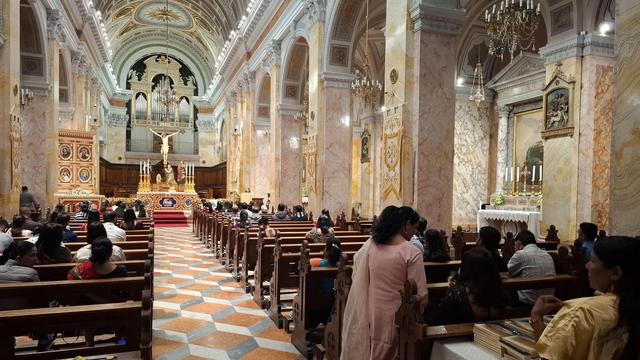
Repubblica.it: Restrizioni e controlli: a Gerusalemme la Pasqua è blindata. Al Santo Sepolcro messa a porte chiuse

Nella città vecchia gli accessi sono contingentati per via della guerra. Dopo le polemiche dalla domenica delle Palme, il cardinale Pizzaballa tiene la messa nella Basilica ma con lui ci sono solo i francescani

Restrictions and controls: Easter is under lockdown in Jerusalem. Mass at the Holy Sepulchre with closed doors.

In the old town, access is restricted due to the war. After the controversies since Palm Sunday, Cardinal Pizzaballa holds mass in the Basilica, but only the Franciscans are with him.

#Easter #Jerusalem #CardinalPizzaballa #Basilica #Franciscans

https://www.repubblica.it/esteri/2026/04/05/news/gerusalemme_pasqua_santo_sepolcro-425265795/

Restrizioni e controlli: a Gerusalemme la Pasqua è blindata. Al Santo Sepolcro messa a porte chiuse

Nella città vecchia gli accessi sono contingentati per via della guerra. Dopo le polemiche dalla domenica delle Palme, il cardinale Pizzaballa tiene la messa n…

la Repubblica

Charles Borromeo

We’re delving into Charles Borromeo because there’s a church named after him in our founder’s hometown. We hope you enjoy this read.

His name in Italian is: Carlo Borromeo. In Latin, his name: Carolus Borromeus. He was an Italian Catholic prelate who served as the Archbishop of Milan from 1564-1584. He became a cardinal in 1560. A prelate is a high-ranking cleric with special jurisdiction or authority, essentially anyone exercising public power or holding a position of prominence above ordinary clergy.

Charles founded the Confraternity of Christian Doctrine together with St. Ignatius of Loyola & St. Philip Neri. In this role, he was responsible for significant reforms in the Catholic Church. Including the founding of seminaries for the education of priests. He was canonized in 1610 & his feast day is November 4.

Charles was a descendant of nobility. The Borromeo family was 1 of the most ancient & wealthiest in Lombardy. The family coat of arms included the Borromean rings, sometimes taken to symbolize the Holy Trinity.

Charles’ dad, Gilbert, was the Count of Arona. His mom, Margaret, was a member of the Milanese branch of the House of Medici. He was the 2nd son in a family of 6 kids. He was born in the castle of Arona on Lake Maggiore 36 miles from Milan on October 2, 1538.

Charles received the tonsure when he was about 12 years old. At this time, his paternal uncle (dad’s brother), Giulio Cesare Borromeo turned over to him the income from the rich Benedictine abbey of Saints Gratinian & Felin, 1 of the ancient requirements of the family.

Charles let his dad know on no uncertain terms that all revenues from the abbey beyond what was required to prepare him for a career in the church belonged to the poor & couldn’t be applied to secular use.

Charles went to the University of Pavia. He applied himself to the study of civil & canon law. Because of a slight speech impediment, he was thought of as slow but his thoroughness & industry meant that he made fast progress.

In 1554, his dad died. Although he had an older brother, Count Federico, he was requested by the family to take the management of their domestic affairs. After a time, he restarted his studies. On December 6, 1559, he earned a doctorate in canon & civil law.

On December 25, 1559, Charles’ uncle, Cardinal Giovanni Angelo Medici, was elected as Pope Pius IV. The newly elected Pope requested his nephew to go to Rome. On January 13, 1560, Pope Pius IV appointed him as protonotary apostolic. Protonotary apostolic is the title for a member of the highest non-episcopal college of prelates in Roman Curia, or outside Rome.

Shortly after, on January 31, 1560, the Pope made him a cardinal. This made Charles a cardinal-nephew. He was entrusted with both the public & the privy seal of the ecclesiastical state. A cardinal-nephew was a high-ranking Cardinal in the Catholic Church. Usually the pope’s actual nephew or another close relative(s), who served as the pontiff’s chief assistant & confidant. He was also brought into the government of Papal States & appointed a supervisor of the Franciscans, Carmelites, & Knights of Malta.

During his 4 years in Rome, Charles lived in austerity, required the Roman Curia to wear black (The Roman Curia is the administrative arm of the Holy See.), & established an academy of learned persons, the Academy of the Vatican Knights.

Charles organized the 3rd, & last, session of the Council of Trent, in 1562-63. He had a large hand in making the Tridentine Catechism (Catechismus Romanus). In 1561, Charles founded & endowed a college at Pavia. Today the college is known as Almo Collegio Borromeo. Charles dedicated the college to Justina of Padua.

On November 19, 1562, Charles’ older brother, Federico, suddenly died. His family urged Charles to seek permission to return to the laity (laicization), to marry & have kids so that the family name wouldn’t become extinct. But he decided not to leave the ecclesiastic state.

His brother’s death, along with his contacts (with the Jesuits, the Theatines, & the example of bishops such as Bartholomew of Braga) were causes of the conversion Charles towards a more strict & operative Christian life. His aim became to put into practice the dignity & duties of the bishop as drafted by the Council of Trent.

After the death of his uncle, Pope Pius IV (1566), Charles sent a galley (a type of ship) to get Cardinal Ugo Boncompagni, the Nuncio of Spain. The nuncio (or apostolic nuncio) is the Pope’s personal ambassador (like an embassy’s ambassador) to a country & plays a key role in appointing bishops.

But the Cardinal didn’t arrive in time to be considered at the conclave. Charles reached an agreement with Alessandro Farnese, who held a significant number of conclave votes, to support Antonio Ghislieri (who was rumored to have the support of King Philip II of Spain). Ghislieri was elected Pope & took the name: Pius V.

He devoted himself to the reformation of his diocese which had deteriorated in practice owing to the 80-year absence of previous archbishops. Milan was the largest archdiocese in Italy at the time, with more than 3,000 clergy & 800,000 people. Both its clergy & laity had drifted from church teaching. The selling of indulgences & ecclesiastical positions was prevalent.

Charles believed that abuses in the church arose from ignorant clergy. His emphasis on Catholic learning greatly increased the preparation of men for the priesthood & benefited their congregations.

He founded the fraternity of Oblates of St. Ambrose (a society of secular men who didn’t take orders), but devoted themselves to the church & followed a discipline of monastic prayers & study. The new archbishop’s efforts for catechesis & the instruction of youth included the initiation of the 1st Sunday School classes & the work of the Confraternity for Christian Doctrine.

Charles’ diocesan reforms faced opposition from several religious orders. Particularly that of the Humiliati (Brothers of Humility), a penitential order which owned some 90 monasteries. Some members of that society formed a conspiracy against his life.

A shot was fired at him with an arquebus in the archepiscopal chapel. His survival was considered miraculous.

Even though the Diet of Ilanz of 1524 & 1526 had proclaimed freedom of worship in the 3 Leagues, Charles repressed Protestantism in the Swiss valleys. During his pastoral visit to the region, 150 people were arrested for practicing witchcraft. 11 women & the provost were condemned by the civil authorities to be burned alive.

Reacting to the pressure of the Protestant Reformation, Charles encouraged Ludwig Pfyffer in his development of the “Golden League” but didn’t live to see its formation in 1586.

Based in Lucerne, the organization (also called the Borromean League) linked activities of several Swiss Catholic cantons of Switzerland. This became the center of Catholic Counter-Reformation efforts & caused the break-up of Appenzell canton along religious lines.

Following his departure from this mortal coil, devotion to Charles grew quickly & continued to grow. The Milanese memorializes his anniversary as though he were already a saint. Supporters in a number of cities collected documentation to support his canonization.

In 1602, Pope Clement VIII beatified Charles. 2 years later, his “case” was sent to the Congregation of Rites. On November 1, 1610, Pope Paul V canonized Charles. 3 years later, the church added his feast day to the General Roman Calendar for celebration on November 4.

Along with Guarinus of Palestrina & Anselm of Lucca, he’s 1 of only 2-3 cardinal-nephews to have been canonized. Charles Borromeo is the patron saint of bishops; catechists; seminarians; against ulcers; apple orchards; bishops; catechumens; colic; intestinal disorders; Lombardy, Italy; Monterey, California; cardinals; seminarians; spiritual directors; spiritual leaders; starch makers; stomach diseases; & Sao Carlos (Brazil).

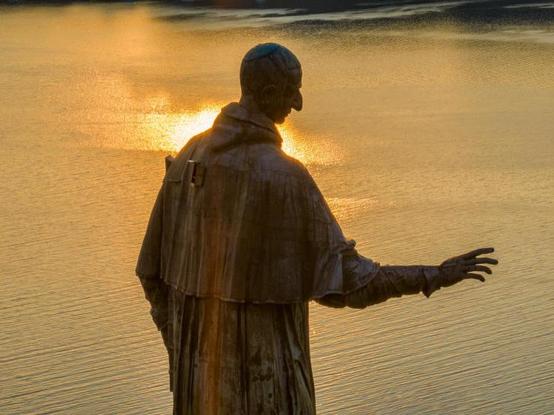
Charles’ emblem is the Latin word humilitas (humility), which is a portion of the Borromeo shield. He’s usually represented in art in his robes, barefoot, carrying the cross as archbishop, a rope around his neck and 1 hand raised in blessing. Thus recalling his work during the plague.

A large number of churches dedicated to St. Charles Borromeo exist in: Austria; Sheffield, England; Scotland; Belgium; Italy; Serbia; Poland; Switzerland; Vienna; Ireland; England; Indiana; Louisiana; Canada, California; Florida; Illinois; New York; Texas; Missouri; Minnesota; North Dakota; Ohio; Maryland; Massachusetts; Nebraska; New Jersey; North Carolina; Pennsylvania; Rhode Island; Virginia; Washington; Oklahoma; New Hampshire; Argentina; Brazil; Peru; Uruguay; Venezuela; & Chile.

Make a one-time donation

Your contribution is appreciated.

Donate

Make a monthly donation

Your contribution is appreciated.

Donate monthly

Make a yearly donation

Your contribution is appreciated.

Donate yearly

#1November1610 #13January1560 #1526 #1554 #1560 #1561 #1562 #1563 #1564 #1566 #1584 #1586 #1602 #1610 #19November1562 #2October1538 #25December1559 #31January1560 #6December1559 #AcademyOfTheVaticanKnights #AlessandroFarnese #AlmostCollegioBorromeo #AnselmOfLucca #AntonioGhislieri #ApostolicNuncio #Appenzell #ArchbishopOfMilan #Argentina #Arona #Austria #BartholomewOfBraga #Belgium #BorromeanLeague #Brazil #BrothersOfHumility #Califronia #Canada #CanonLaw #Cantons #Cardinal #CardinalGiovanniAngeloMedici #CardinalUgoBoncompagni #CardinalNephew #CardinalNephews #CarloBorromeo #Carmelites #CarolusBorromeus #Catechesis #CatechismusRomanus #Catholic #CatholicChurch #CatholicCounterReformation #CharlesBorromeo #Chile #CivilLaw #Conclave #ConfraternityForChristianDoctrine #ConfraternityOfChristianDoctrine #CongregationOfRites #CouncilOfTrent #CountFederico #CountOfArona #DietOfIlanzOf1524 #England #Franciscans #GeneralRomanCalendar #GilbertBorromeo #GiulioCesareBorromeo #GoldenLeague #GuarinusOfPalestrina #HolySee #HolyTrinity #Humiliati #Illinois #Indiana #Ireland #Italy #Jesuits #JustinaOfPadua #KingPhilipIIOfSpain #KnightsOfMalta #Laicization #LakeMaggiore #Lombardy #Louisiana #LudwigPfyffer #MargaretBorromeo #Massachusetts #MilaneseHouseOfMedici #Missouri #Nebraska #NewHampshire #NewJersey #NorthCarolina #NorthDakota #November4 #Nuncio #Ohio #Oklahoma #PapalStates #Pavia #Pennsylvania #Peru #PiusV #Poland #PopePaulV #PopePiusIV #Prelate #ProtestantReformation #Protestantism #ProtonotaryApostolic #RomanCuria #Rome #Scotland #Serbia #StAmbrose #StFelin #StGratinian #StIgnatiusOfLoyola #StPhilipNeri #SundaySchool #SwissValleys #Switzerland #Texas #Theatines #ThreeLeagues #Tonsure #TridentineCatechism #UniversityOfPavia #Uruguay #Venezuela #Vienna #Washington

The first European-style school of #HigherEducation in the Americas was founded #ThisDayInHistory in 1536. #ColegioDeSantaCruz was run by #Franciscans, intended to train #Aztecs as priests & bishops, but they lacked money for it, and in 1555 Spain forbade #indigenous ordinations.

Humiliati

In Italian: Umiliati. This is an Italian religious order of men formed, probably, in the 12th century. It was suppressed by a papal bull in 1571. Though an associated order of women continued into the 20th century.

The origin of the order of Humiliati is obscure. According to some chroniclers, certain noblemen of Lombardy, taken prisoner by the Emperor Henry V (1081-1125) following a rebellion in the area, were taken as captives to Germany & after suffering the miseries of exile for some time, they assumed a penitential garb of grey & gave themselves up to works of charity & mortification. Whereupon the emperor, after receiving their pledges of future loyalty, permitted their return to Lombardy.

At this time, they were often called “Barettini,” because of their beret-shaped headdress. Their acquaintance with the German woolen manufacturers enabled them to introduce improved methods into Italy, thus giving a great drive to the industry, supplying the poor with employment & distributing their gains among those in want.

Returning to their own country, the Humiliati talked to St. Bernard. On his advice (1134), many of them with the consent of their wives, withdrew into a monastery founded in Milan.

Despite St. Bernard’s best attempts, the Humiliati had no fixed rule, at first. Their name “Humiliati” is said to have arisen from their very simple clothes, which were all of 1 color against the fashions of the day.

The fraternity spread quickly & gave rise to 2 new branches, a “Second Order” composed of women, & a “Third Order” composed of priests. The order of priests, once formed, claimed precedence over the other branches, & on the model of mendicant orders such as the Dominicans or Franciscans, was styled the “First Order.” Their original ashen habit was replaced by a white one.

On the advice of St. John of Meda, they hold to the Rule of the St. Benedict was adapted by him to suit the orders’ needs.

The “Chronicon anonymity Laudunensis Canonici” says that in 1178 a group of Lombards came to Rome with the intention of getting the Pope’s approval of the rule of life which they’d spontaneously chosen.

While continuing to live in their houses in the midst of their families, they wished to lead a more pious existence, abandon oaths & litigation, be content with modest dress, & live in a spirit of piety.

The Pope approved their resolve to live in humility & purity. But forbade them to hold gatherings or preach in public. The chronicler added that they broke the rules & were excommunicated.

The Chronican Urs pergense mentions the Humiliati as 1 of the 2 Waldensian sects & a decretal put into effect in 1184 by Pope Lucius III at the Council of Verona against all heretics condemns both the “Poor Men of Lyons” & “those who attribute to themselves falsely the name of Humiliati.”

A decretal is/are letters of a Pope that formulate decisions in ecclesiastical law of the Catholic Church.

In this state, they remained until 1201, when, upon presentation of their constitution, Pope Innocent III reconciled them with the Church, & reorganized them in conformity with their economic & religious customs. Also approved of the name of “Humiliati.”

This brought most of them back to the Church. But a number persevered in their former life under the direction of the Poor of Lyons (Waldensians). However, economic & religious difficulties aggravated long-felt dissension between the 2 groups.

In 1205, these non-reconciled Humiliati separated from the Lyonese Waldensians & formed a distinct group named the “Poor Lombards” (“Pauperes Lombardi”).

Pope Innocent III granted a rule to the lay branch as the “Third Order” that resembled the Regula de poenitentia of the Franciscan movement.

The Humiliati rule forbade vain oaths & taking God’s name in vain, allowed voluntary poverty & marriage, regulated pious exercises, & approved the solidarity which already existed among the members.

Unusual was the authorization to meet on Sundays to hear the words of a brother “of proved & prudent piety,” on condition that they didn’t discuss among themselves either the Articles of Faith or the Sacraments. Though some Waldensians were perhaps won back in Lombardy, others weren’t.

The Order grew quickly. Many of the members were declared Saints & Beati. It also formed trade associations among & played an important part in the civic life of every community in which it was established. It has left some church buildings still in use.

However, in time the gathering of material possessions & the limitations placed on the number of members led to laxity & serious abuses. At one time, there were only approximately 170 in the 94 monasteries.

Charles Borromeo, the Archbishop of Milan, was commissioned by Pope Pius IV to remedy the situation. The rigor with which he did this awakened such opposition among a minority that a conspiracy formed & 1 of the Humiliati, Girolamo Donati, called “Farina,” attempted to murder Charles.

This led to the execution of the principal conspirators by the civil authorities & the suppression of the Order for corruption by a bull of Pope Pius V of February 1571.

Their houses & possessions were given on other religious orders, including the Barnabites & Jesuits, or applied to charity.

The wives of the 1st Humiliati, who belonged to some of the principal families of Milan, also formed a community under Clara Blassoni. They were joined by so many others that it became necessary to open a 2nd convent, the members of which devoted themselves to the care of the lepers in a neighboring hospital, whence they were also known as Hospitallers of the Observance.

The number of their monasteries increased quickly. But the suppression of the male branch of the order, which had administered their temporal affairs, proved a heavy blow, involving in many cases the closing of monasteries. Though the congregation itself wasn’t affected by the Bull of Suppression.

The nuns recited the canonical Hours, fasted rigorously & engaged in other severe penitent practices, such as the “discipline” or self-inflicted whipping.

Some retained the ancient Breviary of the order, while other houses adopted the Roman Breviary. A breviary is the official prayer book of the Church. It has psalms, hymns, readings, & prayers recited at specific times throughout the day to praise God, structured into several “hours” like Morning Prayer (Lauds) & Evening Prayer (Vespers).

The habit consisted of a robe & scapular of white over a tunic of ashen gray, the veils are usually white, though in some houses there black. The lay sisters, who kept the name of Barettine, wore gray.

In the early 20th century, there were/are still 5 independent houses of Humiliati nuns in Italy.

One-Time Monthly Yearly

Make a one-time donation

Make a monthly donation

Make a yearly donation

Choose an amount

$1.00 $5.00 $10.00 $1.00 $5.00 $10.00 $5.00 $10.00 $15.00

Or enter a custom amount

$

Your contribution is appreciated.

Your contribution is appreciated.

Your contribution is appreciated.

DonateDonate monthlyDonate yearly

#1081 #1125 #1134 #1178 #1184 #1201 #1205 #12thCentury #1571 #20thCentury #ArchbishopOfMilan #ArticlesOfFaith #Barettine #Barettini #Barnabites #Beati #Breviary #CanonicalHours #CatholicChurch #CharlesBorromeo #ChroniconAnonymiLaudunensisCanonici #ChroniconUrsPergense #ClaraBlassoni #CouncilOfVerona #Dominicans #EmperorHenryV #Farina #February1571 #FirstOrder #Franciscans #Germany #GirolamoDonati #Habit #HospitallersOfTheObservance #Humiliati #Italy #Jesuits #Lauds #Lombardy #Lyons #Milan #MorningPrayer #Mortification #papalBull #PauperesLombardi #PoorLombards #PoorMenOfLyons #Pope #PopeInnocentIII #PopeLuciusIII #PopePiusV #RegulaDePoenitentia #RomanBreviary #Rome #RuleOfStBenedict #Sacraments #Saints #Scapular #SecondOrder #StBernard #StJohnOfMeda #ThirdOrder #Vespers #Waldensians

29 Nov 1342: Having been deposed by John XXII and excommunicated, Michael of Cesena, Minister General of the #Franciscans died #otd at Munich (PHGCOM)
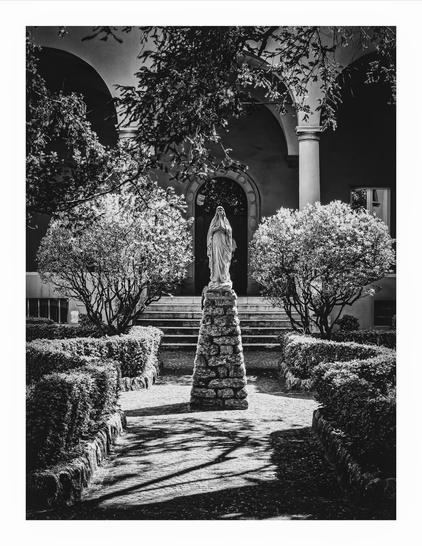
Maria for #monochromemonday

This is the garden of a Franciscan convent here in Bologna. It was open during "Diverdeinverde" - where you could visit some.private gardens. Funny thing is, there's a plaque that says this is where the Franciscan sisters come on holiday! I knew Bologna was a tourist destination but not that it was a hotspot for the clergy! 😂✨

#photography #amateurphotography #statue #greyscale #dark #moody #garden #urbangarden #convent #stonework #architecture #bologna #italia #franciscans #blackandwhite #bnw #monochrome #trees #shadows #blackandwhitephotography #italy #europe #travel

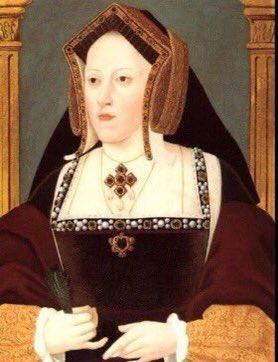
1 June 1509: Catherine of #Aragon marries Henry VIII in the chapel of the Observant #Franciscans at #Greenwich #otd (NPG)

A 25 year union.

All religion is horrible and a pox on humanity… but if we've got to have it, I want observant #Franciscans to be the only ones in positions of power.

#PopeFrancis isn't perfect, but he's a damn sight better than the fuckers I've learned about for the last few hundred years.