 Fra
Fra"Beati sono i santi
I cavalieri e i fanti
Beati i vivi e i morti
Ma soprattutto i risorti"
 Spirituality & Religious Studies
Humiliati
In Italian: Umiliati. This is an Italian religious order of men formed, probably, in the 12th century. It was suppressed by a papal bull in 1571. Though an associated order of women continued into the 20th century.
The origin of the order of Humiliati is obscure. According to some chroniclers, certain noblemen of Lombardy, taken prisoner by the Emperor Henry V (1081-1125) following a rebellion in the area, were taken as captives to Germany & after suffering the miseries of exile for some time, they assumed a penitential garb of grey & gave themselves up to works of charity & mortification. Whereupon the emperor, after receiving their pledges of future loyalty, permitted their return to Lombardy.
At this time, they were often called “Barettini,” because of their beret-shaped headdress. Their acquaintance with the German woolen manufacturers enabled them to introduce improved methods into Italy, thus giving a great drive to the industry, supplying the poor with employment & distributing their gains among those in want.
Returning to their own country, the Humiliati talked to St. Bernard. On his advice (1134), many of them with the consent of their wives, withdrew into a monastery founded in Milan.
Despite St. Bernard’s best attempts, the Humiliati had no fixed rule, at first. Their name “Humiliati” is said to have arisen from their very simple clothes, which were all of 1 color against the fashions of the day.
The fraternity spread quickly & gave rise to 2 new branches, a “Second Order” composed of women, & a “Third Order” composed of priests. The order of priests, once formed, claimed precedence over the other branches, & on the model of mendicant orders such as the Dominicans or Franciscans, was styled the “First Order.” Their original ashen habit was replaced by a white one.
On the advice of St. John of Meda, they hold to the Rule of the St. Benedict was adapted by him to suit the orders’ needs.
The “Chronicon anonymity Laudunensis Canonici” says that in 1178 a group of Lombards came to Rome with the intention of getting the Pope’s approval of the rule of life which they’d spontaneously chosen.
While continuing to live in their houses in the midst of their families, they wished to lead a more pious existence, abandon oaths & litigation, be content with modest dress, & live in a spirit of piety.
The Pope approved their resolve to live in humility & purity. But forbade them to hold gatherings or preach in public. The chronicler added that they broke the rules & were excommunicated.
The Chronican Urs pergense mentions the Humiliati as 1 of the 2 Waldensian sects & a decretal put into effect in 1184 by Pope Lucius III at the Council of Verona against all heretics condemns both the “Poor Men of Lyons” & “those who attribute to themselves falsely the name of Humiliati.”
A decretal is/are letters of a Pope that formulate decisions in ecclesiastical law of the Catholic Church.
In this state, they remained until 1201, when, upon presentation of their constitution, Pope Innocent III reconciled them with the Church, & reorganized them in conformity with their economic & religious customs. Also approved of the name of “Humiliati.”
This brought most of them back to the Church. But a number persevered in their former life under the direction of the Poor of Lyons (Waldensians). However, economic & religious difficulties aggravated long-felt dissension between the 2 groups.
In 1205, these non-reconciled Humiliati separated from the Lyonese Waldensians & formed a distinct group named the “Poor Lombards” (“Pauperes Lombardi”).
Pope Innocent III granted a rule to the lay branch as the “Third Order” that resembled the Regula de poenitentia of the Franciscan movement.
The Humiliati rule forbade vain oaths & taking God’s name in vain, allowed voluntary poverty & marriage, regulated pious exercises, & approved the solidarity which already existed among the members.
Unusual was the authorization to meet on Sundays to hear the words of a brother “of proved & prudent piety,” on condition that they didn’t discuss among themselves either the Articles of Faith or the Sacraments. Though some Waldensians were perhaps won back in Lombardy, others weren’t.
The Order grew quickly. Many of the members were declared Saints & Beati. It also formed trade associations among & played an important part in the civic life of every community in which it was established. It has left some church buildings still in use.
However, in time the gathering of material possessions & the limitations placed on the number of members led to laxity & serious abuses. At one time, there were only approximately 170 in the 94 monasteries.
Charles Borromeo, the Archbishop of Milan, was commissioned by Pope Pius IV to remedy the situation. The rigor with which he did this awakened such opposition among a minority that a conspiracy formed & 1 of the Humiliati, Girolamo Donati, called “Farina,” attempted to murder Charles.
This led to the execution of the principal conspirators by the civil authorities & the suppression of the Order for corruption by a bull of Pope Pius V of February 1571.
Their houses & possessions were given on other religious orders, including the Barnabites & Jesuits, or applied to charity.
The wives of the 1st Humiliati, who belonged to some of the principal families of Milan, also formed a community under Clara Blassoni. They were joined by so many others that it became necessary to open a 2nd convent, the members of which devoted themselves to the care of the lepers in a neighboring hospital, whence they were also known as Hospitallers of the Observance.
The number of their monasteries increased quickly. But the suppression of the male branch of the order, which had administered their temporal affairs, proved a heavy blow, involving in many cases the closing of monasteries. Though the congregation itself wasn’t affected by the Bull of Suppression.
The nuns recited the canonical Hours, fasted rigorously & engaged in other severe penitent practices, such as the “discipline” or self-inflicted whipping.
Some retained the ancient Breviary of the order, while other houses adopted the Roman Breviary. A breviary is the official prayer book of the Church. It has psalms, hymns, readings, & prayers recited at specific times throughout the day to praise God, structured into several “hours” like Morning Prayer (Lauds) & Evening Prayer (Vespers).
The habit consisted of a robe & scapular of white over a tunic of ashen gray, the veils are usually white, though in some houses there black. The lay sisters, who kept the name of Barettine, wore gray.
In the early 20th century, there were/are still 5 independent houses of Humiliati nuns in Italy.
One-Time Monthly YearlyMake a one-time donation
Make a monthly donation
Make a yearly donation
Choose an amount
$1.00 $5.00 $10.00 $1.00 $5.00 $10.00 $5.00 $10.00 $15.00Or enter a custom amount
$Your contribution is appreciated.
Your contribution is appreciated.
Your contribution is appreciated.
DonateDonate monthlyDonate yearly
#1081 #1125 #1134 #1178 #1184 #1201 #1205 #12thCentury #1571 #20thCentury #ArchbishopOfMilan #ArticlesOfFaith #Barettine #Barettini #Barnabites #Beati #Breviary #CanonicalHours #CatholicChurch #CharlesBorromeo #ChroniconAnonymiLaudunensisCanonici #ChroniconUrsPergense #ClaraBlassoni #CouncilOfVerona #Dominicans #EmperorHenryV #Farina #February1571 #FirstOrder #Franciscans #Germany #GirolamoDonati #Habit #HospitallersOfTheObservance #Humiliati #Italy #Jesuits #Lauds #Lombardy #Lyons #Milan #MorningPrayer #Mortification #papalBull #PauperesLombardi #PoorLombards #PoorMenOfLyons #Pope #PopeInnocentIII #PopeLuciusIII #PopePiusV #RegulaDePoenitentia #RomanBreviary #Rome #RuleOfStBenedict #Sacraments #Saints #Scapular #SecondOrder #StBernard #StJohnOfMeda #ThirdOrder #Vespers #Waldensians

 Eugenio Ruberto
Giuseppe Puglisi
#beati #ricorrenze
Beato Giuseppe Puglisi, sacerdote a Pal...
https://tinyurl.com/26kkmsg4

Giuseppe Puglisi
#beati #ricorrenze
Beato Giuseppe Puglisi, sacerdote a Pal...
https://tinyurl.com/2bshxm5y
 Stefano
Essere beati o avere false certezze? Il materialismo di Tommaso, che vuol metterci il dito, è una falsa certezza. Noi non sappiamo dare alcuna descrizione e spiegazione della resurrezione fisica, ma Gesù Cristo Risorto dice che avendo fede dell'annuncio di resurrezione diveniamo beati. Infatti, essere abituati alla morte ci fa divenire disperati, mentre confidare nella vita eterna ci libera e ci dà già nuova vita.https://pastoredarchino.ch/2024/04/07/essere-beati-o-avere-false-certezze/ #Beati, #Giovanni, #Materialismo, #Risorto, #Tommaso

 Mannaggia!
Fermi tutti! Abbiamo un importante scoop teologico: le AI non credono ai santi. Ancora aperto il giudizio sulle divinità, ma ci stiamo lavorando. #santi #beati #chatgpt #ateismo
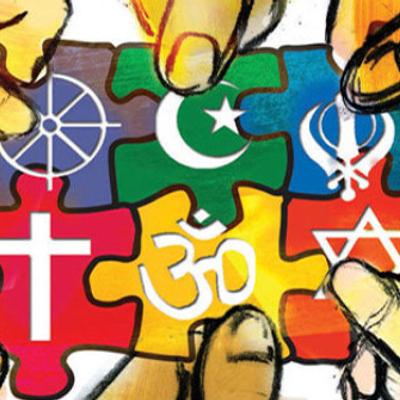 Religione
ECCO I SANTI CHE POSSIAMO FESTEGGIARE IN QUESTO GIORNO DEL 21 FEBBRAIO https://ift.tt/2NyESiY #santioggi #beati #calendario
ECCO I SANTI CHE POSSIAMO FESTEGGIARE IN QUESTO GIORNO DEL 21 FEBBRAIO
Bellissima giornata anche oggi questa di Giovedì 21 Febbraio 2019. Ma cosa si festeggia anche in questo giorno del 21 Febbraio riguardo i santi, beati e martiri? Cosa possiamo onorare secondo le tradizioni cristiane e cattoliche e secondo, quindi la nostra Chiesa cattolica? Oggi quanti e quali santi ritroviamo alla data odierna scritti nel nostro solito calendario che si compone non soltanto dei
ECCO I SANTI DI QUESTO GIORNO DEL 16 FEBBRAIO 2019 https://ift.tt/2E63iMb #santioggi #calendario #beati #martiri
ECCO I SANTI DI QUESTO GIORNO DEL 16 FEBBRAIO 2019
Vediamo anche oggi di capire e comprendere quali santi è possibile festeggiare secondo la tradizione cristiana e cattolica e quindi secondo la Chiesa Romana. Vediamo di leggere nel nostro sito i vari santi, beati e martiri che possiamo festeggiare e onorare potendo così capire a chi poter fare gli auguri di buon onomastico e facendoci pagare magari un bel caffè. Diciamo che oggi sul nostro calend
VEDIAMO I SANTI DI QUESTO GIORNO DEL 12 FEBBRAIO 2019 http://bit.ly/2TSMuPj #santioggi #calendario #beati #martiri
VEDIAMO I SANTI DI QUESTO GIORNO DEL 12 FEBBRAIO 2019
Settimana decisamente interessante per quanto riguarda i santi perchè se ne festeggiano davvero tantissimi e poi molto particolari. Infatti anche in questa giornata i diversi nomi che ritroviamo sul nostro calendario sono molto belli ma insoliti, insomma poco diffusi in Italia e tra la popolazione ma davvero molto belli e dalla incredibile sonorità. Forse alcuni di voi hanno conoscenze che portan
ECCO I VARI NOMI SUL CALENDARIO DEI SANTI DI OGGI 10 FEBBRAIO http://bit.ly/2TWaTUt #santioggi #calendario #beati #martiri
ECCO I VARI NOMI SUL CALENDARIO DEI SANTI DI OGGI 10 FEBBRAIO
Oggi vediamo di capire e comprendere quali siano i santi di questa giornata e quali siano i beati e martiri che eventualmente possiamo festeggiare in questa Domenica del 10 Febbraio 2019. Intanto anticipiamo che sul nostro calendario ritroviam osoltanto alcun inomi ed esattamente due soli nomi che non sono poi così diffusi ma senza dubbio conosciuti da voi. Ma cosa festeggia la Chiesa cattolica e