" For fish and birds, this is described as gradual mouth gaping, staying open for at least three seconds and subsequently a rapid closure of the mouth. Almost all #vertebrate animals, including mammals, birds, reptiles, amphibians, and even fish, experience yawning. "

RE: https://mastodon.social/@sflorg/116131363356930077

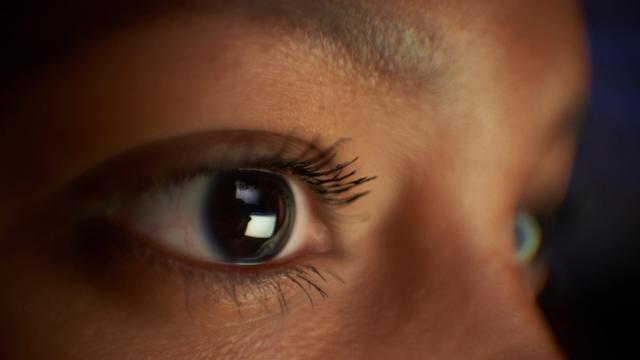
Eyes, as light-sensing organs of the #lens #eye type, have #evolved independently multiple times in the animal kingdom. But what did a representative of the early #vertebrate lineage look like? According to G. Kafetzis et al. (2026), a worm-like #ancestor possessed #medianeyes bring #homologous to the modern #pinealgland of the #brain. Published in #CurrentBiology. #evolution

© this text #StefanFWirth March 2026

#Reference
G. Kafetzis et al. (2026),
https://doi.org/10.1016/j.cub.2025.12.028

#Eyes of the world's longest-living #vertebrate, the #GreenlandShark, show little #ageing
Greenland #shark (Somniosus microcephalus) can live for up to 400 years in the chilly North Atlantic and Arctic waters, making it one of the longest-living #vertebrates on Earth. And according to new research its seemingly undead eyes are fully functioning and barely deteriorate even after a century. Unravelling the shark's anti-ageing secrets could benefit human eye health.
https://www.abc.net.au/news/science/2026-01-10/eyes-dont-age-for-greenland-shark/106019818
Greenland shark eyes may hold anti-ageing secrets

The Greenland shark is thought to live for about 400 years but somehow its eyes appear to barely deteriorate, according to a new study that has implications for human health.

New publication: Changes in #phenology mediate #vertebrate #population responses to #temperature globally, by @stefanvriend and others.
https://doi.org/10.1038/s41467-025-68172-8

🐭🧠 The common #shrew is a tiny #vertebrate with a bizarre survival strategy called Dehnel’s phenomenon. To save #energy during lean #winter months, these #animals physically shrink their skulls and #brains, only to regrow them when #spring arrives.

👉 https://www.discoverwildlife.com/animal-facts/mammals/common-shrew-shrink

#neuroscience #evolution #nature #science #mammals #research #discovery #education

Scientists found that this tiny mammal ‘regrows’ its brain in winter. And it could help cure Alzheimer’s | Discover Wildlife

Researchers discovered that the common shrew can shrink itself during the winter

Discover Wildlife
Apparently, some 530 million years ago (give or take) in the #Cambrian age, after about 2.5 billion years of rather plodding #evolution, bi-lateral symmetry appeared in animals (after some dabbling in tri-lateral and penta-lateral symmetry) and when brains showed up they were bi-lateral. #Vertebrate, but still #jawless, fishes were swimming after each other for lunch. #Eyes, which had already existed for a long while, started showing up in pairs, at the head end of the fishes. (1/3)
Urban Naturalist, Number 75 (2024)

Urban Naturalist, Number 75 (2024)