The Power of the Whisper: How WSPR and WSJT-X are Redefining Long-Distance Radio

1,250 words, 7 minutes read time.

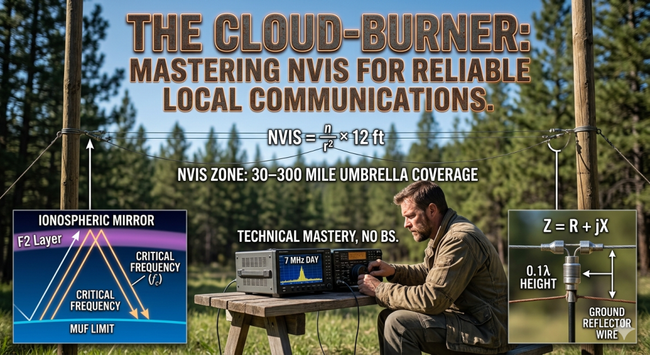
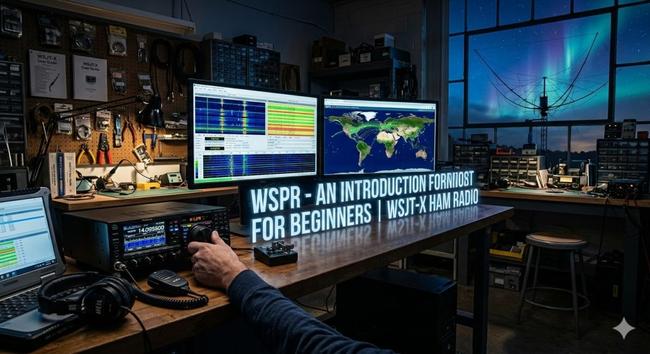
Amateur radio operators and technology enthusiasts are currently utilizing the Weak Signal Propagation Reporter, commonly known as WSPR, and the WSJT-X software suite to achieve global communication using minimal power. Developed by Nobel laureate Joe Taylor, K1JT, this digital protocol allows stations to send and receive signals that are often completely buried in background noise, making it possible to map atmospheric conditions and radio propagation in real-time. This technology serves as a critical entry point for men looking to understand the mechanics of the ionosphere and the efficiency of modern digital signal processing. By leveraging advanced mathematical algorithms, WSPR proves that high-power amplifiers and massive antenna towers are no longer the only way to reach across the ocean, offering a technical challenge that rewards precision and patience over brute force.

The core of this system lies in the software known as WSJT-X. This program implements several digital protocols designed specifically for making reliable communication under extreme conditions where traditional voice or Morse code signals would fail. While WSPR is not a conversational mode, it acts as a global beacon system. A station transmits a brief packet containing its callsign, location grid square, and power level. Thousands of other stations around the world, running the same software, listen for these signals and automatically report any successful decodes to a central internet database called WSPRnet. This creates a living, breathing map of how radio waves are traveling across the planet at any given second, providing invaluable data for anyone interested in the science of communication.

Understanding the physics behind this process is what separates a casual observer from a true radio technician. The Earth’s ionosphere, a layer of the atmosphere ionized by solar radiation, acts as a mirror for certain radio frequencies. Depending on the time of day, solar flare activity, and the season, these signals can skip off the sky and land thousands of miles away. In the past, confirming these paths required luck and high-power transmissions. Joe Taylor once noted that the goal of these modes is to utilize the information-theoretic limits of the channel. This means squeezing every bit of data through the smallest amount of bandwidth possible, allowing a station running only one watt of power to be heard in Antarctica from a backyard in Michigan.

For the man standing on the threshold of earning his amateur radio license, WSPR is the ultimate proof of concept. It removes the intimidation factor of “talking” to strangers and replaces it with a pure engineering objective: How far can my signal go with the least amount of effort? Setting up a WSPR station requires a computer, a transceiver, and a simple wire antenna. The software handles the heavy lifting of Forward Error Correction and narrow-band filtering. This process teaches the fundamentals of station grounding, signal-to-noise ratios, and frequency stability—skills that are mandatory for passing the licensing exam and, more importantly, for operating a professional-grade station.

The hardware requirements are surprisingly modest, which appeals to the practical, DIY-oriented mind. Many enthusiasts use a Raspberry Pi or an older laptop dedicated to the task. The interface between the radio and the computer is the critical link, ensuring that the audio generated by the software is cleanly injected into the radio’s transmitter. If the audio levels are too high, the signal becomes distorted, “splattering” across the band and becoming unreadable. This level of technical discipline is exactly what is required in high-stakes fields like aviation or telecommunications. Mastering the “clean” signal is a badge of honor in the ham radio community, signifying a man who knows his equipment inside and out.

As we look at the data generated by WSPR, we see more than just dots on a map; we see the pulse of the sun. Because radio propagation is tied directly to solar activity, WSPR users are often the first to notice a solar storm or a sudden ionospheric disturbance. When the sun emits a massive burst of energy, the higher frequency bands might “open up,” allowing for incredible distances to be covered on low power. Conversely, a solar blackout can shut down communication entirely. Being able to read these signs and adjust one’s strategy accordingly is a core component of the hobby. It turns a simple radio into a scientific instrument used for environmental monitoring.

The community surrounding WSJT-X is one of rigorous peer review and constant improvement. The software is open-source, meaning the code is available for anyone to inspect and refine. This transparency has led to a rapid evolution of the protocols. While WSPR is for propagation reporting, other modes within the suite like FT8 or FST4 are used for rapid-fire contacts. However, WSPR remains the gold standard for testing antennas. If a man builds a new wire antenna in his yard, he doesn’t have to wait for someone to answer his call to know if it works. He can run WSPR for an hour, check the online map, and see exactly where his signal landed. It provides immediate, objective feedback that is essential for any technical project.

The future of this technology points toward even more robust communication in the face of increasing electronic noise. As our cities become more crowded with Wi-Fi, power lines, and electronics, the “noise floor” of the radio spectrum is rising. Traditional modes are struggling to compete. Digital modes like those found in WSJT-X are the solution, using digital signal processing to “dig” signals out of the static. This represents the next frontier of amateur radio—the transition from analog heritage to digital mastery. For those looking to get involved, the barrier to entry has never been lower, and the potential for discovery has never been higher.

In the broader context of emergency preparedness and global infrastructure, the lessons learned from WSPR are invaluable. In a scenario where satellites or internet backbones fail, the ability to bounce low-power signals off the atmosphere remains one of the only viable long-distance communication methods. A man who understands how to deploy a WSPR-capable station is a man who can provide data and connectivity when everything else goes dark. This sense of utility and self-reliance is a driving force for many who pursue their license. It is not just about a hobby; it is about mastering a fundamental force of nature to ensure that the lines of communication stay open, no matter the circumstances.

Call to Action

If this story caught your attention, don’t just scroll past. Join the community—men sharing skills, stories, and experiences. Subscribe for more posts like this, drop a comment about your projects or lessons learned, or reach out and tell me what you’re building or experimenting with. Let’s grow together.

D. Bryan King

Sources

  • WSJT-X Main Page: physics.princeton.edu/pulsar/k1jt/wsjtx.html
  • WSPRnet Official Site: wsprnet.org/drupal/
  • ARRL – What is WSPR?: arrl.org/wspr
  • K1JT’s WSPR Implementation Guide: physics.princeton.edu/pulsar/k1jt/WSPR_Instructions.pdf
  • WSPR on Raspberry Pi – GitHub: github.com/JamesP6000/WsprryPi
  • Make Magazine – Ham Radio for Beginners: makezine.com/projects/ham-radio-for-beginners/
  • Introduction to Digital Modes – OnAllBands: onallbands.com/digital-modes-101-wspr/
  • DX Engineering – WSPR Equipment: dxengineering.com/search/product-line/wsjt-x-interfaces
  • Radio Society of Great Britain – WSPR Intro: rsgb.org/main/get-started-in-ham-radio/digital-modes/wspr/
  • Ham Radio School – Digital Mode Basics: hamradioschool.com/digital-modes-introduction/
  • The History of WSJT-X – Princeton University: princeton.edu/news/2017/10/18/nobel-prize-winner-taylor-channels-passion-radio
  • WSPR Rocks – Real-time Database: wspr.rocks
  • Antenna Theory for Digital Modes: antenna-theory.com
  • HF Propagation Basics – NOAA: swpc.noaa.gov/phenomena/hf-radio-propagation
  • Digital Radio Mondiale and WSPR – IEEE: ieee.org/publications/wspr-technical-overview

Disclaimer:

The views and opinions expressed in this post are solely those of the author. The information provided is based on personal research, experience, and understanding of the subject matter at the time of writing. Readers should consult relevant experts or authorities for specific guidance related to their unique situations.

#amateurRadioCommunity #amateurRadioForBeginners #amateurRadioLicense #antennaTesting #AtmosphericScience #AtomicClock #Balun #bandwidth #CATControl #dataModes #Decibel #digitalModes #digitalSignalProcessing #dipoleAntenna #DIYRadio #DXing #ElectronicEngineering #Elmers #EmergencyCommunication #ExtraClass #forwardErrorCorrection #frequencyHopping #FrequencyStability #FT8 #GeneralClass #GlobalRadioMap #GPSTime #GridDownRadio #GridSquares #Grounding #hamRadio #hamRadioExamPrep #hamRadioGear #HamRadioMentoring #hamRadioProjects #hamRadioSkills #hamRadioSoftware #hfAntenna #HFRadio #HighFrequency #impedanceMatching #ionosphere #JoeTaylorK1JT #LongDistanceRadio #LowPowerRadio #MagneticLoopAntenna #MaidenheadLocator #NarrowbandCommunication #NetworkTimeProtocol #NoiseFloor #OpenSourceRadio #PCToRadioInterface #QRP #RadioAstronomy #RadioBenchmarking #radioCommunication #radioFrequency #RadioInterfacing #RadioNetworking #radioPropagation #RadioScience #radioSignals #radioSpectrum #radioTechnician #radioTroubleshooting #RadioWavePhysics #RaspberryPiRadio #RealTimeTracking #RFInterference #RigControl #SDR #shortwaveRadio #SignalDecoding #SignalReporting #SignalToNoiseRatio #softwareDefinedRadio #solarActivity #solarCycle #SolarFlareImpacts #SoundcardPacket #SpaceWeather #StandingWaveRatio #SurvivalCommunication #SWR #TechHobbiesForMen #TechnicalSelfReliance #technicianClass #telecommunications #timeSync #TransceiverSetup #Unun #verticalAntenna #VOXControl #WeakSignalPropagationReporter #wireAntenna #wirelessTechnology #wsjtX #wsjtXTutorial #WSPR #WSPRTutorial #WSPRnet

HF vs VHF/UHF: Which Band Should You Start With?

2,730 words, 14 minutes read time.

There’s something raw and satisfying about firing up a radio and knowing you’re about to push a signal beyond the walls of your home, past the skyline, maybe even across oceans. It’s not a toy, not a gimmick—it’s a connection forged through skill, knowledge, and the right gear. But before you spin the dial and key the mic, there’s a decision to make: do you start with the hard-hitting world of HF, or the precision and practicality of VHF/UHF?

This isn’t about passing a test. It’s about choosing the path that will challenge you, teach you, and deliver the kind of results that make radio more than a hobby. It’s about starting where the signal meets your ambition.

The Straight Answer

VHF/UHF is the fast track to getting on the air and making solid contacts close to home. If your goal is reliable comms, quick access to local nets, and gear that’s compact and efficient, this is your arena. It’s also the training ground where you’ll sharpen your skills before stepping into the deeper water.

HF is for those who want reach—real reach. We’re talking contacts across continents, late-night signal hunts, and the thrill of cracking through atmospheric noise to land a QSO on the other side of the planet. It’s more gear, more learning, and more challenge—but the reward is unmatched.

What These Bands Really Are

HF—or High Frequency—covers 3 to 30 MHz. This is where propagation becomes an art form, where the ionosphere turns raw RF energy into a ticket to anywhere on the globe. These bands are unpredictable, influenced by sunspots, seasons, and time of day. It’s part science, part instinct, and all about knowing how to read the sky.

VHF and UHF—Very High and Ultra High Frequency—run from 30 MHz to 3 GHz. These bands are clean, sharp, and perfect for local or regional comms. Signals are typically line-of-sight, which means antennas and terrain matter as much as power. They excel at practicality: emergency comms, quick QSO check-ins, and portable ops that keep you connected without a massive footprint.

The Factors That Count

This isn’t about shiny radios and spec sheets. It’s about what you actually want out of the game. Are you looking to join local nets, support emergency services, or keep a reliable rig in your truck for when things go sideways? Then VHF/UHF gives you everything you need without the learning curve of HF.

But if the pull of long-distance DX, chasing rare stations, and experimenting with antennas keeps you up at night, HF is where you should start. It demands more—more cash, more space, more knowledge—but it pays back with a sense of accomplishment that can’t be bought off the shelf.

Budget isn’t a small detail here. A solid handheld VHF/UHF rig can be had for less than a tank of gas in a full-size pickup. A decent HF station, on the other hand, might set you back the cost of a weekend fishing boat. But one isn’t better than the other—it’s about matching the investment to your goals.

VHF/UHF: The Ground Game

Starting with VHF/UHF is like learning to box before stepping into MMA. It’s straightforward but demands discipline. Handheld transceivers—HTs—are compact and affordable, perfect for learning the ropes. But don’t expect miracles from the stock antenna; swap it out for a quality whip or mount a mag antenna on your vehicle for real performance.

With repeaters, you can stretch your reach far beyond line-of-sight, check into local nets, and get involved in community events. Want to go mobile? Install a 50-watt mobile rig in your truck and you’ll have a reliable comms system ready for road trips or emergency deployments.

VHF/UHF builds fundamentals—how to make clean contacts, work repeaters, and operate with confidence. It’s practical, immediate, and a perfect launchpad into the deeper world of radio.

HF: The Long Game

HF is where things get serious. This isn’t plug-and-play. It’s about building a station, learning propagation, and fine-tuning antennas until the SWR meter tells you it’s good enough to chase DX halfway around the world.

A starter HF station typically includes a 100-watt transceiver, a good power supply, and a wire antenna—dipole, end-fed, or vertical. Antenna placement is critical, and tuning can be a ritual in itself. But when you hear a faint call from a station thousands of miles away and your reply punches through, you’ll know why HF commands respect.

Each band has its character. Twenty meters is the workhorse for daytime DX, forty meters handles regional chatter and night ops, and ten meters can explode with activity when the solar cycle peaks. Mastering these nuances takes time, but the payoff is the thrill of global reach.

Antennas: The Real Workhorses

Forget the myth that the radio makes the operator. That kind of thinking belongs to catalog shoppers, not builders. The truth is simple: the antenna is the kingmaker. A thousand-dollar rig feeding into a poor antenna will perform worse than a budget transceiver pushing into a properly tuned wire or vertical. The difference isn’t subtle—it’s night and day, and anyone who’s spent time in the field will tell you the same.

On VHF/UHF, the antenna determines whether your signal clears the ridge line or dies in the driveway. A simple upgrade from the stock “rubber duck” that comes with most handhelds can transform a mediocre radio into a surprisingly capable performer. High-gain whips, roll-up J-poles, or a properly mounted base vertical with clear line of sight will stretch your reach far beyond what power alone can accomplish. For mobile operators, a mag-mount antenna on the roof of a vehicle often doubles or triples the usable range compared to a stock handheld. The lesson here is straightforward: height and gain are the great equalizers in the VHF/UHF world, and investing in the right antenna makes more difference than chasing extra watts.

When it comes to HF, the stakes climb. HF propagation is an art, and the antenna is your brush. Space, height, and design matter far more than radio model numbers. A wire dipole hung at 30 feet will outperform a low-mounted, poorly resonant vertical every time. But when height is limited—say, in an HOA environment or a tight urban lot—stealth end-fed wires, balcony-mounted loops, or compact verticals with proper ground radials can still deliver respectable results. The key is understanding trade-offs. Magnetic loops, for instance, are compact and stealthy, but they demand precise tuning and can be narrow-banded. End-fed antennas are simple to deploy, but they require a solid counterpoise and good feedline practices to avoid RF headaches.

Real operators experiment. They measure, test, and refine. They know that moving an antenna five feet higher can drop noise levels, improve SWR, and turn weak signals into clean contacts. They appreciate that an antenna isn’t just a piece of hardware—it’s a performance multiplier. And when the bands open, it’s the operator who spent time perfecting his antenna system—not the one who bought the fanciest rig—who owns the airwaves.

Digital & Data: The New Frontier

Digital modes are rewriting the rules of amateur radio, reshaping what’s possible and demanding a new kind of operator—one who understands both RF and data. The old-school crowd may swear by analog FM or SSB, but the reality is that digital voice and data modes are becoming the sharp edge of modern communication. They’re not toys. They’re not gimmicks. They’re force multipliers that give you reach, clarity, and reliability when propagation or conditions would shut other operators down.

On VHF/UHF, the big three—DMR, D-Star, and Yaesu System Fusion—have cracked open a whole new level of performance. Forget scratchy analog signals that fade into static; digital voice is crisp, clean, and cuts through background noise like a hot knife through steel. But the real magic comes from how these systems tap into linked repeater networks and internet backbones. A handheld with a good antenna can reach across the globe through a properly configured hotspot or a linked repeater. Suddenly, that local VHF rig isn’t just a short-range tool; it’s a gateway to international QSO networks, emergency nets, and round-the-clock ragchews with operators in every corner of the world.

HF operators aren’t sitting on the sidelines either. When the solar cycle dips, noise levels climb, and propagation flattens out, modes like FT8, PSK31, and JS8Call step in to do what voice sometimes can’t—pull signals out of the mud and lock down contacts with barely a whisper of RF. FT8 in particular has redefined weak-signal communication, decoding transmissions so faint they’re invisible to the human ear. Some operators scoff at the minimal keyboard interaction these modes demand, but when you’re bouncing signals across continents at 10 watts and logging contact after contact on an otherwise dead band, the power becomes undeniable.

These modes also open the door to more than just casual QSOs. JS8Call can pass digital messages across stations like a low-power, decentralized email network, invaluable for backcountry expeditions or off-grid comms where traditional infrastructure is nonexistent. PSK and RTTY are still workhorses for contesting and DXing, proving that digital versatility is more than a trend—it’s a permanent shift in how serious operators approach their craft.

And make no mistake—digital proficiency isn’t about pressing buttons. It’s about mastering station setup, interface design, and signal processing. It means understanding sound card levels, proper interfacing, and software configuration to avoid splatter and distortion. It’s about blending old-school RF fundamentals with modern networking skills to run a station that’s as sharp as it is adaptable. The analog purists might roll their eyes, but when conditions turn brutal or range becomes critical, the digital-equipped operator is the one who keeps making contacts while everyone else is spinning dials in frustration.

Building the Right Starter Kit

For VHF/UHF, the essentials are stripped down to the bones—simple, rugged, and field-ready. A quality handheld (HT) or mobile rig forms the core, but don’t get sucked into the false economy of bargain-bin radios that fizzle out after a season. Go for a unit that can take a beating, hold a charge, and deliver clean audio under stress. Pair it with an upgraded antenna—because that stock rubber duck? It’s a compromise at best. A high-gain whip for the HT or a properly tuned vertical for the mobile rig will punch through dead spots and extend your range far beyond the limits of the factory setup. Toss in spare batteries, preferably high-capacity packs or a reliable power bank, because nothing kills a field session faster than a dying rig. And don’t forget a programming cable; wrestling with tiny keypads to input repeaters or talk groups is a test of patience best avoided. A well-programmed radio is a ready radio.

HF is a different animal—bigger, meaner, and less forgiving. Here, the gear list steps up a notch, starting with a solid 100-watt transceiver. The sweet spot is a radio with robust filtering, a responsive tuner interface, and ergonomics that make long operating sessions a pleasure rather than a chore. Speaking of tuners, you’ll need one—internal or external—because a poorly matched antenna isn’t just inefficient; it’s a shortcut to frying finals. Your feed line also matters more at these frequencies. Cheap coax with high loss will bleed power before it even hits the radiator, so invest in low-loss cable rated for your bands and power level.

But the real game-changer is the antenna. On HF, it’s not an accessory—it’s the soul of your station. A dipole strung high between trees, an end-fed wire tucked along a fence line, or even a magnetic loop for stealth setups can mean the difference between pulling in distant DX and shouting into the void. Every element—height, orientation, grounding—adds up. Cut corners here, and you’ll spend countless hours wondering why everyone else hears stations you can’t.

None of this has to bankrupt you. Smart operators know that the cost of entry can be reasonable if you choose wisely. Buy once, buy right, and you’ll avoid the trap of upgrading three times before you finally get the gear you needed in the first place. Entry-level doesn’t have to mean underpowered; it means gear built to grow with you as your skills sharpen and your ambitions climb from local repeater chats to cross-continental pileups.

Growing Into the Hobby

Starting with VHF/UHF doesn’t box you in, and kicking things off on HF doesn’t chain you there forever. The smart move is to build your station like a platform—not a dead-end. Every piece of gear should be chosen with an eye toward what’s next, not just what’s now. A good power supply with plenty of headroom will run today’s 50-watt mobile rig and tomorrow’s 100-watt HF transceiver without breaking a sweat. Quality coax—low-loss, properly rated, and built to last—will serve you across both bands and save you from the frustration of replacing cheap feed lines after water intrusion or UV damage ruins them.

Versatile antennas are another key play. A solid VHF/UHF vertical can be a permanent fixture while you experiment with wires, dipoles, or loops for HF. Later, you can build out a multi-band setup without scrapping what you already own. Even simple additions like an antenna switch or a portable tuner mean you can expand without gutting your existing station.

This approach keeps you flexible. It means you’re not painting yourself into a corner with band-specific gear that loses value the minute you decide to branch out. Instead, you’re building a foundation—one capable of handling late-night DX hunts on 20 meters, weekend field ops on 2 meters, and whatever digital modes or emergency nets you decide to tackle next. Radio isn’t a single path. It’s a growing arsenal. Build like you mean it, and your station will grow with you instead of holding you back.

The Call to Action

This isn’t a hobby for the faint-hearted or the casually curious. Amateur radio is a craft that rewards patience, persistence, and a willingness to get your hands dirty with antennas, coax, and meters. It’s about testing limits, learning the quirks of the bands, and mastering tools that most people don’t even understand exist. There’s a satisfaction in making a contact over a hundred miles with nothing but a handheld, or in logging a DX station on a band that seemed dead five minutes ago. That kind of accomplishment doesn’t come from watching tutorials—it comes from rolling up your sleeves and being on the air.

So where will you plant your flag first? Will you dive into the practical, tactical world of VHF/UHF, where repeaters, local nets, and portable ops reward preparation and persistence? Or will you chase the raw, far-reaching power of HF, bending the ionosphere to your will and connecting with operators across continents? Neither path is easy. Both demand focus, discipline, and a willingness to learn the hard way.

The best operators don’t wait—they act. They experiment, iterate, and build stations that can grow with their skills. Now it’s your turn. Get on the air. Make that first call. Tinker with your setup. Test your antenna. Push the limits of what your station can do.

And if you want to keep sharpening your edge, subscribe to the newsletter. You’ll get hard-hitting gear guides, field-tested tips, and strategies that keep you one step ahead on the bands. Whether you’re logging your first VHF contact or chasing long-distance HF DX, you’ll be ready for whatever comes next on the dial. The airwaves are waiting—claim your spot.

D. Bryan King

Sources

US Amateur Radio Bands Chart (ARRL)
Graphical Frequency Allocations (ARRL)
47 CFR Part 97 — Amateur Radio Service (eCFR)
Your First Station (ARRL)
Choosing a Ham Radio (ARRL PDF)
HF Operations: The Difference with HF (Ham Radio School)
HF Radio Communications & Space Weather (NOAA SWPC)
NOAA Space Weather Scales
RepeaterBook — Find Local Repeaters
Your First Antenna (ARRL)
VHF Operation Primer (ARRL Field Day PDF)
Buying Your First Radio (ARRL)
Getting Started (DXEngineering)
Parks On The Air (POTA)

Disclaimer:

The views and opinions expressed in this post are solely those of the author. The information provided is based on personal research, experience, and understanding of the subject matter at the time of writing. Readers should consult relevant experts or authorities for specific guidance related to their unique situations.

Related Posts

Rate this:

#AmateurRadio #antennaHeight #antennaPlacement #antennaTuner #baseStation #beginnerHamRadio #beginnerStation #contesting #DStar #digitalModes #Dipole #DMR #DXContacts #DXing #emergencyCommunications #fieldOperations #FT8 #Fusion #hamRadio #hamRadioAdvice #hamRadioChecklist #hamRadioTips #handheldRadio #HFBeginners #HFDigitalModes #HFPropagation #HFRadio #HFVsVHF #HTRadio #JS8Call #localNets #lowLossCoax #mobileRadio #operatingSkills #portableHamRadio #propagation #PSK31 #QRP #radioAntennas #radioBands #radioGear #radioNets #radioPower #radioSetup #radioTroubleshooting #radioUpgrades #repeaters #solarCycle #starterKit #startingHamRadio #stationPlanning #UHFRadio #verticalAntenna #VHFBeginners #VHFDigitalModes #VHFRadio #VHFUHFGuide #VHFUHFRange #weakSignal #wireAntenna

The Easiest Way to Build Your First Dipole Antenna: A Beginner’s Guide for Future Ham Radio Operators

1,938 words, 10 minutes read time.

If you’re dreaming of getting your amateur radio license someday, one of the most rewarding and practical steps you can take right now is building your very first dipole antenna. This simple yet effective antenna is a staple in the ham radio world and serves as the perfect introduction to understanding how antennas work. But don’t worry—this guide isn’t about the license exam itself. Instead, it’s designed to help you get hands-on experience with something that will become the backbone of your radio setup. Building a dipole antenna will deepen your knowledge, boost your confidence, and get you closer to speaking on the airwaves.

What Exactly Is a Dipole Antenna, and Why Should You Care?

At its core, a dipole antenna is one of the simplest types of antennas you can build and use. It’s essentially two equal lengths of wire stretched out in a straight line, with the radio feed line connected at the center. The magic of the dipole lies in its balanced design, which efficiently radiates radio signals when the length of the wires matches the wavelength of the frequency you want to use.

One of the reasons it’s the go-to antenna for beginners is its straightforward construction and the fact that it doesn’t require expensive or complicated equipment to get started. The American Radio Relay League describes the dipole antenna as the foundation of many ham stations, prized for its simplicity and effectiveness.

Not only is it a practical tool for transmitting and receiving signals, but it’s also a fantastic educational project. By building your own dipole, you’re diving headfirst into the physics of radio waves, antenna resonance, and impedance matching—all key concepts that will serve you well as you advance in amateur radio.

Why Build Your Own Dipole? The Benefits Are Bigger Than You Think

You might be wondering: why build when you can just buy an antenna? There are several good reasons to roll up your sleeves and make your own. First, building a dipole antenna is incredibly cost-effective. You only need basic materials like wire, a center insulator, and some coax cable, which means you can build a quality antenna for under $20 in most cases. This is a huge advantage when you’re just starting out and might be on a tight budget.

Second, nothing beats the satisfaction of operating a radio system with an antenna you built yourself. This hands-on experience builds confidence and helps demystify the technical side of amateur radio. It’s one thing to study antenna theory in a book, but it’s another to measure, cut, and test your own antenna and see it work in real time.

Finally, constructing your own dipole antenna allows you to tailor it exactly to your needs. Whether you want to build an antenna for 40 meters, 20 meters, or any other band, you have complete control over the design. Plus, you gain valuable troubleshooting skills that will make maintaining and optimizing your station easier down the road.

Gathering What You Need: Simple Materials for a Simple Antenna

Building a dipole antenna doesn’t require a trip to a specialty electronics store or a massive investment in tools. The materials list is short and straightforward, and most of these items are easy to find.

You’ll need a length of insulated wire for the antenna elements. Copper wire is common because it’s a great conductor, but aluminum or other metals can also work. The wire should be sturdy enough to hold its shape when stretched out, yet flexible enough to handle some bending during installation.

At the center of your dipole, you’ll need a feed point where the coaxial cable from your radio connects to the antenna wires. This is often done using a center insulator or a small piece of non-conductive material like plastic or wood to keep the two sides of the antenna separated while securing the connection points.

Coaxial cable is used as the feed line to carry the radio frequency energy from your transmitter or receiver to the antenna. RG-58 or RG-8X coax are common choices for dipoles because they’re affordable and have acceptable loss characteristics at HF frequencies.

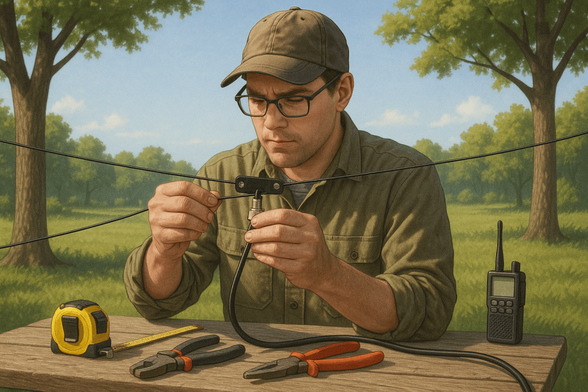
You might also want some rope or wire to hang your antenna from trees, poles, or your roof, and basic tools like wire cutters, pliers, and a tape measure. While optional, an antenna analyzer or SWR (Standing Wave Ratio) meter can be invaluable in testing and tuning your antenna once it’s up.

Getting the Length Right: How to Calculate Your Dipole’s Size

One of the most critical steps in building a dipole is calculating the correct length of your antenna elements. The performance of your antenna depends heavily on this because the wires need to resonate at the frequency you want to use.

A simple and widely used formula to find the total length of a half-wave dipole in feet is:

Length (feet) = 468 / Frequency (MHz)

For example, if you want to build a dipole for the 40-meter amateur band, which centers around 7.1 MHz, you would calculate:

468 ÷ 7.1 = approximately 65.9 feet total length.

This total length is then split into two equal halves, so each leg of the dipole would be about 32.95 feet.

It’s worth noting that this formula is a practical approximation, and factors such as wire thickness, height above ground, and nearby objects can slightly affect the antenna’s resonant frequency. For beginners, the formula is accurate enough to get you on the air, and any small tuning can be done after installation.

If you prefer metric units, a similar formula applies:

Length (meters) = 143 / Frequency (MHz)

This formula helps you plan your build based on your local preferences.

Step-by-Step: How to Build Your Dipole Antenna

Once you have your materials and have done the calculations, the building process itself is straightforward but rewarding. Start by cutting two equal lengths of wire according to your calculations.

At the center, attach the two wire ends to your feed point. This can be done by soldering or using mechanical connectors to ensure a solid electrical connection. Then, connect the coax shield (outer conductor) to one wire and the coax center conductor to the other. The center insulator keeps the two wires electrically isolated but physically connected at the center.

After your feed point is ready, you’ll need to insulate and secure the ends of the antenna wires to prevent movement and corrosion. Using end insulators, available at ham radio shops or made from durable plastic or wood, helps keep the antenna stretched and supports the weight.

Next, choose your mounting points. Many amateur operators prefer to hang the antenna horizontally between two trees or poles, about 20 to 30 feet above ground if possible. This height provides a good balance of radiation efficiency and accessibility. If you don’t have space for a horizontal dipole, an inverted V configuration—where the center is high and the ends slope down—is a good alternative that uses less horizontal space.

Secure the antenna firmly but allow some slack in the supporting ropes to avoid stress during wind or weather changes. Weatherproof your connections with electrical tape or shrink tubing for durability.

Testing Your Antenna: How to Know It Works

Once installed, it’s important to test your antenna to ensure it’s functioning correctly. The easiest method is to check continuity with a simple multimeter to make sure there are no breaks in the wire.

Using an SWR meter, you can measure how well the antenna is matched to your transmitter. A low SWR (close to 1:1) means most of your radio energy is being transmitted and not reflected back, which protects your equipment and improves performance. If you don’t have an SWR meter, an antenna analyzer is even better, giving detailed information about resonance and impedance.

You can also simply tune your radio to the target frequency and listen for signals or try transmitting at low power to see how well your antenna performs. The first contacts you make will be a thrilling confirmation of your efforts.

Optimizing Your Dipole for Better Performance

Even a simple dipole benefits from some thoughtful placement and tuning. Height is crucial; the higher your antenna, the better your signal can travel, especially on lower HF bands. Orientation matters too—generally, dipoles radiate best broadside (perpendicular) to the wire, so positioning it toward areas where you want to make contacts can help.

Avoid running your antenna too close to metal objects, power lines, or buildings, which can distort the radiation pattern or cause interference. Using insulating supports and ensuring your feed line runs straight down from the center reduces unwanted coupling and losses.

If your SWR reading is high, you can trim the antenna wires slightly to bring the resonance closer to your desired frequency. Start by shortening each leg in small increments, testing after each change.

Common Pitfalls to Dodge

While building a dipole is straightforward, beginners often stumble on a few key points. One frequent mistake is not isolating the two antenna wires properly at the center feed point, which can cause shorts and prevent the antenna from working.

Using poor-quality or excessively thin wire can lead to breakage or poor conductivity, and improper feed line connections can introduce losses or damage your radio.

Another common issue is neglecting to test the antenna before final installation. Taking the time to verify continuity and SWR early saves frustration later.

Finally, placing your antenna too low or too close to obstructions limits its effectiveness. Planning your installation carefully will pay off in better signals and more successful contacts.

How Building Your Dipole Antenna Sets You Up for Success

Building a simple dipole antenna is more than just a project—it’s a foundational experience that prepares you for a lifetime in amateur radio. You’ll gain practical skills that make licensing and future station upgrades less intimidating. Understanding antenna fundamentals through your own build lets you troubleshoot problems, experiment with different designs, and ultimately communicate more effectively.

As one experienced ham radio operator puts it, there is no substitute for hands-on experience. Building and tuning your own antenna is the fastest way to learn and the best way to really understand how radio works.

Final Thoughts and Next Steps

Getting your hands dirty by building your first dipole antenna is a fantastic step toward your amateur radio goals. It’s affordable, educational, and incredibly satisfying. Whether you’re aiming to get your license tomorrow or next year, this experience will serve you well.

If you found this guide helpful, we’d love for you to stay connected. Subscribe to our newsletter for more beginner-friendly ham radio tips and projects. And don’t be shy—join the conversation below by leaving a comment with your questions, experiences, or photos of your own dipole antenna builds. Let’s learn and grow together on this exciting journey!

D. Bryan King

Sources

Disclaimer:

The views and opinions expressed in this post are solely those of the author. The information provided is based on personal research, experience, and understanding of the subject matter at the time of writing. Readers should consult relevant experts or authorities for specific guidance related to their unique situations.

Related Posts

#affordableHamAntenna #amateurRadioAntenna #AmateurRadioBasics #amateurRadioStationSetup #antennaAnalyzer #antennaBuildingGuide #antennaConstruction #antennaInstallation #antennaMaintenance #antennaOptimization #antennaResonance #antennaSafety #antennaTesting #antennaTheory #antennaTroubleshooting #antennaTuning #beginnerHamRadioProject #bestAntennaForHamRadio #buildDipoleAntenna #buildingAntennaAtHome #coaxialCableAntenna #dipoleAntenna #dipoleAntennaDesign #dipoleAntennaFeeding #dipoleAntennaLengthCalculation #dipoleAntennaMaterials #dipoleAntennaPlans #dipoleAntennaSetup #dipoleAntennaTutorial #dipoleVsVerticalAntenna #diyAntennaProject #diyHamRadioAntenna #halfWaveDipole #hamRadioAntenna #hamRadioBeginners #hamRadioCommunity #hamRadioEquipment #hamRadioLearning #hamRadioProjectIdeas #hamRadioTips #hfAntenna #hfDipoleAntenna #howToBuildDipole #radioAntennaForBeginners #radioWaveAntenna #simpleDipoleBuild #swrMeterUse #wireAntenna

Wire_Antennas_for_Ham_Radio

A thread tied to the zinc gutter. (+/- 40 meter roof gutter). The pirates come in well. (1600 kHz). Now listen to radio sikbok 😁. #shortwave #mediumwave #longwave #AM #DX #WireAntenna