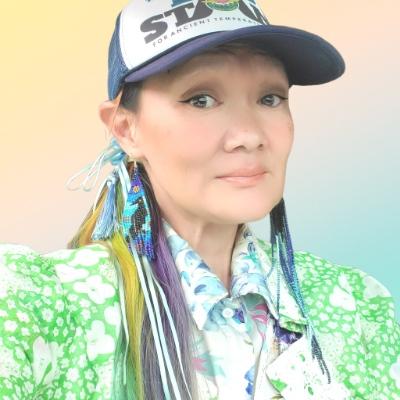
Today was National Indigenous Peoples Day. I mentioned it in an earlier article but also wanted to share this post from my archives. For unknown reasons it was by far my most popular post on Recipes and Roots.

I am not Indigenous and strongly encourage people to read and listen to Indigenous stories and learn more about the Indigenous people who live in your area.

https://www.nordicprairielife.ca/recipesandroots/traditional-indigenous-foods-in-canada

#indigenousfoods
#IndigenousCuisine
#firstnationspeople

Traditional Indigenous Foods in Canada — Nordic Prairie Life

Explore the deep roots of traditional Indigenous foods in Canada — from bannock and berries to pre-colonial sustainability and foraging wisdom.

Nordic Prairie Life

Legacy of #Indigenous #stewardship of #camas dates back more than 3,500 years, #OSU study finds

May 20, 2024

Excerpt: CORVALLIS, Ore. — "An #Oregon State University study found evidence that Indigenous groups in the #PacificNorthwest were intentionally harvesting edible #CamasBulbs at optimal stages of the plant’s maturation as far back as 3,500 years ago.

"The findings contribute to the growing body of research around #TraditionalEcologicalKnowledge and practices, demonstrating the care and specificity with which Indigenous groups have been stewarding and cultivating natural resources for millennia.

"Camas is an #ecological and cultural keystone, meaning it is a species that many other organisms depend on and that features prominently within many cultural practices.

" 'If you think about #salmon as being a charismatic species that people are very familiar with, camas is kind of the plant equivalent,' said Molly Carney, an assistant professor of anthropology in OSU’s College of Liberal Arts and lead author on the study. 'It is one of those species that really holds up greater #ecosystems, a fundamental species which everything is related to.'

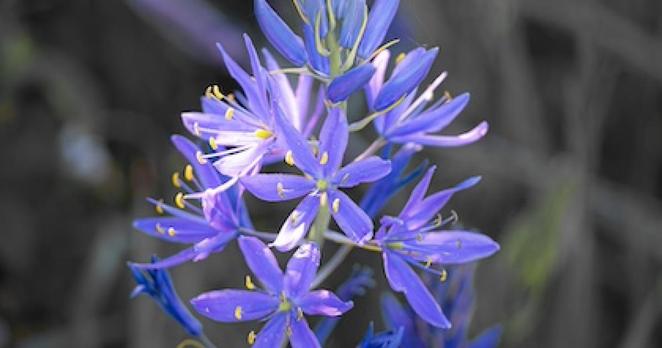
"An eye-catching blue flower that grows widely throughout the Pacific Northwest, camas is referred to in Indigenous calendars across the region, with the plant’s growth stages used as a sort of seasonal benchmark. It is often included in traditional #FirstFood ceremonies, in which tribal communities mark the coming of spring with the first #SalmonRun or the first #EdibleRoots after a long winter, Carney said.

"Camas bulbs must be baked for two to three days to render them edible. Once soft, the bulbs taste a bit like sweet potato, Carney said. Traditional baking was done in underground ovens using heated rocks."

Read more:
https://news.oregonstate.edu/news/legacy-indigenous-stewardship-camas-dates-back-more-3500-years-osu-study-finds

#SolarPunkSunday #LandUse
#IndigenousFoods #CulturalPreservation
#NativeAmericanHistory #IndigenousStewardship #IndigenousHistory #TraditionalFoods
#TraditionalFoodSources #KeystoneSpecies #PNW #TEK

Legacy of Indigenous stewardship of camas dates back more than 3,500 years, OSU study finds | Newsroom

CORVALLIS, Ore. — An Oregon State University study found evidence that Indigenous groups in the Pacific Northwest were intentionally harvesting edible camas bulbs at optimal stages of the plant’s maturation as far back as 3,500 years ago. The findings contribute to the growing body of research around Traditional Ecological Knowledge and practices, demonstrating the care and specificity with which Indigenous groups have been stewarding and cultivating natural resources for millennia.

Newsroom

#NativeAmericaCalling: A Native cafe, #CamasRestoration and the #IndigenousFoodPyramid

Friday, May 29, 2026

Excerpt: "Camas, a wild purple flower with an onion-like bulb, has been an important plant for Native people, mainly in the northwest. This is the time of year for harvesting and cooking them.

"Some Culture-keepers are reconnecting with traditional teachings and recipes handed down across generations. But environmental and land use changes are setting up more access barriers. The #ConfederatedTribesOfGrandRonde is one tribe working to protect this significant plant through a series of projects in #Oregon."

https://indianz.com/News/2026/05/29/native-america-calling-a-native-cafe-camas-restoration-and-the-indigenous-food-pyramid/

#SolarPunkSunday #LandUse #IndigenousFoods #CulturalPreservation #PlantPreservation #EnvironmentalRestoration #CamasPreservation #TraditionalFoods #TraditionalFoodSources

Native America Calling: A Native cafe, camas restoration and the Indigenous food pyramid

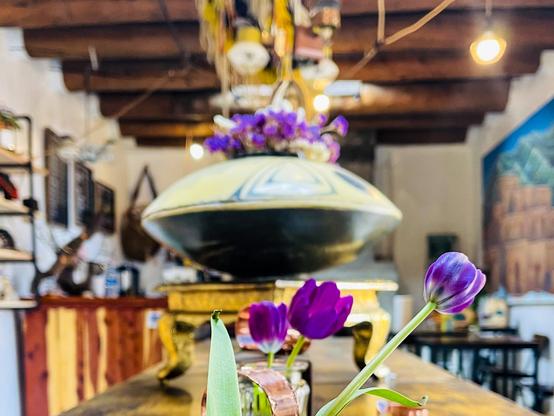
A Native-owned cafe in New Mexico, camas on tribal lands in Oregon and an Indigenous food pyramid are what's on The Menu.

Indianz.Com

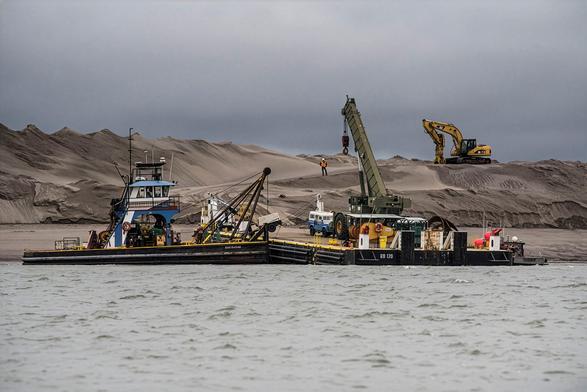
Dredging the #ColumbiaRiver at the expense of tribal and aquatic communities

The U.S. Army Corps of Engineers has transformed the estuary and robbed the river of sediment over the last century.

Josephine Woolington June 1, 2026
"Grand Ronde’s elected officials said they were not consulted during planning for the proposed dredge project, George said. In a written statement, the Corps did not acknowledge this but said that it is committed to “conducting robust, meaningful government-to-government consultation with all federally recognized tribes.”

Read more:
https://www.hcn.org/issues/58-6/dredging-the-columbia-river-at-the-expense-of-tribal-and-aquatic-communities/

#Riverkeepers #WaterIsLife #Chinookan #ChinookNation #Oregon #KellyPoint #PNW #WashingtonState #YakamaNation #CRITFC #IndigenousFoods #RiverPlants #ChinookSalmon #ColumbiaRiverkeepers #ColumbiaRiverBasin #nativeAmericans #NativeAmericanNews
#ConfederatedTribesOfGrandRonde

Dredging the Columbia River at the expense of tribal and aquatic communities

The U.S. Army Corps of Engineers’ deepening of the lower Columbia River has transformed lifeways for tribal and aquatic communities.

High Country News

Preparing to shut down the garden for summer as temps just hit 110s (after a week of perfect 70s no less). Pulled what corn I could, only four ears matured this season but we'll dry and store it and try again at the end of summer. The squash are still holding on, most of the sunflowers are about ready to cut and bag, and I'll be caging the tomatoes to see if they'll produce through the summer. Our kale is little but I'll be cutting it this week, and there are a few onions to pull and age also. With that, the garden will be just about ready to turn over to the chickens for the season!

Nopales harvest is officially done: our yield was 14 pounds all said, and I could have cut more while still leaving pads to grow on the cacti, but I maxxed out my capacity for cleaning and preparing them for storage. We gave some away, have some still fresh in the fridge (what we haven't cooked already) and I have 7 quarts of nopalitos fermenting on the shelf.

It's so odd how inverted our seasons are compared to most of you: as you enter your season of fertility we are mostly shutting down, preparing to rest the land through its harshest months before having another growing season in late summer. Though we aren't done! The mesquite pods come mature around the solstice, and in July or August las tunas (prickly pear fruits) will be ready for harvest also.

#Gardening #Zone9 #Mojave #Permaculture #Farm #SustainableFarming #IndigenousFoods

Africa: African Indigenous Foods That Fight Inflammation May Help People With Diabetes - Research: [The Conversation Africa] African indigenous food groups present an exciting area to explore when it comes to taste and nutrition. They may even offer potential as nutritional therapy for people with health problems. http://newsfeed.facilit8.network/TQww6T #AfricanFoods #Nutrition #DiabetesCare #HealthBenefits #IndigenousFoods

Recipe: #Squash and Apple Soup with Fresh Cranberry Sauce

November 15, 2018 / 2:22 PM EST / CBS News

"A #NativeAmerican recipe from #SeanSherman, author of "#TheSiouxChef's Indigenous Kitchen," winner of the 2018 James Beard Foundation Book Award for Best American Cookbook.

"Sherman says, 'This rich, flavorful soup has a creamy texture without cream. We use the small, tart crab apples that grow in backyards and along the borders of farm fields.'

Squash and Apple Soup with Fresh Cranberry Sauce
(Wagmú na Tȟaspáŋ Waháŋpi nakúŋ Watȟókeča T'áǧa Yužápi)

Serves 4 to 6

Ingredients:
2 Tablespoons sunflower oil
1 wild onion, chopped, or ¼ cup chopped shallot
2 pounds winter squash, seeded, peeled, and cut into 1-inch cubes
1 tart apple, cored and chopped
1 cup cider
3 cups Corn Stock (see below) or vegetable stock
1 Tablespoon maple syrup or more to taste
Salt to taste
Sumac to taste
Cranberry Sauce (see below) or chopped fresh cranberries for garnish

Instructions:
Heat the oil in a deep, heavy saucepan over medium heat and sauté the onion, squash, and apple until the onion is translucent, about 5 minutes. Stir in the cider and stock, increase the heat, and bring to a boil.

Reduce the heat and simmer until the squash is very tender, about 20 minutes.

With an immersion blender or working in batches with a blender, puree the soup and return to the pot to warm.

Season to taste with maple syrup, salt, and sumac. Serve with a dollop of Cranberry Sauce.

#CornStock

Save the #corncobs after you've enjoyed boiled or roasted corn on the cob, or you've cut the kernels for use in a recipe. Put the corncobs into a pot and cover with water by about 1 inch. Bring to a boil and partially cover. Reduce the heat and simmer until the stock tastes "corny," about 1 hour.

Discard the cobs, and store the stock in a covered container in the refrigerator or freezer.


#CranberrySauce
Makes 1½ cups

Use this to drizzle over roasted squash or turkey, or for a dessert sauce.

Ingredients:
1½ cups cranberries, fresh or frozen
¼ cup cider
¼ cup maple syrup
Salt to taste
Crushed juniper to taste

Put all the ingredients into a saucepan and set over medium heat. Bring to a simmer, stirring occasionally, and cook until the cranberries have popped and the mixture is thick. Remove from the heat and put into a fine-mesh sieve set over a bowl. Press the mixture firmly with the back of a spoon and scrape the underside of the sieve to capture all of the fruit pulp. Taste and adjust the seasoning. Serve warm or cool."

https://www.cbsnews.com/news/recipe-squash-and-apple-soup-with-fresh-cranberry-sauce-sean-sherman-the-sioux-chef/

#SolarPunkSunday #Vegan #Recipes
#IndigenousFoods #IndigenousCookbooks #NativeAmericanFoods #VeganRecipes #WinterSquash #VegetarianRecipes

Recipe: Squash and Apple Soup with Fresh Cranberry Sauce, from Sean Sherman, author of "The Sioux Chef's Indigenous Kitchen"

A rich, flavorful soup from The Sioux Chef

In the Kitchen with Black Walnuts: America’s Indigenous Baking Nut

Published on October 14, 2020 | in Baking, Healthy By Home Baking Association |

"Black walnuts, are a superfood native to the U.S. and one of the very few wild harvested foods commercially available today. For centuries #NativeAmericans used the nut meats as a food source and the husks for medicine and dyes. Even today nothing is wasted! The shells are ground into an eco-friendly abrasive."

Learn more:
https://www.homebaking.org/in-the-kitchen-with-black-walnuts-americas-indigenous-baking-nut/

#SolarPunkSunday #BlackWalnuts #WalnutTrees #IndigenousFoods

In the Kitchen with Black Walnuts: America’s Indigenous Baking Nut

Black walnuts, are a superfood native to the U.S. and one of the very few wild harvested foods commercially available today. For centuries Native Americans used the nut meats as a food source and the husks for medicine and dyes. Even today nothing is wasted! The shells are ground into an eco-friendly abrasive. Baking with

-

How #Indigenous #FoodSovereignty can improve #FoodSecurity

Sustainable Bites: Food and Our Future What can we do to help make our food systems more sustainable? UBC researchers share small steps that can make a big collective impact. 

March 24, 2025

"Indigenous households experience food insecurity at rates two to three times higher than non-Indigenous households in Canada. #Agroecologist Dr. #JenniferGrenz, an Assistant Professor in the Faculty of Forestry and Faculty of Land and Food Systems, studies Indigenous food sovereignty and food systems, and how to revitalize them.

Did you know?

#Kwetlal, or #camas, a lily-like plant with a starchy bulb, was an important staple for #IndigenousPeoples along the #SalishSea.
Kwetlal was cultivated in Garry oak #ecosystems by #W̱SÁNEĆ and Quw’utsun Peoples, until #colonization nearly destroyed these unique food systems.

What does Indigenous food sovereignty mean?

" 'Indigenous food sovereignty is the reclamation and revitalization of our food systems,' says Dr. Grenz, who is Nlaka’pamux of mixed ancestry, whose family comes from the #Lytton First Nation. She grew up and lives on the coast of BC.

"The lands across #BritishColumbia, Dr. Grenz explains, were purposefully shaped since time immemorial for foods, medicines and technologies by the Indigenous Peoples who lived there until colonial settlers dispossessed them of their lands, culture and traditions.

" 'Indigenous food sovereignty is also about #CulturalResurgence: being able to access those foods and medicines again and find new ones as we face a changing climate,' said Dr. Grenz. 'Heal the people, heal the land. Heal the land, heal the people. I think that’s really what food sovereignty is about.'

"Revitalizing Indigenous food systems can help diversify and localize food systems in ways that could buffer against #FoodInsecurity in a changing climate.

"Dr. Grenz’s research team is working alongside Indigenous communities impacted by the 2021 heat dome and wildfires to understand the effects on culturally important plants.

" 'If you think of land as just vegetation and an aesthetic notion of what belongs, you’re going to have very different approaches and different outcomes to recovery than if you see that land as a food system, not just for humans, but for our animal, bird, fish and insect relations,' says Dr. Grenz. 'We’re working alongside communities to develop those Indigenized processes around wildfire recovery that honour Indigenous food systems, sustainability and resiliency.”'

How can #Settlers support the revitalization of Indigenous food systems?

"Learn about the histories of the lands you live on and what the traditional food systems were, what they are now and what they could be, says Dr. Grenz.

"Incorporating reciprocity into your relationship with the land is also important. 'Learn about the plants of those lands and find a way to invite them into your life. How can you take care of them, nurture them and steward them?' asks Dr. Grenz.

"One way might be to Indigenize your own back yard or community garden. Or learn about Indigenous food system protocols and the concept of '#HonourableHarvest.'

How can land-based learning support Indigenous food sovereignty?

"Land-based learning is an opportunity to get students and people out on the land—and start taking steps to give back while they are learning.

"At #UBCFarm, Dr. Grenz and students are starting two different Indigenous food systems to work as part of the agrarian food system that exists there — 'essentially bridging two food systems, #decolonizing and #Indigenizing our understandings of what foods are and how those two systems work together to benefit both.'

"In one, they are establishing a Garry oak ecosystem and growing camas, which is a traditional food system of the W̱SÁNEĆ  and Quw’utsun Peoples. Another type of #ForestGarden, similar to other Coast #Salish, #Tsimshian or #Haida food systems, will see the forest shaped by different plants like beaked #hazelnut, #elderberry, #salmonberry and #thimbleberry.

The students will be able to practice how to care for plants ordinarily thought of as forest plants, and 'learn how to reclaim traditional #LandStewardship practices to actually increase the production of those berries.' "

Source [includes video links]:
https://beyond.ubc.ca/how-indigenous-food-sovereignty-can-improve-food-security/

#SolarPunkSunday #FirstNations #Quwutsun #ClimateChange #Resilience #DecolonizeYourDiet #HonorIndigenousFoodSystems #LandBasedLearning #IndigenousFoodSovereignty #IndigenousFoods #BuildingCommunity #CommunityGardens #FoodForests
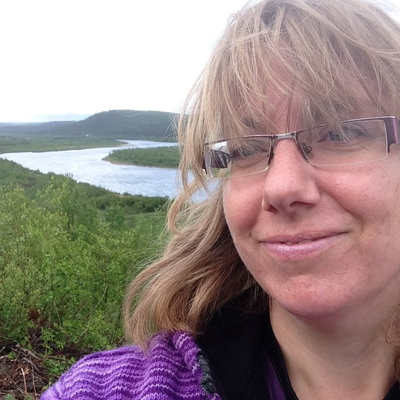
How Indigenous food sovereignty can improve food security - Beyond

Indigenous food sovereignty can help heal both the land and its people as we face the challenges of climate change

If you're up in #Namgis territory/ #AlertBay - you'll want to try & get some yummy bannock eats from #DuchessBannockAndDesserts. The hours are irregular, like most small businesses on #CormorantIsland. If you luck out - you'll find the Duchess of #Bannock & she will fill your belly while engaging in lively conversations!
I found out on my 2023 trip there, that she's an Auntie/relative to some of my Indigenous friends 💗

She gifted me a book, a magic hat bunny plushie & gave us free cheese bannock bites to eat on the ferry. We bought 3 different bannock goodies from her.

#NamgisNation #SupportSmallBusiness #IndigenousFoods #NativeSmallBiz #CoastSalish #BCIndigenousSmallBiz #NativeFoods #CoastalBC #IndigenousOwned #ExploreBC #BCBusiness #PacificNorthwest #Cascadia #PNW #POCwomen #CulturalConnections #CulturalDiversity