 Andrew Shields
Orioles and pumpkins
Black Walnuts
Seamus Heaney
#Poetry #SeamusHeaney #BlackWalnuts #Walnuts #Massachusetts #Autumn #Orioles #Pumpkins #Roof #TheNewYorker
https://www.newyorker.com/magazine/2025/09/29/black-walnuts-seamus-heaney-poem
Orioles and pumpkins
Black Walnuts
Seamus Heaney
#Poetry #SeamusHeaney #BlackWalnuts #Walnuts #Massachusetts #Autumn #Orioles #Pumpkins #Roof #TheNewYorker
https://www.newyorker.com/magazine/2025/09/29/black-walnuts-seamus-heaney-poem
In the Kitchen with Black Walnuts: America’s Indigenous Baking Nut
Published on October 14, 2020 | in Baking, Healthy By Home Baking Association |
"Black walnuts, are a superfood native to the U.S. and one of the very few wild harvested foods commercially available today. For centuries #NativeAmericans used the nut meats as a food source and the husks for medicine and dyes. Even today nothing is wasted! The shells are ground into an eco-friendly abrasive."
Learn more:
https://www.homebaking.org/in-the-kitchen-with-black-walnuts-americas-indigenous-baking-nut/
#SolarPunkSunday #BlackWalnuts #WalnutTrees #IndigenousFoods

Black walnuts, are a superfood native to the U.S. and one of the very few wild harvested foods commercially available today. For centuries Native Americans used the nut meats as a food source and the husks for medicine and dyes. Even today nothing is wasted! The shells are ground into an eco-friendly abrasive. Baking with
Did you know you can grow: #BlackWalnut
#UGAExtension experts provide information on growing uncommon Southern delights in your own backyard.
By Makenna Reavis
"#GeorgiaUSA is famous for its #peaches, #pecans and #peanuts, but thanks to its mild climate, the state also supports a variety of uncommon and exotic fruits and nuts.
"In a series inspired by University of Georgia #CooperativeExtension publication 'Minor Fruits and Nuts in Georgia,' edited by UGA Extension consumer horticulturist Bob Westerfield, we’ll highlight lesser-known edibles that can thrive in Georgia home gardens.
"This issue's focus is black walnut, a large nut tree native to Georgia and many parts of the eastern United States.
"Historically, the black walnut was a crucial tree for Native Americans, particularly the Cherokee, Delaware and Apache tribes. Indigenous people used various parts of the tree in their daily lives as a key ingredient in breads, soups and puddings. Parts of the bark and leaves repelled bugs and treated snake bites, sores, toothaches and other ailments."
Learn more:
https://fieldreport.caes.uga.edu/features/did-you-know-you-can-grow-black-walnut/
132 #Juglone Tolerant Plants That Can Grow Near Black #WalnutTrees [or any plant containing juglone -- which includes #ButternutTrees]
By Erin Marissa Russell
"If your property includes a black walnut tree, you’re likely familiar with black walnut toxicity and the difficulty of keeping plants near your black walnut tree alive. However, you may not be aware that some plants are not as susceptible to black walnut toxicity as others and can successfully be grown near or even right underneath a black walnut tree.
"We’ve compiled plant lists containing various types of plants you can count on to flourish underneath black walnut trees, along with some details about each plant. But first, let’s take a look at why it’s so difficult for most plants to prosper when they grow too near to a black walnut tree."
Read more:
https://www.gardeningchannel.com/juglone-tolerant-plants-grow-black-walnut/

By Erin Marissa Russell If your property includes a black walnut tree, you’re likely familiar with black walnut toxicity and the difficulty of keeping plants near your black walnut tree alive. However, you may not be aware that some plants are not as susceptible to black walnut toxicity as others and can successfully be grown […]
How to Make #NaturalDyes in Every Color: A Step-by-Step Guide
Grace Waters - December 31, 2023
Excerpt: "Which Ingredients Will Make Which Colors?
You can use practically any plant, produce or spice to make a natural dye. Many of those ingredients are available year-round. Here’s how to make natural dyes with every color under the rainbow.
Red
Produce like raspberries, cherries, cranberries, and pokeberries will make rich dyes. You can also use hibiscus, rose, amaranth, and hollyhock plants. Most deeply red flower petals will produce saturated pigments. Beetroots will make a pink dye that is incredibly vibrant.
Orange
The flower calendula makes for a fantastic natural orange dye. To get that classic, bright color, use carrots or orange peels. Surprisingly, pomegranates can also produce deep orange hues.
Yellow
Tumeric is incredibly vibrant and easily stains. Ginger is another good spice, but it isn’t as bright. Flowers like goldenrod, yarrow, black-eyed Susan, and dandelions produce varying shades of yellow. You can also use lemon peels.
Green
You can use almost any plant’s stems and leaves to make a vibrant green color. Leafy greens like spinach also work well. If you want a very bright shade, you may have to add some blue.
Indigo
Blue flowers like bachelor buttons and Russian sage will create unique, rich hues. Of course, you can also use blueberries for a very dark dye. Red cabbage makes a classic, bright purple color. If you want something more saturated and subtle, use blackberries.
Brown
Red onion skin and #acorns can make light brown or tan dyes. If you want something darker, use #BlackWalnuts or used coffee beans."
Read more:
https://environment.co/how-to-make-natural-dyes/
#SolarPunkSunday #DIY #FiberArts #NaturalDyes #Dyes #Wildflowers #PlantDyes
And yeah, I've seen urine used for various purposes, but not as a dye mordant... Not for the squeamish!
20 Natural Dye Plants You Can Forage and Grow in Your Garden
By Catherine Winter
Excerpt: "Would you prefer to go a super-natural route, since you’re using plant-based dyes? If you’re aiming to be as self-sufficient as possible, there are also all-organic mordant options as well.
Natural Mordants:
- Sumac: Simmer fresh sumac twigs for about an hour, strain out the twiggy bits, and reduce the liquid by half
- Urine: human urine is ideal for mordanting, but you’ll need to age it. Collect it in a jar and allow it to age for several days. [🤢 ]
- Salt: You can use standard table salt as a mordant, but Kosher salt can yield some of the strongest color-fastness. [I've used that]
- Vinegar [That too]
- Wood ash lye
"You’ve probably noticed that some of these are alkaline, and some are acidic. Alkaline mordants tend to work best with plant-based fibers like cotton, linen, and #hemp. In contrast, acidic mordants like vinegar are better with animal fibers like #wool, #alpaca, and #angora.
"Note that if you use an acidic mordant and your colors still run, you can set the color by dipping the fabric in a 50/50 vinegar/water solution. In contrast, if you’ve used an alkaline mordant like lye or baking soda [another one I've used], an acidic solution will strip the color rather than setting it." [Been there, done that!]
Learn more [includes a list of #DyePlants -- does not include #BlackWalnuts though]:
https://morningchores.com/dye-plants/
#SolarPunkSunday #DIY #FiberArts #NaturalDyes #Gardening #Foraging #Goldenrod #Elderberries #Chicory #Beets #Onions #RedCabbage
In other news, hubby trimmed back the branches of a dying oak tree, which will give our 2nd walnut tree more space and light. Our first one should be producing walnuts by now, but we think it was not producing because of the drought (mom in law's tree, the mother tree, is the same way). We'll make sure to give both of them plenty of watering the rest of this season and also next year...
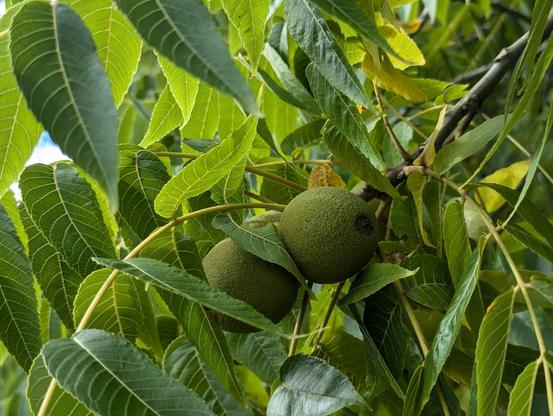
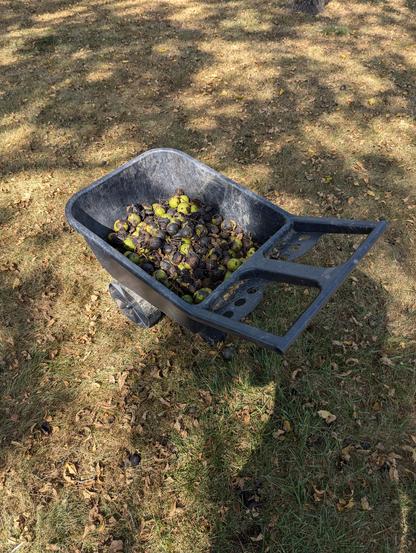
Black walnuts are known for their staining properties. Check out what the spatter has done to my face! 😂😂😂
@Jillianmarisa says I look like SpongeBob’s grandma. Haaaa

 DoomsdaysCW

 Old walker
 Bill Seitz
 JL Johnson