 DoomsdaysCW
Legacy of #Indigenous #stewardship of #camas dates back more than 3,500 years, #OSU study finds
May 20, 2024
Excerpt: CORVALLIS, Ore. — "An #Oregon State University study found evidence that Indigenous groups in the #PacificNorthwest were intentionally harvesting edible #CamasBulbs at optimal stages of the plant’s maturation as far back as 3,500 years ago.
"The findings contribute to the growing body of research around #TraditionalEcologicalKnowledge and practices, demonstrating the care and specificity with which Indigenous groups have been stewarding and cultivating natural resources for millennia.
"Camas is an #ecological and cultural keystone, meaning it is a species that many other organisms depend on and that features prominently within many cultural practices.
" 'If you think about #salmon as being a charismatic species that people are very familiar with, camas is kind of the plant equivalent,' said Molly Carney, an assistant professor of anthropology in OSU’s College of Liberal Arts and lead author on the study. 'It is one of those species that really holds up greater #ecosystems, a fundamental species which everything is related to.'
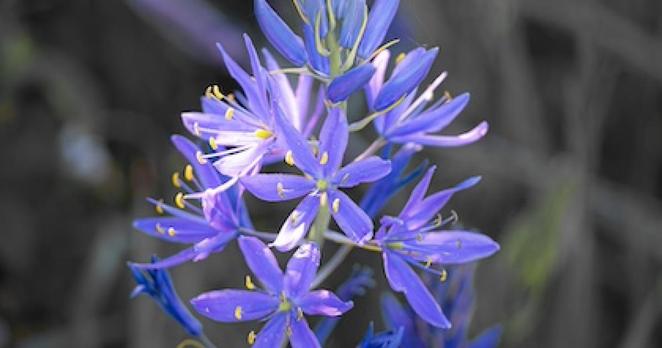
"An eye-catching blue flower that grows widely throughout the Pacific Northwest, camas is referred to in Indigenous calendars across the region, with the plant’s growth stages used as a sort of seasonal benchmark. It is often included in traditional #FirstFood ceremonies, in which tribal communities mark the coming of spring with the first #SalmonRun or the first #EdibleRoots after a long winter, Carney said.
"Camas bulbs must be baked for two to three days to render them edible. Once soft, the bulbs taste a bit like sweet potato, Carney said. Traditional baking was done in underground ovens using heated rocks."
#SolarPunkSunday #LandUse
#IndigenousFoods #CulturalPreservation
#NativeAmericanHistory #IndigenousStewardship #IndigenousHistory #TraditionalFoods
#TraditionalFoodSources #KeystoneSpecies #PNW #TEK
Legacy of Indigenous stewardship of camas dates back more than 3,500 years, OSU study finds | Newsroom
CORVALLIS, Ore. — An Oregon State University study found evidence that Indigenous groups in the Pacific Northwest were intentionally harvesting edible camas bulbs at optimal stages of the plant’s maturation as far back as 3,500 years ago. The findings contribute to the growing body of research around Traditional Ecological Knowledge and practices, demonstrating the care and specificity with which Indigenous groups have been stewarding and cultivating natural resources for millennia.