This brief highlights a shift in understanding cognitive functioning: intelligence is not confined to a single hub but arises from efficient coordination across diverse brain networks. For mental health professionals, this emphasizes the importance of holistic approaches to cognitive variation, rather than attributing strengths or difficulties to isolated regions. The described emphasis on network communication aligns with assessments and interventions that consider how information processing unfolds across interconnected systems, informing perspectives on neurodiversity and adaptive functioning.

Article Title: Intelligence emerges when the whole brain works as one

Link to Science Daily Mind-Brain News: https://www dot sciencedaily dot com/releases/2026/03/260303050632 dot htm

https://www dot sciencedaily dot com/releases/2026/03/260303050632 dot htm

For decades, scientists have mapped attention, memory, language, and reasoning to separate brain networks — yet one big mystery remained: why does the mind feel like a single, unified system? Researchers at the University of Notre Dame now suggest that intelligence doesn’t live in one “smart” region of the brain at all. Instead, it emerges from how efficiently and flexibly the brain’s many networks communicate and coordinate with each other.<br>
via Mind & Brain News -- ScienceDaily https://www dot sciencedaily dot com/news/mind_brain/<br>
March 3, 2026 at 10:32AM

#brainnetworks #cognitivearchitecture #neuroscience #mentalhealth #neurodiversity

Copy and paste broken link above into your browser and replace "dot" with "." for link to work.

We have to do it this way to avoid display of copyrighted images.

The article reports that acquired aphantasia arises from damage connected to a single brain hub, the fusiform imagery node, and that this node's network connections explain loss of visual imagination after brain injury.

The topic highlights how specific brain networks underpin internal imagery, offering a concrete example of how cognition ties to brain structure and connectivity, which is of interest to anyone exploring psychological processes and the biology of mind.

Article Title: New research on acquired aphantasia pinpoints specific brain network responsible for visual imagination
Link to PsyPost Article: https://www.psypost dot org/new-research-on-acquired-aphantasia-pinpoints-specific-brain-network-responsible-for-visual-imagination/

Copy and paste broken link above into your browser and replace "dot" with "." for link to work. We have to do it this way to avoid displaying copyrighted images.

#visualimagination #neuroscience #aphantasia #brainnetworks #cognition

Using a mega-analysis of 16 fMRI studies with 572 participants and 739 persuasive messages, the article reports that activity in reward-related and mentalizing brain networks predicts both individual judgments of message effectiveness and population-level outcomes, suggesting a common neural currency for persuasion. Exploratory results also indicate roles for language and emotion processing, with limitations and calls for broader samples and standardized methods.

These findings illuminate how neural mechanisms of value evaluation and social understanding underlie persuasive messaging across contexts, bridging neuroscience and social psychology. They suggest that brain signals can forecast collective responses beyond self-reported attitudes, offering a cross-domain perspective on attitude change and behavior.

Article Title: Neuroimaging data reveals a “common currency” for effective communication

Link to PsyPost Article: ift dot tt/91Vxcau

Copy and paste broken link above into your browser and replace "dot" with "." for link to work. We have to do it this way to avoid displaying copyrighted images.

#Neuroimaging #Persuasion #Neuroforecasting #BrainNetworks #SocialCognition

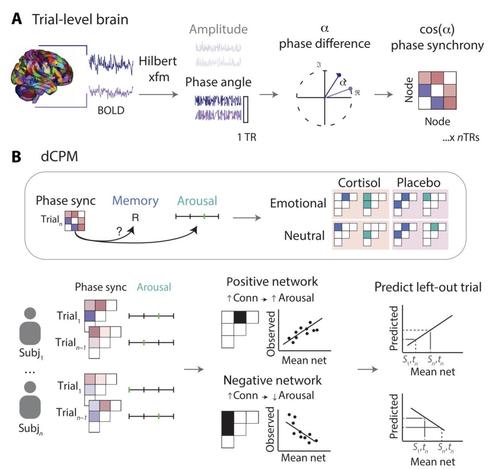
🧠 New paper by Huang et al.: By using #pharmacological #fMRI and dynamic #connectome-based #PredictiveModeling, they show how #cortisol reshapes whole-brain #NetworkDynamics during emotional memory encoding. Trial-level analyses reveal distinct but increasingly integrated #arousal and #memory networks under #stress, supporting a hormonally driven "memory formation mode".

🌍 https://doi.org/10.1126/sciadv.adz4143

#Neuroscience #CognitiveNeuroscience #BrainNetworks #CogSci

Brain Changes: Keto's Seizure Cure - Dom D Agostino and Peter Attia

#brainnetworks #ketogenicdiet

I’m excited to share that our article has been published: “Brain Topology Disruption in Early-Onset Dementia: Review of Current Findings and the Need for Network Resilience-Focused Models” (http://dx.doi.org/10.1002/brb3.70903)

In this review, we highlight several important insights:

- A summary of how early‐onset forms of dementia (including Alzheimer’s disease, frontotemporal dementia (FTD), and behavioral variant FTD) show disruption in brain network topology (both structural and functional) rather than purely focal pathology.

- Evidence that brain networks lose their optimal organisational properties (e.g., balance of segregation and integration) in early‐onset dementia, reflecting decline in network resilience. For example, previous work has shown disrupted segregation/integration in large‐scale brain networks in Alzheimer’s/MCI.

- The concept of network resilience as a key lens: rather than only asking “where damage occurs”, the paper argues we should ask “how the network topology fails to compensate, reorganise or maintain function under pathology”. This shifts the view to resilience‐focused models.

- Review of methodological findings: how graph‐theoretic metrics (clustering coefficient, global/local efficiency, modularity, assortativity, small‐worldness) are being applied to neuroimaging and electrophysiology in early dementia.

- Gaps and opportunities: the need for models that integrate network resilience, longitudinal data, multimodal connectivity (structural + functional + electrophysiological) and early‐onset cohorts; and the translational potential for biomarkers and interventions that support network integrity rather than just reduce pathology.

I believe this work contributes to bridging neuroscience, network theory, and clinical neurology, and invites discussion on how we can design interventions that strengthen brain network resilience in dementia.

Thanks to my co-authors (Hema Nawani, Sredha Sunil) and reviewers, and a huge thank you to our professor Veeky Baths for his guidance and support throughout this work.

If you’re working in cognitive neuroscience, network approaches to brain disorders, early‐onset dementia, connectomics or translational neurology, let’s collaborate to make a real impact.

#Neuroscience #BrainNetworks #Dementia #EarlyOnsetDementia #Neurodegeneration #NetworkResilience #ClinicalNeuroscience #GraphTheory #NetworkNeuroscience #ComputationalNeuroscience

Before you continue to YouTube

Before you continue to YouTube

Before you continue to YouTube