Really interesting convo about PDA:

"Avoidance is not the only way PDAers respond to demands.
PDAers experience stress responses to any perceived demands.
Those stress responses may be masked or internalized.

(PDA is a genetic neurotype like Autism or ADHD. If you want to learn more you can click on Sally Cat’s page to learn more.)"

https://www.facebook.com/share/p/1J3rB2NEgx/

#ActuallyADHD #ADHD #AuDHD #PDA #ActuallyAutistic #CPTSD #PTSD #trauma #PervasiveDriveForAutonomy #PathologicalDemandAvoidance

Folks, every time I write these I keep hoping it's the last time we'll ever need to engage in digital begging, yet here I am again like a broken record.

This month has been a bit of an emotional rollercoaster. Interestingly, I'm just realizing that the "ups" of said rollercoaster mostly coincide with having money to live (making rent, buying groceries, our nifty new scooters that I absolutely adore) and while I know correlation doesn't equal causation, it is certainly a lot of curious coincidences.

It is also worthy of note that every one of those save for maybe groceries were given to us through people's donations. Our friends here on Mastodon and the Fediverse are who keep the roof over our head and the lights on.

My partner and I are barely able to earn enough money to eat, and not much more. My weekly hours at my retail job haven't been completely sufficient but they at least seem to be holding steady.

On the other hand, I'm very, very proud of my partner for adapting to public transit (despite the its anxiety-provoking nature for him, on top of some sort of PTSD-triggering aspect that is so deeply ingrained that he can't really tell me about it) for getting to work due to our car being out of commission.

Said car will likely remain that way for the foreseeable future due to my not being as active about fundraising for it as I should have been; and now that it's the last week of the month, I need to set our focus on staying housed.

Anyway.. I've only got about two hours before I need to leave for my soul-crushing retail job, where I work myself so ragged I can barely function on my days off, yet I'm not even getting full-time hours and frankly I don't know if I physically *could* do full-time right now.

Ugh. I'm so exhausted. Fucking mental illness, my friends.. it poisons everything. I literally can't afford it.

Long story short: We need help. Yet again.

If you're willing AND able, please boost and if possible donate. If you can't donate, *do NOT feel guilty* for being in the same boat as us. Your feelings about it are valid but rest assured you needn't feel bad.

Venmo: https://venmo.com/thegizmotwins
Cashapp: https://cash.app/$thegizmotwins
PP: https://www.paypal.com/paypalme/gizmo1982
GFM: https://gofund.me/12171be3

#Solidarity #BPD #PTSD #Poverty #MentalIllness @mutualaid

Andrew Checketts | @thegizmotwins

Venmo is a digital wallet that lets you make and share payments with friends. You can easily split the bill, cab fare, or much more. Download the iOS or Android app or sign up on Venmo.com today.

It's been an up&down kind of week, but #Friday delivered #moments that helped turn it around: 

1. Woke up to a big #thunderstorm at 5am / caught up with a good #nap hearing gentle #rainfall toward evening.

2. It's been a #creative week in the #kitchen, clearing out random freezer #leftovers to make room for fresh #garden surplus. 

3. And I spoke up about accommodations needed to better communicate with a #health provider. 

#ThreeGoodThings #3goodthings #tbi #ptsd #urbangarden #neurodiversity

A fun thing about being on different meds after my operation is that my fibro numbers are wonderfully low today😂 Gotta take the good where you can find it😁😉

#fibromyalgia #kidney #disabled #kidneys #disabledlife #cptsd #ptsd

“Mind Over Ring – How Unwanted Calls Disrupt Focus and Increase Anxiety”

A Holistic Health Perspective on Modern Stressors

In today’s hyperconnected world, one of the subtle but pervasive intrusions into our daily life comes through an object we carry everywhere: our phone. Many of us experience a steady stream of unwanted robocalls, scam calls, and telemarketing pitches. The National Do Not Call Registry was designed to protect consumers from such interruptions, but does it still work? More importantly, from a holistic health perspective, how does this constant digital harassment affect our mental well-being?

In this article, I explore both the current relevance of the Do Not Call list and the broader implications for mental hygiene, stress, and emotional resilience.

The Do Not Call Registry: Then and Now

The National Do Not Call Registry was established by the Federal Trade Commission (FTC) in 2003, allowing U.S. consumers to opt out of unwanted sales calls (Federal Trade Commission, 2024). Initially, the list proved effective: legitimate companies respected it, and consumers reported fewer unsolicited calls.

However, technological shifts soon outpaced the list’s protective power:

  • Robocalls now dominate the spam landscape. In 2023 alone, U.S. consumers received over 50 billion robocalls, with a large percentage coming from scam operations that do not adhere to U.S. regulations (YouMail, 2024).
  • Caller ID spoofing makes scam calls appear local or even governmental, increasing the likelihood of response (Allen, 2024).
  • Digital marketing (via text, email, and social platforms) circumvents traditional telemarketing rules entirely.

Today, while the Do Not Call list still reduces calls from legitimate U.S. businesses, it offers little protection against the global flood of scam calls and robocalls.

The Mental Health Impact of Persistent Phone Intrusions

You may wonder: Why is this issue relevant to holistic health and wellness?

The answer lies in the connection between mental clutter, stress physiology, and emotional well-being.

1. Elevated Stress and Cortisol

Research shows that frequent, unpredictable interruptions trigger spikes in cortisol, the body’s primary stress hormone (Mark et al., 2008). Even minor interruptions, such as a ringing phone can disrupt autonomic balance, contributing to chronic low-level stress.

2. Loss of Flow and Focus

The concept of “flow” describes a state of deep focus and optimal performance. Yet digital interruptions are one of the main obstacles to maintaining flow states (Csikszentmihalyi, 1990). Each unexpected call breaks concentration and requires cognitive effort to reorient.

3. Anxiety and Fear in Vulnerable Populations

Scam calls are often designed to provoke fear (“your bank account is frozen,” “your Social Security number is compromised”) or urgency. For older adults, this can trigger anxiety, confusion, and emotional distress (Lichtenberg et al., 2016). In some cases, repeated scam targeting may even contribute to depressive symptoms.

4. Erosion of Personal Boundaries

Holistic health emphasizes the importance of personal boundaries and control over one’s environment. Constant interruptions from unknown callers create a sense of helplessness and erode the autonomy we seek to cultivate in daily life (Rosen et al., 2019).

Holistic Solutions for Digital Boundaries

While the Do Not Call list is no longer sufficient on its own, several practices can help safeguard your mental hygiene:

  • Use call filtering apps (Nomorobo, Hiya, RoboKiller) to block known spam numbers.
  • Activate carrier-level protections (AT&T ActiveArmor, Verizon Call Filter, T-Mobile Scam Shield).
  • Practice intentional phone hygiene: silence calls during work or meditation; check voicemail instead of answering unknown numbers.
  • Report violations to the FTC, while imperfect, enforcement efforts rely on consumer reports.
  • Educate older relatives about common scam tactics to reduce their risk of emotional harm.

Mental Hygiene in a Digital Age

The Do Not Call list, while originally a valuable tool, now functions as a symbolic baseline rather than an effective shield. Yet the issue of persistent phone interruptions is not simply technologically, it is a modern stressor that affects mental clarity, emotional balance, and personal empowerment.

In holistic health, we teach that maintaining a clean and supportive mental environment is as important as caring for the body. Taking deliberate steps to reduce unnecessary digital noise is a powerful act of self-care in an overstimulated world.

References:

Allen, G. (2024, May 20). Robocalling Fraud: The 6 biggest Scams to watch in 2024. Juniper Research Ltd. https://www.juniperresearch.com/resources/infographics/robocalling-fraud-the-6-biggest-scams-to-watch-in-2024/?utm_source=chatgpt.com

Csikszentmihalyi, M. (1990). Flow: The psychology of optimal experience. Harper & Row. https://archive.org/details/flowpsychologyof00csik

Federal Trade Commission. (2024). National Do Not Call Registry FAQs. https://www.consumer.ftc.gov/articles/national-do-not-call-registry-faqs

Lichtenberg, P. A., Stickney, L., & Paulson, D. (2016). Financial exploitation and psychological distress in older adults: A population-based study. Journal of Elder Abuse & Neglect, 28(2), 141–152. https://doi.org/10.1080/08946566.2016.1168330

Mark, G., Gudith, D., & Klocke, U. (2008). The cost of interrupted work: More speed and stress. Proceedings of the SIGCHI Conference on Human Factors in Computing Systems, 107–110. https://doi.org/10.1145/1357054.1357072

Rosen, L. D., Carrier, L. M., & Cheever, N. A. (2019). The distracted mind: Ancient brains in a high-tech world. MIT Press.

YouMail Robocall Index: September 2025 Nationwide Robocall data. (n.d.). https://robocallindex.com/

#angerManagement #chronicPain #healthCare #innerTransformation #martialArtsCenterForHealth #osteoporosis #PTSD #Qigong #selfMastery #stressRelief #TaiChi #WinterParkPresbyterian #WinterParkTaiChi #yoga
Looks at the gatekeepers, bigots and barbarians that keep bothering (trans) women...

#LGBTQ+ #pride #pridemonth #cptsd #ptsd #mentalhealth

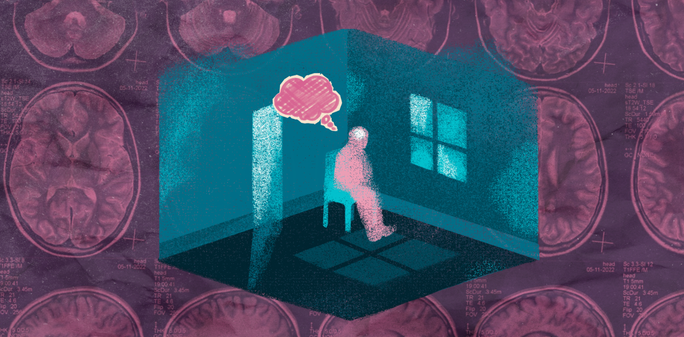
Therapies aimed at reframing negative thoughts may not work for some people with PTSD. New research shows it may be because their brains work differently after trauma.

https://tcnv.link/I5egn3o

#PTSD #trauma #MentalHealth #therapy

Talking about trauma doesn’t always help. Brain scans show one reason why

Therapies aimed at reframing negative thoughts may not work for some people with PTSD. New research shows it may be because their brains work differently after trauma.

The Conversation

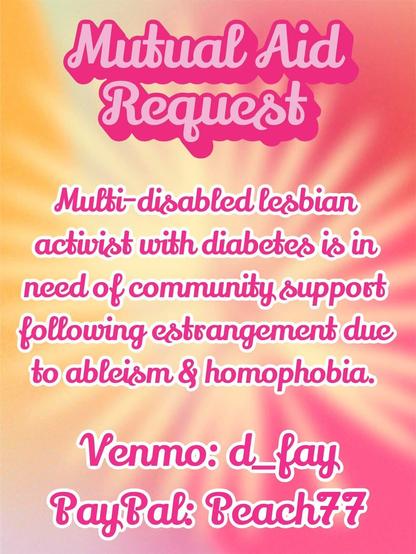
July MA request! Stalled today ⚠️
$0/$550 for necessities! Need food‼💫

Im a disabled lesbian living 26% below the poverty line. Unable to work due to chronic illnesses/pain and disabilities.

Preventative care is more affordable than a crisis, even a few dollars goes a long way! Thanks so much💕

V d_fay
P peach77

#Mutualaid #MutualAidBoost #MutualAidSavesLives #disabled #ptsd #bpd #Kofi #venmo #paypal #crowdfunding #lgbtq #lesbian #queer #artist @mutualaid @lgbtq

That Time I Thought All Would Be Right With The World

It is common knowledge that I have bipolar disorder and PTSD. I write about the diagnosis a lot. I write about my history of, at times, crippling depression. I wrote ad nauseam about various traumas (though not all), mostly romantic in nature. So most people know I can get and have spent significant time depressed. And if we’ve known each other well for any length of time, you might know that the bipolar includes a sometimes difficult to control or mask variety of anger that I am ashamed […]

https://carolineprice.com/2026/06/25/that-time-i-thought-all-would-be-right-with-the-world/

Spiritual Paradoxes: Humility Taught, Materialism Practiced

Across time and cultures, the greatest spiritual teachers have emphasized simplicity, humility, and inner transformation. Yet, paradoxically, the institutions that grow around these teachings often accumulate material wealth, political power, and ego-driven prestige.

Christianity, Buddhism, Hinduism, Islam, all at their core, advocate for the shedding of worldly attachments. Yet many of their largest institutions exhibit the very materialism and hierarchy their founders warned against. In light of today’s cultural unrest, consumerism, and spiritual seeking, these contradictions deserve closer reflection.

A Humble Beginning

Jesus of Nazareth lived with radical humility. His birth in a manger (Luke 2:7, New International Version [NIV]), his itinerant lifestyle (“the Son of Man has no place to lay his head,” Luke 9:58, NIV), and his repeated critiques of religious legalism (Matthew 23:1–28, NIV) demonstrate a clear rejection of material power and ritualized pretense.

He warned against storing up treasures on earth, urging people instead to seek spiritual treasures (Matthew 6:19–21, NIV). His message was direct: inner transformation and compassion mattered more than public ritual or personal gain.

And yet, centuries later, the Roman Catholic Church emerged from the very empire that crucified him, to became one of the wealthiest and most ritualized institutions in human history (MacCulloch, 2011).

A Universal Paradox

This irony is not exclusive to Christianity. It is a universal pattern across major belief systems:

  • Buddhism: Siddhartha Gautama, the Buddha, renounced his royal status to seek enlightenment through simplicity and meditation. His core teaching of the elimination of craving and attachment became institutionalized into monasteries and sects, some of which, over centuries, accumulated wealth, political influence, and hierarchical authority (Lopez, 2001).
  • Hinduism: Early Vedic teachings stressed detachment from material life through paths like Jnana (knowledge) and Bhakti (devotion). Yet, sprawling temple complexes, priestly hierarchies, and caste structures often mirrored societal materialism and status-seeking (Flood, 1996).
  • Islam: The Prophet Muhammad lived simply, called for humility, and emphasized equality among believers. Yet throughout history, caliphates and modern regimes alike have at times entangled faith with vast political and material ambitions (Esposito, 1998).

Again and again, humanity seems to be drawn to codify spiritual simplicity into worldly complexity.

Why Does This Happen?

From a psychological and sociological standpoint, this paradox might stem from natural human tendencies:

  • Desire for Security: Spiritual communities often accumulate resources to protect their teachings and communities from external threats.
  • Institutionalization: Movements grow into organizations, and organizations seek stability, leading to bureaucracy and hierarchy.
  • Human Ego: Even with the best intentions, individuals and groups may seek recognition, authority, and influence, contradicting the original teachings.

As the Tao Te Ching observes, “The higher the structure, the farther from the Way” (Laozi, trans. Mitchell, 1988).

Cultural Relevance Today

Today’s society, riddled with consumerism, curated self-images, and institutional distrust, mirrors these spiritual paradoxes. Many seekers are disillusioned with religious structures not because they reject faith, but because they crave authenticity.

Holistic health practitioners recognize that wellness is found in true balance of mind, body, and spirit, and requires stripping away external noise and realigning with essential truths. It’s not in grandeur but in simplicity that healing often occurs.

The example of figures like Jesus, Buddha, and Muhammad calls us back not to ritualized identity, but to the living essence of humility, compassion, and conscious living.

A Personal Reflection

This reflection isn’t a condemnation of all spiritual institutions. Rather, it is a call to vigilance:

  • Are we aligning with the heart of spiritual wisdom or merely its outer forms?
  • Are we living simply, authentically, and compassionately, or becoming entangled in ego, status, and recognition?

As individuals seeking holistic well-being, we are invited to live in the spirit rather than merely follow the form.

Spiritual maturity requires discernment and choosing the inward journey over external display, whether in religion, health, or daily life.

References

Esposito, J. L. (1998). Islam: The straight path (3rd ed.). Oxford University Press.

Flood, G. (1996). An introduction to Hinduism. Cambridge University Press.

Lopez, D. S., Jr. (2001). THE STORY OF BUDDHISM. HarperSanFrancisco. http://www.chanreads.org/wp-content/uploads/2022/09/The-Story-of-Buddhism-A-Concise-Guide-to-Its-History-Teachings-Donald-S.-Lopez-Jr.-chanreads.org_.pdf

MacCulloch, D. (2011). Christianity: The first three thousand years. Penguin Books.

Mitchell, S. (Trans.). (1988). Tao Te Ching (Lao Tzu). Harper & Row.

The Holy Bible, New International Version. (2011). Biblica, Inc. (Original work published 1978)

#angerManagement #anxiety #chronicPain #depression #healthCare #innerTransformation #martialArtsCenterForHealth #osteoporosis #ParkinsonsDisease #PTSD #Qigong #stressRelief #TaiChi #WinterParkPresbyterian #WinterParkTaiChi #yoga