𝗪𝗜𝗞𝗜𝗣𝗘𝗗𝗜𝗔 𝗣𝗜𝗖𝗧𝗨𝗥𝗘 𝗢𝗙 𝗧𝗛𝗘 𝗗𝗔𝗬

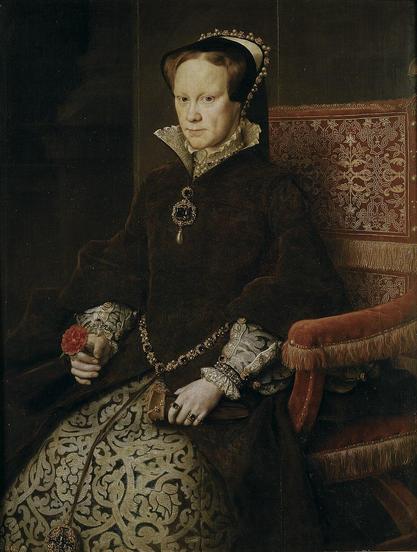
✧ Mary I ✧

Mary I (1516–1558) was the queen of England and Ireland from July 1553 until her death. The only child of Henry VIII with his first wife, Catherine of Aragon, Mary is remembered for her restoration of Roman Catholicism after the short-lived Protestant reign of her half-brother, Edward VI. During her five-year reign, she had more than 280 religious dissenter...

#RomanCatholicism #England #Ireland #Spain #Wikipedia
https://en.wikipedia.org/wiki/Mary_I

Mariology

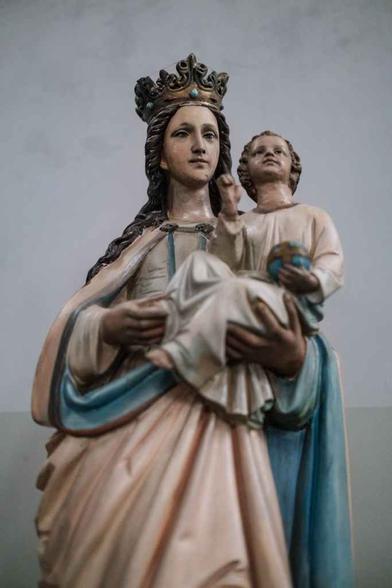
This is the Christian theological study of Mary, mother of Jesus. Mariology looks to relate doctrine/dogma about Mary to other doctrines of faith, for example, concerning Jesus & ideas about redemption, intercession, & grace. Christian Marisolgy seeks to place the role of the historical Mary in the context of scripture, tradition, & the teachings of the Church of Mary.

In social history terms, Mariology may be broadly defined as the study of devotion to & thinking about Mary throughout the history of Christianity. There exists a range of Christian and non-Christian views from the veneration of Mary in Roman Catholicism to accusations of idolatry. The idolatry “accusation” includes certain Protestant objections to Marian devotion.

As a field of theology, the most significant developments in Mariology (& the founding of specific centers devoted to its study) in the more recent centuries have taken place within the Catholic Church.

Eastern Orthodox concepts & versions of Mary are integral to the rite as a whole, & are mostly expressed in liturgy. The veneration of Mary is said to permeate, in a way, the entire life of the Church as a dimension of dogma as well as piety, of Christology as well as of Ecclesiology.

While similar to the Roman Catholic view, barring some minor differences, the Orthodox don’t see a need for a separate academic discipline of Mariology. As the Mother of God is seen as the self-evident peak of God’s human creation.

Eastern Orthodoxy calls Mary “The Theotokos,” “God-bearer.” The virginal motherhood of Mary is at the center of Orthodox Mariology. The title Ever Virgin is often used. Virginal motherhood is also known as the perpetual virginity of Mary. The Orthodox approach of Mariology underscores the sublime holiness of Mary, her share in redemption, & her role as a mediator of grace.

Eastern Orthodox mariological thought goes back as far as St. John Damascene (a.k.a. our boy, John of Damascus). In the 8th century, John of Damascus wrote on the meditative role of Mary & on the Dormition of the Mother of God. In the 14th century, Orthodox Mariology began to flourish among Byzantine theologians.

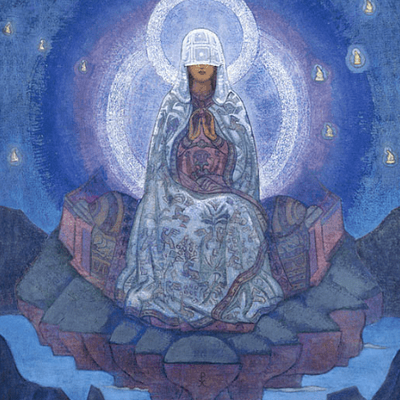
They believed in a cosmic view of Mariology, putting Mary & Jesus together at the center of the cosmos & see them as the goal of world history. More recently, Eastern Orthodox Mariology achieved a renewal among 20th-century theologians in Russia, for whom Mary is the heart of the Church & the center of creation. Eastern Orthodox Mariology doesn’t hold to the belief of the Immaculate Conception of…Mary.

Protestant views on Mary vary significantly from 1 denomination to another. Generally, they focus on various interpretations of Mary in the Bible, the Apostles’ Creed (which professes the Virgin Birth), & the Ecumenical Council of Ephesus in 431, which called Mary, the Mother of God.

Most Protestants don’t venerate Mary like Catholics or Eastern Orthodox do. Martin Luther’s, John Calvin’s, & Karl Barth’s views on Mary have contributed to modern Protestant views.

Anglican Marian theology varies. The Anglican Church formally celebrates 6 Marian feasts: Annunciation (Mar. 25), Visitation (May 31), Day of St. Mary (Assumption or Dormition, Aug. 15), Nativity of Mary (Sept. 8), Our Lady of Walsingham (Oct. 15), & Mary’s Conception (Dec. 8).

The Oriental Orthodox Churches regard Mary as the highest of saints & the Theotokos. It celebrates various Marian feast days.

One-Time Monthly Yearly

Make a one-time donation

Make a monthly donation

Make a yearly donation

Choose an amount

$1.00 $5.00 $10.00 $1.00 $5.00 $10.00 $5.00 $10.00 $15.00

Or enter a custom amount

$

Your contribution is appreciated.

Your contribution is appreciated.

Your contribution is appreciated.

DonateDonate monthlyDonate yearly #14thCentury #431 #AnglicanChurch #AnglicanMarianTheology #Annunciation #Apogee #ApostlesCreed #Assumption #August15 #bible #Byzantine #Catholics #Christian #Christianity #Christology #DayOfStMary #December8 #Dormition #DormitionOfTheMotherOfGod #EasternOrthodox #EasternOrthodoxy #Ecclesiology #EcumenicalCouncilOfEphesus #Idolatry #Jesus #JohnCalvin #JohnOfDamascus #KarlBarth #March25 #Mariology #MartinLuther #MarySConception #MarySImmaculateConception #May31 #MotherOfGod #NativityOfMary #October15 #OrientalOrthodoxChurch #OrthodoxMariology #OurLadyOfWalsingham #PerpetualVirginityOfMary #Protestant #RomanCatholicism #Russia #Saints #September8 #StJohnOfDamascene #TheTheotokos #VirginBirth #VirginMary #Visitation

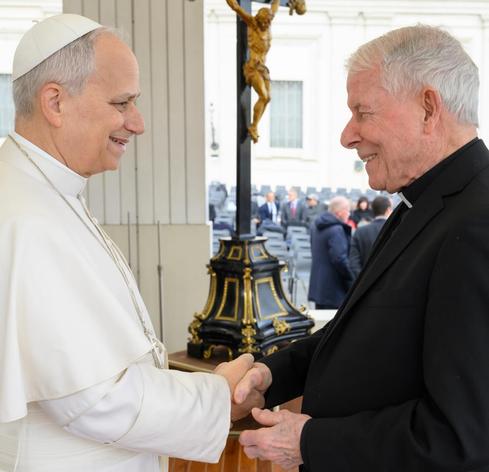
Seattle’s legendary Father Michael G. Ryan meets with Pope Leo XIV during trip to Rome

The Pastor Emeritus of St. James Cathedral was granted an audience with the Holy Father on his birthday during a trip to Rome, during which he thanked the pontiff for keeping the Second Vatican Council front and center.

https://www.nwprogressive.org/weblog/2026/03/seattles-legendary-father-michael-g-ryan-meets-with-pope-leo-xiv-during-trip-to-rome.html

#RomanCatholicism

Seattle's legendary Father Michael G. Ryan meets with Pope Leo XIV during trip to Rome - NPI's Cascadia Advocate

The Pastor Emeritus of St. James Cathedral was granted an audience with the Holy Father on his birthday during a trip to Rome, during which he thanked the pontiff for keeping the Second Vatican Council front and center.

NPI's Cascadia Advocate

St. George

St. George (Romanized: Georgios), a.k.a. George of Lydda, was a Christian martyr. He’s venerated as a saint. He was born in the late 3rd century (circa 270-281 AD) in Cappadocia in Anatolia (modern-day Turkey), to Christian parents of noble Greek descent.

According to tradition, he was a soldier in the Roman army. He became a soldier in the Roman army. He became a soldier after his dad passed away. He became a Tribunus (a high-ranking officer). He eventually became a member of the Diocletian at Nicomedia.

But he was later executed, as part of the Diocletianic Persecution. In 303 AD, Diocletian issued an edict allowing the persecution of Christians. George was ordered to renounce his faith & offer sacrifices to the Roman gods. He refused. He also tore up the emperor’s edict.

He was beheaded on April 23, 303 AD. His courage was so admired (in some traditions) that it led to Empress Alxandra of Rome to be martyred also.

He’s 1 of the most venerated saints, heroes, & megalomartyrs in Christianity. He has been especially venerated as a military saint since the Crusades. He’s also prominently venerated by the Druze (& by some Muslim groups) as a martyr of monotheistic faith.

In hagiography, he was immortalized in the legend(s) of St. George & the dragon & as 1 of the most prominent military saints. In a famous tale of George rescuing a princess from a dragon in Silene (Libya) 1st appeared in Georgian texts in the 11th century.

It was popularized in the West by the Lombardic “Golden Legend” in the 13th century. In religious iconography, the dragon represents the devil or Paganism, & the princess represents the Church.

In Roman Catholicism, he is also venerated as 1 of the 14 Holy Helpers. His feast day, St. George’s Day, is traditionally celebrated on April 23. The Church of St. George in Lydda (now Lod, Israel) has a sarcophagus traditionally believed to contain George’s relics.

According to tradition, a fierce dragon was causing panic in the city of Silene in Libya when our guy George arrived there. To keep the creature from ravaging the city, the inhabitants gave it 2 sheep each day. But when the sheep were no longer enough, they were forced to sacrifice people chosen by the townesfolk themselves.

Eventually, the king’s daughter was selected, & no one was willing to take her place. Georger saved her by slaying the dragon with a lance. The king was so grateful that he offered George treasures as a reward for saving his daughter’s life.

But George refused & urged him to give to the poor instead. The townspeople were so astonished by what they saw that they all became Christians & were baptised.

George (In Arabic, Jirjis or Girgus) is included in some Muslim texts as a prophetic figure. The Islamic sources state that he loved a group of believers who were in direct contact with the last apostles of Jesus. He was described as a rich merchant who opposed Dadan, the king of Mosul, in his reaction to Apollo’s stature.

After confronting the king, George was tortured many times to 0 effect, was imprisoned, & was aided, allegedly, by angels. Eventually, he was exposed to the fact that the idols were possessed by Satan. But was martyred when the city was destroyed by God in a rain of fire. (This is giving serious Sodom & Gomorrah vibes.)

According to Muslim legends, he was martyred under the rule of Diocletian & was killed 3x. But was resurrected every time. The legend is more developed in the Persian version of al-Tabari, wherein he resurrects the dead, makes trees sprout, & pillars bear flowers.

After 1 of his deaths, the world is covered by darkness, which is lifted only when he’s resurrected. He’s able to convert the queen, but she’s put to death. Then he prays to God to allow him to die, which is granted.

Al-Tah’labi says that George was from Palestine & lived in the times of some disciples of Jesus. He was killed many times by the king of Mosul, & resurrected each time. When the king tried to starve him, he touched a piece of dry wood brought by a woman & turned it green, with varieties of fruits & veggies growing from it. After his 4th death, the city was burnt along with him.

English soldiers under Richard the Lionheart invoked St. George at the Siege of Acre. They brought his “cult” back to Britain, where he replaced Edward the Confessor as the nation’s primary patron because he represented “active” chivalry rather than “passive” monasticism.

In 1348, King Edward III founded the Order of the Garter (the oldest and highest order of chivalry in England), putting it under the patronage of St. George. The current British monarch, King Charles III, is the head of the order today.

In the General Roman Calendar, George’s feast day is on April 23. In the Tridentine calendar of 1568, it was given the rank of “Semi double.” In Pope Pius XII’s calendar, the rand was reduced to “Simple.” In Pope Paul VI’s 1969 revision, it appears as an “optional memorial.”

In some countries, like England, the rank is higher. It’s a Solemnity (Roman Catholic) or Feast (Church of England): if it falls between Palm Sunday & the Second Sunday of Easter inclusive, it’s transferred to the Monday after the Second Sunday of Easter.

The Russian Orthodox Church also celebrates 2 additional feasts in honor of St. George. One is on November 3, commemorating the consecration of a cathedral dedicated to him in Lydda during the reign of Constantine the Great (305-337). When the church was consecrated, George’s relics were transferred there. The other feast day is on November 26 for a church dedicated to him in Kyiv (or Kiev, Ukraine), circa 1054.

In Bulgaria, St. George’s Day is celebrated on May 6. It’s customary to slaughter & roast a lamb. George’s Day is also a public holiday.

In Serbia & Bosnia & Herzegovina, the Serbian Orthodox Church celebrates St. George on May 6. It’s a common slava (patron saint day) among ethnic Serbs.

In Egypt, the Coptic Orthodox Church of Alexandria calls St. George the “Prince of Martyrs.” They celebrate his martyrdom on the 23rd of Paremhat of the Coptic Calendar (equal to May 1). The Copts also celebrate the consecration of the 1st church dedicated to him on the 7th of the month of Hatour of the Coptic calendar (equal to November 17).

George is the patron saint of England. His cross forms the national flag of England. By the 14th century, he was declared both the patron saint & protector of the British royal family. He’s also the patron saint of Georgia (the country), Ethiopia, Iberia, Russia, & Bulgaria.

One-Time Monthly Yearly

Make a one-time donation

Make a monthly donation

Make a yearly donation

Choose an amount

$5.00 $10.00 $15.00 $1.00 $5.00 $10.00 $5.00 $10.00 $15.00

Or enter a custom amount

$

Your contribution is appreciated.

Your contribution is appreciated.

Your contribution is appreciated.

DonateDonate monthlyDonate yearly #11thCentury #1348 #13thCentury #14HolyHelpers #1568 #1955 #1969 #23April303 #23rdOfParemhat #281AD #303 #305 #337 #7thOfHatour #alTabari #AlThaLabi #Anatolia #Angels #Apollo #Apostles #April23 #BosniaHerzegonvina #Britain #British #BritishMonarchy #BritishRoyalFamily #Bulgaria #Cappadocia #ChivalricOrder #Christian #Christianity #ChurchOfEngland #ChurchOfStGeorge #Circa1054 #Circa270AD #ConstantineTheGreat #CopticCalendar #CopticOrthodoxChurchOfAlexandria #Crusades #CultOfStGeorge #devil #DiocletianicPersecution #Disciples #Druze #EdwardTheConfessor #Egypt #EmperorDiocletian #EmpressAlexandraOfRome #England #English #Ethiopia #EthnicSerbs #FeastDay #GeneralRomanCalendar #GeorgeOfLydda #Georgia #Georgios #Girgus #Greek #Hagiography #Iberia #Islam #Israel #Jesus #Jirjis #Kiev #KingCharlesIII #KingDadanOfMosul #KingEdwardIII #Kyiv #Late3rdCentury #Libya #Lombardic #Lydda #Martyr #Martyrdom #May1 #May6 #Megalomartyrs #MilitarySaint #monotheistic #Mosul #Muslim #Nicomedia #November17 #November26 #November3 #OrderOfTheGarter #Paganism #Palestine #PalmSunday #PatronSaint #Persia #PopePaulVI #PopePiusXII #PraetorianGuard #PrinceOfMartyrs #relics #Resurrection #RichardTheLionheart #Roman #RomanCatholicism #Russia #RussianOrthodoxChurch #Sacrophagus #Saint #Satan #SecondSundayOfEaster #Semidouble #Serbia #SerbianOrthodoxChurch #Serbs #SiegeOfAcre #Silene #Slava #Solemnity #StGeorge #StGeorgeTheDragon #StGeorgeSDay #Tribunus #TridentineCalendar #Turkey #Ukraine

Responding to Speaker Mike Johnson

YouTube
Why the Great Schism of 1054 is a Medieval Myth - Medievalists.net

Why the Great Schism of 1054 is often misunderstood. Explore how the split between the Catholic and Orthodox churches began centuries earlier, how the filioque controversy and Charlemagne’s imperial ambitions reshaped Christian authority, and why 1054 was not the true beginning of the schism.

Medievalists.net

Irenaeus

Irenaeus of Lyons (circa 130-202 AD) is 1 of the most important theologians of the 2nd century. He’s often called the “Father of Catholic Theology.” He served as a crucial bridge between the era of the Apostles & the developed institutional Church of the later Roman Empire.

He was born in Smyrna (modern-day Turkey). He was a student of Polycarp, who was himself a disciple of John the Apostle. This connection to an actual eyewitness of Jesus gave Irenaeus a unique statue. In an era where secret teachings were being whispered in various sects, Irenaeus could claim a direct, public, & verifiable line of “transmission” back to the source.

Around 177 AD, he traveled to Lugdunum (Lyons, in modern-day France) to serve as a priest. Eventually, he became the bishop after his predecessor, Pothinus, was martyred.

Irenaeus’ legacy is defined by his battle against Gnosticism. Gnosticism is a diverse movement that threatened to dismantle early Christianity. Generally, Gnostics believed:

  • The material world was evil, created by a lesser, bumbling deity (Demiurge).
  • Salvation came through secret, esoteric knowledge (gnosis).
  • Jesus didn’t have a physical body (Docetism), as matter was inherently corrupt.

Irenaeus saw this as a total rejection of the Hebrew scriptures & the reality of the Incarnation. To counter this, he wrote his 5-volume masterpiece, “Against Heresies” (Adversus Haereses). Irenaeus’ theology’s centerpiece is the concept of Recapitulation. He argued that Jesus “summed up” all of humanity in Himself.

Just as the 1st Adam failed at the Tree of Knowledge, Jesus (the “new Adam”) succeeded on the tree of the Cross. Irenaeus taught that Jesus went through every stage of mortal human life (infancy, youth, & adulthood) to “sanctify” & “undo” the corruption introduced at each stage of the Fall.

Before Irenaeus’ time, there wasn’t the New Testament as we know it today. Different groups/sects used different, & various, gospels. This is where we get the infamous banned books of the Bible. Irenaeus was the 1st major figure to argue for the Four-Fold Gospel.

He insisted that there could be no more, & no fewer, than 4 Gospels (Matthew, Mark, Luke, & John), using a poetic justification: just as there are 4 zones of the world (or 4 corners) & 4 principal winds, the Church had to have 4 “pillars” of the Gospel. By doing this, he helped stabilize the core of the Christian Bible.

To fight the Gnostic claim of secret traditions, Irenaeus proposed 2 tests of “Truth”:

  • The Rule of Faith:
    • A summary of essential beliefs (a forerunner of the Apostles’ Creed) that all true churches held in common.
  • Apostolic Succession:
    • Irenaeus argued that if Jesus had secret knowledge, he would’ve given it to the bishops he appointed.

Irenaeus’ most profound contribution to theology is the concept of Recapitulation (anakephalaiosis). Using the math of his day, he sought to “sum up” the entire human experience through Christ.

To counter his Gnostic opponents, Irenaeus significantly develops Paul’s presentation of Christ as the Last Adam. Irenaeus’ presentation of Christ as the New Adam is based on Paul’s Christ-Adam parallel in Romans 5:12-21.

But also dervies significantly from the Johannine presentation of Adam-Christ typology. Irenaeus uses this parallel to demonstrate that Christ truly took human flesh. Irenaeus considered it important to emphasize this point because he understands the failure to recognize Christ’s full humanity links the various strains of Gnosticism together, as seen in his statement that “according to the opinion of no one of the heretics was the Word of God made flesh.”

Irenaeus believes that unless the Word became flesh, humans weren’t fully redeemed. He explains that by becoming man, Christ restored humanity to bring in the image & likeness of God, which they’d lost in the Fall of Man.

Just as Adam was the original head of humanity through whom all sinned, Christ is the new head of humanity who fulfills Adam’s role in the Economy of Salvation. The Economy of Salvation (a.k.a. Divine Economy) is that part of divine revelation in the Roman Catholic tradition that deals with God’s creation & management of the world, particularly his plan of salvation accomplished through the Church. Irenaeus calls this process of restoring humanity: Recapitulation.

Irenaeus emphasizes the importance of Christ’s reversal of Adam’s actions. Through His obedience, Christ undoes Adam’s disobedience. Irenaeus presents the Passion as the climax of Christ’s obedience, emphasizing how this obedience on the tree of the Cross undoes the disobedience that occurred through a tree.

Irenaeus’ interpretation of Paul’s discussion of Christ as the New Adam is significant because it helped develop the recapitulation theory of atonement.

Irenaeus took part in the Quartodeciman Controversy. When Victor I of Rome tried to force a universal practice of fasting until Easter to supersede the Jewish practice & prevent Christians from partaking of the Passover, Polycrates who led the Churches of Anatolia continued to hold old traditions of the paschal feast. For this reason Victor I wanted to excommunicate Polycrates & his supporters. But this was a step too far for Irenaeus & other bishops.

Tradition holds that he was martyred around 202 AD during the persecution of Emperor Septimius Severus. Thought historical records of his death are sparse compared to his writings.

In 2022, Pope Francis officially declared him a “Doctor of Unity” (Doctor Unitatis), acknowledging his role in bridging the Eastern & Western theological traditions.

One-Time Monthly Yearly

Make a one-time donation

Make a monthly donation

Make a yearly donation

Choose an amount

$1.00 $5.00 $10.00 $1.00 $5.00 $10.00 $5.00 $10.00 $15.00

Or enter a custom amount

$

Your contribution is appreciated.

Your contribution is appreciated.

Your contribution is appreciated.

DonateDonate monthlyDonate yearly #130AD #177AD #202AD #2022 #2ndCentury #Adam #AdversusHaereses #AgainstHeresies #Anatolia #Apostles #ApostlesCreed #ApostolicSuccession #BannedFromTheBible #ChristianBible #Christianity #Christians #Demiurge #DivineEconomy #Docetism #DoctorOfUnity #Easter #EconomyOfSalvation #EmperorSeptimiusSeverus #Excommunication #FallOfMan #FourFoldGospel #France #Gnosis #Gnosticism #Gnostics #Gospel #IrenaeusOfLyons #Jesus #Johannine #John #JohnTheApostle #LastAdam #Lugdunum #Luke #Lyons #Mark #Matthew #PaschalFeast #Passover #PaulTheApostle #Polycrates #PopeFrancis #Pothinus #QuartodecimansControversy #Recapitulation #RomanCatholicism #RomanEmpire #Romans51221 #Smyrna #TheCross #TheFall #ThePassion #TreeOfKnowledge #Turkey #Valentinus #VictorIOfRome

Keeping and building the faith: The religious left is growing with ministries that offer inclusive advocacy in dark times

Progressive faith communities in and beyond the PNW are expanding, welcoming new believers, and turning faith into action.

https://www.nwprogressive.org/weblog/2026/01/keeping-and-building-the-faith-the-religious-left-is-growing-with-ministries-that-offer-inclusive-advocacy-in-dark-times.html

#Christianity #InterfaithCooperation #Islam #Judaism #RomanCatholicism

Keeping and building the faith: The religious left is growing with ministries that offer inclusive advocacy in dark times - NPI's Cascadia Advocate

Progressive faith communities in and beyond the PNW are expanding, welcoming new believers, and turning faith into action.

NPI's Cascadia Advocate
A trial in #Constantinople opened #ThisDayInHistory in 653. Facing the anger of the #Roman imperial court was #PopeMartinI, the last #Pope to become a #martyr for #RomanCatholicism. Martin was convicted of opposing #Monothelitism & banished to #Cherson on #Crimea. He died in 655.

Just as one can be critical of all sorts of aspects of Roman Catholicism yet still recognize the hateful part played by anticatholicism in UK and US history, so one can note repressive and reactionary currents within Islam, yet still understand the poisonous politics of the Islamophobia peddled by the right today.

https://www.texasobserver.org/first-ismaili-center-in-houston-rising-islamophobia/

#Islam #Islamophobia #Muslim #Anticatholicism #RomanCatholicism #Catholic #Bigotry #USHistory #UKHistory #USPolitics #UKPolitics

With Islamophobia on the Rise, Houston Becomes Home to First Ismaili Center in the Country

Despite growing anti-Muslim sentiments and discrimination, American Muslims continue to engage civically and thrive as a community.

The Texas Observer