NOTE: As someone pointed out, this is a DANGEROUS process and requires a lot of safety precautions. I would refer to other instructions with more safety measures. I posted this more for the uses of #Lime (as opposed to using tons of chemicals).

Burn #Seashell #Lime in a Primitive Straw/Clay #Kiln!

By skillcult

"In this project we use Earth, Water, Fire, Air, Animal, Vegetable and Mineral to make something with a multitude of practical uses. The text is detailed and stands alone, but the videos are very useful and entertaining. Video #1, the Quicky version, is the 7 minute general interest, entertainment version. Video #2, buildcult, is the long educational 20 minute version. I'd recommend watching the short version first, before reading this instructable, so that you have a visual reference. I did my best to make it worth 7 minutes of your life. I conceived this project for the Brave the Elements contest, which you can vote in here, hint hint.

"The goal is to build a kiln from natural materials in order to burn and slake #lime for #seashells. Lime is immensely valuable! If lime disappeared tomorrow, civilization would fall hard! It is the main ingredient in cement and can be used to make #mortar and #plaster. It can also be used in the arts for #limewash and fresco, in #Soapmaking, mixed with casein (milk protein) to make #PreIndustrial waterproof #glue and #paint, for smelting and refining metal, and to remove hair and prepare skins for rawhide, hide glue or tanning. Ever read the ingredients on your tortillas or tortilla chips and seen 'traces of lime'? That’s because lime is used in processing #corn kernels to make tortillas, hominy and grits, which is easy to do at home. Not only does it make corn more nutritious and digestible, but it also lends to the unique flavor of those products. Beet sugar is processed with lime too. Lime is also used to potentiate certain drug substances such as betel nut and coca leaves, a small bit of lime being chewed with the plant material to activate it. So, yeah, wow, lime is one of the most useful substances ever!

"A WORD ON SAFETY: A lot of people think that lime is some deadly scary chemical that will burn you face off. It’s not… not really... well, maybe. #QuickLime is dangerous, but that is a brief transient state. During #slaking, the quicklime will give off heat and boil vigorously, so that is dangerous since the stuff can splatter around and is not only hot, but also highly alkaline. So, yeah, okay, maybe doing a face plant in a boiling tub of quicklime may burn your face off. Don’t do that! Otherwise, the stuff is not that horrible, and people have been making #tortillas, mixing mortar, plastering walls and tanning leather without goggles and hazmat suits for a very long time. It is also non-toxic. You definitely don’t want your pets drinking lime water or your kids playing with lime, but that is due to it’s concentration mostly, and not to inherent toxicity. When diluted, it becomes less and less caustic and is at some point completely harmless. Once converted to #CalciumCarbonate by drying, it’s just like egg shells, sea shells or stone, not only non-toxic, but actually used as a #calcium supplement. So, don’t get it in your eyes, keep it away from children and pets, be careful when slaking and use common sense and everything will be fine. It will temporarily dry skin though skin though, so be aware of that.

"Before we get to the fun stuff, let me explain how this works. Don’t be intimidated by the chemistry terms, they aren’t important. The changes lime goes through have a name, The Lime Cycle. By heating stone or shells red hot, about 900 Celcius (called calcining), we can change lime from it’s stable inert form, calcium carbonate, into #Calciumxide. Calcium oxide, aka Qucklime, is the most unstable and highly reactive form of lime. Quicklime reacts violently with water, giving off tremendous heat and boiling vigorously. This reaction with water makes it into #CalciumHydroxide, which is similar to #lye, but not as strong. This is the form that is used the most in the arts and industries mentioned above. If the lime is kept under a layer of water, it will not only keep forever, but it improves with age! This stuff is called lime putty. You may be more familiar with the dry lime you can buy in a bag, which is dry calcium hydroxide. This bagged powdered #HydratedLime is widely available, but inferior to wet #SlakedLime putty. You can hardly buy lime putty, and it is very expensive, but you can make it! For more on the forms of lime see my article, Understanding Lime.

"Basically, #LimePutty is like liquid rocks. Once it is allowed to dry with exposure to air, it absorbs carbon from the atmosphere and turns back into a hard rock (or shell, which is pretty much the same thing). Think about that for a second. That is awesome!

"And thus the lime cycle is completed from rock or shell, to quicklime, to lime putty, and back to rock/shell.

"In my book, it doesn't get much funner than burning and slaking lime, so lets get this party started!"

Learn more:
https://www.instructables.com/Burn-Seashell-Lime-in-a-Primitive-StrawClay-Kiln/

#SolarPunkSunday #OldTech #LowTech #LoTech #DIY #TraditionalTechnology
#AncientTechnology #CalciumCarbonate #TraditionalMortar #History #HistoricalMethods #OldTech #SeashellLime
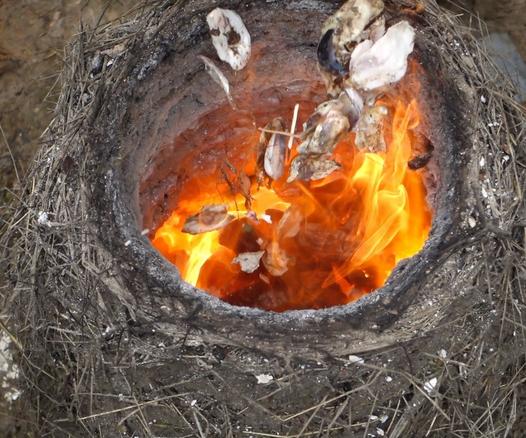
Burn Seashell Lime in a Primitive Straw/Clay Kiln!

Burn Seashell Lime in a Primitive Straw/Clay Kiln!: In this project we use Earth, Water, Fire, Air, Animal, Vegetable and Mineral to make something with a multitude of practical uses. The text is detailed and stands alone, but the videos are very useful and entertaining. Video #1, the Quicky version,…
Instructables

More about #GladiatorGatorade

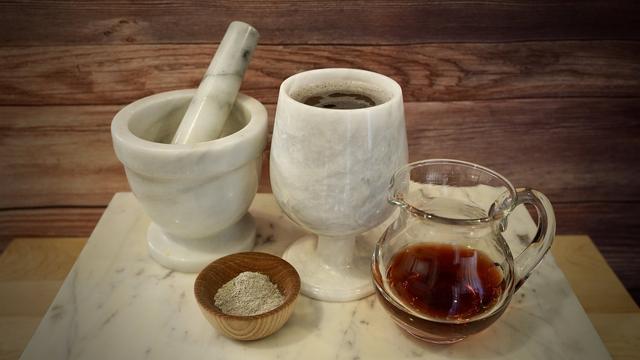
A refreshing, slightly smoky gladiator drink made with vinegar, honey, and culinary ash

"Pliny the Elder writes of gladiators drinking 'a lye of ashes' to refresh themselves after 'being disabled at the games'. They probably weren’t drinking actual #lye because that would do terrible things to your insides, but you can get #CulinaryAsh in place of that 'lye of ashes'. If you make this, use culinary ash to be on the safe side. I mixed mine into some #posca, a #VinegarHoney drink that was the #Gatorade of #AncientRome.

"This gladiator Gatorade is refreshing with a bit of sourness from the vinegar and sweetness from the honey, and the ash adds a bit of smokiness at the end. Was it good? Not really. Was it better than I thought it would be? Definitely.

'For convulsions or contusions of the viscera, let the hearth be your medicine-box; for a lye of ashes, taken from thence, mixed with your drink, will effect a cure. Witness the gladiators, for example, who, when disabled at the games, refresh themselves with this drink.'
— Pliny the Elder, Natural History, XXXVI.203

Ingredients:

- Water
- Wine vinegar
- Honey
- Culinary ash*

*It’s very important to use culinary ash.

Instructions:

- In a mixing glass, stir a small amount of honey and vinegar into the water. Taste and adjust the amounts to your liking.
- Add a small spoonful of the culinary ash and stir.
- Strain into a glass and serve it forth to a weary gladiator. "

Source:
https://www.tastinghistory.com/recipes/gladiatorgatorade

#SolarPunkSunday #PlantAshes #LowTech #BoneHealth #History #RecoveryDrink #Histodon #HistoricalRecipes #ThirstQuenching

Gladiator Gatorade — Tasting History

A refreshing, slightly smoky gladiator drink made with vinegar, honey, and culinary ash

Tasting History

Something both the #Hopi and #Romans (and other cultures) shared -- using plant-based ashes in food and medicine!

#GladiatorGatorade? Ancient Athletes Had A Recovery Drink, Too

by Maria Godoy, October 27, 2014

Excerpt: "#PlantAshes were evidently consumed to fortify the body after physical exertion, and to promote better bone healing,' Fabian Kanz, a forensic anthropologist at the Medical University of Vienna who led the research, said in a statement. 'Things were similar then to what we do today."

"Evidence for this ancient dietary supplement comes from a second-century cemetery for gladiators in what was once the great Roman city of Ephesus, in modern-day Turkey. Kanz and his colleagues have been studying the remains buried there to unravel how these athletes lived. To figure out what they ate, the researchers examined the remains of 22 gladiators using stable carbon and nitrogen isotope ratio analysis.

"Carbon can tell us about the plants these people ate, while nitrogen offers hints of their animal protein consumption. The gladiators were eating a pretty varied diet, the analysis showed. Some went heavier on the #grains and #greens; some ate more meat.

"When the same tests were run on the remains of 31 regular folks from that era and region, they found the same sorts of variation. In other words, gladiators seemed to be eating the same way as everyone else.

"But the researchers also decided to look at the trace elements of strontium and calcium in those old bones. And that's where a huge difference jumped out. Compared with the regular Joes, the gladiators had a much larger ratio of strontium to calcium.

" 'This is strong evidence that the gladiators were consuming something high in calcium to replenish their calcium stores that other people weren't and that didn't show up in the isotopes,' says Kristina Killgrove, a biological anthropologist at the University of West Florida who studies imperial Rome through ancient bones.

"The researchers wondered: If the gladiators weren't eating more meat than their contemporaries, then where was this calcium boost coming from? A nearly 2,000-year-old encyclopedia offered a tantalizing clue.

"In his #NaturalisHistoria, published in the first century, #PlinyTheElder wrote: 'Your #hearth should be your #MedicineChest. Drink #lye made from its ashes, and you will be cured. One can see how gladiators after a combat are helped by drinking this.'

"Using ash in food and medicine wasn't limited to the Romans. The #Hopis used ash from burned plant leaves and pea pods to prepare #BlueCornmeal foods like #PikiBread and #BivilvikiDumplings. The ash provided essential elements like #calcium, #manganese, #copper and #iron."

Read more:
https://www.npr.org/sections/thesalt/2014/10/27/357903336/gladiator-gatorade-ancient-athletes-also-had-a-recovery-drink

#SolarPunkSunday #LowTech
#BoneHealth #History #RecoveryDrink
#Histodon #HistoricalRecipes
#ThirstQuenching #BlueCorn #TraditionalRecipes #CulinaryAsh

#Soapmaking from Scratch: #Woodash #Lye

Sally Pointer, Apr 4, 2023

"Part one of a series looking at the history, archaeology and practical creation of soap starting from ashes and fats.

Today we are setting up a lye hopper to turn wood ash into a strong alkali suitable for soapmaking."

Learn more:
https://www.youtube.com/watch?v=B5KLWPSMot8

#DIY #SolarPunkSunday #WoodashLye #SoapmakingHistory #Homesteading

Soapmaking from Scratch: Woodash Lye

YouTube
SciTech Chronicles. . . . . . . . .Mar 28th, 2025

  My best teacher is my last mistake. Vol II No 79 481 links Curated Fungus-like organism may be a completely unknown branch of life. https:...

How to Make Soap without Lye #howto #diy #Lye

https://www.seriouseats.com/the-ultimate-guide-to-making-ramen-noodles-at-home
#tbh I am not a huge fan of #traditional #ramen soup😮 #sacrilegious in some circles

I just #love the #noodle #density #texture #spring 〰️🌀

#unbeknownst to me previously before #yesterday ramen is a wee #slightly more #complicated than I ever could have #fathomed There’s #science behind it & I’d like to know how someone in #China discovered #baking the baking soda & making #lye water was the #secret #ingredient

#simple is always so #complicated
#sigh #recipes #food

How to Make Ramen Noodles From Scratch

Every bowl of ramen should be crafted around the best wheat-based, alkaline noodles you can get your hands on. Here's how to make them at home.

Serious Eats