 DoomsdaysCW
NOTE: As someone pointed out, this is a DANGEROUS process and requires a lot of safety precautions. I would refer to other instructions with more safety measures. I posted this more for the uses of #Lime (as opposed to using tons of chemicals).
Burn #Seashell #Lime in a Primitive Straw/Clay #Kiln!
By skillcult
"In this project we use Earth, Water, Fire, Air, Animal, Vegetable and Mineral to make something with a multitude of practical uses. The text is detailed and stands alone, but the videos are very useful and entertaining. Video #1, the Quicky version, is the 7 minute general interest, entertainment version. Video #2, buildcult, is the long educational 20 minute version. I'd recommend watching the short version first, before reading this instructable, so that you have a visual reference. I did my best to make it worth 7 minutes of your life. I conceived this project for the Brave the Elements contest, which you can vote in here, hint hint.
"The goal is to build a kiln from natural materials in order to burn and slake #lime for #seashells. Lime is immensely valuable! If lime disappeared tomorrow, civilization would fall hard! It is the main ingredient in cement and can be used to make #mortar and #plaster. It can also be used in the arts for #limewash and fresco, in #Soapmaking, mixed with casein (milk protein) to make #PreIndustrial waterproof #glue and #paint, for smelting and refining metal, and to remove hair and prepare skins for rawhide, hide glue or tanning. Ever read the ingredients on your tortillas or tortilla chips and seen 'traces of lime'? That’s because lime is used in processing #corn kernels to make tortillas, hominy and grits, which is easy to do at home. Not only does it make corn more nutritious and digestible, but it also lends to the unique flavor of those products. Beet sugar is processed with lime too. Lime is also used to potentiate certain drug substances such as betel nut and coca leaves, a small bit of lime being chewed with the plant material to activate it. So, yeah, wow, lime is one of the most useful substances ever!
"A WORD ON SAFETY: A lot of people think that lime is some deadly scary chemical that will burn you face off. It’s not… not really... well, maybe. #QuickLime is dangerous, but that is a brief transient state. During #slaking, the quicklime will give off heat and boil vigorously, so that is dangerous since the stuff can splatter around and is not only hot, but also highly alkaline. So, yeah, okay, maybe doing a face plant in a boiling tub of quicklime may burn your face off. Don’t do that! Otherwise, the stuff is not that horrible, and people have been making #tortillas, mixing mortar, plastering walls and tanning leather without goggles and hazmat suits for a very long time. It is also non-toxic. You definitely don’t want your pets drinking lime water or your kids playing with lime, but that is due to it’s concentration mostly, and not to inherent toxicity. When diluted, it becomes less and less caustic and is at some point completely harmless. Once converted to #CalciumCarbonate by drying, it’s just like egg shells, sea shells or stone, not only non-toxic, but actually used as a #calcium supplement. So, don’t get it in your eyes, keep it away from children and pets, be careful when slaking and use common sense and everything will be fine. It will temporarily dry skin though skin though, so be aware of that.
"Before we get to the fun stuff, let me explain how this works. Don’t be intimidated by the chemistry terms, they aren’t important. The changes lime goes through have a name, The Lime Cycle. By heating stone or shells red hot, about 900 Celcius (called calcining), we can change lime from it’s stable inert form, calcium carbonate, into #Calciumxide. Calcium oxide, aka Qucklime, is the most unstable and highly reactive form of lime. Quicklime reacts violently with water, giving off tremendous heat and boiling vigorously. This reaction with water makes it into #CalciumHydroxide, which is similar to #lye, but not as strong. This is the form that is used the most in the arts and industries mentioned above. If the lime is kept under a layer of water, it will not only keep forever, but it improves with age! This stuff is called lime putty. You may be more familiar with the dry lime you can buy in a bag, which is dry calcium hydroxide. This bagged powdered #HydratedLime is widely available, but inferior to wet #SlakedLime putty. You can hardly buy lime putty, and it is very expensive, but you can make it! For more on the forms of lime see my article, Understanding Lime.
"Basically, #LimePutty is like liquid rocks. Once it is allowed to dry with exposure to air, it absorbs carbon from the atmosphere and turns back into a hard rock (or shell, which is pretty much the same thing). Think about that for a second. That is awesome!
"And thus the lime cycle is completed from rock or shell, to quicklime, to lime putty, and back to rock/shell.
"In my book, it doesn't get much funner than burning and slaking lime, so lets get this party started!"
Learn more:
https://www.instructables.com/Burn-Seashell-Lime-in-a-Primitive-StrawClay-Kiln/
#SolarPunkSunday #OldTech #LowTech #LoTech #DIY #TraditionalTechnology
#AncientTechnology #CalciumCarbonate #TraditionalMortar #History #HistoricalMethods #OldTech #SeashellLime
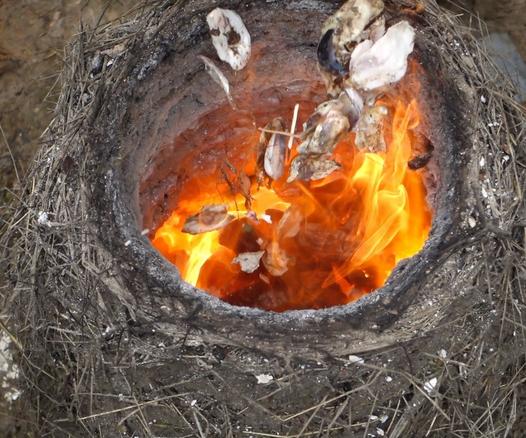
Burn Seashell Lime in a Primitive Straw/Clay Kiln!
Burn Seashell Lime in a Primitive Straw/Clay Kiln!: In this project we use Earth, Water, Fire, Air, Animal, Vegetable and Mineral to make something with a multitude of practical uses. The text is detailed and stands alone, but the videos are very useful and entertaining. Video #1, the Quicky version,…
