More about #GladiatorGatorade

A refreshing, slightly smoky gladiator drink made with vinegar, honey, and culinary ash

"Pliny the Elder writes of gladiators drinking 'a lye of ashes' to refresh themselves after 'being disabled at the games'. They probably weren’t drinking actual #lye because that would do terrible things to your insides, but you can get #CulinaryAsh in place of that 'lye of ashes'. If you make this, use culinary ash to be on the safe side. I mixed mine into some #posca, a #VinegarHoney drink that was the #Gatorade of #AncientRome.

"This gladiator Gatorade is refreshing with a bit of sourness from the vinegar and sweetness from the honey, and the ash adds a bit of smokiness at the end. Was it good? Not really. Was it better than I thought it would be? Definitely.

'For convulsions or contusions of the viscera, let the hearth be your medicine-box; for a lye of ashes, taken from thence, mixed with your drink, will effect a cure. Witness the gladiators, for example, who, when disabled at the games, refresh themselves with this drink.'
— Pliny the Elder, Natural History, XXXVI.203

Ingredients:

- Water
- Wine vinegar
- Honey
- Culinary ash*

*It’s very important to use culinary ash.

Instructions:

- In a mixing glass, stir a small amount of honey and vinegar into the water. Taste and adjust the amounts to your liking.
- Add a small spoonful of the culinary ash and stir.
- Strain into a glass and serve it forth to a weary gladiator. "

Source:
https://www.tastinghistory.com/recipes/gladiatorgatorade

#SolarPunkSunday #PlantAshes #LowTech #BoneHealth #History #RecoveryDrink #Histodon #HistoricalRecipes #ThirstQuenching
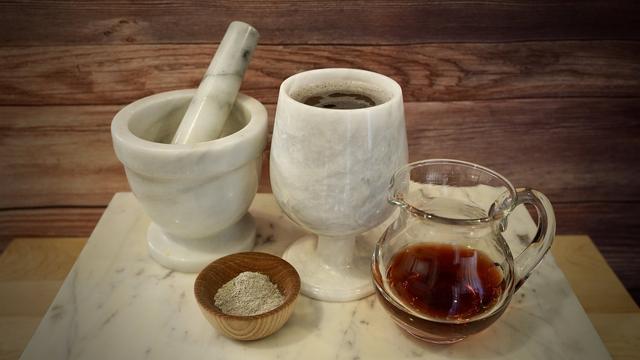
Gladiator Gatorade — Tasting History

A refreshing, slightly smoky gladiator drink made with vinegar, honey, and culinary ash

Tasting History

Something both the #Hopi and #Romans (and other cultures) shared -- using plant-based ashes in food and medicine!

#GladiatorGatorade? Ancient Athletes Had A Recovery Drink, Too

by Maria Godoy, October 27, 2014

Excerpt: "#PlantAshes were evidently consumed to fortify the body after physical exertion, and to promote better bone healing,' Fabian Kanz, a forensic anthropologist at the Medical University of Vienna who led the research, said in a statement. 'Things were similar then to what we do today."

"Evidence for this ancient dietary supplement comes from a second-century cemetery for gladiators in what was once the great Roman city of Ephesus, in modern-day Turkey. Kanz and his colleagues have been studying the remains buried there to unravel how these athletes lived. To figure out what they ate, the researchers examined the remains of 22 gladiators using stable carbon and nitrogen isotope ratio analysis.

"Carbon can tell us about the plants these people ate, while nitrogen offers hints of their animal protein consumption. The gladiators were eating a pretty varied diet, the analysis showed. Some went heavier on the #grains and #greens; some ate more meat.

"When the same tests were run on the remains of 31 regular folks from that era and region, they found the same sorts of variation. In other words, gladiators seemed to be eating the same way as everyone else.

"But the researchers also decided to look at the trace elements of strontium and calcium in those old bones. And that's where a huge difference jumped out. Compared with the regular Joes, the gladiators had a much larger ratio of strontium to calcium.

" 'This is strong evidence that the gladiators were consuming something high in calcium to replenish their calcium stores that other people weren't and that didn't show up in the isotopes,' says Kristina Killgrove, a biological anthropologist at the University of West Florida who studies imperial Rome through ancient bones.

"The researchers wondered: If the gladiators weren't eating more meat than their contemporaries, then where was this calcium boost coming from? A nearly 2,000-year-old encyclopedia offered a tantalizing clue.

"In his #NaturalisHistoria, published in the first century, #PlinyTheElder wrote: 'Your #hearth should be your #MedicineChest. Drink #lye made from its ashes, and you will be cured. One can see how gladiators after a combat are helped by drinking this.'

"Using ash in food and medicine wasn't limited to the Romans. The #Hopis used ash from burned plant leaves and pea pods to prepare #BlueCornmeal foods like #PikiBread and #BivilvikiDumplings. The ash provided essential elements like #calcium, #manganese, #copper and #iron."

Read more:
https://www.npr.org/sections/thesalt/2014/10/27/357903336/gladiator-gatorade-ancient-athletes-also-had-a-recovery-drink

#SolarPunkSunday #LowTech
#BoneHealth #History #RecoveryDrink
#Histodon #HistoricalRecipes
#ThirstQuenching #BlueCorn #TraditionalRecipes #CulinaryAsh