Presentación tesis Teledetección-Machine Learning 02-2024 - 2025_02_07 13_45 CST - Recording

https://makertube.net/videos/watch/289c7549-8f6e-40f3-9045-9b97c7aba5b7

Presentación tesis Teledetección-Machine Learning 02-2024 - 2025_02_07 13_45 CST - Recording

PeerTube
David Alexander (@david-alexander.bsky.social)

AI predictions of #LandCover in the #PeakDistritct #NationalPark #GIS #maps https://www.mdpi.com/2072-4292/15/22/5277

Bluesky Social

I remembered playing with DeepDream computer vision program that uses CNN (Convolutional Neural Network) almost 10 years ago. How fun it was to be able to run it locally on one my machines despite being very slow. Luckily I was able to find an already trained model, because training it locally was not feasible for me.

#convolutionalneuralnetwork #cnns

I came across a neat paper, Deep Image Prior https://arxiv.org/abs/1711.10925 The idea is that the structure of a deep convolutional neural net, CNN, is a prior that allows it to be useful for image problems. In the paper they used an untrained CNN to do things like upscaling an image. I had seen CNN's being used for that kind of task before but I thought the training was what allowed them to work well. This paper is arguing that the structure is enough.
#machinelearning
#convolutionalneuralnetwork
Deep Image Prior

Deep convolutional networks have become a popular tool for image generation and restoration. Generally, their excellent performance is imputed to their ability to learn realistic image priors from a large number of example images. In this paper, we show that, on the contrary, the structure of a generator network is sufficient to capture a great deal of low-level image statistics prior to any learning. In order to do so, we show that a randomly-initialized neural network can be used as a handcrafted prior with excellent results in standard inverse problems such as denoising, super-resolution, and inpainting. Furthermore, the same prior can be used to invert deep neural representations to diagnose them, and to restore images based on flash-no flash input pairs. Apart from its diverse applications, our approach highlights the inductive bias captured by standard generator network architectures. It also bridges the gap between two very popular families of image restoration methods: learning-based methods using deep convolutional networks and learning-free methods based on handcrafted image priors such as self-similarity. Code and supplementary material are available at https://dmitryulyanov.github.io/deep_image_prior .

arXiv.org

While we're (needfully) obsessing over AI in the world of direct human affairs, there's an explosion of productive exploitation of deep learning in the natural (often anthropogenically-influenced) world.

And these applications need to survive more than an elevator pitch.

Side-product, perennially surfaced during weekly climate research trawl:

https://www.sciencedirect.com/science/article/pii/S0034425723003930

#DeepLearning
#TreeMortality
#WildFire
#ConvolutionalNeuralNetwork

Google’s Augmented Reality Microscope Might Help Diagnose Cancer

Despite recent advances in diagnosing cancer, many cases are still diagnosed using biopsies and analyzing thin slices of tissue underneath a microscope. Properly analyzing these tissue sample slide…

Hackaday

https://phys.org/news/2023-09-ai-algorithm-microscopic-nematicity-moir.html

"…typically composed of stacks of #graphene layers with a relative twist…attracted immense attention from the #condensedmatter community…due to their high tunability and…make these systems a perfect playground for testing theories from #stronglycorrelatedphenomena…but directly obtaining these details from experimental data is often an ill-defined inverse problem…we trained a #convolutionalneuralnetwork…to recognize features of #nematicity from the data…"

AI algorithm learns microscopic details of nematicity in moiré systems

Identifying and understanding experimental signatures of phases of matter is usually a challenging task due to strong electron interactions in a material and can become even harder due to external influences in samples with the presence of impurities or other sources of deformations. Typically, these interactions between the electrons in a material give rise to fascinating phenomena such as magnetism, superconductivity and electronic nematicity.

Phys.org
Teaching A Mini-Tesla To Steer Itself

At the risk of stating the obvious, even when you’ve got unlimited resources and access to the best engineering minds, self-driving cars are hard. Building a multi-ton guided missile that can…

Hackaday
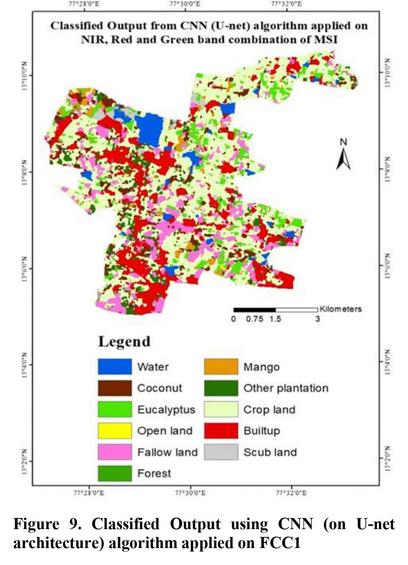
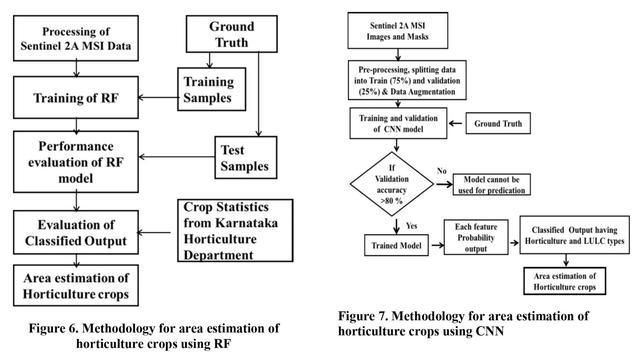
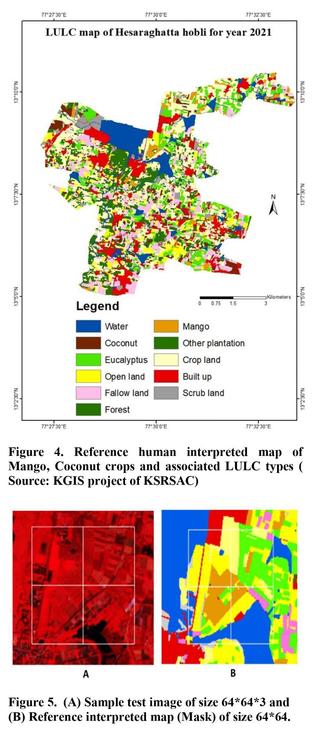
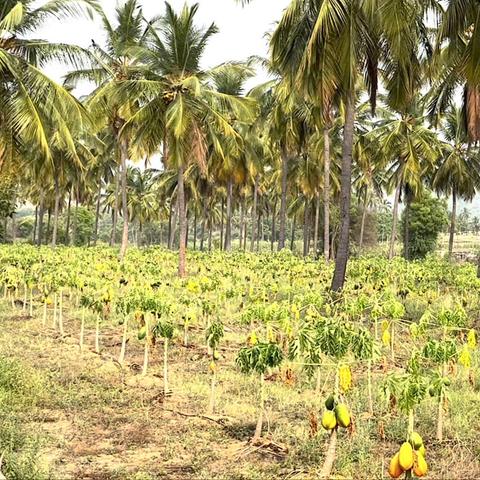
Area Estimation of Mango and Coconut Crops using Machine Learning in Hesaraghatta Hobli of Bengaluru Urban District, Karnataka | Journal of Geomatics