 The Bad Place
Feed: All Latest | The Gulf’s AI Boom Has an Undersea Cable Problem by Chris Hamill-Stewart
AI generated summary, Read the full article for complete information.
The Gulf’s push to become an AI powerhouse is being hampered by its reliance on a few vulnerable undersea cables that carry the majority of international data through risky chokepoints such as the Strait of Hormuz and the Red Sea. As hyperscalers demand the same high‑resilience, low‑latency connectivity they enjoy on transatlantic routes, any cable cut—like the 2025 Red Sea incident that cost $3.5 billion—could cripple the region’s emerging compute‑export model. Gulf nations are therefore planning a multilayered diversification strategy that includes new terrestrial fiber corridors across Saudi Arabia, the UAE, Oman, Jordan and the Levant, subsea‑terrestrial hybrids bypassing Egyptian chokepoints, and northern overland routes through Iraq, Syria and Turkey, alongside satellite backup. Projects such as Saudi‑backed SilkLink and the Iraq‑UAE WorldLink aim to create additional east‑west pathways, reducing dependence on maritime routes, while satellite links provide redundancy despite lower bandwidth. Ultimately, the Gulf is redefining cross‑border connectivity from a mere data conduit to a strategic asset whose resilience will shape the future of AI‑driven economies.
Read more: https://www.wired.com/story/the-gulfs-ai-boom-has-an-undersea-cable-problem/
#SaudiArabia #UAE #StraitofHormuz #RedSea #business_artificialintelligence

 Saxafi Media


 The New York Times - Breaking News, US News, World News and Videos [Unofficial]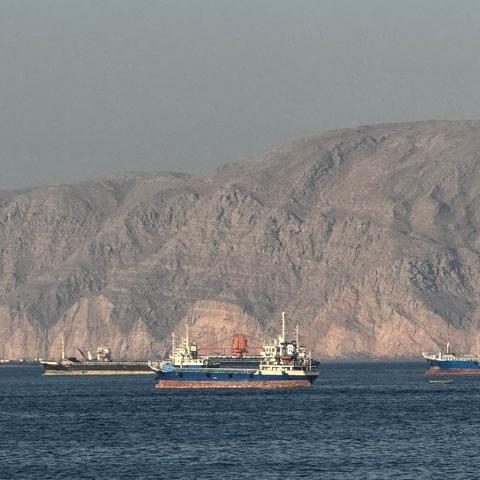

 Interaksyon [Unofficial]
 Susan Ville