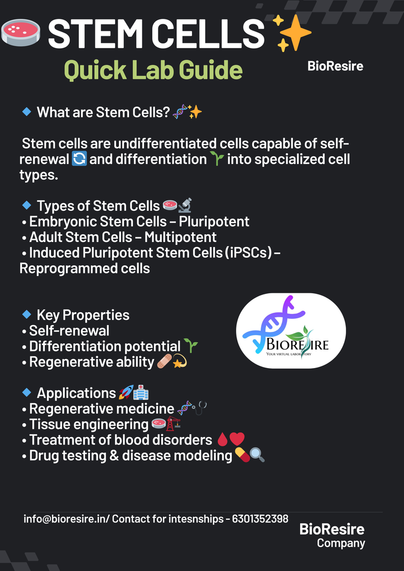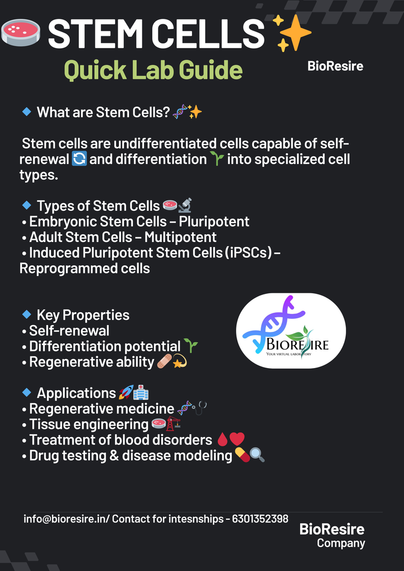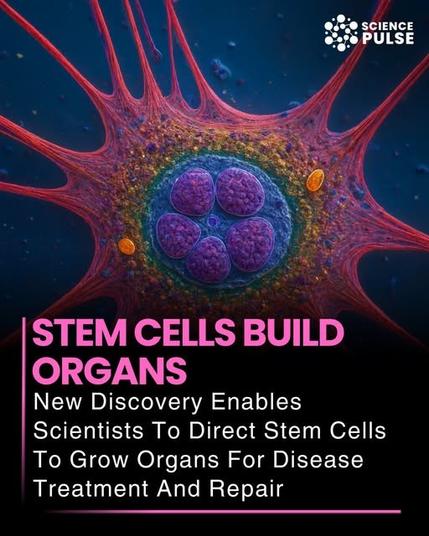
In a revolutionary breakthrough, scientists have discovered a way to guide stem cells to develop into fully formed organs, opening new frontiers in disease treatment and tissue repair. Stem cells, known for their incredible ability to become any cell type in the body, can now be directed with precision to form complex organ structures.

This discovery could transform medicine, offering hope for patients with damaged organs, chronic diseases, or injuries that currently have limited treatment options. Researchers are exploring how this technology can create functional organs in the lab, potentially reducing the need for donor transplants and eliminating long waiting lists. By understanding the signals that tell stem cells how to grow, scientists can replicate the natural process of organ development in controlled conditions.

This breakthrough not only promises life-saving therapies but also paves the way for personalised medicine, where organs can be grown using a patient’s own cells, dramatically lowering the risk of rejection. As research progresses, the ability to guide stem cells may revolutionise how we approach healthcare, making organ failure a challenge of the past. The potential to heal the human body from within has never been closer to reality.

Core discovery
#StemCells #OrganRegeneration #OrganEngineering #Organogenesis #LabGrownOrgans

Medical innovation
#RegenerativeMedicine #TissueEngineering #PersonalizedMedicine #TransplantInnovation #FutureOfMedicine

Research & science
#MedicalBreakthrough #Biotech #LifeSciences #CuttingEdgeScience #HealthInnovation

Hope & impact
#OrganRepair #DiseaseTreatment #HealthcareRevolution #HealingFromWithin #NextGenMedicine

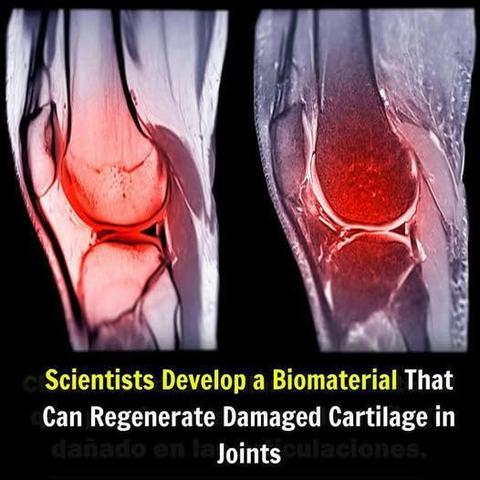
Scientists develop an innovative biomaterial capable of repairing cartilage in joints, potentially transforming medicine for millions…Details in the first comment👇

Core medical focus
#CartilageRepair #JointHealth #ArthritisRelief #Osteoarthritis #OrthopedicInnovation

Biotech & materials
#Biomaterials #RegenerativeMedicine #TissueEngineering #MedicalBreakthrough #Biotech

Longevity & mobility
#HealthyAging #MobilityMatters #PainRelief #LifeExtension #FutureOfMedicine

General science buzz
#ScienceNews #CuttingEdgeResearch #HealthInnovation #MedTech #NextGenMedicine

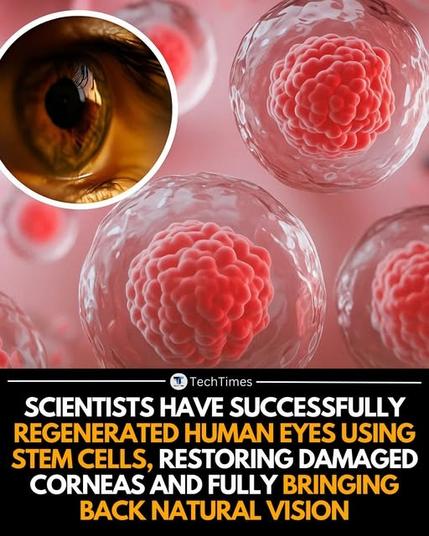
In a ground-breaking advance for regenerative medicine, scientists have successfully restored vision by using stem cells to regenerate corneal tissue, the transparent layer that covers the front of the eye. Unlike traditional corneal transplants, which rely on scarce donors and carry a risk of immune rejection, this method uses a patient’s own stem cells to grow new, healthy tissue that integrates seamlessly with the eye.

The results have been extraordinary—patients with severe vision loss, once reliant on donors or resigned to permanent impairment, regained clear sight with minimal complications. Early clinical trials show that the regenerated corneas remain stable over time, offering lasting improvements in vision and quality of life.

Beyond corneal injuries, researchers see enormous potential in extending this approach to other causes of blindness, such as retinal damage and age-related eye diseases. By harnessing the body’s own healing mechanisms, medicine is shifting from replacement therapies to natural renewal, opening the door to a future where blindness can be reversed.

Eye & Vision
#VisionRestoration #EyeHealth #BlindnessCure #VisionResearch #CornealRegeneration #CorneaRepair #SightRecovery #Ophthalmology #EyeCare #RestoringSight

Stem Cells & Regenerative Medicine
#StemCells #RegenerativeMedicine #CellTherapy #TissueEngineering #MedicalBreakthrough #BiomedicalResearch #NextGenMedicine #LifeSciences #HealingWithCells

Medical Innovation & Science
#MedicalInnovation #MedicalResearch #ScienceNews #FutureOfMedicine #HealthTech #ClinicalTrials #HealthInnovation #ScienceIsAwesome

Hope & Awareness
#HopeInScience #HealingThroughScience #EndingBlindness #BetterVision #QualityOfLife

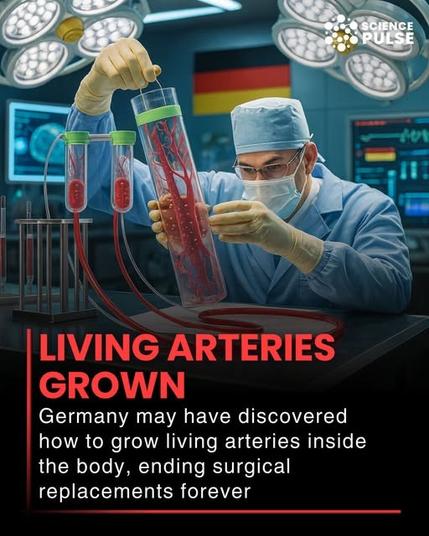
A revolutionary medical breakthrough is emerging from Germany that could change the future of cardiovascular health forever. Scientists may have discovered a way to grow living arteries directly inside the human body, eliminating the need for artificial grafts or surgical replacements.

For decades, patients with blocked or damaged arteries have relied on transplants or synthetic implants. While effective, these procedures often come with complications such as rejection, clotting, or limited durability. Now, researchers are exploring a technique that allows the body itself to generate fully functioning arteries.

By harnessing advanced tissue engineering and regenerative medicine, this approach encourages the body’s own cells to build living vascular structures. These arteries are not foreign objects but part of the patient’s natural biology, meaning they could last a lifetime and drastically reduce the risks tied to traditional surgery.

If successful, this innovation would mark a new era in heart and vascular medicine. Millions of people suffering from cardiovascular diseases could one day avoid invasive procedures altogether. Instead, their bodies may simply grow the vital blood vessels they need to survive and thrive.

This is not just medicine’s future, it may soon become reality.

Cardiovascular & Heart Health
#CardiovascularHealth #HeartHealth #HeartDisease #VascularHealth #HeartResearch #HealthyHeart #HeartBreakthrough #CirculatorySystem

Regenerative & Tissue Engineering
#RegenerativeMedicine #TissueEngineering #VascularRegeneration #Bioengineering #LivingTissues #CellTherapy #Bioprinting #OrganRegeneration #VascularEngineering

Medical Innovation & Research
#MedicalBreakthrough #MedicalInnovation #ScienceNews #NextGenMedicine #FutureOfMedicine #LifeSciences #BiomedicalResearch #ResearchMatters #HealthTech

Germany & Global Science
#GermanResearch #MadeInGermany #EuropeanScience #GlobalHealth

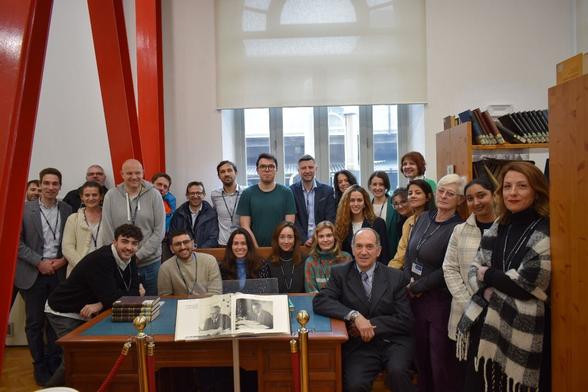
🦴 ReBone is here!
ReBone is a four-year Marie Skłodowska-Curie Doctoral Network funded by Horizon Europe.
Our mission? To train a new generation of researchers to design personalized bone-substitute implants using bioactive glass/ceramic materials — combining biomechanics, materials science, clinical research, and advanced manufacturing.

We're tackling urgent challenges in bone repair:
🔹 Patient-specific solutions
🔹 Better mechanical reliability and bioactivity
🔹 Optimized manufacturing processes
—all with the goal of improving outcomes for people with critical-size bone defects.

🌐 Want to learn more?
Check out our brand-new website:
👉 https://rebone.eu

You’ll find info about the project, partners, DCs, research progress, training activities, and events.

📰 And yes — Issue 1 of the ReBone Newsletter is out now!
Get a snapshot of our latest research, events, and what’s ahead.
📥 Read it here: https://rebone.chem.polimi.it/s/6TdW92mfRTCmC27

#ReBoneProject #MSCA #HorizonEurope #BoneImplants #BioactiveCeramics #Biomechanics #TissueEngineering #PhDLife #OpenScience #PersonalisedMedicine #ResearchCommunity

Everyone loves the story of an underdog, and Dr. Luiz Bertassoni shared part of his remarkable story of perseverance in our latest podcast episode! He covered his academic training spanning 3 continents, his research applying engineering tools to biology to study cancer and regenerative medicine, his favorite scientific travels, building an innovative new research center, his love of surfing and music, and more.

https://www.peoplebehindthescience.com/dr-luiz-bertassoni/

This episode was made possible with support from Innovative Research.

#OHSU #tissueengineering #engineering #BME #biomedicalengineering #cancerresearch #cancer #biology #biotech #science #STEM #research #podcast #podcasts #SciComm #ScienceCommunication

Cells battle for survival by exerting force! A groundbreaking study reveals why mechanical strength—not size—determines which cells live or die.

#CellBiology #CancerResearch #TissueEngineering

https://geekoo.news/cell-showdowns-how-force-determines-which-cells-thrive-or-die/

Cell Showdowns: How Force Determines Which Cells Thrive or Die | Geekoo

Cells compete by exerting mechanical forces through E-cadherin junctions. New research uncovers how this cellular tug-of-war impacts tissue health, cancer, and regeneration.

Geekoo
Revolutionizing Regenerative Medicine with CRISPR

Explore how CRISPR technology is transforming regenerative medicine, enhancing tissue engineering, and revolutionizing stem cell therapy | TGC News.

The Global Commons News