 Gravitas
Can AI Make You Immortal? (Future Documentary) | Real Stories

Can AI Make You Immortal? (Future Documentary) | Real Stories
Stem Cells: Medical Miracle Or Science Gone Too Far? (Medical Documentary) | Real Stories

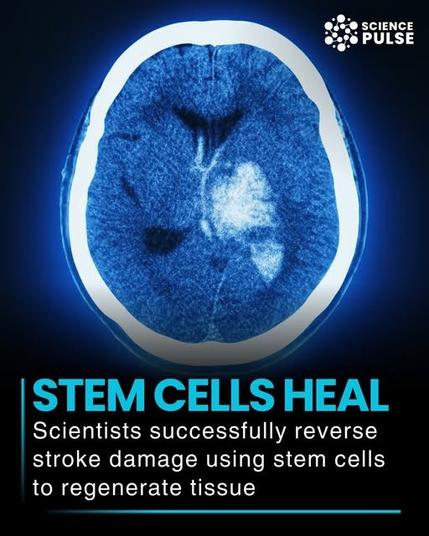
A groundbreaking medical breakthrough is giving hope to millions affected by strokes. Scientists have successfully used stem cells to regenerate brain tissue and reverse the damage caused by a stroke. This discovery is rewriting the possibilities for recovery, offering a new chance at healing for patients who were once told the damage was permanent.
In this new treatment, stem cells are carefully introduced into damaged areas of the brain. These cells have the remarkable ability to transform into the type of tissue needed, repairing blood vessels, neurons, and connections critical for movement, speech, and memory. Early clinical studies have shown significant improvement in patients’ motor skills and cognitive function, even months after their stroke.
Traditional therapies can help manage symptoms, but they rarely restore lost brain tissue. Stem cell regeneration changes everything by addressing the root of the problem and actually rebuilding what was damaged. Experts believe this breakthrough could soon revolutionize stroke recovery, dramatically reducing disability rates and improving quality of life for millions of people worldwide.
This advancement highlights the incredible potential of regenerative medicine. With continued research and development, stem cell therapy may soon become a standard treatment, offering hope where there once was none. The future of stroke recovery is brighter than ever.
Core discovery & science
#MedicalBreakthrough #RegenerativeMedicine #StemCellResearch #LifeSciences #FutureOfMedicine
Disease focus
#StrokeRecovery #BrainHealth #Neuroscience #NeuroRegeneration #CognitiveHealing
Impact & hope
#InnovativeMedicine #HopeForPatients #NextGenHealthcare #CuttingEdgeScience #HealingTheBrain
🧠 Scientists reversed memory loss using lab-grown “young” immune cells
In a breakthrough study, researchers at Cedars-Sinai have shown it may be possible to reverse age-related memory decline and Alzheimer’s symptoms—at least in mice—by using lab-grown “young” immune cells.
These specialized cells, called mononuclear phagocytes, were generated from adult stem cells and infused into aged and Alzheimer’s-model mice. The results were striking:
• Mice treated with the cells performed better in memory tests.
• Their brains retained more mossy cells, which are crucial for learning and memory in the hippocampus.
• Their microglia—the brain’s immune sentinels—remained healthier and more active than in untreated animals.
Interestingly, the infused cells never entered the brain directly. Instead, researchers believe they worked indirectly—possibly by releasing protective proteins, shedding vesicles that reach the brain, or clearing harmful molecules from the bloodstream.
This discovery opens the door to a new class of stem cell-based therapies that could one day slow or even reverse cognitive decline in aging and neurodegenerative diseases like Alzheimer’s. The next step is understanding the exact mechanism—so this approach can move from mice to humans.
🔬 Source: Moser, V.A., Dimas-Harms, L.J., Lipman, R.M., et al. (2025). Human iPSC-Derived Mononuclear Phagocytes Improve Cognition and Neural Health across Multiple Mouse Models of Aging and Alzheimer’s Disease. Advanced Science.
Core discovery & science
#MedicalBreakthrough #Neuroscience #StemCellResearch #LifeSciences #FutureOfMedicine
Therapy & innovation
#MemoryRestoration #YoungImmuneCells #CognitiveHealth #Neurodegeneration #AlzheimersResearch
Impact & hope
#BrainHealth #InnovativeMedicine #AgeReversal #CuttingEdgeScience #HopeForPatients
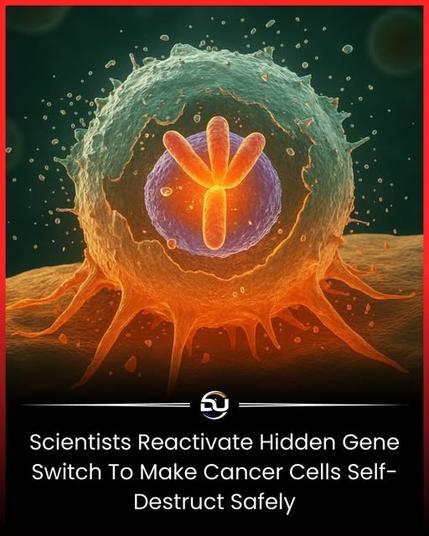
Scientists Flip Gene Switch to Make Cancer Cells Self-Destruct
In a stunning breakthrough, scientists have discovered a way to make cancer cells destroy themselves, without harming healthy cells. By reactivating a hidden “gene switch” inside the cancer cell’s own DNA, researchers were able to trigger a built-in self-destruct mechanism that stops tumours in their tracks.
Normally, cancer cells override the body’s natural kill switch, allowing them to grow uncontrollably. But this new approach turns that switch back on, forcing the rogue cells to die while leaving surrounding healthy tissue untouched. Unlike chemotherapy or radiation, which can damage the entire body, this method is precise and far less toxic.
This discovery could pave the way for revolutionary cancer treatments that work with the body’s natural defences rather than against them. If successful in human trials, it could mean faster recovery times, fewer side effects, and a much higher chance of completely eliminating the disease.
For millions around the world living with cancer, this research represents something bigger than medicine, it is a glimpse of hope. Hope for treatments that are not only powerful but gentle, restoring health without sacrificing quality of life.
Core discovery & science
#MedicalBreakthrough #CancerResearch #Oncology #LifeSciences #FutureOfMedicine
Therapy & innovation
#GeneSwitch #SelfDestructCancer #PrecisionMedicine #TargetedTherapy #GeneticEngineering
Hope & impact
#HopeForPatients #InnovativeMedicine #NextGenHealthcare #CuttingEdgeScience #HealthTech
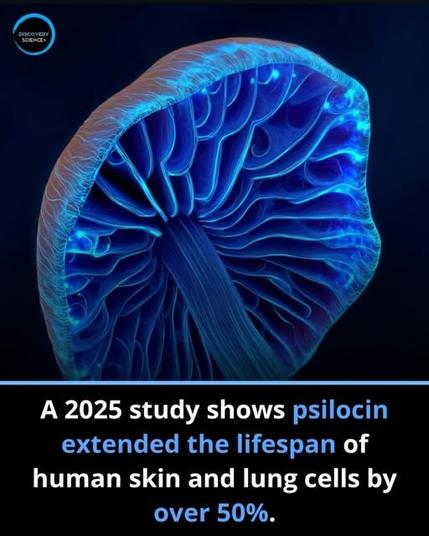
A groundbreaking 2025 study has revealed that psilocin, the active compound in psychedelic mushrooms, can extend the lifespan of human skin and lung cells by more than 50 percent. This discovery highlights an unexpected role for psychedelics beyond their well-known effects on the brain, pointing to potential applications in cellular health and longevity.
Researchers found that psilocin influences cellular pathways related to stress resistance and repair mechanisms. By enhancing the cells’ ability to withstand damage and maintain function, psilocin effectively slows down cellular aging. This could have far-reaching implications for regenerative medicine, anti-aging research, and treatments for age-related diseases.
While the study was conducted at the cellular level and not yet tested in whole organisms, the results are promising. They suggest that compounds traditionally associated with mental health and consciousness studies may also hold keys to improving physical health and lifespan at the cellular level.
The findings also raise exciting questions about the broader impact of psychedelics on human biology. Could psilocin or related compounds one day become tools to support tissue regeneration, healthy aging, or even organ preservation? Scientists are now exploring these possibilities while investigating safety, dosage, and mechanisms of action.
This research underscores the incredible potential of compounds found in nature and reminds us that even substances with a long history of cultural and spiritual use can reveal new benefits under scientific scrutiny.
Core discovery & science
#MedicalBreakthrough #CellularLongevity #LifeSciences #RegenerativeMedicine #AntiAgingResearch
Compound & psychedelics
#Psilocin #PsychedelicScience #NaturalCompounds #PlantMedicine #BioInnovation
Impact & future applications
#HealthyAging #FutureOfMedicine #InnovativeMedicine #CuttingEdgeScience #LongevityResearch
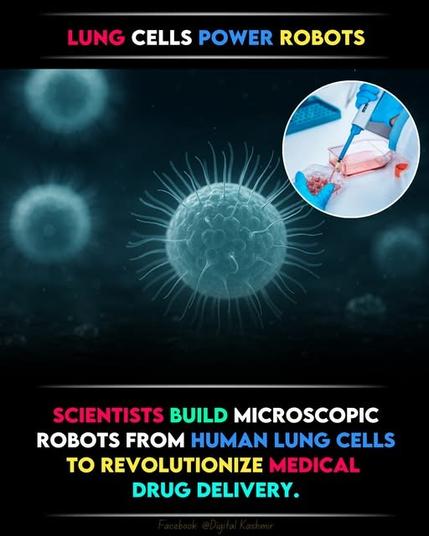
Carnegie Mellon University scientists have engineered microscopic robots, called AggreBots, using human lung cells. These bio-robots move with cilia, the tiny hairlike structures that naturally propel particles in the lungs. Researchers demonstrated for the first time that cilia-driven biological robots can be guided with precision. Published in Science Advances, this work opens new possibilities for targeted drug delivery, minimally invasive therapies, and future biomedical innovations. The approach shows how human cells can be re-engineered into active therapeutic tools, advancing the next generation of medical treatments.
Core discovery & science
#MedicalBreakthrough #BioRobotics #LifeSciences #FutureOfMedicine #ScienceAdvances
Technology & innovation
#AggreBots #CellEngineering #TargetedTherapy #DrugDelivery #MinimallyInvasive #Biotech
Impact & applications
#InnovativeMedicine #NextGenHealthcare #CuttingEdgeScience #BiomedicalEngineering #HealthTech
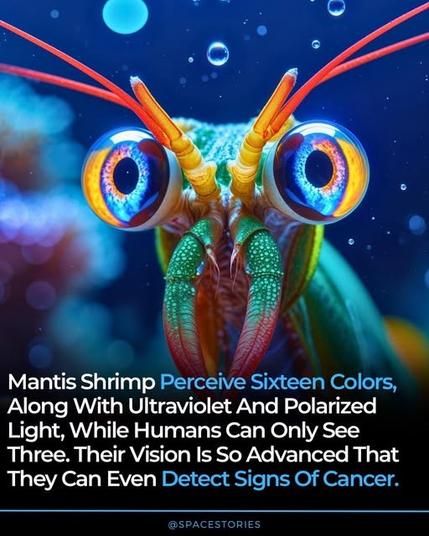
🌈 The Super Vision of Mantis Shrimp 🦐✨
Humans see the world in just three main colors — red, green, and blue. But the mantis shrimp? It sees up to sixteen different color channels! That means its world is bursting with shades and details we can’t even imagine.
🔬 Beyond colors, mantis shrimp can also see ultraviolet light and detect polarized light — giving them a kind of built-in super-vision. This isn’t just cool biology; it has real-world impact. Scientists studying mantis shrimp vision found that they can detect things invisible to us — even subtle signs of cancer in medical images.
This extraordinary eyesight could inspire new diagnostic tools to catch diseases earlier and more accurately.
In short: the mantis shrimp isn’t just one of the ocean’s most remarkable hunters — it’s a tiny creature that could help transform medicine. 🌊💡
Marine life & biology
#MantisShrimp #OceanLife #MarineBiology #NatureFacts #UnderwaterWorld
Vision & science
#SuperVision #ColorVision #UltravioletVision #PolarizedLight #AnimalSuperpowers
Innovation & impact
#BioInspiredTech #MedicalInnovation #ScienceDiscovery #FutureOfDiagnostics #CuttingEdgeScience
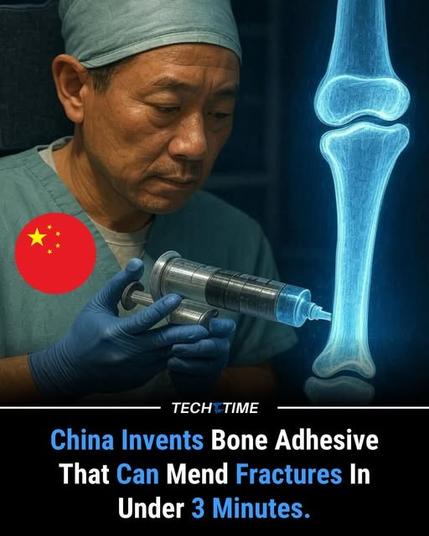
Chinese researchers have achieved a major medical breakthrough with the development of a revolutionary "bone glue." This innovative biomaterial is designed to rapidly heal bone fractures, setting in less than three minutes. The adhesive works by bonding directly to the bone fragments, providing immediate structural support and stability that is crucial for the healing process.
This technology has the potential to transform orthopedic and trauma surgery. It could significantly reduce recovery times for complex fractures, particularly those that are difficult to treat with traditional plates, screws, or casts. The quick-setting nature of the glue allows for minimally invasive procedures, decreasing surgery time and improving patient outcomes. By accelerating the initial critical phase of bone mending, this adhesive paves the way for faster, more effective treatments, getting patients back on their feet in record time.
Core discovery & research
#MedicalBreakthrough #Biomaterials #Orthopedics #RegenerativeMedicine #LifeSciences
Treatment & technology
#BoneGlue #FractureHealing #SurgicalInnovation #TraumaCare #MinimallyInvasive
Impact & hope
#FasterRecovery #InnovativeMedicine #PatientCare #NextGenHealthcare #CuttingEdgeScience
 N-gated Hacker News
 Lexmilian S. R. B. de Mello