Archangel Michael

Also called Michael the Taxiarch. A taxiarch is used in the Greek language to mean “brigadier,” or a commander of a company. In Greek Orthodoxy, it refers to the Archangels Michael or Gabriel as leaders of the heavenly hosts.

Michael is an archangel & warrior of God in Christianity, Islam, & Judaism. The earliest surviving mentions of his name are in the 2nd or 3rd centuries BC Jewish works, often but not always apocalyptic. In these works, he’s the chief of the angels & archangels. He’s the guardian prince of Israel & is responsible for the care of the people of Israel.

Christianity conserved nearly all of Jewish traditions concerning him. He’s mentioned explicitly in Revelation 12:7-12, where he does battle with Satan, & in the Epistle of Jude, where the archangel & the devil have an argument over the body of Moses.

The Book of Enoch lists Michael as 1 of 7 archangels. The remaining names are: Uriel, Raguel, Raphael, Sariel, Gabriel, & Remiel. He’s mentioned again in the last chapters of the Book of Daniel, a Jewish apocalypse composed in the 2nd century BC, in which a man clothed in linen tells Daniel that he & “Michael, your prince” are engaged in a battle with the “prince of Persia,” after which, at the end-time, “Michael, the great prince who protects your people, will arise.”

Enoch was instrumental in establishing the pre-eminent place of Michael among the angels & archangels. In later Jewish works, he’s said to be their chief, mediating the Torah, & standing at the right hand of the throne of God.

In the traditions of the Qumran community, he defends, or leads, the people of God in the end-time battle. In other writings, he’s responsible for the care of Israel & acts as commander of the heavenly armies. He’s Israel’s advocate, contesting Satan’s claim to the body of Moses.

He intercedes between God & humanity & serves as High Priest in the heavenly sanctuary. (So would this make him Aaron’s equal? We’re sincerely asking. Let us know your take in the comments.) He accompanies the souls of the righteous dead to Paradise.

The 7 archangels (or 4, as traditions differ, but always include Michael) were associated with the branches of the menorah, the sacred 7-branched lamp stand in the Temple, as the 7 spirits before the throne of God. This is reflected in the Book of Revelation 4:5. Michael is mentioned explicitly in Revelation 12:7-12, where he does battle with Satan & casts him out of heaven so that he no longer has that exclusive access to God as accuser (his former role in the Old Testament).

Satan’s fall at the coming of Jesus marks the separation of the New Testament from Judaism. In Luke 22:31, Jesus tells Peter that Satan has asked God for permission to “sift” the disciples, the goal being to accuse them. But the accusation by Jesus, who thus takes on the role played by angels, & especially by Michael, in Judaism.

Michael is mentioned by anem for the 2nd time in the Epistle of Jude, which is an impassioned plea for the believers to engage in battle against the incursion of the error. In verses 9-10, the author denounces the heretics by contrasting them with the archangel Michael, who, in disputing with Satan over the body of Moses.

According to rabbinic tradition, Michael acted as the advocate of Israel. Sometimes he had to fight with the princes of other nations (Daniel 10:13), & particularly with the angel Samael, Israel’s accuser. Their hostility dates from the time Samael was thrown from heaven & tried to drag Michael down with him, requiring God’s intervention.

The rabbis declare that Michael came into his role as defender at the time of the biblical patriarchs. Rabbi Eliezer ben Jacob said Michael rescued Abraham from the furnace into which he’d been thrown by Nimrod. Some say he was the “one that had escaped” (Genesis 14:13), who told Abraham that Lot had been taken captive & who protected Sarah from defilement by Abimelech.

Michael prevented Isaac’s being sacrificed by his dad by substituting a ram in his place. He saved Jacob, while still in his mom’s womb, from death at the hands of Samuel. Michael later prevented Laban from hurting Jacob. The midrash Exodus Rabbah holds that Michael exercised his function as an advocate of Israel at the time of the Exodus & destroyed Sennacherib’s army.

Epiphanius of Salamis (circa 310-circa 320-403), in his Coptic-Arabic Hexaemeron, referred to Michael as a replacement of Satan. Accordingly, after Satan fell, Michael was appointed to the function Satan served when he was still 1 of the noble angels.

A painting of Michael slaying a serpent became a major art piece at the Michaelion after Constantine defeated Licinius near there in 324. This contributed to the standard iconography that developed of Michael as a warrior saint slaying a dragon. The Michaelion was a magnificent church & in time became a model for hundreds of other churches in Eastern Christianity.

In the 4th century, St. Basil the Great’s homily, De Angelis, St. Michael over all the angels. He was called “Archangel” because he heralds other angels, the title archangelos applied to him in Jude 1:9. The angelology of Pseudo-Dionysius, which was widely read as of the 6th century, gave Michael a rank in the hierarchy of angels.

Later, in the 13th century, others such as Bonventure believed him to be Prince of the Seraphim, the 1st of the 9 angelic orders. According to Thomas Aquinas, Michael is the Prince of the last & lowest choir, the Angels.

Catholics often refer to Michael as “Holy Michael, the Archangel” or “St. Michael.” He’s generally referred to in Christian liturgies as “St. Michael,” as in the Litany of the Saints. In a shortened archangel, is mentioned by name, omitting Saints Gabriel & Raphael.

In Roman Catholic teachings, St. Michael has 4 main roles or offices. His 1st role is the leader of the Army of God & the leader of celestial forces in triumphing over the powers of Hell. He’s viewed as the angelic model for the virtues of the “spiritual warrior,” his conflict with evil taken as “the battle within.”

The 2nd & 3rd roles of Michael in Catholic teachings deal with death. In his 2nd role, he’s the angel of death, carrying the souls of Christians to Heaven. In his 3rd role, he weighs souls on his perfectly balanced scales. The scales are a common object he holds in art.

In his 4th role, St. Michael, the special patron of the Chosen People in the Old Testament, is also Guardian of the Church. St. Michael was revered by the military orders of knights during the Middle Ages. The names of villages around the Bay of Biscay reflect this history.

The Eastern Orthodox give Michael the title Archistrategos, or “Supreme Commander of the Heavenly Hosts.” The Eastern Orthodox pray to their guardian angels & above all, to Michael & Gabriel. The Eastern Orthodox have always had a strong devotion to angels. In modern times, they’re referred to by the term “Bodiless Powers.” Several feasts dedicated to Archangel Michael are celebrated by the Eastern Orthodox throughout the year.

In Russia, many monasteries, cathedrals, courts, & merchant churches are dedicated to the Chief Commander Michael. Most Russian cities have a church or chapel dedicated to the archangel Michael. In Ukraine, the archangel Michael is the patron saint of Kyiv. He became popular from the time of Prince Vsevolod of Kyivan Rus’.

While in the Serbian Orthodox Church, St. Sava has a special role as the establisher of its autocephaly & largest Belgrade church devoted to him, the capital Belgrade’s Orthodox cathedral, the see church of the patriarch, is devoted to Michael.

The place of Michael in the Coptic Church of Alexandra is as a saintly intercessor. He’s the 1 who presents to God the prayers of the just, who accompanies the souls of the dead to Heaven, who defeats the devil. He’s celebrated liturgically on the 12th of each Coptic month.

In Alexandria, a church was dedicated to him in the early 4th century on the 12th of the month of Paoni. The 12th month of Hathor is the celebration of Michael’s appointment in Heaven, where Michael became the chief of the angels.

Seventh-Day Adventists believe that “Michael” is but 1 of many titles applied to the pre-existent Christ, or Son of God. According to Adventist theology, Michael was/is considered the “Eternal Word,” & the 1 by whom all things were created. The Word was then born, incarnated as Jesus.

They believe that the name “Michael” signifies “One Who Is Like God” & that, as the “Archangel” or “chief or head of the angels,” he led the angels; thus, the statement in Revelation 12:7-9 refers to Jesus as Michael.

Jehovah’s Witnesses believe that Michael is another name for Jesus in Heaven, in His pre-human & post-resurrection existence. They say the definite article in Jude 9 identifies Michael as the only archangel. They consider Michael to be synonymous with Christ, described in 1 Thessalonians 4:16: “with a cry of command, with the voice of an archangel, & with the sound of the trumpet.”

They believe the prominent roles assigned to Michael in Daniel 12:1, Revelation 12:7, Revelation 16, & Revelation 19:14 are identical to Jesus’ roles, being the 1 chosen to lead God’s people & as the only 1 who “stands up,” identifying the 2 as the same spirit being.

Because they identify Michael with Jesus, he’s considered the 1st & greatest of all God’s heavenly “sons,” God’s chief messenger, who takes the lead in vindicating God’s sovereignty, sanctifying his name, fighting the wicked forces of Satan & protecting God’s covenant people on earth. Jehovah’s Witnesses also identify Michael with the “Angel of the Lord” who led & protected the Israelites in the wilderness.

Members of the Mormon Church believe that Michael is Adam (of Adam & Eve fame), the Ancient of Days (Daniel 7), a prince, & the patriarch of the human family. They also hold that Michael assisted Jehovah (the pre-mortal form of Jesus) in the creation of the world under the direction of God the Father (Elohim). Under the direction of the Father, Michael also cast Satan out of Heaven.

In Islam, Mika’il (Michael) is 1 of 4 archangels along with Jibril (Gabriel, whom he’s often paired with), Israfil (trumpeter angel) & ‘Azra’il (angel of death). In other Islamic literature, Michael is associated with mercy. He asks God for forgiveness for humans & is 1 of the 1st angels who obeyed God’s orders to bow before Adam.

From the tears of Michael, angels of mercy are created as his helpers. Like Gabriel, with whom he’s often mentioned together, Michael is also a messenger. While Gabriel delivers messages from Heaven to humans, Michael delivers messages to the angelic world.

As the angel to execute God’s providence, he’s also associated with natural phenomena & causes rain upon the lands. Unlike Christian traditions, Michael is rarely shown as a warrior-angel, with a few references to the Battle of Badr by Suyuti as an exception.

The Miraj literature on occasion mentions both Gabriel & Michael as 2 angels who showed Muhammad Paradise & Hell. He’s mentioned in Shia supplication (Dua), reportedly handed down by the 6th Imam Ja’far al-Sadiq, in the prayers for blessings for the Bearers of the Throne.

The figures of Michael & Gabriel/Jibril serve as dual pillars of angelology. While they show up in the same texts, their “personalities” & mythological roles are distinct. Michael is the celestial soldier & protector. While Gabriel is the bridge between the divine mind & the human ear.

The name Michael (Mikha’el) translates from Hebrew as a rhetorical question: “Who is like God?” This name is actually a battle cry used during the primordial war in Heaven.

In the Book of Daniel, Michael is described as the “Great Prince” who stands guard over the people of Israel. Jewish Midrash expands on this. It suggests that Michael is the high priest of the Heavenly Temple. When other nations’ guardian angels argue against Israel, Michael acts as the defense in the celestial courtroom. Because after all, God is the judge of all.

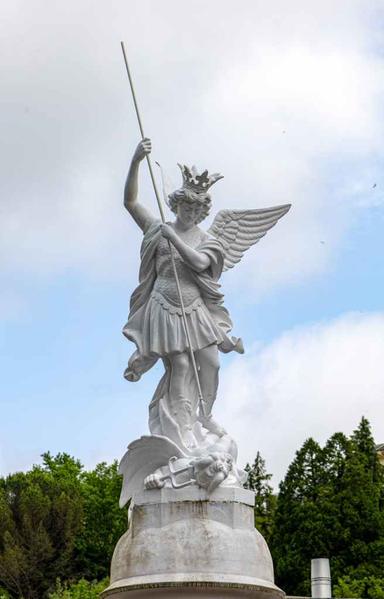
Michael’s most iconic role comes from the Book of Revelation. Here, he leads an army of God against the Dragon (a.k.a. Satan). He’s almost always dressed in Roman/Medieval armor, standing over a defeated demon/dragon, holding a spear/sword.

In Catholic traditions, Michael has a secondary role as the Psychopomp. A Psychopomp is a conductor or a guide of souls. The 1 who “weighs” souls at the moment of death. This is why he’s sometimes shown with scales.

In Islamic tradition, Mikail (Michael) is 1 of 4 archangels. While Jibril feeds the soul (through revelation), Mikail is the Angel of Sustenance. He’s responsible for the forces of nature, specifically rain & lightning. Legends say he’s so moved by the majesty of God that he hasn’t smiled since the creation of Hell.

In the United States, Michael is the patron saint of paratroopers, police officers, & the military.

In the General Roman Calendar, the Anglican Calendar of Saints, & the Lutheran Calendar of Saints, Michael’s feast day is Michaelmas Day (September 29). The day is also the feast day of St. Gabriel & Raphael, in the General Roman Calendar & the Feast of St. Michael & All Angels in the Church of England.

In the Eastern Orthodox Church, St. Michael’s principal feast day is November 8. November 21, if they’re using the Gregorian calendar. Honoring him along with the rest of the “Bodiless Powers of Heaven” (angels) as their Supreme Commander, & the Miracle at Chonae is celebrated on September 6.

In the Coptic Orthodox Church, the main feast day is on 12 Hathor (between November 9 & December 9) & 12 Paoni (between June 8 & July 7). He is celebrated liturgically on the 12th of each Coptic month.

On April 7, the Oriental Orthodox Church commemorates the deliverance of the prophet Jeremiah from prison by Michael.

One-Time Monthly Yearly

Make a one-time donation

Make a monthly donation

Make a yearly donation

Choose an amount

$1.00 $5.00 $10.00 $1.00 $5.00 $10.00 $5.00 $10.00 $15.00

Or enter a custom amount.

$

Your contribution is appreciated.

Your contribution is appreciated.

Your contribution is appreciated.

DonateDonate monthlyDonate yearly #AzraIl #1Thessalonians416 #12Hathor #12Paoni #13thCentury #2ndCenturyBC #324 #3rdCenturyBC #4thCentury #6thCentury #Abimelech #Abraham #Adam #AllAngels #AncientOfDays #AngelOfDeath #AngelOfSustenance #Angelology #AnglicanCalendarOfSaints #Apocalyptic #April7 #ArchangelGabriel #ArchangelMichael #ArchangelRaguel #ArchangelRaphael #ArchangelRemiel #ArchangelSariel #ArchangelUriel #Archangelos #Archistrategos #ArmyOfGod #BattleOfBadr #BayOfBiscay #BearersOfTheThrone #Belgrade #BodilessPowers #BodilessPowersOfHeaven #Bonventure #BookOfDaniel #BookOfEnoch #BookOfRevelation #Catholic #Catholics #ChiefCommanderMichael #Christ #Christianity #ChurchOfEngland #Circa310 #Circa320 #Circa403 #Constantine #CopticChurchOfAlexandria #Daniel #Daniel1013 #Daniel121 #Daniel7 #DeAngelis #December9 #Disciples #Dragon #Dua #EasternChristianity #EasternOrthodox #EasternOrthodoxChurch #Elohim #EpiphaniusOfSalamis #EpistleOfJude #EternalWord #ExodusRabbah #FeastDay #FeastOfStMichael #GeneralRomanCalendar #Genesis1413 #GreatPrince #GreekOrthodoxy #GregorianCalendar #Hathor #Heaven #HeavenlyTemple #Hebrew #Hell #Hexaemeron #HighPriest #Homily #Isaac #Islam #Israel #Jacob #Jehovah #JehovahSWitnesses #Jeremiah #Jesus #Jewish #Jibril #Judaism #Jude19 #Jude9 #July7 #June8 #KievanRus #KingSennacherib #Kyiv #Laban #Licinius #LitanyOfTheSaints #Lot #Luke2231 #LutheranCalendarOfSaints #Menorah #Mercy #MichaelTheTaxiarch #Michaelion #MichaelmasDay #Midrash #Mikail #MikhaEl #MiracleAtChonae #Miraj #MormonChurch #Moses #Muhammad #NewTestament #Nimrod #November21 #November8 #November9 #OldTestament #OrientalOrthodoxChurch #Paoni #Paradise #Patriarchs #PatronSaint #PatronSaints #Persia #PrinceOfTheSeraphim #PrinceVsevolod #Prophet #PseudoDionysius #Psychopomp #Qumran #Rabbis #Revelation127 #Revelation12712 #Revelation1279 #Revelation16 #Revelation1914 #Revelation45 #RomanCatholic #Russia #Samael #Samuel #Sarah #Satan #Scales #September29 #September6 #SerbianOrthodoxChurch #SeventhDayAdventists #Shia #SonOfGod #Spear #StBasilTheGreat #StGabriel #StMichael #StRaphael #StSava #Suyuti #Temple #ThomasAquinas #Torah #Trumpet #Ukraine #UnitedStatesOfAmerica
Het joodse tweegodendom

Als een Perzische koning een vizier had en als een Romeinse keizer een praetoriaanse prefect had, dan was het alleen maar logisch dat God zelf eveneens beschikte over een rechterhand. Het antieke jodendom kende dus een tweede, jongere of lagere godheid. Dat denkbeeld past niet goed bij het moderne idee dat de joden monotheïsten waren, maar het tweegodendom is goed gedocumenteerd: in het land van Israël en daarbuiten, bij diverse joodse stromingen, vanaf de tweede eeuw v.Chr. tot in de Vroege Middeleeuwen. Tweegodendom was destijds zeker niet verwaarloosbaar.

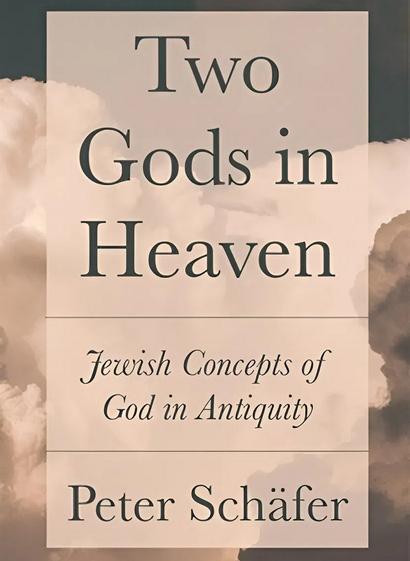
Over dit onderwerp publiceerde de Duitse godsdiensthistoricus Peter Schäfer in 2017 Zwei Götter im Himmel. Ik las vorige maand de drie jaar later verschenen Engelse vertaling, Two Gods in Heaven, waarin hij ook ingaat op kritiek op het oorspronkelijke boek. Schäfer biedt een overzicht van het tweegodendom, waarbij hij zich beperkt tot de joodse receptie vanaf het Bijbelboek Daniël tot en met de laatantieke mystiek en de Babylonische Talmoed. De christelijke receptie, dat Jezus van Nazaret die tweede godheid was, behandelt hij slechts zijdelings.

Wie is de Mensenzoon?

De cruciale passage is te vinden in Daniël, die in een visioen eerst allerlei vreemde dieren ziet en daarna ziet

dat er tronen werden neergezet en dat er een oude wijze plaatsnam. Zijn kleed was wit als sneeuw, zijn hoofdhaar als zuivere wol. Zijn troon bestond uit vuurvlammen, de wielen uit laaiend vuur. Een rivier van vuur welde op en stroomde voor Hem uit. Duizend maal duizenden dienden Hem, tienduizend maal tienduizenden stonden voor Hem.

Dit is God zelf. Er volgt een beschrijving van de beoordeling en dood van een van de dieren.

In mijn nachtelijk visioen zag ik dat er met de wolken van de hemel iemand kwam die eruitzag als een mens. Hij naderde de oude wijze en werd voor Hem geleid. Hem werden macht, eer en het koningschap verleend, en alle volken en naties, welke taal zij ook spraken, dienden hem. Zijn heerschappij was een eeuwige heerschappij, die nooit ten einde zou komen, zijn koningschap zou nooit te gronde gaan. noot Daniël 7.9-14; NBV21.

Over de identiteit van deze Mensenzoon, die naast God zetelt, wordt al eeuwen gediscussieerd. Schäfer meent dat het de engel Michaël is, de vertegenwoordiger van het joodse volk, maar er zijn ook andere mogelijkheden. In de Dode-Zee-rollen wordt deze Mensenzoon voorzien van meer goddelijke attributen, het duidelijkst in de Zelfverheerlijkingshymne, waarin een mens wordt verheven naar de hemel en troont boven de engelen. In een andere tekst wordt de Mensenzoon voorzien van eretitels als “zoon van God” en “zoon van de allerhoogste”. In de henochitische literatuur ontdekt Henoch, de spreekwoordelijke visionair uit de joodse letteren, dat hij zelf de Mensenzoon is die het Laatste Oordeel zal vellen.

Ook behandelt Schäfer hoe in de wijsheidsliteratuur (Spreuken, Jezus Sirach, Wijsheid) de wijsheid gepersonifieerd kon worden als een kind van God en dat dit verder gepreciseerd kon worden als de Wet van Mozes of de logos, d.w.z. de scheppende kracht van God. In teksten als het Gebed van Jozef wordt dit weer gelijkgesteld aan de aartsvader Jakob, die dan weer de engel Israël is, en ontstaan vóór de schepping.

Jezus als tweede god

Dat er vroeg of laat een groep joden zou zijn die een charismatische wijsheidsleraar zou identificeren met de tweede godheid, lag eigenlijk voor de hand. De Zelfverheerlijkingshymne is ook wel zo gelezen: de Leraar der Gerechtigheid zou al zijn gelijkgesteld aan de tweede godheid, of een zeer hoge engel, of de Mensenzoon, of hoe we het ook mogen noemen. Dat de Qumran-sekte zijn stichter zo eerde, is echter niet zeker.

Dat (een deel van) de volgelingen van Jezus hun leraar beschouwden als goddelijk, staat daarentegen niet ter discussie. Ik zie geen enkele reden om te betwijfelen dat de vroege christenen Jezus beschouwden als die tweede god. Op zeker moment breidden ze dit uit met de derde persoon van de Drie-eenheid, de Heilige Geest.

Metatron

Schäfer laat deze stof rusten. Het is immers al veel vaker verteld (en ik heb er ook al over geblogd). Hij vervolgt met de joodse mystiek en de rabbijnse literatuur. Het boeiende is dat de Mensenzoon en de Zoon van God als tweede godheid volkomen ontbreken in de literatuur uit het land van Israël; Schäfer behandelt één mogelijke uitzondering en toont aan dat er niet staat wat er wel in gelezen is geweest. De verklaring voor deze afwezigheid is simpel: nu de christenen Jezus interpreteerden als een god, konden de rabbijnen er niets meer mee.

Dat lag anders in Babylonië, waar de joden minder concurrentie hadden van de christenen. Oude tradities werden hier voortgezet. De literatuur bevat scherpe veroordelingen van de leer dat er twee machten in de hemel waren, wat bewijst dat tweegodendom dus weerlegd moest worden – en dus een serieuze rol speelde. In deze hoofdstukken noemt Schäfer ook het fascinerende personage van Metatron, Gods troongenoot, die door de rabbijnen wordt gereduceerd tot een engel, hoewel hij dat vermoedelijk niet was voor degenen tegen wie ze polemiseerden.

3 Henoch stelt de godgemaakte Metatron gelijk aan de mens Henoch. Ook de naam Kleine JHWH is hier relevant. Schäfer dateert deze tekst heel laat; ik weet niet zeker of dat correct is, maar het doet niet veel ter zake.

Conclusies

Het boek eindigt met enkele voor de hand liggende conclusies: dat het antieke jodendom monotheïstisch zou zijn geweest, blijkt niet uit de bronnen; in de Middeleeuwen streefden joodse filosofen naar monotheïsme maar bleef het tweegodendom bestaan bij kabbalisten; pas in de negentiende eeuw werd monotheïsme de eenduidige norm; de eerste échte monotheïsten waren de moslims.  De overeenkomst tussen de joodse en christelijke opvattingen is dat er ruimte is voor een tweede god die tegelijk à la Henoch mens is, en het verschil is dat die menselijke natuur voor christenen cruciaal is om de redding van de mensen te bewerkstelligen, terwijl ze in de joodse traditie geen rol van betekenis speelt.

Wat ontbreekt aan het boek is een verklaring voor het ontstaan van het idee van een tweede godheid. Ik kan zelf alleen maar denken aan de opvattingen van Aristoteles: als de hoogste god zich richt op de hoogste activiteit, namelijk denken, en dan denkt aan het hoogste, namelijk zichzelf, speelt hij geen rol in de schepping, en moet er voor het dagelijks bestuur van de wereld een tweede godheid zijn. Dit is het enige dat ik kan verzinnen en ik weet niet of dit werkelijk zo is; Schäfer biedt geen betere verklaring en daarom is Two Gods in Heaven net niet helemaal bevredigend, maar wel boeiend.

#3Henoch #BabylonischeTalmoed #Daniël7 #DodeZeeRollen #Henoch #HenochitischeLiteratuur #KleineJahweh #LaatsteOordeel #LeraarDerGerechtigheid #Mensenzoon #Metatron #PeterSchäfer #tweegodendom #Zelfverheerlijkingshymne

Zoon van de Allerhoogste

4Q246

Het is bijna kerstmis, dus het leek me aardig om in mijn reeks over het Nieuwe Testament een tekst te behandelen die daar iets mee te maken heeft: de Annunciatie ofwel de aankondiging van Jezus’ geboorte. Gods boodschapper Gabriël heeft zich in Nazaret aangediend bij Maria, en vóór u verder leest, moet u even bedenken dat Gabriël geen engel was in onze zin van het woord. Het Griekse woord ἄγγελος betekende destijds boodschapper, gezant, heraut. In het boek Daniël wordt Gabriël expliciet beschreven als mens.noot Daniël 8.15. De vleugels die wij erbij voorstellen, zijn pas later gekomen.

Maria schrikt dus nogal schrikt als een vreemde kerel haar huis binnenloopt. Gabriël antwoordt:

“Wees niet bang, Maria, God heeft je zijn gunst geschonken. Luister, je zult zwanger worden en een zoon baren, en je moet hem Jezus noemen. Hij zal een groot man worden en ‘Zoon van de Allerhoogste’ worden genoemd, en God, de Heer, zal hem de troon van zijn vader David geven. Tot in eeuwigheid zal hij koning zijn over het volk van Jakob, en aan zijn koningschap zal geen einde komen.”noot Lukas 1.30-33; NBV21.

Je moet maar niet te lang nadenken over deze scène, want erg geloofwaardig is het niet. Ik richt me dus op de uitdrukking “zoon van de allerhoogste”.

Die kennen we namelijk uit de joodse literatuur van die tijd: namelijk uit de nogal beschadigde Aramese tekst die bekendstaat als 4Q246, die meestal wordt gedateerd in de tweede helft van de eerste eeuw v.Chr. Daarin is sprake van een heerser die na een tijd vol beproevingen over de wereld zal heersen. Er is daarna iemand die “de grote” genoemd zal worden, “de zoon van god” en “zoon van de allerhoogste”. Hun koninkrijk – het meervoud “hun” is onverklaard – zal zijn als de vonken van een vuur. Een volgende sectie van deze tekst behelst dat het “volk van God” iedereen na dit geweld zal laten uitrusten. Daarna lezen we dat zijn (wiens?) koninkrijk eeuwig zal bestaan, dat hij het oordeel zal uitspreken over de aarde, dat vrede zal heersen, dat het geweld zal verdwijnen, dat alle gewesten hem eer zullen bewijzen, dat de grote god zijn kracht zal zijn, dat hij voor God zal strijden, en dat zijn heerschappij eeuwig zal zijn.

Die heerser is te identificeren als het bovennatuurlijke wezen dat volgens Daniël het Laatste Oordeel zal uitspreken: de Mensenzoon. Het “volk van God”, de nadruk op het eeuwige koninkrijk en de eerbewijzen uit alle gewesten zijn allemaal terug te vinden in Daniël 7. Het moge daarom duidelijk zijn dat de tweede sectie verwijst naar de Eindtijd. En dan is degene die “de zoon van god” en “de zoon van de allerhoogste” genoemd zal worden, dus de Mensenzoon.

Kortom: feitelijk schrijft de evangelist Lukas dat de baby die nog geboren moet worden, ooit het Laatste Oordeel zal uitspreken, gezeten op de troon die aan het einde der tijden (volgens Daniël) naast God zal worden opgesteld en die (volgens Lukas) de troon van David heet. Anders gezegd: de taal waarmee Lukas’ Gabriël zich tot Maria richt, is door-en-door joods.

#Annunciatie #Daniël7 #EvangelieVanLukas #Gabriël #Maria #Mensenzoon #NieuweTestament

Hoe schreven ze de Bijbel?

Ooit probeerde ik Ivanhoe te lezen. Al na een paar bladzijden ben ik gestopt, omdat de eindeloze beschrijvingen me tegenstonden. Walter Scott vermeldt zelfs de opening van de hals van een kledingstuk. Zulke ultragedetailleerde beschrijvingen laten te weinig over aan mijn verbeelding om me te boeien. De kale verhalen van de Bijbel liggen mij beter: er staat geen woord te veel in, zodat je je fantasie erop los kunt laten.

Dat betekent ook dat nogal wat onuitgelegd blijft. Een beroemd voorbeeld is Daniëls visioen van het Laatste Oordeel.noot Daniël 7. Hij heeft in zijn droomgezicht allerlei monsters uit de zee zien komen, en vervolgens staat er, zonder overbrugging, ineens laconiek “Ik zag dat er tronen werden neergezet en dat er een oude wijze plaatsnam.” Waarom die oude wijze meer dan één zetel nodig heeft, blijft onduidelijk en daarover is dan ook nogal wat rabbijnse discussie geweest. De auteur van Daniël lokt gedachtewisseling uit.

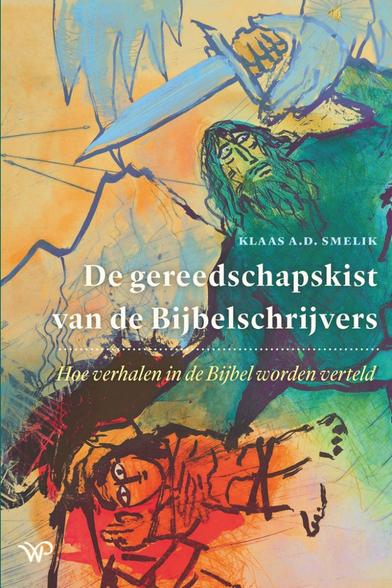
Wie zich bezighoudt met de wijze waarop mensen verhalen vertellen – het specialisme staat bekend als narratologie – kan dus constateren dat Scott spreekt tot de lezers, terwijl de Bijbelschrijvers spreken met de lezers. Maar er is natuurlijk meer te vertellen over de wijze waarop Bijbelteksten “werken”, en daarover gaat De gereedschapskist van de Bijbelschrijvers van Klaas Smelik. Hij heeft over de joodse Bijbel gedoceerd in Amsterdam, Utrecht, Leuven en Gent, en je kunt om te beginnen blij zijn dat hij zijn onderwijsstof deelt, in plaats van die achter academische betaalmuren te verbergen. En verder kun je blij zijn dat het zo’n onderhoudend boek is geworden.

Verhaaltechnieken

Het grootste deel van het boek bestaat uit uitleg van de verhaaltechnieken, die overigens en vanzelfsprekend niet specifiek zijn voor de Bijbel. Dat iets tweemaal mislukt om de derde keer wel te lukken, zoals wanneer de opvarenden van de Ark van Noach vogels uitzenden om te ontdekken of er ergens land is,noot Genesis 8.6-11. kennen we bijvoorbeeld ook uit de Griekse literatuur, zoals uit het verslag van Herodotos van de staatsgreep van de Atheense alleenheerser Peisistratos. Het heet ook wel “de wet van drie”. De flashback komt niet alleen voor als de opvarenden in het schip van Jona al blijken te weten dat hij op de loop is voor God,noot Jona 1.10. maar komt ook voor in de Odyssee of – ik noem eens wat – Once Upon a Time in the West.

Een ander voorbeeld van een truc die niet alleen de samenstellers van de Bijbel benutten, is vertraging: het opvoeren van de spanning door de ontknoping uit te stellen. De spanning is ook te vergroten door vooruit te wijzen naar iets dat nog zal gebeuren, zonder daarvan voldoende prijs te geven. In dat laatste geval hebben antieke auteurs natuurlijk altijd de beschikking over profetieën, voorspellingen en orakels.

Smelik noemt ook het gebruik van de directe rede, motiefwoorden, poëzie, dubbele bodems, plotwendingen, open eindes, dromen, fabels. Het viel me op dat de opsomming ontbrak, hoewel antieke auteurs genieten van catalogi, variërend van catalogus van minnaars van Ištar in het Epos van Gilgameš via de Scheepscatalogus in de Ilias tot Lucanus’ overzicht van Egyptische gifslangen. In de Bijbel zijn de Grote Volkenlijst en het overzicht van Davids helden maar twee voorbeelden.noot Genesis 10; 2 Samuël 23.8-39.

Over de type-scene, standaardmomenten waarbij het er niet om gaat wát er gebeurt, maar om hóe het gebeurt, wil ik nog eens bloggen. De bijbelse voorbeelden zijn de roepingen van de profeten, meisjes bij waterputten en geboorteverhalen. Maar u kunt ook denken aan De generaal van Peter de Smet, die trouwens (net als de Bijbelschrijvers) van alles abstraheert dat voor de plot niet relevant is.

Verrassingen

De gereedschapskist van de Bijbelschrijvers is een geslaagd boek. Dat komt deels door de verrassende materie. Smelik typeert twee apocriefe delen van Daniël (Susanna in bad en het beeld van Bel) als vroege detective-verhalen, en hij heeft gelijk.

Ik was ook verrast door de typering van de profeet Jona. Zoals bekend krijgt die opdracht aan te kondigen dat God Nineveh zal omkeren, en gaat hij op de loop. Dat doet hij niet omdat hij er geen zin in heeft, of denkt dat het profeetschap boven zijn krachten gaat, maar omdat hij het risico niet wil nemen dat de bewoners zich bekeren en hun welverdiende straf ontlopen. Dat was iets wat ik nooit eerder had bedacht.

Sommige inzichten presenteert Smelik meer terloops, zoals de opmerking dat de bijbelse God, anders dan zijn oosterse collega’s, alleen in grammaticaal opzicht mannelijk is, maar verder seksloos. Geen verhalen over overspel à la Griekse Zeus dus, ook geen hemelse harem zoals de Fenicische El.

De Bijbel herschreven

Ik schreef zojuist dat Scott tot de lezers spreekt en de Bijbel met de lezers. Die kunnen er ook anders over denken en zo ontstaan nieuwe verhalen. Smelik beëindigt zijn boek met het genre van de Rewritten Bible. Het beste voorbeeld is hoe het Bijbelboek Kronieken de stof van onder andere Samuël en Koningen herhaalt. Daarbij gaat de kronist behoorlijk ver: de opdracht die God aan koning David geeft om een volkstelling te houden, is in de navertelling afkomstig van Satan.noot 2 Samuël 24; 1 Kronieken 21. De fascinerende henochitische literatuur valt eveneens in dit genre, met aanvullingen bij Genesis die tonen waar latere generaties behoefte aan hadden. Smelik noemt tevens teksten als het Gebed van Manasse en het Genesis Apocryphon.

Juist op dit punt had ik méér willen lezen. Ik ben namelijk gefascineerd door de vrijheid de auteur Pseudo-Filon nam bij het verhaal dat bekendstaat als de aqedah. In Genesis is duidelijk dat God Abraham op de proef wil stellen en daarom opdraagt zijn enige zoon te offeren.noot Genesis 22. Het verhaal is dan ook vooral bekend geworden onder de naam “offer van Abraham”. Maar het gaat tevens over “het binden” (aqedah) van Isaak, die volgens Pseudo-Filon accepteert dat hij wordt geofferd als verzoening voor de zonden van de mensen. Deze uitleg documenteert hoe het christelijke idee van plaatsvervangend lijden wortelt in het jodendom, en het is ook een voorbeeld van de herschrijving van een canoniek Bijbelverhaal.

Dat mijn persoonlijke vraag onbeantwoord bleef, heeft aan mijn leesplezier verder geen afbreuk gedaan. De gereedschapskist van de Bijbelschrijvers toont duidelijk hoe de Bijbelteksten “werken” en biedt terzijdes over bijvoorbeeld de wijze waarop je zo’n tekst vertalen moet of waarom je de pointe mist als je een wonderverhaal letterlijk neemt. Ik heb in dit blogje aangegeven dat dezelfde gereedschapskist wordt benut door klassieke auteurs, want ik hoop op een soortgelijk boek over de Griekse en Latijnse schrijvers. Het boek over de verhalenvertellers van de Bijbel ligt in elk geval vanaf vandaag in de boekhandel.

#1Koningen #1Samuël #2Koningen #2Samuël #aqedah #Daniël7 #EposVanGilgameš #Genesis #GenesisApocryphon #HenochitischeLiteratuur #Jona #KlaasSmelik #Kronieken #narratologie #Odyssee #PeterDeSmet #PseudoFilon #RewrittenBible #typeScène #vertraging #verzoeningTheologie_ #WalterScott #wetVanDrie #wonderverhaal

Sonhos Perturbadores: O que Deus quer te dizer com eles?

Sonhos perturbadores te deixando pra baixo? Entenda o que Deus quer te dizer com eles e como encontrar conforto na fé.

NT Gospel