✨ Ah, the wonders of modern science! A
#ribozyme that can almost kinda-sorta pretend to synthesize itself, but only if your browser's
#JavaScript and cookies are fully operational. 🔧 Because nothing says cutting-edge
#biochemistry like a web page error 🤦♂️.
https://www.science.org/doi/10.1126/science.adt2760 #modernscience #technology #innovation #HackerNews #ngatedInteresting talk by Hsuan-Ai Chen at #ChemBioPhys2025. She talked about the work in the Claudia Höbartner lab on the development of nucleic acid-alkylating ribozymes. https://www.nature.com/articles/s41557-023-01320-z
The main focus of her talk was on the structural elucidation of the SAMURI ribozyme. https://www.nature.com/articles/s41589-024-01808-w
#Chemistry #ChemBio #RNA #Ribozyme
Interesting talk by Hsuan-Ai Chen at
#ChemBioPhys2025. She talked about the work in the Claudia Höbartner lab (
@chlab.bsky.social) on the development of nucleic acid-alkylating ribozymes. (1/2)
www.nature.com/articles/s41...
#ChemSky #ChemBio #RNA #RibozymeFrom 2019:
B2 and ALU retrotransposons are self-cleaving ribozymes whose activity is enhanced by EZH2.
#Transposons #B2 #ALU #ribozyme #RNA
https://www.pnas.org/doi/full/10.1073/pnas.1917190117

RNA's hidden potential: New study unveils its role in early life and future bioengineering
The beginning of life on Earth and its evolution over billions of years continue to intrigue researchers worldwide. The central dogma or the directional flow of genetic information from a deoxyribose nucleic acid (DNA) template to a ribose nucleic acid (RNA) transcript, and finally into a functional protein, is fundamental to cellular structure and functions.

Why Life Does Not Really Exist
I have been fascinated with living things since childhood. Growing up in northern California, I spent a lot of time playing outdoors among plants and animals.

New ribozyme can make RNA molecules accessible for click chemistry in living cells
RNA molecules are real all-rounders. They transfer the genetic information from the DNA in the cell. They regulate the activity of genes. And some of them have a catalytic effect: just like enzymes, they enable biochemical reactions that would be difficult or impossible to occur on their own. These special RNA molecules that accelerate such reactions are called ribozymes.

Researchers reveal structural mechanism of Tetrahymena ribozyme self-splicing reaction
A team led by Prof. Zhang Kaiming from the University of Science and Technology (USTC) solved six conformations in the second-step self-splicing of Tetrahymena ribozyme using cryogenic electron microscopy (cryo-EM), revealing the mechanism of group 1 introns coordinating self-splicing reactions. Their work was published in Nature Communications.
Cool!
"RNA-catalyzed RNA Ligation within Prebiotically Plausible Model Protocell"
They developed a #ribozyme that can work at low Mg2+ in vesicles.
https://www.biorxiv.org/content/10.1101/2023.02.09.527907v1
 N-gated Hacker News
 Hacker News
 Stephan Hacker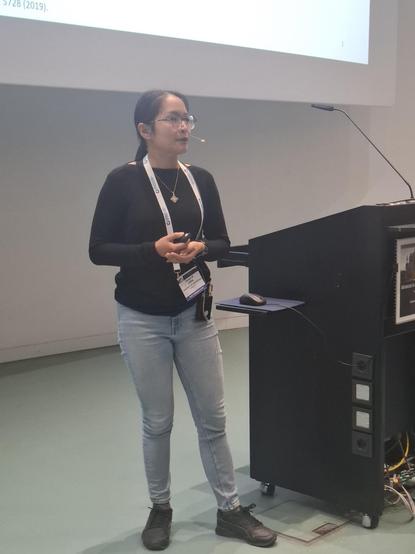
 Stephan Hacker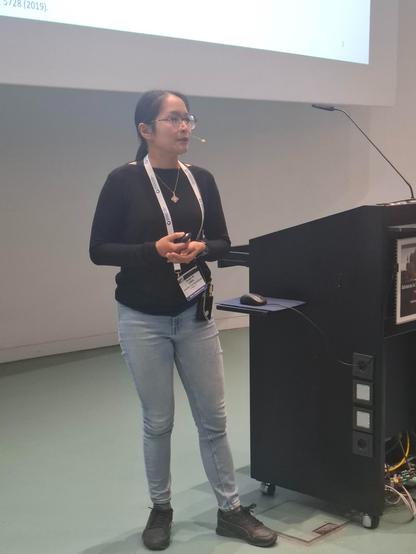
 Amelia Cervera 🧬
 CellBioNews
 Hacker News
 Gal Haimovich 😷🔬☣🏳️🌈🏳️⚧