 Homepage [Unofficial]
Ebola Expert Fears Outbreak Is Heading Into “Nightmare Scenario”
https://fed.brid.gy/r/https://futurism.com/health-medicine/ebola-expert-warns-outbreak-virus-congo
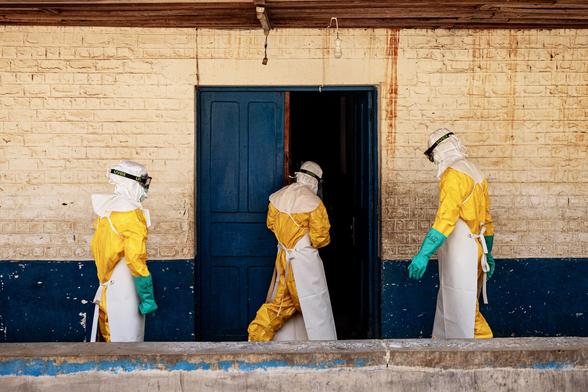
Ebola Expert Fears Outbreak Is Heading Into “Nightmare Scenario”
https://fed.brid.gy/r/https://futurism.com/health-medicine/ebola-expert-warns-outbreak-virus-congo
#AI #Medicine #ArtificialIntelligence #UK #Vaccine #Vaccines #Virus #Viruses #BBC #BBCNews #News #Research #Science #Cambridge #MedicalResearch I’m not a fan of using AI to put people in the creative industry (graphic artists, musicians etc.) out of work, but it certainly has its uses. This is a great one, and seeing it genuinely assisting a workforce instead of replacing it is quite reassuring…
'World-first' vaccine designed by artificial intelligence https://www.bbc.co.uk/news/articles/crrpggegwe0o
"What gives? There is a vast diversity of viruses, but we employ a limited vocabulary to talk about them. It would be just as confusing to treat blue whales like fruit bats and Siberian tigers, simply on the grounds that they’re all mammals.
Jens Kuhn, a virologist who serves on the International Committee on Taxonomy of Viruses, said that the recent outbreaks point to yawning gaps in our understanding of the so-called virosphere..."
https://www.nytimes.com/2026/05/27/science/ebola-hantavirus-species-strains.html
Deadly Virus Outbreak Spreads to New Nation...
A suspected Ebola patient has been quarantined in the heart of mainland Europe. Officials in Austria said the man was showing symptoms of Bundibugyo, the current strain of the lethal virus, after returning from Uganda...
#Ebola #africa #austria #bundibugyovirus #uganda #congo #viruses #VirusOutbreak #ebolaoutbreak
https://www.thedailybeast.com/deadly-ebola-outbreak-spreads-to-austria/
Healthcare worker infections highlight risks to frontline staff and the urgent need for better surveillance, testing, PPE, and infection control. International health organizations are enhancing response as authorities stress early detection and contact tracing to contain transmission and strengthen global public health preparedness.
Read Full- https://economicsperspective.com/worldnews/ebola-bundibugyo-virus-WHO/
#worldhealthorganization #publichealth #viruses #worldnews #BreakingNews #globalnews #healtheconomics
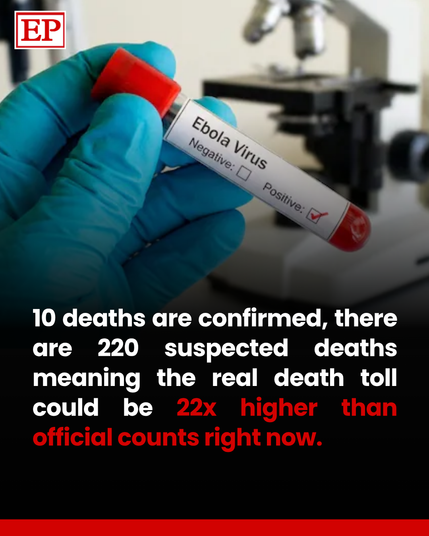
"At an earlier time, I named a series of foundational lies, which I believed created a spirit that desires genocide and slavery. I still believe that.
You might think of a foundational lie as a virus—a thing that exists only to promote itself, which has no place whatsoever within a healthy system, which will eventually consume that system if left unchecked. You might think of a natural human priority configured around a foundational lie as a cancer—a corruption of something that under optimal circumstances would exist in a healty system, but now exists only to grow itself unsustainably.
Imagine the most extreme example of my earlier picture: a system so unfair that every bit of value the city generates—every wage, every increase to property value, every bit of food, all permission to drive on the street or walk on the sidewalk, all permission to access shelter, every drop of rain—goes only to one person.
Let's make that person me. Hey, it's my example.
All value in my city—everything needed for a person to live—now goes to me, and to me alone, which means my neighbors receive none. The only destination this configuration could ever arrive at would be the one in which all my neighbors were crushed in the gears of my intentions, unable to provide our natural human system with value; leaving me alone, receiving only the value I can manage to deliver to myself, for however long that lasts. In time, I would become a bizarre and unsustainable curiosity. Having cut every other human out of my natural human system, I would have made an unnatural human system; a viral system that no longer generated the value that a community of humans naturally makes. Eventually I, too, would fail—not despite the fact that I have hoarded all the value, but because.
These lies contain their own deaths within them, you know. Unsustainable things don't sustain. A cancer dies with the body. A virus will die, once it runs out of bodies."
— A. R. Moxon: Very Fine People, pp. 149-150
#Books #Quotes #ARMoxon #VeryFinePeople #Society #HumanSystems #Cancers #Viruses #Lies

The Viruses Causing New Outbreaks Are Much Less Familiar to Science
https://www.nytimes.com/2026/05/27/science/ebola-hantavirus-species-strains.html
 Andy
Andy
 Gail Waldby ❌👑
 Benjamin Carr, Ph.D. 👨🏻💻🧬
 Bich Nguyen
 formuchdeliberation
 Don Curren 🇨🇦🇺🇦
 Economics Perspective
 mosspiglet
 NYT > Home Page