Quote of the day, 21 January: Mother Agnès of Jesus

Recently a tiny shellfish gave me a lesson in interior recollection. I had difficulty in opening it because it resisted strongly, and I said to myself: “It is quite a vigorous little creature: no one would think it is so far from the sea.”

It taught me a great lesson. I must be sufficiently filled with the water of recollection to resist as strongly as he did the pressure of work and various happenings of the day, anything that could make me lose the drop of water which makes possible my union with God.

Mother Agnès of Jesus, o.c.d. (Pauline Martin)

Little Counsels of Mother Agnes of Jesus, OCD Saint Therese’s Sister, Pauline (excerpt), Compiled by the Discalced Carmelite nuns of Ada (Parnell) Michigan

Featured image: Comboni Missionary Father David Bohnsack, mccj captures the humble, contemplative gaze of a child in Abéché, Chad. Image credit: David Bohnsack, mccj (By permission).

#counsel #MotherAgnesOfJesus #PaulineMartin #recollection #unionWithGod

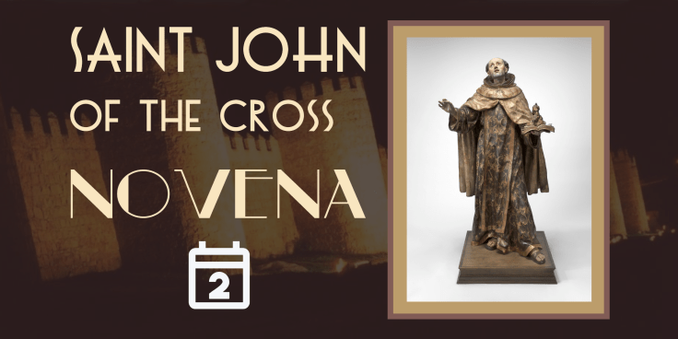
St. John of the Cross Novena, Day 2: Self-giving

Reading

All for me and nothing for you. All for you and nothing for me.

Sayings of Light and Love, 110–111

Scripture 

I believe nothing can happen that will outweigh the supreme advantage of knowing Christ Jesus my Lord. For him, I have accepted the loss of everything, and I look on everything as so much rubbish if only I can have Christ and be given a place in him. I am no longer trying for perfection by my own efforts, the perfection that comes from the Law, but I want only the perfection that comes through faith in Christ, and is from God and based on faith. All I want is to know Christ and the power of his resurrection and to share his sufferings by reproducing the pattern of his death. That is the way I can hope to take my place in the resurrection of the dead. Not that I have become perfect yet: I have not yet won, but I am still running, trying to capture the prize for which Christ Jesus captured me. I can assure you my brothers, I am far from thinking that I have already won. All I can say is that I forget the past and I strain ahead for what is still to come; I am racing for the finish, for the prize to which God calls us upward to receive in Christ Jesus. We who are called “perfect” must all think in this way. If there is some point on which you see things differently, God will make it clear to you; meanwhile, let us go forward on the road that has brought us to where we are.

Philippians 3:8-16

Meditation

“Nothing for me.” The nada—that absolute, naked, utter nothing—of Saint John of the Cross can seem so stark, even off-putting to a novice reader of the Church’s Mystical Doctor. Nothing for me? How can this be?

In order to unpack these absolutes, it helps to have a reference point. Saint Paul can help us to understand the purpose of striving for such nakedness, such emptiness, the possession of nothing to the point of being nothing.

In the verses preceding our Scripture reading, St. Paul lists all the reasons that he had to boast of his “Hebrew-ness”. He even calls himself a “Hebrew of Hebrews.” That’s a rather bold statement. Yet despite all of his reasons to boast of his Hebrew and Pharisee pedigree, he says that nothing can happen that will outweigh the supreme advantage of knowing Christ Jesus.” (Ph 3:8) There’s that absolute qualifier again: nothing.

But Paul doesn’t stop there, he goes further: “For Him, I have accepted the loss of everything, and I look on everything as so much rubbish.” St. Paul is getting out his virtual work gloves, his virtual broom, dustpan, trash bags, and taking inventory of his life as one would assess their home and property with an insurance adjuster after a fire or natural disaster, understanding that all one possessed is a total loss, ready to be hauled away with the garbage.

Ah, but there’s a reason for rejoicingclearing away the rubbish creates total and absolute room for Christ: “if only I can have Christ and be given a place in Him.”

This contrast of self-emptying to be filled with something greater in St. John of the Cross and St. Paul the Apostle reminds us of the self-emptying in the life of Christ:

Who, though he was in the form of God, did not regard equality with God something to be grasped. Rather, he emptied himself, taking the form of a slave, coming in human likeness; and found human in appearance, he humbled himself, becoming obedient to death, even death on a cross. Because of this, God greatly exalted him and bestowed on him the name that is above every name (Ph 2:6-9).

And as we look at St. Paul’s words, it is interesting to look further at his all-or-nothing contrasts. We know what he considers to be nothing, a pile of rubbish. With what does he seek to replace it? Let’s search his text for the simple word, all. “All I want is to know Christ and the power of his resurrection and to share his sufferings by reproducing the pattern of his death… All I can say is that I forget the past and I strain ahead for what is still to come” (Ph 3:10,13). Yes, nothing for me leaves all for you. That is, essentially, what St. John of the Cross said, in the stark all-and-nothing contrast of his saying, todo para ti y nada para mí.

If the nada of St. John of the Cross and the rubbish-heap imagery of St. Paul still leave us wondering how to attain such noble, holy aspirations, it is St. Paul’s great disciple, St. Elizabeth of the Trinity who can show us the way. In her retreat Heaven in Faith (First Day, second prayer) she writes:

We must not, so to speak, stop at the surface, but enter ever deeper into the divine Being through recollection. “I am still running,” exclaimed St. Paul (Ph 3:12); so must we descend daily this pathway of the Abyss which is God; let us slide down this slope in wholly loving trust. “Deep calls to deep” (Ps 42:8). It is there in the very depths that the divine impact takes place, where the abyss of our nothingness encounters the Abyss of mercy, the immensity of the all of God. There we will find the strength to die to ourselves and, losing all vestige of self, we will be changed into love…. “Blessed are those who die in the Lord” (Rev 14:13)!

Prayer

O St. John of the Cross
You were endowed by our Lord with the spirit of self-denial
and a love of the cross.
Obtain for us the grace to follow your example
that we may come to the eternal vision of the glory of God.

O Saint of Christ’s redeeming cross
the road of life is dark and long.
Teach us always to be resigned to God’s holy will
in all the circumstances of our lives
and grant us the special favor
which we now ask of you.

Mention your request

Above all, obtain for us the grace of final perseverance,
a holy and happy death and everlasting life with you
and all the saints in heaven.
Amen.

Let’s continue in prayer

Day 1 — Self-trust
Day 2 — Self-giving
Day 3 — Cleansing
Day 4 — Walking in love
Day 5 — Trust
Day 6 — Prayer
Day 7 — Humility
Day 8 — Eternal Silence
Day 9 — Silent love

Orléans, France

The novena prayer was composed from approved sources by Professor Michael Ogunu, a member of the Discalced Carmelite Secular Order in Nigeria.

Elizabeth of the Trinity, S 2014, I Have Found God, The Complete Works of Elizabeth of the Trinity Volume 1: Major spiritual writings, translated from the French by Kane, A, ICS Publications, Washington DC.

All scripture references in this novena are from the New Revised Standard Version Bible: Catholic Edition, copyright © 1989, 1993 the Division of Christian Education of the National Council of the Churches of Christ in the United States of America as accessed from the Bible Gateway website.

Don’t become discouraged and give up prayer, says St. John of the Cross. We offer varying novenas to Our Lady of Mount Carmel, as well as novenas to St. Teresa of Avila, St. John of the Cross, St. Thérèse of Lisieux, Sts. Louis and Zélie Martin, St. Elizabeth of the Trinity, and St. Joseph.

Let us unite in prayer

#abyss #all #deep #elizabethCatez #heavenInFaith #icsPublications #johnOfTheCross #love #nada #nothing #nothingness #novena #pharisee #recollection #rubbish #sabeth #sanJuanDeLaCruz #stElizabethOfTheTrinity #stJohnOfTheCross #stPaul #stTherese #stThereseOfLisieux #stThereseOfTheChildJesus #todo #transformation

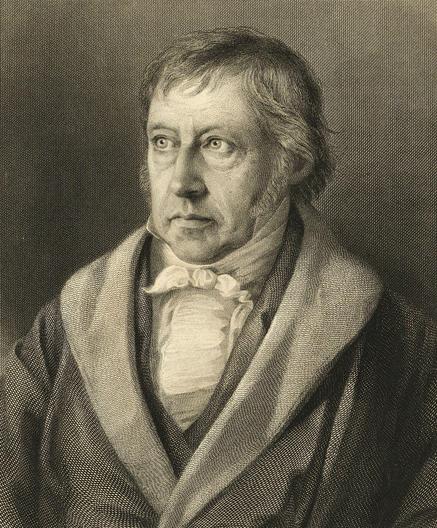
"Religion, right, ethics, and everything spiritual in human beings, is merely aroused. We are implicitly spirit, for the truth lies within us and the spiritual content within us must be brought into consciousness."

Hegel, Lectures on the Philosophy of Religion: The Lectures of 1827, p. 161

#Hegel #Recollection #Anamnesis #Philosophy #Religion #Ethics #Spirit #Consciousness #Mysticism #GermanIdealism

A #recollection - a story, if you will - that doesn't have a particular purpose. I'm not trying to influence you to think something in particular, just relating something I thought about recently.

Many years ago, towards the end of my senior year in high school, the #school day had just ended and I was getting a ride home from a friend. I was in the passenger seat of his car, on a beautiful late-spring day, and had just fastened my seat belt as we prepared to leave the parking lot.

Three guys were walking by in front of the car. One, "J", was a guy I'd been #friends with in elementary school, but fell out of contact with in high school. I don't think we'd talked or interacted in years. He had no reason or motive for what followed, except perhaps #peer pressure from one of the other two guys. *That* guy was a former friend who disliked me because I'd #dated his #sister for a while. He'd spent much of the last year slagging me off to anyone who would listen, and I have no doubt he influenced Former Friend J.

As they walked by the front of the car, J stared at me and #flipped me off. I laughed and did the same back to him. They stopped, he came around to my side of the car, and sucker-punched me through the window, breaking my #nose. My friend drove me to the hospital a few blocks away, where the doc straightened it - I'd broken it before, as a kid, so this actually made it better.

Today, it would probably result in #police etc. Then, it was "just kids". #Weird.

"What's the crapword?"

"Shit! I d..."

"Yes! Do come in!"

#crap #crapword #recollection

A quotation from Oliver Wendell Holmes, Sr.

Memory is a net; one finds it full of fish when he takes it from the brook; but a dozen miles of water have run through it without sticking.

Oliver Wendell Holmes, Sr. (1809-1894) American poet, essayist, scholar
Article (1858-10), “Autocrat of the Breakfast-Table,” Atlantic Monthly

Sourcing, notes: wist.info/holmes-sr-oliver-wen…

#quote #quotes #quotation #qotd #experience #forgetfulness #memory #recollection #selectivememory

A quotation from J. M. Barrie

   If you ask your mother whether she knew about Peter Pan when she was a little girl she will say, “Why, of course, I did, child,” and if you ask her whether he rode on a goat in those days she will say, “What a foolish question to ask; certainly he did.” Then if you ask your grandmother whether she knew about Peter Pan when she was a girl, she also says, “Why, of course, I did, child,” but if you ask her whether he rode on a goat in those days, she says she never heard of his having a goat. Perhaps she has forgotten, just as she sometimes forgets your name and calls you Mildred, which is your mother’s name. Still, she could hardly forget such an important thing as the goat. Therefore there was no goat when your grandmother was a little girl. This shows that, in telling the story of Peter Pan, to begin with the goat (as most people do) is as silly as to put on your jacket before your vest.
   Of course, it also shows that Peter is ever so old, but he is really always the same age, so that does not matter in the least.

J. M. Barrie (1860-1937) Scottish novelist and dramatist [James Matthew Barrie]
The Little White Bird, ch. 14 “Peter Pan,” Scribner’s Magazine, Vol. 32 (1902-10)

Sourcing, notes: wist.info/barrie-james/77853/

#quote #quotes #quotation #qotd #peterpan #jmbarrie #age #childhood #generations #goat #memory #recollection

Quote of the day, 11 March: St. Teresa of Avila

Now, then, let us speak again to those souls I mentioned that cannot recollect or tie their minds down in mental prayer or engage in reflection. Let’s not mention here by name these two things, since you are not meant to follow such a path. As a matter of fact there are many persons seemingly terrified by the mere term “mental prayer” or “contemplation,” and perhaps one of these might come to this house, for as I have also said not everyone walks by the same path.

Well what I now want to counsel you about (I can even say teach you, because as a Mother, having the office of prioress, I’m allowed to teach) is how you must pray vocally, for it’s only right that you should understand what you’re saying.

And because it can happen that those who are unable to think about God may also find long prayers tiring, I don’t want to concern myself with these. But I will speak of those prayers we are obliged as Christians to recite (such as, the Our Father and the Hail Mary) so that people won’t be able to say of us that we speak and don’t understand what we’re speaking about—unless we think it is enough for us to follow the practice in which merely pronouncing the words is sufficient. I’m not concerned with whether this is sufficient or not; learned men will explain [the matter to those persons to whom God gives light to ask the question. And I’m not meddling with what doesn’t belong to our state.]

What I would like us to do, daughters, is refuse to be satisfied with merely pronouncing the words. For when I say, “I believe,” it seems to me right that I should know and understand what I believe.

And when I say, “Our Father,” it will be an act of love to understand who this Father of ours is and who the Master is who taught us this prayer.

What we ourselves can do is to strive to be alone; and please God it will suffice, as I say, that we understand to whom we are speaking and the answer the Lord makes to our petitions. Do you think He is silent? Even though we do not hear Him, He speaks well to the heart when we beseech Him from the heart.

And it is good for us to consider that He taught this prayer to each of us and that He is showing it to us; the teacher is never so far from his pupil that he has to shout, but he is very close. I want you to understand that it is good for you, if you are to recite the Our Father well, to remain at the side of the Master who taught this prayer to you.

Saint Teresa of Avila

The Way of Perfection, chap. 24, nos. 1–2, 5

Teresa of Avila, St. 1985, The Collected Works of St. Teresa of Avila, translated from the Spanish by Kavanaugh, K; Rodriguez, O, ICS Publications, Washington DC.

Featured image: Jude Beck / Unsplash (Stock photo)

#contemplation #LordSPrayer #mentalPrayer #OurFather #recollection #solitude #StTeresaOfAvila #understanding #vocalPrayer

St. Teresa of Ávila

Estoy viendo a @SamMeister hablar de #PreservacionDigital, me encanta que enliste a las #instituciones como uno de los grandes depredadores de nuestras #memoriasdigitales. Me recuerda a @jonippolito y si texto #DeathByInstitution en su libro #ReCollection

A quotation from Oliver Wendell Holmes, Sr.

I talk half the time to find out my own thoughts, as a school-boy turns his pockets inside out to see what is in them. One brings to light all sorts of personal property he had forgotten in his inventory.

Oliver Wendell Holmes, Sr. (1809-1894) American poet, essayist, scholar
Article (1872-01), “The Poet at the Breakfast-Table,” Atlantic Monthly

Sourcing, notes: wist.info/holmes-sr-oliver-wen…

#quote #quotes #quotation #chatter #recollection #selfdiscovery #selfexamination #talking #thoughts

Article (1872-01), "The Poet at the Breakfast-Table," Atlantic Monthly - Holmes, Oliver Wendell, Sr. | WIST Quotations

I talk half the time to find out my own thoughts, as a school-boy turns his pockets inside out to see what is in them. One brings to light all sorts of personal property he had forgotten in his inventory. Collected in The Poet at the Breakfast-Table, ch. 1 (1872).

WIST Quotations