 Osna.FM
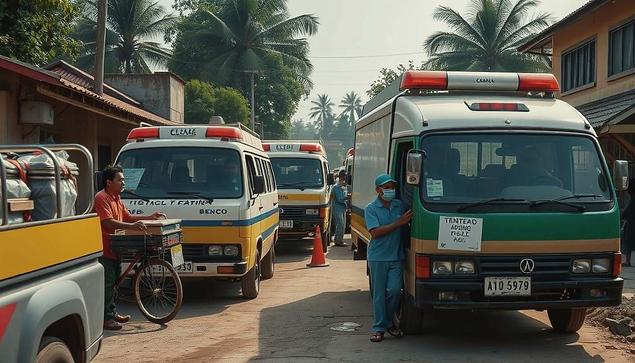
Several nursing associations have warned that high fuel prices threaten the reliable care of patients in rural areas. According to Sarah Lukuc, the chairwoman o... https://news.osna.fm/?p=41035 | #news #action #ambulatory #care #costs
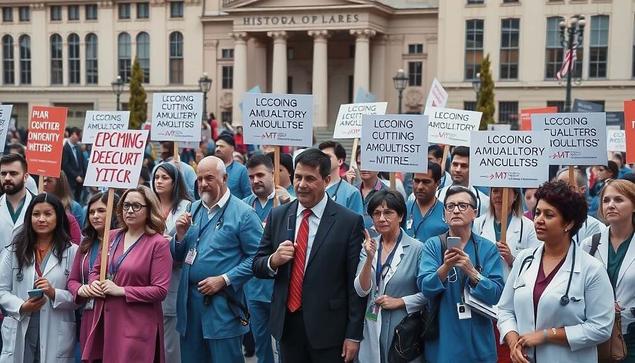
Andreas Gassen, chairman of the German Association of Statutory Health Insurance Physicians (KBV), warned in an interview with Politico that the medical communi... https://news.osna.fm/?p=40390 | #news #ambulatory #commission #cuts #doctors
 Per Axbom
Something to always be aware of: Many wheelchair users can stand and move around for brief periods of time. Not all wheelchair users are paralysed. Reasons for wheelchair use are numerous and varied.
Some wheelchair users choose not to stand in public because chances are they will be chastised and harassed if they do. With more awareness and understanding this risk can hopefully diminish over time.
For example, if a wheelchair user is able to retrieve their own wheelchair from the boot/trunk of their car, this does not mean they are ”faking”, and accusing them of this is ableist in itself.
”Ambulatory wheelchair user” is something you can search for to learn more, as many are sharing their experiences online, like Lauren:
https://www.rareyouthrevolution.com/post/ten-things-i-wish-you-knew-from-an-ambulatory-wheelchair-user
#accessibility #wheelchair #ambulatory
Some wheelchair users choose not to stand in public because chances are they will be chastised and harassed if they do. With more awareness and understanding this risk can hopefully diminish over time.
For example, if a wheelchair user is able to retrieve their own wheelchair from the boot/trunk of their car, this does not mean they are ”faking”, and accusing them of this is ableist in itself.
”Ambulatory wheelchair user” is something you can search for to learn more, as many are sharing their experiences online, like Lauren:
https://www.rareyouthrevolution.com/post/ten-things-i-wish-you-knew-from-an-ambulatory-wheelchair-user
#accessibility #wheelchair #ambulatory

Ten Things I Wish You Knew (from an Ambulatory Wheelchair User)
A small guide on things to consider before you interact with wheelchair users, and other disabled people, based on my experience as an ambulatory wheelchair user. When most people think of a wheelchair user, they automatically think of someone with a spinal cord injury, resulting in some form of paralysis (paraplegia, quadriplegia, hemiplegia, etc). While it may come as a surprise to many, an astounding amount of people who use wheelchairs are ambulatory (are capable of walking, at least to some
 Michael Dmitriev
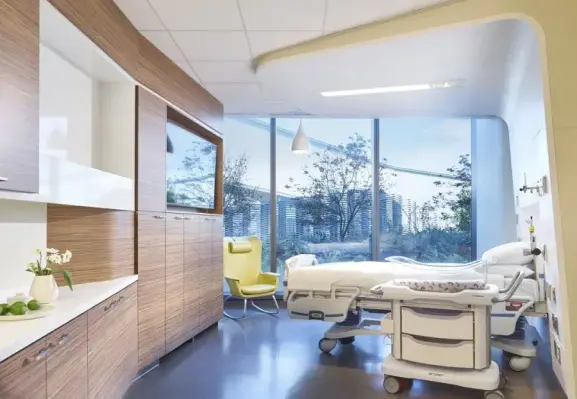
According to the Ministry of Health of the Russian Federation and Rosstat, at the end of 2023, there were 21,146 ambulatory-polyclinic and hospital organizations in the Russian Federation, 14.8% of which were not state-owned.
https://globaltribune.net/trends-and-prospects-of-the-development-of-commercial-medicine-in-russia
#russia #healthcare #hospitals #medicine #health #polyclinic #ambulatory #cis

Trends and prospects of the development of commercial medicine in Russia
According to the Ministry of Health of the Russian Federation and Rosstat, at the end of 2023, there were 21,146 outpatient and polyclinic and hospital organizations in the Russian Federation, 14.8% of which were not state-owned.
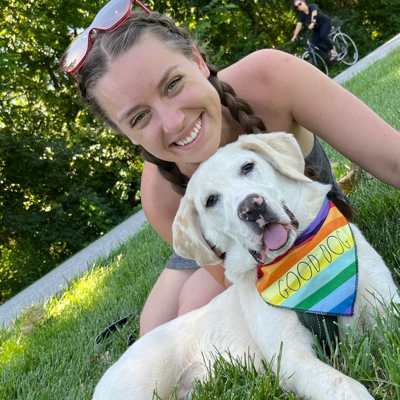 antiableistdreams
 Sammie
For a while now I’ve been an #ambulatory #wheelchair user.
It means that I fall under the umbrella of having a #disability and that I sometimes need to use a wheelchair but I’m also capable of walking sometimes.
Since I got #Covid and developed #LongCovid it’s a useful aid.
Thread 🧵 👇

 👁 socat
Les opérateurs BlackByte revendiquent des attaques contre :
- 🇮🇹 Generale Prefabbricati S.p.A. (
generaleprefabbricatispa.com)
Providing a solid framework for entrepreneurial ambitions is a wager that Generale Prefabbricati commits to every time a request arrives to customise a surface or an open space, to transform them into a harmonious combination of volumes, lines and spans.
- 🇺🇸 Statcomm Incorporated (
statcomm.com)
Your All-In-One Fire Protection Resource. Providing Quality Service Since 1992. Serving the counties of the greater Bay Area; Including Santa Clara, San Mateo, Alameda, Santa Cruz, parts of Contra Costa and Monterey counties.
- 🇺🇸 Advance Medical Designs, Inc (
advancemedicaldesigns.com)
Manufacturer of disposable infection control products focused on hospital Operating Rooms, Cardiac Cath Labs, Interventional Radiology, and Ambulatory Surgery Centers. C-Arm Drapes. Decanting Devices.
- 🇨🇱 Distribuidora de Industrias Nacionales S.A. (
abcdin.cl)
Chilean homewares chain founded in 1950 as a subsidiary of Copec and today, it is owned by Yaconí-Santa Cruz.
#USA #ITALIA #CHILE #RANSOMWARE #FIRE #BLACKBYTE #DATABREACH #SYSTEMS #EMERGENCY #LIGHTING #INFECTION #SECURITY #DOORS #ALARMS #LABORATORY #HOSPITAL #SERVICES #CLIENTS #RADIOLOGY #EXTINGUISHER #MEDICAL #FACTORIES #INSPECTIONS #PATIENTS #MONITORING #SHOP #SPRINKLERS #PRODUCTS #GLASS #STOREFRONT #SURGERY #SAFETY #ENGINEERS #CARDIAC #CONSTRUCTION #DIGITAL #MANUFACTURER #HEALTH #LABORATORIES #FRAMEWORK #CUSTOMERS #HEALTHCARE #MARKET #AMBULATORY #BUILDING
Les opérateurs Hive revendiquent des attaques contre :
- 🇹🇭 Guts Superpols Co., Ltd. (
guts.co.th)
Largest security firm in Thailand. We always realize that in the moments of a life crisis someone is waiting for help, in just a few moments of command control through advanced security equipment and technologies including the work of professional team, fast and efficient teamwork to help prevent and mitigate the loss of life and property that may not be assessed values.
- 🇦🇺 Net Ninjas (
netninjas.com.au)
Net Ninjas is a full-service digital agency operating in Melbourne, Australia. Business grade web hosting solutions and web development services. Our world-class web hosting.
- 🇺🇸 W.H. Stovall & Company, Inc. (
whstovall.com)
Engineered Building Products General Info Operational since 1927. W. H. Stovall & Company Inc. is an engineering building company. Located in Ashland, Va., the company provides services in fabrication, distribution and installation of aluminum composite panels, profile metal panels, storefronts, entrances, curtain walls, skylights and glass and glazing.
#AUSTRALIA #THAILAND #USA #RANSOMWARE #HIVE #DATABREACH #HIVELEAKS #DIGITAL #BUSINESS #CLOUD #HOSTING #NUMÉRIQUE #WEB #AGENCY #MANUFACTURERS #SECURITY #SOLUTIONS #COMMERCIAL #DISTRIBUTION #SERVICES #CAREERS #DEVELOPEMENT #CORPORATE #INTERNET #CONTRACTORS #INSTALLATION #BUILDING #ENGINEERING #PLANS #EMPLOYEES #FIRMS #FABRICATION #INDUSTRIES #FINANCIAL #WORDPRESS #ALUMINUM #PROFESSIONAL #AMBULATORY #HEALTHCARE #MAINTENANCE #MICROSOFT #SUPPORT #ARCHITECTS #HEALTH #CLINIC #COMPOSITE #ENGINEERS #BUILDINGS #METAL #SHAREHOLDERS #PRODUCTS #INDUSTRY #DEVOPS #MANUFACTURERS #WEB #EMERGENCY #TECHNOLOGIES #SURVEILLANCE #CRISIS #BUSINESSES #EQUIPMENT #SOCIETY #CCTV #SENSORS #ALARMS #SIREN #REMOTE #CAMERA #DOORS #GUARD #VIDEO #MANAGEMENT #PATROL #FIRE #FAILURE #PARTNERS #CONTROL
Les opérateurs de ransomware Babuk diffusent des données relatives à :
- 🇺🇸 Unitex (https://twitter.com/Unitextextile) (
unitex.com)
For more than 90 years, our family-run business has been leading the way in the medical uniform and linen rental industry. Today, we're the largest family-owned healthcare service provider in the country. Every one of our more than 1500 skilled employees understands the importance of the work you do.
#USA #RANSOMWARE #BABUK #DATABREACH #COMPANY #COVID19 #INDUSTRY #INFECTION #SERVICES #PRODUCTS #COMMERCIAL #BUSINESS #EMPLOYEES #MEDICAL #CAREERS #RENTAL #HYGIENICALLY #CLEAN #ENTREPRENEURIAL #INDUSTRIAL #COMPANIES #SURGICAL #CLOTHES #DENTAL #HEALTH #DIGITAL #UNIFORMS #CLINICS #HEALTHCARE #SANTÉ #RECRUITMENT #DRAPES #CLOTHING #AUTOMATION #AMBULATORY #TOWELS #CLINICAL #PATIENTS #CARE #ENVIRONMENTAL #BLANKETS #AMERICAN #DOCTORS #NURSES #WASHCLOTH #FUTURE #SOLUTIONS #APPARELS #SUPPLY #AMERICA #INSTRUMENTATION #LAUNDRY #COMMUNITY #APPAREL #DRIVERS #TEXTILE #MANAGEMENT #HOSPITALS #RETAIL #FACILITIES #MAINTENANCE #MECHANIC #ROBOTIC #TECHNICIAN #TRUCKS
Les opérateurs derrière le ransomware Conti revendiquent une attaque contre :
- 🇺🇸 White Glove Placement (
whiteglovecare.com)
Glove Nursing is a medical staffing agency that offers you reliable, top tier nursing job placements across the USA. Since 1995 White Glove Placement has provided staffing services to facilities, across the USA, in need of nursing resources. As the largest recruiter of nurses, the agency has successfully placed thousands of qualified staff in hospitals, nursing homes, ambulatory care, correctional facilities, group homes, schools, home health and other specialties.
#USA #RANSOMWARE #CONTI #DATABREACH #NURSES #HEALTHCARE #JOB #MEDICAL #JOBS #HEALTH #EMPLOYEE #NURSING #STAFFING #AGENCY #BENEFITS #CAREERS #PLACEMENT #OFFICE #ENVIRONMENT #LOCATIONS #SOLUTIONS #SUPPORT #PROFESSIONAL #RECRUITER #HOSPITAL #AMBULATORY #SCHOOLS #HOPITAL #RECRUTEMENT #EMPLOYEES #EMERGENCY #SURGICAL #INTENSIVE #REIMBURSEMENT #STAFF #SCHEDULING #PLANNING #CALENDAR #AGENDA #HOPITAUX #PANDEMIC #SANTÉ #FOREIGN #LABORATORIES #TRAVEL #CARE #COMMUNITY