 Dag-Rune Z
Greetings from Granny Sampov
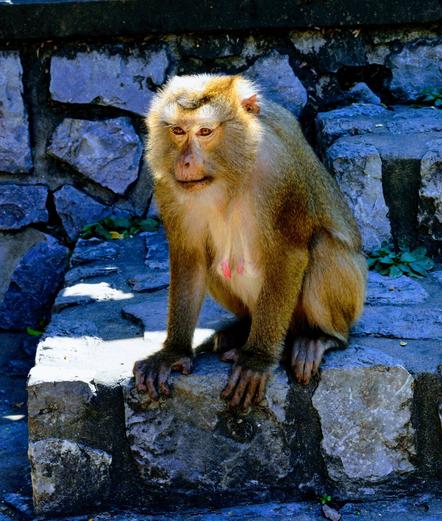
Somehow this elderly lady reminds me of some certain members of my family. Namely the ones who always wonders why younger family members haven’t called lately, and why they’re not married yet. With an added advice to settle down and start a proper family.
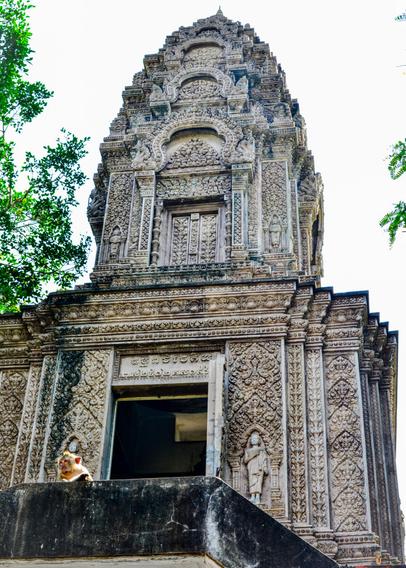
Met this not easily impressed lady macaque in the temple complex on top of Phnom Sampov, outside Battambang.
More than bat caves
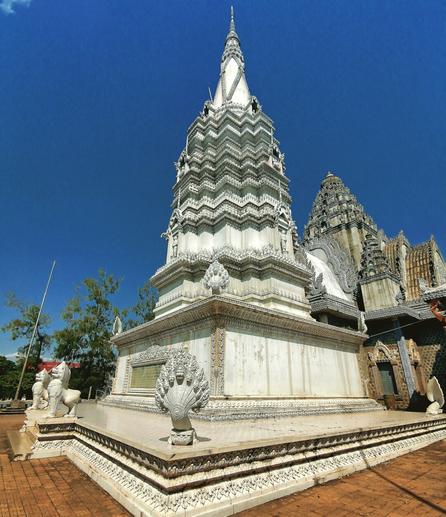
These hills are well known for its bat cave and sunset departure of hundred of thousands of bats for the night hunt. But there is much more to the “ship mountain” Phnom Sampeau/Sampov than bats. There are several sites in the hills worth a visit.
Two larger monasteries with pagodas and stupas, monkeys and large caves are worth visiting both for cave fans and people of all parts of Cambodian history. The caves on this and the other small mountain hills in this cluster carry with it stories of tradition, happiness and deep tragedy.
It is worth spending some time walking these hills. For the well fit, there is an opportunity to trek the stairs and tracks up the hill. The fast alternative is to pay a driver to take you up to the sites by car.
Phnom Sampov is north-west of Battambang city in the west of Cambodia. It takes about 30-40 minutes by car to get there from the city.
Do not feed the monkeys
The monkeys are a part of the pagoda experience. These longtail Macaques are normally very friendly because they expect to get, or steal, food or items for play from the visitors.
Please, do not feed the monkeys. It reduces their ability to hunt and gather their own food. It may lead to malnutrition.
#battambang #batcave #PhnomSampeou #oldlady #khmermother #granny #temple #bluesky #roadtrip #countryside #2019CE #architecture #art #Buddhism #Cambodia #Hinduism #khmer #Nikkor #Nikon #southeast #asia #southeastasia #stupas #KR #deathcaves #tragedy #visitcambodia #visitsiemreap #watsampeou #PhnomSampov #macaque #macaquemonkey #Pagoda #PhnomSampeau #visitbattambang
Somehow this elderly lady reminds me of some certain members of my family. Namely the ones who always wonders why younger family members haven’t called lately, and why they’re not married yet. With an added advice to settle down and start a proper family.
Met this not easily impressed lady macaque in the temple complex on top of Phnom Sampov, outside Battambang.
More than bat caves
These hills are well known for its bat cave and sunset departure of hundred of thousands of bats for the night hunt. But there is much more to the “ship mountain” Phnom Sampeau/Sampov than bats. There are several sites in the hills worth a visit.
Two larger monasteries with pagodas and stupas, monkeys and large caves are worth visiting both for cave fans and people of all parts of Cambodian history. The caves on this and the other small mountain hills in this cluster carry with it stories of tradition, happiness and deep tragedy.
It is worth spending some time walking these hills. For the well fit, there is an opportunity to trek the stairs and tracks up the hill. The fast alternative is to pay a driver to take you up to the sites by car.
Phnom Sampov is north-west of Battambang city in the west of Cambodia. It takes about 30-40 minutes by car to get there from the city.
Do not feed the monkeys
The monkeys are a part of the pagoda experience. These longtail Macaques are normally very friendly because they expect to get, or steal, food or items for play from the visitors.
Please, do not feed the monkeys. It reduces their ability to hunt and gather their own food. It may lead to malnutrition.
#battambang #batcave #PhnomSampeou #oldlady #khmermother #granny #temple #bluesky #roadtrip #countryside #2019CE #architecture #art #Buddhism #Cambodia #Hinduism #khmer #Nikkor #Nikon #southeast #asia #southeastasia #stupas #KR #deathcaves #tragedy #visitcambodia #visitsiemreap #watsampeou #PhnomSampov #macaque #macaquemonkey #Pagoda #PhnomSampeau #visitbattambang