Archangel Raphael
The name Raphael comes from the Hebrew Rafa’el, meaning “God has healed” or “Medicine of God.”
He’s not mentioned in the Tanakh/Old Testament or the New Testament; he’s definitely in the Book of Tobit. The Book of Tobit is a deuterocanonical work recognized by Catholic & Orthodox churches. He’s also mentioned in 1 Enoch, both books date from around the 3rd & 2nd centuries BC.
In later Jewish tradition(s), he became identified as 1 of the 3 heavenly visitors entertained by Abraham at the Oak of Mamre. While the Bible doesn’t name him, Midrashic tradition identifies Raphael as 1 sent to heal Abraham’s pain after his circumcision.
Later Christian tradition(s) identified him with healing & as the angel who stirred the waters at the Pool of Bethesda in John 5:2-4. But he isn’t specifically named in this passage.
In Islam, his name is Israfil. He’s understood to be the unnamed angel of Quran 6:73. In this passage, he’s standing with a trumpet to his lips eternally, ready to announce the Day of Judgment.
In Gnostic tradition(s), Raphael is represented on the Ophite Diagram. This diagram is/are a ritual & esoteric diagram used by the Ophite sect of Gnosticism.
In the Book of Tobit, Raphael takes the human form of a man named Azarias. He serves as a protector for young Tobias on a perilous journey to Media. Azarias instructs Tobias on how to use the heart, liver, & gall of a giant fish to create medicinal ointments. These are used to drive away a demon (Asmodeus) & to cure the blindness of Tobias’ dad, Tobit.
Because Raphael safely guided Tobias across vast distances, he became the patron saint of travelers, pilgrims, & even modern-day hitchhikers.
His name comes from the Hebrew meaning “to heal,” & can be translated as “God has healed.” In Tobit, he goes by the name Azariah while in disguise as a man. In the book, he acts like a doctor/physician & expels, uses an extraordinary fish to heal Tobit’s eyes, & binds the demon Asmodeus. While in 1 Enoch, he’s “set over all disease & every wound of the children of the people.” He also binds the armies of Azazel & throws them into the valley of fire.
According to the Babylonian Talmud, Raphael was 1 of 3 angels who appeared to Abraham in the Oak Grove (Oak wood/trees have been used for millennia in spiritual traditions) of Mamre, in the Hebron region.
Michael walked in the middle because he was the “greatest,” with Gabriel on his right & Raphael on his left. Each had a specific mission they were commanded to carry out: Gabriel’s was to destroy Sodom; Michael’s was to tell Sarah that she was going to have Isaac; & Raphael’s was to heal Abraham from his recent circumcision & to save Lot. Now, the healing of the circumcision is HUGE in this context. Because Abraham was the 1st Hebrew/Jew to get a circumcision. AND he was a grown old man when he got it. He wasn’t a baby who’d “forget” the pain & healed up in a couple of days.
In the Midrash Konen, it’s revealed that Raphael was originally named Libbiel (“God is my heart”). In the Midrash, God takes counsel with His angels before He creates Adam, the 1st man. The angels weren’t all of 1 opinion, with differing views & reasons.
The Angel of Love & Angel of Justice both were in favor of Man’s creation as he (humans) would be affectionate & loving, alongside practicing Justice. The Angel of Truth & the Angel of Peace opposed Man’s creation, as he (humans) would be full of lies & be quarrelsome.
To invalidate his protest, God cast the Angel of Truth down from Heaven to Earth. When the others cried out against the treatment of their companion, He said, “Truth will spring back out of the earth.” Before their objections, God had only told the Angels of the good that would be among the humans. But didn’t tell them of the evil, either.
Despite not knowing the whole truth, the angels were nevertheless prompted to cry out: “What is man, that Thou art mindful of him? And the son of man, that Thou visitest him?” God replied: “The fowl of the air & the fish of the sea, what were they created for? Of what avail a larder full of appetizing dainties, & no guest to enjoy them?” The angels couldn’t but exclaim: “O Lord, our Lord, how excellent is Thy name in all the Earth! Do as is pleasing in Thy sight.” For not a few of the angels, their opposition bore fatal consequences.
When God summoned the band under the Archangel Michael & asked their opinion on the creation of man, they answered scornfully: “What in man, that Thou art mindful of him? And the son of man, that Thou visited him?” God stretched out his little finger, & all were consumed by fire except their Chief Michael. And the same fate befell under the leadership of the archangel Gabriel; he alone of all was saved from destruction.
The 3rd band consulted by the Archangel Libbiel. He learned from his predecessors’ horrible fate, so he warned his troops. “You’ve seen what misfortune overtook the angels who said, ‘What is man, that Thou art mindful of him? Let us have care not to do likewise, lest we suffer the same dire punishment. Gor God will not refrain from doing in the end what He has planned. Therefore, we should yield to His wishes.”
Having been warned, the angels spoke: “Lord of the world (Not the universe? Huh.), it’s well that Thou hast thought of creating man. Do Thou create him according to Thy will. And as for us, we’ll be his attendants & his minsters, & reveal unto him all our secrets.”
Thereupon, God changed Archangel Libbiel’s name to Raphael, the Rescuer, because his Host of Angels had been rescued by his sage advice. He was appointed the Angelic Prince of Healing, who has in his safekeeping all the celestial remedies, the types of medical remedies used on Earth.
In the Midrash Tanhuma (a.k.a. Yelammedenu, this is the name given to a homiletic Midrash on the ENTIRE Torah), Satan became envious of the righteous. R. Matthew bar Heresh, after seeing him sitting occupied in Torah study, without looking at anyone’s wife or any other woman.
Believing it to be impossible for a righteous man to exist in the world without sin, Satan asks God how He sees Rabbi Matthew; He sees him as completely righteous. Satan then asks for permission to test Rabbi Matthew (Is this starting to sound like the Job story to anyone else?), which God grants again.
So Satan transforms himself into a beautiful woman upon finding the rabbi studying the Torah. After seeing that Satan would continue to truly & tempt him from all sides. He (the Rabbi) used hot pins to blind himself, so his evil inclination prevailed. Satan trembles in dismay & goes back to report to God.
When God gets the report, He calls Raphael, Prince of the Healing Arts, commanding Raphael to go heal the rabbi’s eyes. When Raphael goes to the rabbi to heal him, Raphael reveals his identity & mission. Rabbi Matthew tells Raphael that he doesn’t want to be healed.
Raphael returns to God & tells God what the rabbi said. When hearing this, God commands Raphael to tell the rabbi not to fear, because his evil inclination will not prevail. When the rabbi heard this from Raphael’s mouth, the rabbi accepted the healing & wasn’t afraid.
In Rabbeinu Bahya, a commentary on the Torah written by Rabbi Bahya ben Asher (1255-1340), the Camp of Ephraim (situated to the west of the Tabernacle (Numbers 2:18)), corresponded to the celestial camp headed by the archangel Raphael, supported by the angels Zavdiel & Achziel.
It’s also said that this is the camp that Moses alluded to when he prayed that Miriam be asked from her tzaraath by saying “please God heal her” (Numbers 12:13). He appealed to the attribute represented by Raphael.
In the Beginning of Wisdom, an introduction to Kabbalistic thought composed by Rabbi Aharon Meir Altshuler (1835-1905) in Warsaw between 1887 and 1893. Raphael is said to be the Sephirah of Tiphereth (Beauty). He’s said to act as an intermediate conduit between Chesed (Kindness) corresponding to Michael, & Din (Judgment) corresponding to Gabriel. Uriel (a.k.a. Nuriel) is also said to act as an intermediate conductor alongside Raphael.
It’s explained that when he inclines to Chesed, he’s called Uriel. But when he inclines Din, he’s called Nuriel. In the same context, the Sefer Ha Bahir calls Raphael, the “Prince of Peace” (“Sar Salom”). The text states that the reconciliation between Michael (the prince of God’s right) & Gabriel (the prince of God’s left) is the meaning of the verse, “He imposes peace in His heights” (Job 23:2). With Raphael being the Archangel of Air that establishes peace between fire & water.
In Kabbalistic astrology, Raphael is most commonly associated with the Sun (alongside Michael) & Mercury (the planet). The Zohar associates him with the image of man in the tetramorph (A symbolic arrangement of 4 differing elements, or the combination of 4 disparate elements in 1 unit) of the Four Holy Living Creatures (these are a class of heavenly beings in Judaism, described in the 1st & 10th chapters of the Book of Ezekiel), alongside the zodiac sign of Aquarius, & in ration to the image of man; the Sephriah of Malkhuth (Kingdom) & the Earth.
As well as Tiphereth & Malkhuth, the Zohar also has Raphael corresponding to the Sephirah of Hod (Majesty), the Euphrates river, the left leg of the body, & the Israelite tribe of Ephraim.
It’s also customary in Judaism to invoke Raphael as 1 of the Four Archangels after 1 recites the Shema (This is a Jewish prayer that serves as a centerpiece of the Jewish morning & evening prayer services.) before going to bed; with Michael by your right side, Gabriel by your left side, Uriel before you, & Raphael behind you.
The New Testament only names 2 archangels (Michael & Gabriel, respectfully). But because of Raphael’s association with healing, he became identified with the unnamed angel of John 5:1-4, who periodically stirred up the Pool of Bethesda.
Because of his actions in the Book of Tobit & the Gospel of John, Raphael is considered a protector & healer. Thus, the patron of travelers, the blind, happy meetings, nurses, physicians, medical workers, matchmakers, Christian marriage, & Catholic studies.
He’s perhaps most seen in depictions of Tobias & the Angel, from the Book of Tobit, showing him walking with Tobias & his dog through a landscape. The subject became very popular in Italy from about 1450 for a century, as devotion to Raphael increased, at least partly through confraternities dedicated to him. A confraternity is generally a Christian voluntary association of laypeople created for the purpose of promoting special works of Christian charity or piety, & approved by the Church hierarchy.
In altarpieces & the like, Tobias, his fish, & his dog may be used as identifying attributes of Raphael.
Raphael is said to guard pilgrims on their journey, & when depicted as a single figure, is often depicted holding a staff. Also, he’s often pictured holding or standing on a fish, which alludes to his healing of Tobit with the fish’s gall. Early mosaics often show him & other archangels in the clothing of a Byzantine courtier.
The feast day of Raphael was included for the 1st time in the General Roman Calendar in 1921, on October 24. With the 1969 revision of the General Roman Calendar, the feast was transferred to September 29 for celebration together with the archangels Saints Michael & Gabriel.
Pope Benedict XVI’s Summorum Pontificum permitted, within certain limits for public use, the General Roman Calendar of 1960, which has October 24 as Raphael’s feast day. He’s commemorated in some Spanish dioceses on the old date & with a procession on May 7 in Cordoba, Spain.
In the Diocese of Warsaw-Praga, he’s commemorated on October 3 (with Michael & Gabriel). The feast was transferred from September 29 (Devotion of St. Florian’s Cathedral).
The archangel Raphael is commemorated by the Eastern Orthodox Church on November 8 in the Synaxis of the Archangel Michael & the Other Bodiless Powers.
In the Oriental Orthodox Churches, the dedication of the church of St. Raphael on the back of a whale is commemorated on August 26 (or 3 Pagumen, this is an intercalary month of the ancient Egyptian, Coptic, & Ethiopean calendars are a period of 5 days in common years & 6 days in leap years in addition to those calendars’ 12 standard months, sometimes reconned as their 13th month.).
The Coptic Orthodox Church celebrates Raphael’s feast on Kouji Nabot 3 & Koiak 13.
In the Antiochian Western Rite Vicariate, St. Raphael the Archangel is commemorated on October 24.
The Archangel Raphael is said to have appeared in Cordoba, Spain, during the 16th century. In response to the city’s appeal, Pope Innocent X allowed the local celebration of a feast in the Archangel’s honor on May 7, the date of the principal apparition.
St. John of God (founder of the Hospital order that bears his name) is also said to have received visitations from Saint Raphael, who encouraged & instructed him.
In tribute to this, many of the Brothers Hospitallers of St. John of God’s facilities are called “Raphael Centers” to this day. The 18th-century Neapolitan nun, St. Maria Francesca of the 5 Wounds, is also said to have seen apparitions of St. Raphael.
In the Mormon tradition, Doctrine & Covenants 128:21 (this is part of a letter dated Sept. 7, 1842) refers to an appearance or manifestation of Raphael to Joseph Smith as 1 of several angels who had appeared to him either together or separately.
Raphael is a venerated archangel, according to Islamic tradition. In Islam, he’s called Israfil. Israfil will blow the trumpet from a holy rock in Jerusalem to announce the Day of Judgment (Yawn al-Qiyamah). The trumpet is constantly poised at his lips, ready to go at Allah’s orders.
Certain Islamic sources indicate that, created at the beginning of time, Israfil has 4 wings, & is so tall as to be able to reach from the earth to the pillars of Heaven. A beautiful angel who is a master of music, Israfil sings praises to God in 1,000 different languages, the breath of which is used to inject life into hosts of angels who add to the songs themselves.
Further, he’s probably the highest angel, since he also mediates between God & other archangels, reading on the Preserved Tablet (al-lawh al-mahfooz) to transmit the commands of God. Although disputed, some reports assert he visited Muhammad prior to the archangel Gabriel.
According to Sufi traditions reported by Imam Rafa’il, the Ghawth or Qutb (‘perfect human being’) is someone who has a heart that resembles that of the archangel Israfil, signifying the loftiness of this angel. The next in are the saints who are known as the Umdah or Awtad, amongst whom the highest ones have their hearts resembling that of the archangel Mikhail (Michael), & the rest of the lower-ranking saints having the heart of Jibrail (Gabriel), & that of the previous prophets before the Islamic prophet Muhammad. The earth is believed to always have 1 of the Qutb.
In another account, Rafa’il is mentioned by name in the Islamic tradition narrated by Ath-Tha’labi from Ali. He’s said to have met Dhu al-Qarnayn, who’s mentioned in the last part of Sura 18 of the Quran, al-Kahf (“The Cave”). Dhu al-Qarnayn (The 2 Horned One) is believed by some to be Alexander the Great.
The angel told Dhu al-Qarnayn about the Water of Life (Ayn al-Hayat). Hearing that there was such a spring, Dhu al-Qarnayn wanted to drink the Water of Life. But the only 1 who had succeeded in drinking it was his cousin, Khidir. In Islamic tradition, Khidr is the mystical guide popularly quoted, especially in Sufi traditions, who has attained a long life & appears to have selected Islamic saints throughout the times.
Make a one-time donation
Your contribution is appreciated.
Donate
Make a monthly donation
Your contribution is appreciated.
Donate monthly
Make a yearly donation
Your contribution is appreciated.
Donate yearly
#1Enoch #1450 #16thCentury #1887 #1893 #1921 #1960 #1969 #2ndCenturyBC #3rdCenturyBC #7September1842 #Abraham #Achziel #alLawhAlMahfooz #AlexanderTheGreat #Ali #Allah #AngelOfJustice #AngelOfLove #AngelOfPeace #AngelOfTruth #AntiochianWesternRiteVicariate #Aquarius #ArchangelLibbiel #ArchangelMichael #ArchangelRaphael #Asmodeus #August26 #Awtad #Azarias #BabylonianTalmud #bible #BookOfEzekiel #BookOfTobit #ByzantineCourtier #CampOfEphraim #Catholic #CatholicChurch #circumcision #Confraternities #Cordoba #DayOfJudgment #Demon #Deuterocanonical #DhuAlQarnayn #Din #Diocese #DoctrineCovenants12821 #Ethiopean #EuphratesRiver #FeastDay #Fish #FourArchangels #FourHolyLivingCreatures #GeneralRomanCalendar #Ghawth #Gnosticism #GospelOfJohn #Heaven #Hebrew #Hebron #HospitallersOfStJohnOfGod #Isaac #Islam #Israfil #Italy #Jewish #Jibrail #Job #Job252 #John514 #John524 #Judaism #Kabbalah #Khidr #Koiak13 #KoujiNabot3 #Libbiel #Lot #Malkhuth #Mamre #May7 #Media #Mercury #Midrash #MidrashKonen #MidrashTanhuma #Miriam #Mormonism #Moses #Muhammad #NeapolitanNun #NewTestament #November8 #Numbers1213 #Numbers218 #Nuriel #OakGrove #OakOfMamre #October24 #October3 #OldTestament #OphiteDiagram #Ophites #OrientalOrthodoxChurch #OrthodoxChurch #Pagumen #PoolOfBethesda #PopeBenedictXVI #PopeInnocentX #Prayer #PreservedTablet #Quran #Quran673 #RabbeinuBahya #RabbiMatthewBenHeresh #Sarah #Satan #SeferHaBahir #SephirahOfHod #SephirahOfMalkhuth #SephirahOfTiphereth #September29 #Shema #Sodom #Spain #StJohnOfGod #StMariaFrancescaOfTheFiveWounds #StRaphael #Sufi #Surah18 #SynaxisOfTheArchangelMichaelTheOtherBodilessPowers #Tanakh #Tetramorph #TheCave #Tobias #TobiasTheAngel #Tobit #Torah #TribeOfEphriam #Trumpet #Umdah #Uriel #Warsaw #WarsawPraga #WaterOfLife #Whale #Yelammedenu #Zavdiel #Zohar SamuelLuminari
 Spirituality & Religious Studies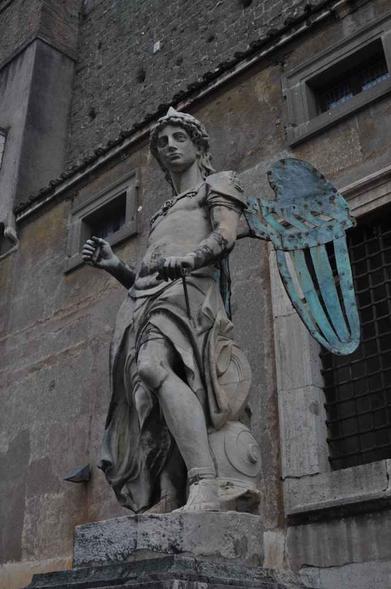
 ERROR 404 ▼
 דער קערפער פֿון השם
 Frater SRH

 RevDrMatthewFox