Punishment of the Grave

Also known as Torment of the Grave.

This is a Judeo-Islamic concept about the time between death & resurrection of the Day of Judgment. According to some hadiths, the souls of the unrighteous are punished by 2 angels in the grave. While the righteous find the grave “peaceful & blessed.”

Punishment of the grave isn’t explicitly stated in the Quran. Although it’s mentioned in the hadiths (Hadiths are the Islamic equivalent of Jewish midrashs.) & shows up as early as the 9th century, still present among the majority of Sunnis & Shias.

The Quran does mention that certain individuals, such as martyrs, are alive & not dead in 2:154. Also, that is already in Hell in 71:25.

The term Barzakh indicates that the deceased & the living are entirely separated & cannot interact with each other. Otherwise, Barzakh refers to the whole period between the Day of Resurrection & death & is used synonymously for “grave.”

Others regard barzakh as a world dividing & simultaneously connecting the realm of the dead & the living. Therefore, some Muslim traditions argue about possibilities to contact the dead by sleeping in graveyards. Despite the non-existent or, at most, the brief mentions in the Quran.

Islamic tradition discusses elaborately, almost in graphic detail, as to what exactly happens before, during, & after death, based on certain hadithic narrations.

After burial, each person is interrogated in the grave by 2 angels, called Munkar & Nakir, appointed by God to question the dead in order to test their faith. The righteous believers answer correctly & live in peace & comfort. While the sinners & disbelievers fail & punishments ensue.

In the life of Barzakh, the souls of the sinners & disbelievers are kept & punished in a place called Sijjin, which is said to be located at the lowest level of the earth (traditionally Hell, before the Day of Resurrection or underworld). The books containing the full deeds are also kept here.

On the other hand, the souls of the righteous believers are kept in a place called Illiyin. Their books of deeds are also kept here.

According to some accounts, Illiyin is located in Heaven. There is a belief that the fire which represents one’s own bad deeds can already be seen during the Punishment of the Grave, & that the spiritual pain caused by this can lead to purification of the soul.

Rabbinic literature offers many traditions about angels chastising the dead. In Jewish religious books, the souls of the wicked are punished in the hereafter by Dumah & 3 subordinated Angels of Destruction. They’re only released from their suffering on Shabbat (the Jewish Sabbath).

One-Time Monthly Yearly

Make a one-time donation

Make a monthly donation

Make a yearly donation

Choose an amount

$5.00 $10.00 $15.00 $1.00 $5.00 $10.00 $5.00 $10.00 $15.00

Or enter a custom amount.

$

Your contribution is appreciated.

Your contribution is appreciated.

Your contribution is appreciated.

DonateDonate monthlyDonate yearly #9thCentury #AngelsOfDestruction #Barzakh #DayOfJudgment #DayOfResurrection #Death #Dumah #Grave #Hadith #Hell #Illiyin #Islam #Judaism #Midrash #Munkar #Muslim #Nakir #PunishmentOfTheGrave #Quran #Resurrection #Sabbath #Shabbat #Shia #Sijjin #Sinners #TormentOfTheGrave
Angelic Ranks Across Religions

This is about the different ranks amongst different religions. We hope you enjoy!

Christianity:

The most famous ranking in Western culture comes from Pseudo-Dionysius the Areopagite in his 5th century work, The Celestial Hierarchy. He divided angels into 9 “choirs” organized into 3 “triads.”

The First Triad (Comtemplators of God):

Seraphim: The “Burning Ones” They have 6 wings & surround the throne of God, perpetually chanting the Trisagion (“Holy, Holy, Holy”).

Cherubim: Known as the “Plenitude of Knowledge.” In Scripture, they’re guardians of sacred space (like Eden or the Ark of the Covenant).

Thrones: Also called Ophanim (Wheels). They represent divine justice & the “chariot” of God.

The Second Triad (Cosmic Governors):

Dominions (Dominations): They regulate the duties of lower angels & represent the authority of God over the universe.

Virtues: Known as the “Brillant” or “Shining Ones.” They’re associated with miracles & bestowing grace & valor.

Powers: These are “warrior” angels who protect the world from demonic interference & maintain the laws of nature.

The Third Triad (Messengers to Humanity):

Principalities: The “Chief Messengers.” Though common tradition lists many, only Michael, Gabriel, & Raphael are officially recognized in most Catholic & Orthodox canons.

Angels: The lowest rank, most concerned with the affairs of individual humans (including Guardian Angels).

Judaism: The Maimonidean Hierarchy

In Judaism, the ranking of angels is primarily used to explain the different levels of “closeness” to the Divine Essence. The most widely cited list is from Maimonides (the Rambam) in his Mishneh Torah.

Chayot Ha-Kodesh: “Holy Living Creatures.” The highest possible rank.

Ophanim: “Wheels.” Associated with Ezekiel’s vision of the Chariot.

Erelim: “The Valiant Ones.” Linked to the concept of peace.

Chashmalim: “The Glowing/Amber Ones.”

Seraphim: “The Burning Ones.”

Malachim: “Messengers.” The general term for angels.

Elohim: “Godly Beings.” Referring to their divine reflection.

Bene Elohim: “Sons of God.”

Cherubim: Guardians & attendants

Ishim: “Person-like Beings.” They’re the closest to the human intellect.

Islam:

Islam doesn’t use a numbered “1 to 9” hierarchy in the same way Christianity does. Instead, angels (Mala’ika) are categorized by their by their functions.

The Four Archangels:

Jibril (Gabriel): The Angel of Revelation

Israfil (Raphael): The Angel of the Trumpet. This signals the Day of Judgment.

Mikail (Michael): The Angel of Mercy & Providence (weather & sustenance).

Azrael (Malak al-Mawt): The Angel of Death.

The Bearers of the Throne (Hamalat al-Arsh): 8 massive angels who carry the Throne of Allah.

The Cherubim (Al-Karubiyyun): Angels who are perpetually lost in the praises of God, unaware of anything else.

The Recording Angels (Kiraman Katibin): Every human has 2 (Raquib & Atib) who record good & bad deeds.

Munkar & Nakir: The interrogators of the soul in the grave.

Maalik & Ridwan: The guardians of Hell & Paradise, respectively.

Zoroastrianism: The Amesha Spentas:

In Zoroastrianism, the “angels” are emanations of the supreme God, Ahura Mazda. They’re known as the Amesha Spentas (Holy Immortals).

Vohu Manah: Good Mind/Purpose

Asha Vahishta: Best Righteousness/Truth

Khshathra Vairya: Desirable Dominion/Power

Spenta Armaiti: Holy Devotion/Piety

Haurvatat: Wholeness/Health

Ameretat: Immortality

Below these entities are the Yazatas. These are entities/beings “worthy of worship,” like Mithra.

Buddhism: The 26 Heavenly Realms

In Buddhist cosmology, “angels” are called Devas. Rather than a hierarchy, they’re ranked by the level of the Heaven they inhabit.

The 6 Sensual Heavens: Devas here still experience desire (like the Four Great Kings who guard the world).

The 16 Fine-Maternal Heavens (Arupa-loka): Beings of pure consciousness with no physical form at all, existing in states like “Infinite Space” or “Neither Perception nor Non-Perception.”

Hinduism: Celestial Classes

Hinduism features a vast array of celestial beings. While not always called “angels,” they function as intermediaries between the Trimurti (which we’ve covered in another post. Check it out!): Brahma, Vishnu, & Shiva, & humanity.

Devas: The benevolent “shining ones” who govern natural forces (Indra, Agni, Vagu).

Gandharvas: Celestial musicians & messsengers.

Apsaras: Celestial dancers & spirits of the clouds & waters.

Yakshas: Nature spirits & guardians of the earth’s treasures.

Vidyadharas: “Knowledge holders” or magical beings of the air.

Make a one-time donation

Your contribution is appreciated.

Donate

Make a monthly donation

Your contribution is appreciated.

Donate monthly

Make a yearly donation

Your contribution is appreciated.

Donate yearly

#16FineMaternialHeavens #26HeavenlyRealms #3Triads #4GreatKings #5thCentury #6SensualHeavens #9Choirs #AhuraMazda #AlKarubiyyun #Ameretat #AmeshaSpentas #Angels #Apsaras #ArchangelGabriel #ArchangelMichael #Archangels #ArkOfTheCovenant #ArupaLoka #AshaVahishta #Atib #Azrael #BeneElohim #Brahma #Buddhism #Canons #Catholic #Chashmalim #ChayoteHaKodesh #Cherubim #Christianity #DayOfJudgment #Devas #Dominations #Dominions #Eden #Elohim #Erelim #Ezekiel #Gandharvas #GuardianAngel #HamalatAlArsh #Haurvatat #Hell #Hinduism #HolyImmortals #Indra #Islam #Israfil #Jibril #Judaism #KhshathraVairya #KiramanKatibin #MaimonideanHierarchy #MalaIka #Malachim #MalakAlMawt #MalikRidwan #Mikail #MishnahTorah #Mithra #MunkarNakir #Ophanim #Orthodox #Paradise #Powers #Pricipalities #PseudoDionysiusTheAreopagite #Rambam #Raphael #Raquib #Seraphim #SpentaArmaiti #TheCelestialHierarchy #ThroneOfAllah #ThroneOfGod #Thrones #Trimurti #Trisagion #Vagu #Vidyadharas #Virtures #Vishnu #VohuManah #Yakshas #Yazatas #Zoroastrianism

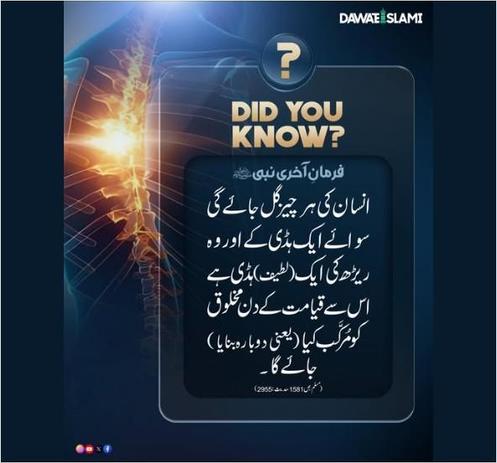
On the Day of Judgment, new life will begin with a bone.

قیامت کے دن نئی زندگی ایک ہڈی سے شروع ہوگی۔

For more updates: https://www.dawateislami.net/

#DayOfJudgment #newlife #LastProphetMuhammad #hadis #QAYAMAT #naizindagi #hisabkitab #amal #dua #namaz #zikar #azkar #doorudsharif #Tasbeeh #astaghfirullah #tilawate_quraan

Sometimes, do a good deed that only Allah and you can witness.

.کبھی ایسی نیکی بھی کریں جس کا گواہ صرف اللہ پاک اور آپ ہی ہوں

For more to know: https://www.dawateislami.net

#sometimes #dogood #deeds #allah #witness #help #muslim #brother #DayOfJudgment #results #WODHO #namaz #dua #azkar #zikar #astaghfirullah #Tasbeeh #Allahuakbar

Learn about Islam and Islamic knowledge with an Islamic Organization

Dawat e Islami is an international non-profit Islamic organization which is propagating Islamic knowledge and enlighting the message of Islam across the globe.

The Holy Quran, Surat Yaseen (repeated) with nature sounds

Rumble.com
THIS IS LIFE IN JAHANNAM (HELL)

YouTube
YOUR FIRST HOUR IN THE GRAVE

YouTube