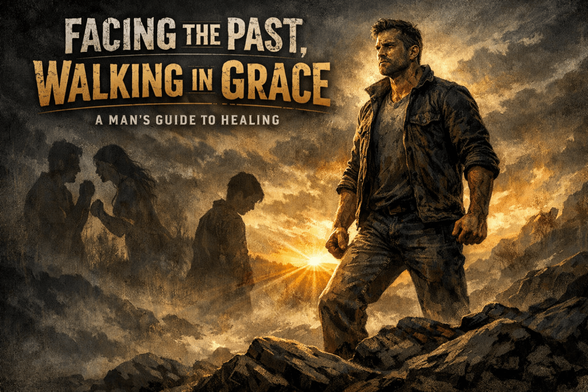
Facing the Past, Walking in Grace: A Man’s Guide to Healing

1,271 words, 7 minutes read time.

Scripture Anchor: “The Lord is close to the brokenhearted and saves those who are crushed in spirit.” —Psalm 34:18 (NIV)

When the Past Won’t Let Go

Let’s cut the crap: family can hurt. Badly. And it’s not always obvious. Sometimes it’s fists or yelling. Sometimes it’s quiet poison—the gaslighting, the twisted stories, the manipulation that leaves you doubting your own memory. You grow up thinking maybe you imagined it. Maybe you deserved it. Maybe it’s just your fault.

Here’s the brutal truth—sometimes the people who caused it don’t want the truth out. They want the “sins” of the past buried, rewritten, polished. Your pain? That’s inconvenient. Your memories? That’s a threat. They want a clean story, a family narrative that looks flawless while you carry the scars.

And it gets worse: the abuse you survived doesn’t stay in your past. It leaks into everything you do. The man you try to be, the father you hope to raise, the spouse you want to love—childhood trauma doesn’t vanish. It shapes your anger, your patience, your fears, your sense of worth. If you don’t face it, if you let it simmer in silence, it can infect your relationships, repeat the patterns, and leave you unknowingly passing the pain to the next generation.

If that resonates, I see you. That tension in your chest, the rage, the self-doubt—these aren’t flaws. They’re echoes of what you survived. And God sees it all. Psalm 34:18 says, “The Lord is close to the brokenhearted and saves those who are crushed in spirit.” He’s not just watching from a distance—He’s in the mess with you, seeing what no one else will.

Face It or Keep Getting Played

Here’s a hard truth: you can’t heal what you refuse to confront. The patterns, the anger, the shame—they won’t disappear. They’ll follow you into your marriage, your parenting, your work, your friendships. That’s the vicious cycle of unresolved trauma.

Some memories are ugly. Some truths are messy. Pretending they don’t exist is cowardice. You’ll keep getting played by the ghosts of your past until you grab the truth by the throat and refuse to let it run your life.

Pastors are vital—they can pray, counsel, and guide—but they’re not trained to untangle deep, layered trauma. If what you’re reading here applies to you, resonates, or describes patterns in your life, seek professional help beyond what the church or your pastor can provide. Therapists, counselors, and trauma specialists are trained to help men process abuse, repressed memories, and the long-term effects of trauma safely. Asking for help isn’t weakness—it’s war strategy. It’s reclaiming your life and breaking cycles that could otherwise carry on to the next generation.

Some of this work will piss people off. It will make your family uncomfortable. They may resist or deny the truth. Good. That just means you’re doing it right. Freedom doesn’t require their acknowledgment—it requires your courage to face the truth and refuse to let their lies control your life.

Gaslighting, Lies, and the Fight for Freedom

Abuse often comes with an accomplice: deception. They’ll gaslight you until you doubt everything—your memory, your instincts, your reality. You’ll replay every word, every action, wondering if you’re losing your mind. That’s the point.

Freedom starts with naming it. Saying, “I see what you did. I see the lies. I see the manipulation. And I will not let it control me anymore.” John 8:32 says it plainly: “Then you will know the truth, and the truth will set you free.”

You won’t do this alone. God is with you, yes—but He also gives allies: trusted friends, mature men, counselors. People who hold the mirror steady when your family tries to gaslight you back into silence. The lies are loud, the pressure is heavy, but you’ve got a choice: live under their story, or reclaim your story and break the cycle.

Healing Isn’t Pretty—It’s Tactical

Healing isn’t some soft, feel-good exercise. It’s tactical. Brutal. And it takes guts.

1. Write your story. Every fragment counts. Even rage. Even shame. Own it on paper. Seeing it outside your head takes power from the hidden lies.

2. Name your triggers. People, places, words—whatever sparks the old pain. Awareness is your first weapon.

3. Get professional support. Counselors, therapists, trauma specialists—these are not optional. They know how to walk a man through the ugly truth without breaking him further.

4. Ground yourself in Scripture and prayer. Psalm 34:18 isn’t a feel-good verse; it’s a battle cry. Speak it. Claim it. Wrestle with it. God won’t let go.

5. Set boundaries. Protect your mental, emotional, and spiritual space. If your family resists your truth, create distance until you can face it safely. Healing isn’t about making anyone else comfortable—it’s about reclaiming your life.

The process will be messy. Anger will flare. Tears will come. That’s normal. God is steady. Psalm 34:18 is a promise: He’s in the trenches with you.

Hope Beyond the Pain

Here’s the raw truth: your family might never admit it. They might resist. They might actively fight your progress. That sucks. It’s unfair. But they don’t get to control your healing. God does.

Even crushed, broken, silenced, and doubted, you can be saved. Psalm 34:18 says it bluntly: He saves those who are crushed in spirit. That includes you, your anger, your shame, and your past they want buried.

And part of hope is practical: professional help, counseling, therapy—these aren’t concessions. They’re weapons God gives you. Don’t be a macho idiot and try to “man up” alone. Take the tools. Take the help. Take your life back. And break the cycle so the next generation doesn’t carry the same hidden chains.

This is your story. Not theirs. Not sanitized. Not rewritten. Yours. God wants you whole. And it’s time to fight for it.

Closing Prayer

God, I’ve carried the weight of family lies, abuse, and silence for too long. I’m done letting rewritten history run my life. Give me courage to face the truth, strength to seek help, and wisdom to set the boundaries I need. Heal what they broke, reclaim what was stolen, and help me to break the cycle for those I love. Amen.

Reflection / Journaling Questions

  • What parts of my past have my family tried to hide or rewrite?
  • What patterns of anger, fear, or shame in my life come from unresolved childhood trauma?
  • How has my past affected the way I try to love, parent, or lead today?
  • Who can I enlist as allies to help me confront these truths safely?
  • Where do I need professional help beyond what the church or pastor can provide?
  • What boundaries do I need to protect my emotional, mental, and spiritual health?
  • Call to Action

    If this devotional encouraged you, don’t just scroll on. Subscribe for more devotionals, share a comment about what God is teaching you, or reach out and tell me what you’re reflecting on today. Let’s grow in faith together.

    D. Bryan King

    Sources

    Psalm 34:18 – NIV
    John 8:32 – NIV
    Isaiah 61:1-3 – NIV
    2 Corinthians 1:3-4 – NIV
    Psychology Today – Trauma and Relationships
    American Psychological Association – Trauma
    Courageous Conversations on Trauma & Abuse
    Focus on the Family – Men and Emotional Healing
    Cloud & Townsend – Boundaries Resources
    National Counseling Resources – Finding Professional Help

    Disclaimer:

    The views and opinions expressed in this post are solely those of the author. The information provided is based on personal research, experience, and understanding of the subject matter at the time of writing. Readers should consult relevant experts or authorities for specific guidance related to their unique situations.

    Related Posts

    #abuseRecovery #BiblicalGuidanceForTrauma #biblicalHealing #breakingGenerationalCycles #brokenheartedMen #childhoodTrauma #ChristianCounseling #ChristianCounselingAdvice #ChristianDevotionalForMen #ChristianMenSGuide #ChristianMentalHealthResources #ChristianSelfHelp #ChristianTherapy #ChristianTherapyForMen #confrontingAbuse #confrontingFamilyLies #confrontingHiddenFamilyPain #counselingForMen #dealingWithFamilyDenial #emotionalBoundaries #emotionalHealing #faithBasedTherapy #familyAbuseRecovery #fatherhoodAndTrauma #gaslighting #gaslightingRecovery #generationalTrauma #GodSGraceAndHealing #healingBrokenhearted #healingFamilyWounds #journalingForMen #maleDevotional2026 #maleHealingDevotional #maleMentalHealthSupport #maleFocusedDevotional #masculineSpirituality #menAndTrauma #menSMentalHealth #menSDevotionalResources #mentalHealthAndSpirituality #mentalHealthInChristianity #overcomingChildhoodAbuse #personalGrowthForMen #prayerForHealing #processingChildhoodAbuse #Psalm3418 #repressedMemories #safeHealingResources #spiritualFreedom #spiritualHealing #traumaAndFaith #traumaAwareness #traumaHealingForMen #traumaRecoveryPrayer #traumaRecoverySteps #traumaInformedSpirituality

    Mein Name ist keine Laune und kein Trend.
    Er ist für mich Schutz.

    Mit 14 habe ich die Schule gewechselt und wollte bereits damals meinen Namen ändern,
    in der Hoffnung, dass das Mobbing und die Gewalt aufhören würden.
    Diese Namensänderung wurde mir nicht erlaubt.

    Zwei Jahre später kaufte ich mir ein Modem.
    In dieser Szene fand ich erstmals Freundschaften, in denen ich einfach angenommen wurde, wie ich bin. Dort wurde ich nicht mehr mit meinem alten, für mich toten Namen angesprochen.
    Einige dieser Freundschaften bestehen bis heute.

    Mein alter Name ist für mich mit jahrelangem Mobbing, körperlicher Gewalt und einem Messerangriff verknüpft. Wenn dieser Name heute ausgesprochen wird, werden diese Erfahrungen im Körper wieder aktiviert – nicht nur in Gedanken.
    Hinzu kommt:
    Mit meinem alten Namen wird mir zugleich ein falsches Geschlecht zugeschrieben.
    Das bedeutet, ich werde nicht nur an Gewalt erinnert, sondern auch in meiner Identität verfehlt.
    Darum ist mein neuer Name so wichtig. Er steht für Sicherheit, Würde und Selbstbestimmung.

    Niemand muss jede Entscheidung anderer gut finden. Aber respektvolle Ansprache ist kein Entgegenkommen, sondern eine Grundform von Anerkennung.

    #ChosenName #Respekt #Selbstbestimmung #TraumaAwareness #Deadnaming #TransRights

    Article 1: 1.6 What Defines “Human” Capacity for harm.

    Care and harm come from the same human brain.
    This piece explores how harm once served survival, how modern systems now amplify it, and why understanding the roots of harm must never erase accountability or the reality of victims’ pain.
    #HumanRights #Accountability #JusticeForVictims #SocialPsychology #TraumaAwareness #DigitalHarm

    Day 21 — My Soft Confession: The Fear Behind “The Other Shoe Will Drop”

    Soft confessions are not easy to share, even when you’ve done enough healing work to name them out loud. They come from tender places. They come from the versions of us we protect the most. They come from wounds that no longer bleed but still ache when touched. Today’s prompt moves straight into that tender place.

    My soft confession is this:
    When I am at my worst — my most anxious, my most overwhelmed — I brace myself for bad things to happen.

    I do not mean this in a dramatic, catastrophic way. I mean it in a patterned, conditioned, deeply ingrained way. It is the quiet expectation that joy has an expiration date. The subtle fear that peace is temporary. The instinct to prepare myself emotionally in case life decides to pivot sharply and take something away.

    It is the mental whisper:
    “When will the other shoe drop?”

    This mindset didn’t appear out of nowhere. It didn’t build itself in a vacuum. It grew out of lived experiences, of survival instincts, of trauma responses, of watching stability turn unstable more times than I could count. It grew from rhythms I adapted to without realizing it, cycles of uncertainty that shaped my body and spirit long before I understood what anxiety was.

    Growing up between cultures, in spaces that required toughness, responsibility, and resilience, I learned early on that good moments often came with shadows. Peace was often followed by disruption. Happiness felt fragile. Safety felt conditional. So my nervous system learned to stay alert, even when I didn’t want it to.

    It was not pessimism.
    It was preparation.

    But preparation becomes fear when it never turns off.

    For a long time, this mindset guided how I moved through the world. If something good happened, I waited for the balance, the moment life would swing the pendulum back. If something went right, I scanned for what might go wrong. If I experienced a stretch of calm days, a part of me braced for the impact of something unexpected.

    This is not an easy thing to admit.
    Especially as someone who has learned, slowly, intentionally, painfully, to embrace softness again.
    Especially as someone who writes stories about healing, courage, and reclaiming magic.
    Especially as someone who is actively trying to rise out of survival mode and into something more spacious and gentle.

    The good news is that I am not as ruled by this mindset as I used to be.
    Therapy helped.
    Self-awareness helped.
    Spirituality helped.
    Taking deeper care of my nervous system helped.
    The soft bruja challenge itself is part of my healing.

    But even now, the old pattern shows up when I am most stressed or anxious.
    That is the moment when the voice inside me, the one shaped by years of emotional bracing, tries to step forward again.
    It tells me to prepare.
    It tells me to expect loss.
    It tells me to tighten my heart just in case.

    And that is when my healing work kicks in.

    Instead of letting that voice run wild, I meet it.
    I name it.
    I breathe into it.
    I challenge it.
    I remind myself:

    Good things don’t have to be balanced with suffering.
    Joy is not suspicious.
    Peace is not a threat.
    Life is not waiting to punish me for being happy.

    I also remind myself of the emotional truth I’ve learned over time:
    The shoe dropping isn’t destiny, it’s actually hypervigilance.
    It’s my nervous system trying to protect me from disappointment.
    It’s little-me, the child version of myself, trying to keep me safe the only way she knew how.

    And she deserves compassion, not shame.

    Now, when I feel myself bracing, I use grounding rituals:
    A deep breath.
    A hand on my heart.
    An affirmation.
    A lavender candle.
    A tarot pull for reassurance.
    A moment outside under the moon.
    A reminder that I have survived everything life threw at me and still rose.

    I’ve also noticed that when I am truly overwhelmed, the fear of the other shoe dropping is not actually about the future. It’s exhaustion plain and simple. It’s the part of me that needs rest, but instead tries to predict disaster. It is a signal that I need to pause, tend to myself, and ground my spirit.

    Sharing this confession is vulnerable because it reveals a part of me that is still healing. But vulnerability is also medicine. Naming what scares us takes away its power. Naming what we’re working through reminds us, and others, that softness and strength can coexist.

    I am not ashamed of this confession.
    It is an honest reflection of where I’ve been and where I am going.

    And the truth is this:
    I am better now.
    I catch the pattern more quickly.
    I interrupt it more gently.
    I remind myself more confidently that joy is not dangerous.
    I choose softness more intentionally.

    Yes, the fear still rises sometimes.
    But I no longer let it steer me.
    I hold it.
    I breathe with it.
    I speak to it.
    I shrink its influence little by little, day by day.

    And that is what healing looks like, not perfection, but awareness.

    So here is my soft confession:
    I still brace for the shoe to drop.
    But now, when it feels like it’s falling, I remind myself:
    I am safe.
    I am capable.
    I am healing.
    I am allowed to trust joy.
    And not every sound is a shoe.

    #anxietyHealing #authorLife #emotionalVulnerability #hypervigilance #intuitiveLiving #LatinaMentalHealth #SelfReflection #softBrujaChallenge #spiritualHealing #TheOrdinaryBruja #traumaAwareness

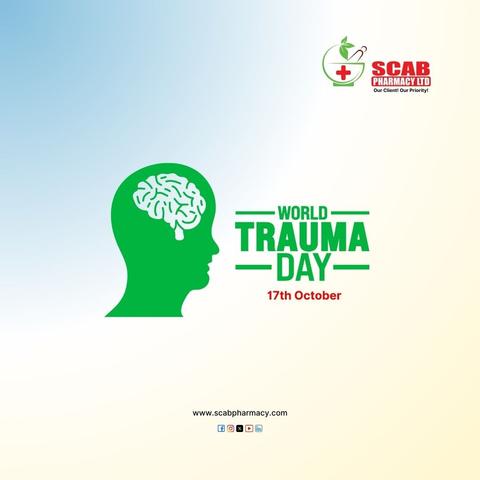
    𝗪𝗼𝗿𝗹𝗱 𝗧𝗿𝗮𝘂𝗺𝗮 𝗗𝗮𝘆 — 𝟭𝟳 𝗢𝗰𝘁𝗼𝗯𝗲𝗿 𝟮𝟬𝟮𝟱

    Today we remember victims of traumatic injury and recommit to prevention, timely care and community action. Trauma—from road crashes, falls, burns, interpersonal violence and disasters—kills and disables millions every year, but many of those losses are preventable. Small choices and system changes save lives: follow road rules, use helmets and seat belts, avoid distractions, keep vehicles and roads safe, and learn basic life support so you can act during the Golden Hour.

    Share this message to raise awareness. If you drive, ride or walk today, make safety your priority.

    𝗞𝗲𝘆 𝗮𝗰𝘁𝗶𝗼𝗻𝘀 𝗲𝘃𝗲𝗿𝘆𝗼𝗻𝗲 𝗰𝗮𝗻 𝘁𝗮𝗸𝗲 𝗻𝗼𝘄
    - Wear helmets on two‑wheelers and seat belts in cars.
    - Never drive tired, impaired or distracted (phone down, eyes up).
    - Keep vehicle maintenance current: brakes, lights, tyres.
    - Take breaks on long drives and plan trips to avoid night fatigue.
    - Carry a basic first‑aid kit and learn CPR/BLS skills.
    - Obey speed limits and traffic signs; use pedestrian crossings.
    - Support safer infrastructure: sidewalks, lighting, separate lanes.
    - Encourage phased renewal of old, unsafe vehicles and proper safety tech.
    - For organisations: invest in road maintenance, clear signage, well‑lit junctions and separated lanes.
    - Volunteer in or support local trauma-care and prevention programs.

    𝗥𝗲𝗺𝗲𝗺𝗯𝗲𝗿: prevention + prompt care = fewer deaths and disabilities. Act today to protect yourself and others.

    #WorldTraumaDay #TraumaAwareness #RoadSafety #HelmetSavesLives #BuckleUp #StopDistractedDriving #FirstAid #GoldenHour #SafeRoads #PreventInjury #SaveLives #TraumaPrevention #InjuryPrevention #SCABPharmacy

    neurodivergentinsights.com/autismandtra... Excellent breakdown of the ways that #Autism and #Trauma intertwine to make like difficult for #neurodivergent people. #MentalHealth #Trauma #Healing #PTSD #CPTSD #AutismAwareness #TraumaAwareness

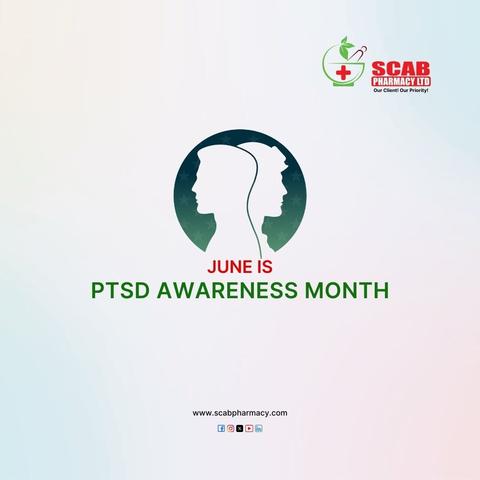
    𝗣𝗧𝗦𝗗 𝗔𝘄𝗮𝗿𝗲𝗻𝗲𝘀𝘀 𝗠𝗼𝗻𝘁𝗵 – 𝗝𝘂𝗻𝗲 𝟮𝟬𝟮𝟱
    June is recognized globally as Post-Traumatic Stress Disorder (PTSD) Awareness Month, with June 27th marking PTSD Awareness Day. This month is dedicated to raising awareness about PTSD and Complex PTSD (C-PTSD), encouraging open conversations, and supporting those affected by trauma worldwide.

    Research shows that around 10% of people globally may experience PTSD in their lifetime, yet many remain undiagnosed or untreated. Symptoms of PTSD and C-PTSD are often misunderstood or misdiagnosed as other mental health or physical conditions, delaying proper care.

    Raising awareness is crucial because effective treatments exist, even years after trauma. By educating ourselves and others, we can break the stigma, improve diagnosis, and support healing.

    If you or someone you know is struggling, seek professional help—recovery is possible, and you are not alone.

    #PTSDAwarenessMonth #GlobalMentalHealth #PTSDRecovery #SupportSurvivors #ComplexPTSD #EndTheStigma #TraumaAwareness #HealingIsPossible #MentalWellness #SCABPharmacy #YouAreNotAlone

    I'm excited to share Rembrandt Editor, a new tool I've created to make digital content more inclusive and trauma-informed. 🧵 #Technology #ContentDesign #UX #Accessibility #TraumaAwareness
    Bluesky

    Bluesky Social

    Several times in the last few months I found myself planning a surprise gift or event and thought to ask first. Every time it turned out better that I asked, the thought and time spent was welcome, but not the surprise.

    It's really about #TraumaAwareness