Agenzia Nova: Giustizia: Cida Fc, sconcerto per parole Nordio, rispetto per ruolo amministrativo

28 mag 21:30 - (Agenzia Nova) - "Questa organizzazione sindacale, prima per rappresentativita' tra i dirigenti del Ministero della Giustizia,... (Com)

The harsh century, the blackest thread of Italian massacres

The author navigates the contradictions of the transition from fascism to the Republic, marked by the “continuation of the State” and, moving forward chronologically, arrives at the 1992-1993 massacres, which, with the end of the Cold War, brought the country into a new phase.

#Italian #State #theColdWar

https://www.editorialedomani.it/idee/commenti/stragi-italiane-fascismo-golpe-portella-ginestra-milano-brescia-bologna-mafia-j3nns5cx

Il secolo feroce, il filo nerissimo delle stragi italiane

L'autore attraversa le contraddizioni della transizione dal fascismo alla Repubblica segnata dalla «continuità dello Stato» e da quell'altezza ... Scopri di più!

Domani

Adnkronos - ultimoratop: Disordini derby Toro-Juve, stabili condizioni tifoso ferito: è ancora in prognosi riservata

(Adnkronos) - Il giovane ha riportato un trauma cranico giudicato severo dai sanitari che all’arrivo in ospedale lo hanno sottoposto a intervento neurochirurgico

The stock market is soaring but Americans are in a bad mood.

Americans are in a bad mood and haven’t been this pessimistic in 70 years, while the stock market isn’t at all. The University of Michigan’s Consumer Confidence Index has fallen to a historic low, while the S&P 500 and Dow Jones are trading at record levels. This is highlighted by the Wall Street Journal, which notes that Americans’ mood was already low at the start of this year, but plummeted after the start of the war with Iran at the end of February, which drove up gasoline prices.

Only in June 2022, when inflation had reached the highest level in decades due to Covid, there was as much concern, but as Joanne Hsu, director of consumer surveys at the University of Michigan, comments, “now prices remain extremely high, the labor market has undeniably weakened over the past four years, and we are in the midst of a war.” However, looking at the stock market, no one would imagine such a low sentiment: stocks have reached record levels and are very expensive. The S&P 500 index registers a valuation of 40.8, measured by the price-to-earnings ratio adjusted for the economic cycle. This is an indicator popularized by Yale University economist Robert Shiller, Nobel Prize winner in 2013 for his work on asset prices.

The S&P 500 has never been so high. The previous one was in 2000.

The only other time the value of this index was above 40 in the 145 years of data collected by Shiller was in the years immediately preceding and following the peak of the dot-com bubble at the beginning of 2000.

The year 2000 was also the year the Michigan index reached historic highs. Since then, it has never come close to those levels. What makes the situation today so unusual compared to the normal course of things? Economists, the WSJ explains, have several hypotheses. In 2000, the economy was growing and creating jobs, and inflation was contained. The Cold War was over, China was opening up, and the US government was running a surplus. Just as today with artificial intelligence, a new revolutionary technology was taking hold: the Internet, a new technology that would connect the world and improve lives.

Reasons for this distrust

AI is not seen in the same positive light. Robert Barbera, director of the Center for Financial Economics at Johns Hopkins University, identifies three distinct factors that could explain the current disconnect. First, stock prices may not align with the fundamentals of the US economy and could fall sharply. In other words, consumers are justified in being dissatisfied. Second, stock markets could foreshadow a future that many Americans have not yet fully understood, a future, for example, in which the war with Iran ends, inflation eases, and growth resumes. In other words, the euphoric trend of the stock markets is justified. The third factor combines euphoria and fear. The factor that has most fueled enthusiasm in the stock markets recently has been artificial intelligence, which is also a source of growing concern for many Americans. A world in which companies can use AI to reduce labor costs and dramatically expand profit margins is positive for stocks. But it could also be a world in which more people struggle to find jobs. “The surge in the stock market and the growing pessimism of families reflect the same thing,” Barbera said.

#Americans #DowJones #Covid #JoanneHsu #YaleUniversity #RobertShiller #NobelPrize #Shiller #Michigan #TheColdWar #China #RobertBarbera #First #Second #third #Barbera

https://www.agi.it/economia/news/2026-05-25/mercato-azionario-ma-americani-cattivo-umore-37220886/

Today: Le rare parole di Antonella Clerici sulla mamma: "Non ha visto il mio successo, era chiacchierona come me. Papà più silenzioso, ora compie 90 anni"

Antonella Clerici - volto amato della tv, una delle migliori conduttrici che la nostra televisione può vantare - si è racconta al Corriere della Sera. La presentatrice ha parlato, oltre che di lavoro (qui le parole su Ilary Blasi e Michelle Hunziker), anche di vita privata. Nella fattispecie ha...

Oreshnik, the Russian missile that can strike all over Europe.

AGI - "Oreshnik" is a medium-range ballistic missile, used by Russia against Ukraine (most recently in the night between Saturday and Sunday) and, according to the Kremlin, a “cutting-edge” weapon that cannot be intercepted.
“The Oreshnik missile can strike targets across all of Europe”
Launched for the first time at the Ukrainian city of Dnipro in 2024, it literally means ‘nut’, but it can be armed with a nuclear warhead. It is a medium-range missile, meaning it can reach targets between 3,000 and 5,500 kilometers away.
Sergei Karakayev, commander of the Russian Strategic Missile Forces, which control the nuclear arsenal and the intercontinental ballistic missile program, stated that the Oreshnik can strike targets “across all of Europe.”
The missile has also been deployed in Belarus
Belarusian President Alexander Lukashenko, Putin’s key ally, announced in December that it had been deployed in his country, which borders the eastern flank of NATO.
Putin: “It’s impossible to intercept the Oreshnik missile”
It is “impossible” for modern air defenses to intercept the Oreshnik, which attacks at a speed of Mach 10, that is, 2.5-3 kilometers per second, Putin stated. Experts say the missile can travel at hypersonic speeds, but it cannot be maneuvered like typical hypersonic missiles.
Hypersonic speed
“As with other intermediate and intercontinental ballistic missiles, its warheads enter the atmosphere and reach their targets at hypersonic speeds,” said Marcin Andrzej Piotrowski, an analyst at the Polish Institute of International Affairs “but unlike hypersonic weapons, the warheads of the Oreshnik did not perform any hypersonic maneuvers, which would complicate the operation of missile defense systems.”

The Oreshnik does not fall into the category of intercontinental ballistic missiles (with a range greater than 5,500 km). However, if launched from Far Eastern Russia, it could theoretically reach targets on the western coast of the United States. Until 2019, Russia and the United States could not deploy such missiles based on the Intermediate-Range Nuclear Forces Treaty (INF), signed in 1987 during the Cold War. However, in 2019, US President Donald Trump withdrew Washington from the treaty, accusing Moscow of violating it, opening the way for a new arms race.
“A reserve of ready-to-use missiles”
By the end of 2024, during a televised meeting with military officials, Putin assured that Moscow had a reserve of these missiles “ready for use.” According to the Pentagon, the Oreshnik “is based on the Russian RS-26 Rubezh intercontinental ballistic missile,” which itself is derived from the “RS-24 Yars.” The RS-26 Rubezh missile program, whose first successful test was in 2012, was frozen in 2018, according to the Russian state news agency Tass.
It had suffered from a lack of resources to implement this project “simultaneously” with the development of the next-generation Avangard hypersonic systems, which were to be able to reach a target virtually anywhere in the world.
According to Putin, the Oreshnik missile can reach a speed of Mach 10, “that is, from 2.5 to 3 kilometers per second” (approximately 12,350 km/h), and “the temperature of the impact elements reaches 4,000 degrees Celsius,” which, in his words, is “almost equal” to the temperature of the surface of the sun.
Analysis by Ukrainian intelligence
According to the Ukrainian military intelligence (GRU), the speed achieved by the missile at the end of November 2024 “in the final part of its trajectory” was “above Mach 11” (approximately 13,600 km/h). The Oreshnik is also equipped with multiple warheads, each of which will follow an independent trajectory once it enters the atmosphere, which would further increase the difficulty of interception, according to the Russian president.

#Oreshnik #Russian #Europe #Russia #Ukraine #Kremlin #first #Ukrainian #Dnipro #5,500kilometers #SergeiKarakayev #Belarus #Belarusian #AlexanderLukashenko #Putin #25-3kilometers #FarEastern #theUnitedStates #theColdWar #DonaldTrump #Washington #Moscow #Pentagon #RS-24Yars #RS-26Rubezh #Avangard #25to3kilometers #second #4,000degreesCelsius

https://www.agi.it/estero/news/2026-05-24/missile-oreshnik-russia-ucraina-europa-37212148/

Agenzia Nova: Quirinale: Mattarella, crisi diritto internazionale e mondo frammentato impongono resilienza eccezionale

04 mag 11:01 - (Agenzia Nova) - Da dopo la guerra fredda lo scenario internazionale "e' mutato e si manifestano crisi dagli effetti globali.... (Rin)

Palace (of Parliament): Mattarella, international law crisis and fragmented world demand exceptional resilience.

May 4, 11:01 - (Agenzia Nova) - Since the end of the Cold War, the international landscape “has changed and global-effect crises are manifesting…” (Rin)

#Parliament #Mattarella #AgenziaNova #theColdWar

https://www.agenzianova.com/a/69f86183233725.75788951/7342583/2026-05-04/quirinale-mattarella-crisi-diritto-internazionale-e-mondo-frammentato-impongono-resilienza-eccezionale

Agi: Come funzionano le mine dell'Iran

AGI - L'Iran possiede ancora migliaia di mine navali nel suo arsenale, secondo le stime della Defense Intelligence Agency. La geografia dello Stretto di Hormuz e delle acque circostanti gioca a vantaggio dell'Iran. La lunga costa meridionale offre ampie opportunità alle piccole imbarcazioni di lanciarsi al largo con mine. Le strette rotte di navigazione lasciano poco spazio per il passaggio delle navi. E l'acqua nel punto più stretto dello Stretto è profonda solo circa 60 metri, abbastanza bassa da permettere la posa di campi minati.
I tipi di mine sono sostanzialmente quattro
Quelle galleggianti alla deriva, quelle trattenute da una catena a un'ancora e che restano sotto il pelo dell'acqua, quelle sul fondale e quelle magnetiche. Le più comuni sono le mine ancorate: hanno testate esplosive tenute appena sotto la superficie da una catena collegata a una pesante ancora.
Le mine galleggianti sono sferiche: nella metà inferiore della testata si trova l'esplosivo, con una sacca d'aria sopra per fornire galleggiabilità. Delle spesse sporgenze a forma di corno contengono dispositivi che fanno esplodere la mina al contatto con lo scafo di una nave.
Durante la Guerra Fredda, le "mine di fondo" si diffusero maggiormente. Contengono una quantità di esplosivo molto maggiore rispetto alle mine ancorate e giacciono sul fondale marino. Queste mine utilizzano una combinazione di sensori (magnetici, acustici, di pressione e sismici) per rilevare la presenza di una nave nelle vicinanze. Dopodiché, esplodono con una forza di centinaia di chilogrammi, proiettando una grande bolla di gas verso l'alto, in direzione della nave bersaglio.
Rifiuti, relitti e altri detriti ingombrano il fondale marino, rendendo spesso difficile e dispendiosa in termini di tempo la ricerca di queste mine.
L'Iran possiede anche mine magnetiche: piccole cariche esplosive posizionate da nuotatori o sommozzatori per neutralizzare una nave, spesso prendendo di mira il sistema di propulsione e il timone sott'acqua. In genere esplodono dopo un periodo di tempo prestabilito, dando a chi le ha piazzate il tempo di mettersi in salvo.
Lo sminamento
È un'operazione pericolosa e non semplice, per una bonifica completa possono volerci anni. La soluzione più rapida è quella di creare una sorta di 'canale' indicato da boe, che consenta il passaggio delle navi. Per arrivare allo sminamento completo con tutto il tempo necessario. La condizione più ovvia, però, è che le navi impegnate nelle operazioni non siano bersagliate dal nemico con razzi e artiglieria.

How do Iranian mines work?

AGI - Iran still possesses thousands of naval mines in its arsenal, according to estimates by the Defense Intelligence Agency. The geography of the Strait of Hormuz and surrounding waters favors Iran. The long southern coastline offers ample opportunities for small boats to venture far out with mines. The narrow shipping lanes leave little room for ship passage. And the water at the narrowest point of the Strait is only about 60 meters deep, low enough to allow the deployment of minefields.

The types of mines are essentially four: those drifting, those held by a chain to an anchor and remaining below the water surface, those on the seabed, and magnetic mines. The most common are the moored mines: they have explosive warheads held just below the surface by a chain connected to a heavy anchor.

Floating mines are spherical: the explosive is found in the lower half of the warhead, with an air pocket above to provide buoyancy. Thick horn-shaped protrusions contain devices that detonate the mine upon contact with a ship's hull.

During the Cold War, “bottom mines” spread more widely. They contain a much larger quantity of explosive than moored mines and lie on the seabed. These mines use a combination of sensors (magnetic, acoustic, pressure, and seismic) to detect the presence of a ship nearby. After that, they explode with a force of hundreds of kilograms, projecting a large bubble of gas upwards, in the direction of the target ship.

Waste, wrecks, and other debris obstruct the seabed, often making the search for these mines difficult and time-consuming.

Iran also possesses magnetic mines: small explosive charges placed by swimmers or divers to neutralize a ship, often targeting the propulsion system and rudder underwater. They generally explode after a predetermined period of time, giving those who placed them time to escape.

Demining

Is a dangerous and complex operation, and it can take years for a complete cleanup. The quickest solution is to create a sort of ‘channel’ marked by buoys, which allows the passage of ships. To arrive at complete demining with all the necessary time. However, the most obvious condition is that ships engaged in operations are not targeted by the enemy with rockets and artillery.

#Iranian #theStraitofHormuz #Strait #onlyabout60meters #theColdWar #hundredsofkilograms #Demining

https://www.agi.it/estero/news/2026-04-13/iran-mine-hormuz-36553717/

Il Tempo: Germania, autorizzazione per soggiorni di oltre 3 mesi all'estero. La nuova legge

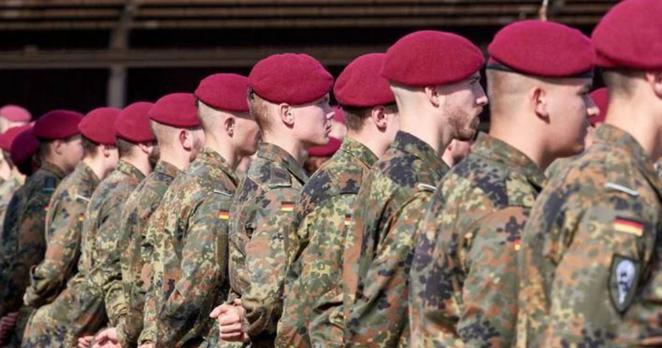
In Germania è stata introdotta la "Legge di modernizzazione del servizio militare", che introduce l'obbligo per gli uomini di età compresa fra 17 e 45 di ottenere una autorizzazione dalle Forze armate tedesche (Bundeswher) per soggiornare oltre 3 mesi all'estero. Il portavoce del ministero ha spiegato la ragion d'essere del provvedimento, specificando che in caso di emergenza l'esercito ha bisogno di sapere chi potrebbe soggiornare fuori dal paese per un periodo prolungato. E al riguardo ha aggiunto: "Il regolamento era già in vigore durante la Guerra Fredda e non aveva alcuna rilevanza pratica; in particolare, non viene applicato. Le conseguenze di questo regolamento per i giovani sono profondamente significative, soprattutto considerando che il servizio militare rimane volontario".
Tuttavia, presso il ministero della Difesa federale "si stanno elaborando regolamenti specifici per la concessione di deroghe al requisito di approvazione, anche al fine di evitare inutili complicazioni burocratiche". Infatti, il portavoce ha poi detto: "Chiariremo tramite regolamenti amministrativi che l'autorizzazione si considera concessa fintanto che il servizio militare è volontario. Poiché il servizio militare, secondo la legge vigente, si basa esclusivamente sulla partecipazione volontaria, tali autorizzazioni devono, in linea di principio, essere concesse".

Germany, authorization for stays of over 3 months abroad. The new law.

In Germany, the “Military Modernization Law” has been introduced, which makes it mandatory for men aged between 17 and 45 to obtain authorization from the German Armed Forces (Bundeswehr) to stay abroad for more than 3 months. The ministry’s spokesperson explained the rationale behind the measure, stating that in the event of an emergency, the army needs to know who might be staying outside the country for an extended period. And regarding this, he added: “The regulation was already in effect during the Cold War and had no practical relevance; in particular, it is not enforced. The consequences of this regulation for young people are profoundly significant, especially considering that military service remains voluntary.”

However, at the Federal Ministry of Defence, “regulations are being developed specifically for granting waivers to the approval requirement, also in order to avoid unnecessary bureaucratic complications.” Indeed, the spokesperson then said: “We will clarify via administrative regulations that authorization is considered granted as long as military service is voluntary. Since, according to current law, military service is based exclusively on voluntary participation, such authorizations must, in principle, be granted.”

#Germany #theColdWar

https://www.iltempo.it/esteri/2026/04/06/news/germania-autorizzazione-per-soggiorni-oltre-3-mesi-la-legge-che-desta-preoccupazione-47159205/

Germania, all'estero per oltre 3 mesi: uomini dovranno chiedere permesso all'esercito

In Germania è stata introdotta la "Legge di modernizzazione del servizio militare", che introduce l'obbligo per gli uomini di et&...

RaiNews: La ricina, il veleno invisibile usato come arma biologica nella Guerra Fredda

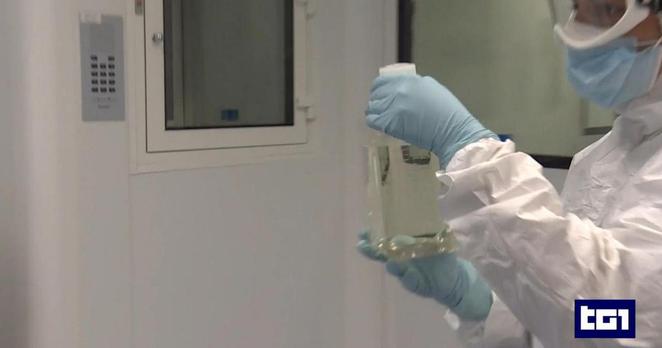
Bastano pochi milligrammi per uccidere un essere umano ed è in vendita sul dark web. Sarebbe stata la causa della morte di Sara Di Vita e Antonella Di Ielsi, figlia e mamma molisane decedute a Natale

Ricinus, the invisible poison used as a biological weapon during the Cold War.

Just a few milligrams are enough to kill a human being, and it’s being sold on the dark web. It would have been the cause of death of Sara Di Vita and Antonella Di Ielsi, a daughter and mother from Molise who died on Christmas.

#Ricinus #theColdWar #SaraDiVita #AntonellaDiIelsi #Molise

https://www.rainews.it/video/2026/04/cronaca-nera-ricina-veleno-invisibile-arma-biologica-sara-di-vita-antonella-di-ielsi-pietracatella-campobasso-video-4111ea8a-a63c-4b09-92e4-d6e62af0a316.html

La ricina, il veleno invisibile usato come arma biologica nella Guerra Fredda

Bastano pochi milligrammi per uccidere un essere umano ed è in vendita sul dark web. Sarebbe stata la causa della morte di Sara Di Vita e Antonella Di Ielsi, figlia e mamma molisane decedute a Natale

RaiNews

Agi: Pechino: "Su Taiwan basta con la narrativa della minaccia cinese"

AGI - Il governo cinese ha chiesto di porre fine alla "narrativa di una minaccia cinese" nei confronti di Taiwan. Dopo che un rapporto dell'intelligence statunitense ha affermato che Pechino non ha piani per invadere l'isola nel 2027 né una tempistica precisa per raggiungere la "riunificazione", il portavoce del ministero degli Esteri cinese, Lin Jian, ha dichiarato che "la soluzione della questione di Taiwan è una questione che spetta esclusivamente al popolo cinese decidere" e "non ammette alcuna interferenza da parte di forze straniere". Gli Stati Uniti "dovrebbero esercitare prudenza nelle loro parole e azioni riguardo alla questione di Taiwan", ha aggiunto il portavoce, esortando "le istituzioni e gli individui statunitensi competenti" ad "abbandonare i pregiudizi ideologici e la mentalità a somma zero tipica della Guerra Fredda" e a "correggere la loro percezione della Cina".
Il rapporto dell'Intelligence Usa
Secondo il Rapporto annuale sulla valutazione delle minacce del 2026, pubblicato mercoledì e redatto dall'intelligence statunitense, le autorità di Pechino continueranno a cercare di "creare le condizioni per un'eventuale riunificazione con Taiwan, senza ricorrere al conflitto".
"Nonostante la minaccia di ricorrere alla forza per imporre l'unificazione, qualora lo ritenesse necessario, e per contrastare quello che percepisce come un tentativo degli Stati Uniti di usare Taiwan per minare la sua ascesa, la Cina preferisce raggiungere l'unificazione senza l'uso della forza, se possibile", si legge nel documento. Questa valutazione contrasta con quella espressa dal Pentagono alla fine dello scorso anno, quando un rapporto indicava che la Cina aspirava a "combattere e vincere" una guerra per Taiwan entro la fine del 2027.
L'incontro tra Trump e Xi Jinping
La pubblicazione di questo documento è avvenuta alla vigilia dell'incontro previsto a Pechino tra Donald Trump e Xi Jinping, la cui data è stata rinviata su richiesta del presidente statunitense a causa del conflitto in Medio Oriente. Tra gli argomenti che potrebbero essere discussi durante l'incontro c'è proprio la questione di Taiwan, che la Cina considera la "prima linea rossa" nelle relazioni tra le due potenze.

Beijing: "Regarding Taiwan, we must put an end to the Chinese narrative of a threat."

The Chinese government has called for an end to the “narrative of a Chinese threat” regarding Taiwan. Following a U.S. intelligence report stating that Beijing has no plans to invade the island in 2027 nor a precise timeline to achieve “reunification,” Chinese Foreign Ministry spokesman Lin Jian stated that “the solution to the Taiwan issue is a matter that belongs exclusively to the Chinese people to decide” and “does not admit any interference from foreign forces.” The United States “should exercise caution in its words and actions regarding the Taiwan issue,” the spokesman added, urging “competent U.S. institutions and individuals” to “abandon ideological biases and the zero-sum mentality typical of the Cold War” and to “correct their perception of China.”

The U.S. Intelligence Report
According to the 2026 Annual Threat Assessment Report, published Wednesday and drafted by U.S. intelligence, Beijing authorities will continue to seek to “create conditions for a possible reunification with Taiwan, without resorting to conflict.”

“Despite the threat to resort to force to impose unification, if necessary, and to counter what it perceives as a U.S. attempt to use Taiwan to undermine its rise, China prefers to achieve reunification without the use of force, if possible,” the document reads. This assessment contrasts with that expressed by the Pentagon at the end of last year, when a report indicated that China aspired to “fight and win” a war over Taiwan by the end of 2027.

The Trump and Xi Jinping Meeting
The publication of this document took place on the eve of the meeting scheduled in Beijing between Donald Trump and Xi Jinping, whose date was postponed at the request of the U.S. president due to the conflict in the Middle East. Among the topics that could be discussed during the meeting is the issue of Taiwan, which China considers the “first red line” in relations between the two powers.

#Beijing #Taiwan #Chinese #ForeignMinistry #LinJian #TheUnitedStates #theColdWar #China #Pentagon #XiJinping #DonaldTrump #theMiddleEast #first

https://www.agi.it/estero/news/2026-03-19/taiwan-cina-riunificazione-36182129/

Today: A chi vende armi l'Italia: export aumentato del 157% in 5 anni

Nel mondo si vendono sempre più armi e l'Italia è il sesto Paese che più lo fa al mondo. Il volume globale dei trasferimenti di armi è cresciuto del 9,2 per cento, una fase di espansione che non si vedeva dai tempi della Guerra fredda. I dati più aggiornati, come ogni anno, sono dello Stockholm...

To Italy that sells weapons: exports increased by 157% in 5 years.

Worldwide arms sales are increasing, and Italy is the sixth country in the world that does it most. The global volume of arms transfers has grown by 9.2 percent, an expansion that hadn't been seen since the Cold War. The latest data, as every year, comes from Stockholm…

#Italy #sixth #92percent #theColdWar #Stockholm

https://www.today.it/attualita/vendita-armi-italia-a-chi-sipri.html

A chi vende armi l'Italia: export aumentato del 157% in 5 anni

Il nostro è tra i 6 Paesi che più esportano armamenti nel mondo, più della metà finisce in Medio Oriente: in Europa non si vendevano...

Today