 Eishi Noguchi
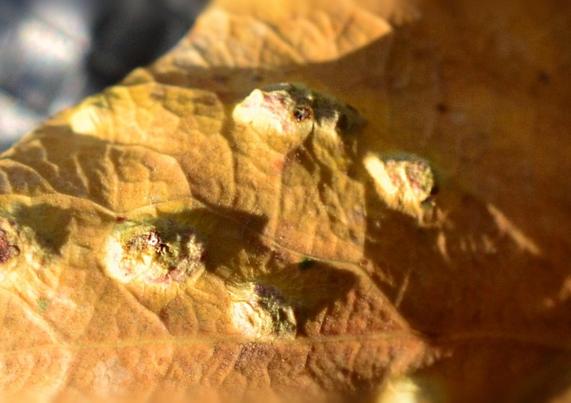
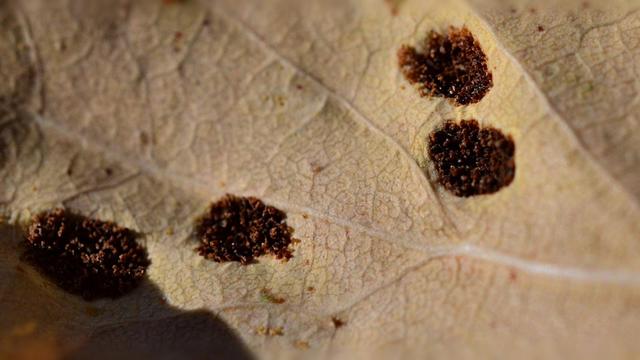
Black walnut gall, a pretty good specimen found in our backyard 😮
#BlackWalnut #Gall #Mite #Tree #Nature #Backyard #Photography
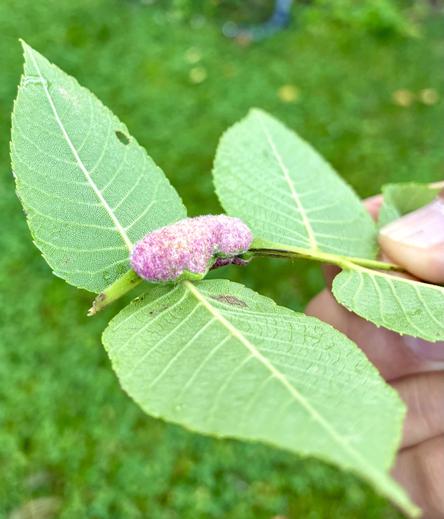
Black walnut gall, a pretty good specimen found in our backyard 😮
#BlackWalnut #Gall #Mite #Tree #Nature #Backyard #Photography
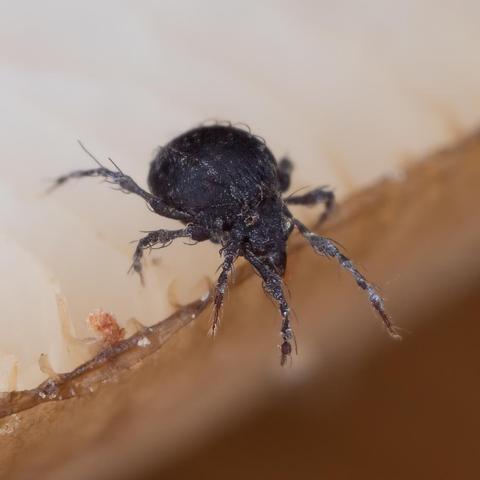
I saw a bunch of these mites walking around on the table, they kept occasionally stopping to nibble on something like this one eating some kind of detritus. I think they might be whirligig mites based on the erratic circles they kept walking in 
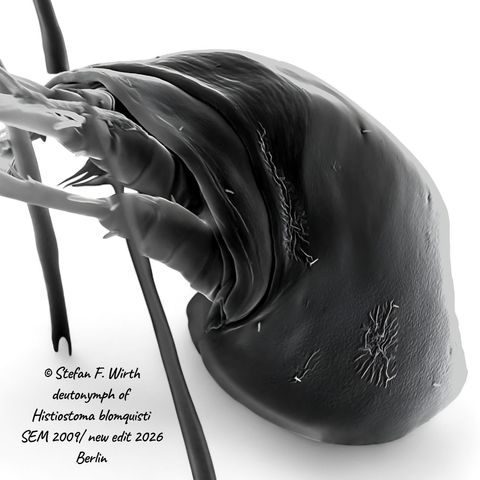
Years ago, with my then-host in the USA, John C. Moser, I described the #myrmecophilous #phoretic #mite #Histiostoma #blomquisti as a new #species (S.F.Wirth & J.C.Moser, 2010).
In a recent #sciencecomm. #article, I reconstructed its #biology, being found on active #queens of ant #Solenopsis #invicta, from my current perspective (S.F.Wirth,2026).
©#StefanFWirth 2026
Please support me with a coffee https://ko-fi.com/sfwirth
Ref
https://doi.org/10.1051/acarologia/20101979
#Photos
©S F.Wirth


RE: https://mastodon.scot/@kim_harding/115984446339509467
#Sarcoptes #scabiei var. hominis (#Astigmata, Acariformes) is a skin-#parasitic #mite that feeds on human #epidermal cells. Infection typically occurs via adult, mated #females.The mite has #subspecies found on both #domestic and #wild #animals. The #evolutionary direction was via #humanancestors to humans and from there #spreading first to domestic animals and then to wild animals (see ref).
© #StefanFWirth 2026
Reference
R. W. Currier er al. (2012): https://doi.org/10.1111/j.1749-6632.2011.06364.x

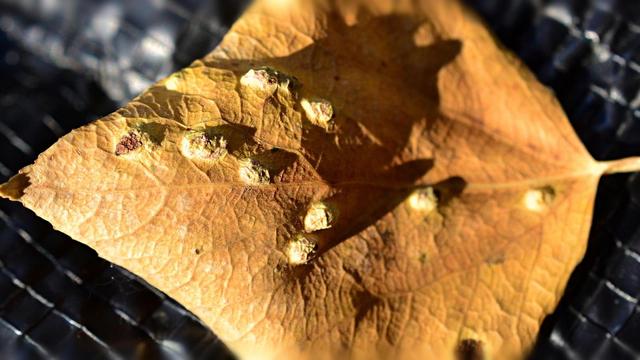
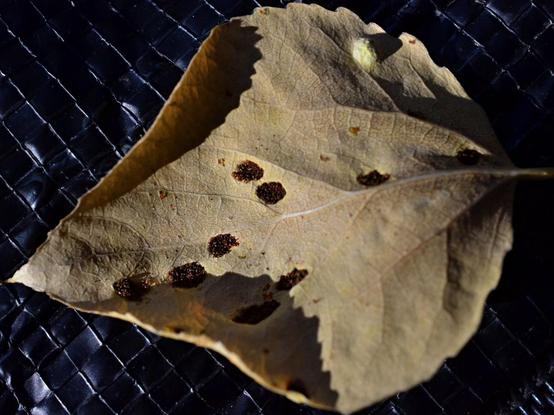
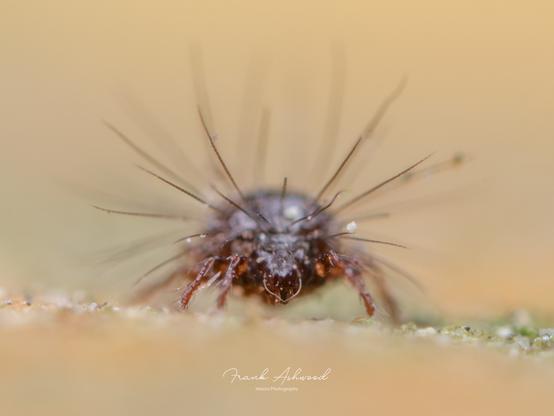
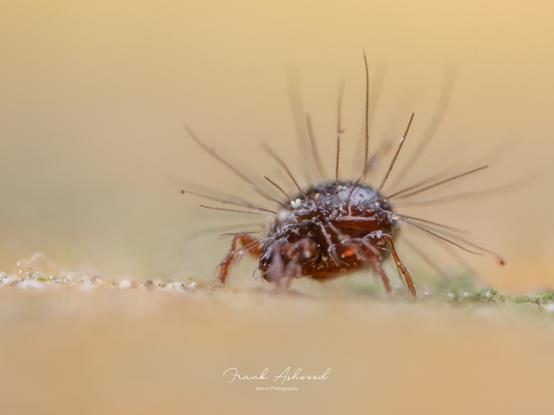
It's week 3 of fatherhood, and today I was granted special dispensation from shopping, housework, nappies and feeding, to do a brief spot of macrophotography in the sunshine, brilliant!
The highlight was this incredible Oribatid mite, sporting long defensive spines (Neotrichozetes spinulosa). I've nicknamed it the Hellraiser mite, which seems to be catching on - feel free to use it too!
#Macrophotography #SoilBiodiversity #SoilEcology #Acari #Entomology #Nature #NaturePhotography #Acarology #Mite
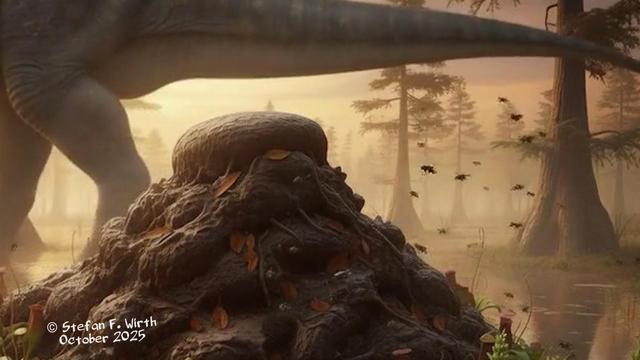
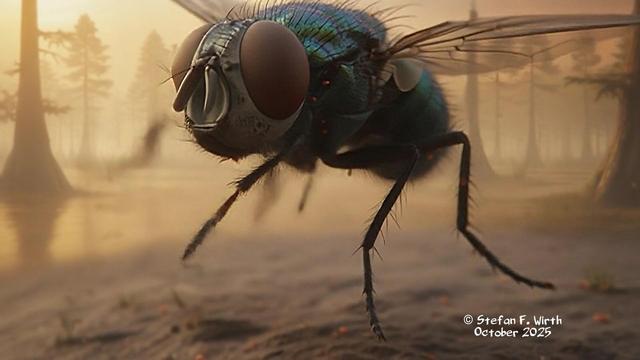
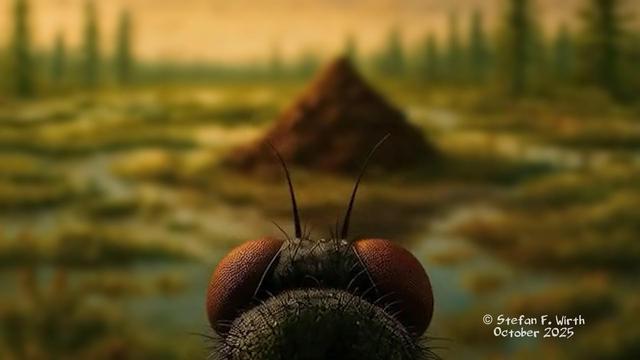
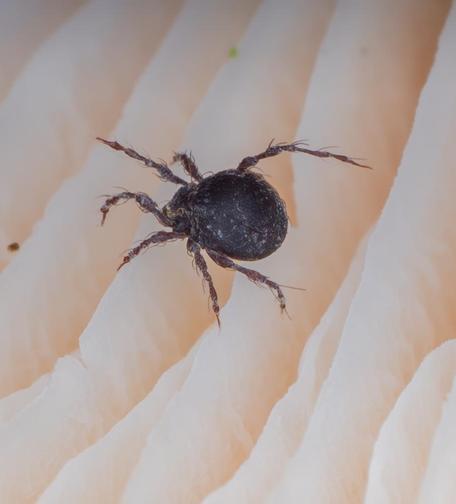
In my new YouTube #video, I tell the #hypothetical story of a #Histiostomatidae #mite that lived its #lifehistory in the #dung heap of the #dinosaur #Edmontosaurus #annectens during the Late #Cretaceous. It developed #fungivorously within the dung and, when conditions deteriorated, was #transported by #flies to a new habitat (phoresis). All images and footage created with #AI assistance, except photos of free-living mites.
© #StefanFWirth 2025
Video
https://youtu.be/gzv-TZmU5G4?si=zrTLfrC96k3KEGqr
Pics
© S.F. Wirth

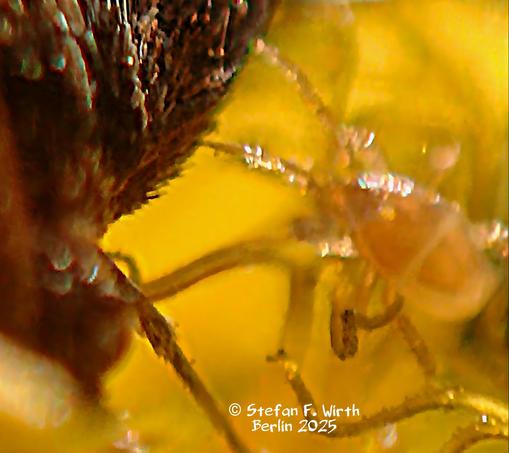
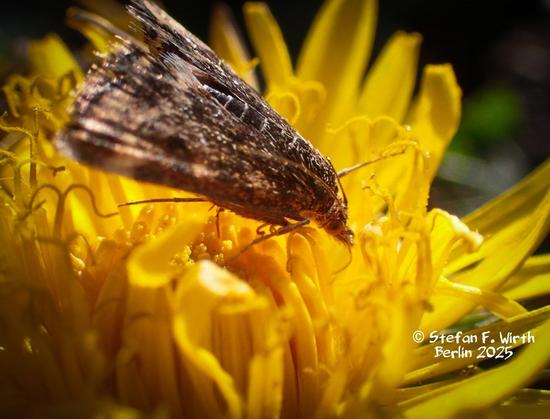
Why a #mite of the #Parasitidae (#Mesostigmata), apparently genus #Parasitellus, seemingly attacks moth #Pyrausta #despicata (Crambidae). Parasitellus develops in #bumblebee #nests and uses them for dispersal (#phoresy) to other nests, thus they leave their hosts on blossoms and wait for new hosts to be carried to new nests. The moth was detected by the mite as a #nonsuitable #phoretic #host.
© #StefanFWirth #Berlin 2025
Visit my new YouTube Video:
https://youtu.be/gRAT7CIKWTk?si=hb2LC19Fmf1URVl6
Photos
©S.F. Wirth
 Alice 🐝
 Stefan F. Wirth
 LIGHTCAMACT
 cohan
cohan Frank Ashwood
 John Dal