That which gets measured

This entry is part 47 of 72 in the series My Journey

I’ve often heard, “that which gets measured, gets improved.” (…and you have to actually plan and work to realize improvements.)

Ten years ago, I saw 270 pounds on the scale and decided to start tracking. The first step was to work on getting proper sleep (followed by many more steps – but that’s another story.) I’ve been tracking health related things – weight, hours of sleep, dietary supplements, habits like stretching (whatever little projects I’ve had going on) for almost 10 years. This enables me to trot out amazing things like this when I’m looking for some inspiration…

Highest weight from memory: 270
Dec 2006, earliest recorded weight: 265
Jun 2012, started Parkour: 254
Jun 2014, ADAPT 1: 240
Aug 2014, rock climbing in Colorado: 232
Mar 2016: 221

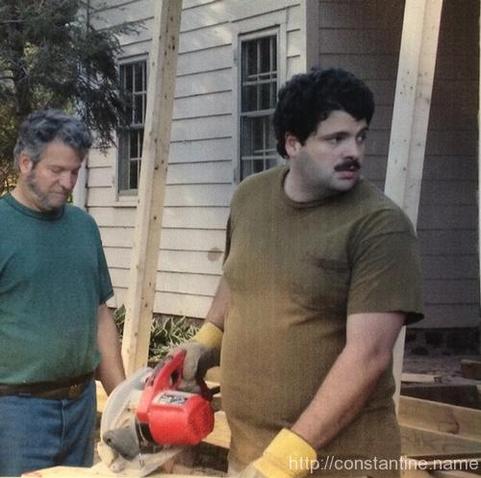
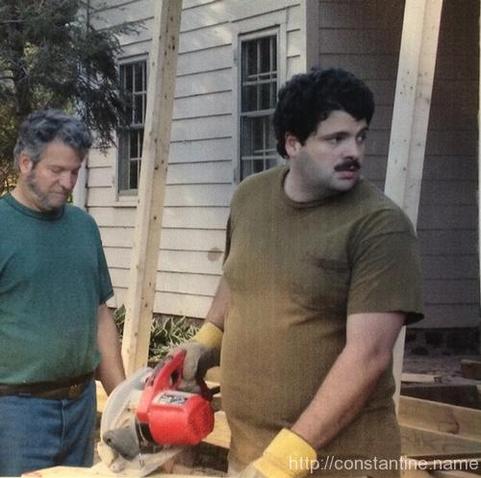
Me, excited? You betcha!!

I’ve said it before: Find the smallest first step you can make towards your goal. Take that step. Tomorrow, look back and say, “well… I’ve come this far, may as well take the next step!” The hardest part of any journey is believing the journey is possible.

ɕ

#Fitness #MyJourney #RestorativePractice #Writing
Craig Constantine

Presence, not pursuit.

Craig Constantine

§1 – Introduction

This entry is part 1 of 13 in the series Changes and Results

I’ve lost a lot of weight and gotten a lot stronger in the last few years. But how, exactly, did I get to where I am now?

In 2011, I didn’t like where I was, and I don’t mean, “I was embarrassed about being fat.” I mean I was physically uncomfortable being sweaty, physically unable to get comfortable sitting, grumpy all the time, tired all the time, and more. I really wanted to change and I knew I needed to change before the Doctor started one of those, “Let’s talk about these numbers,” conversations.

Around that same time I’d discovered a few blogs…

I’d read a lot over at Nerd Fitness. I read all of Steve Kamb’s inspirational and motivational stuff.

The big take-away from NF was the loud-and-clear message about what does NOT work: Simply getting a gym membership does not work, declaring a New Year’s resolution does not work, and generally trying to “turn over a new leaf” does not work. Fortunately, rather than come away hopeless, I took it as a big comforting confirmation that I am not alone in sucking at changes.

Whatever it is that I’d been doing, that is EXACTLY what was NOT working.

I also read everything from Leo Babauta over at Zen Habits. For example, When Willpower is Trumped By Bad Habits is a great example of Leo-zen. Eventually, I finally teased a few more threads out of the Gordian knot that was my problem:

I am weak in willpower.

I need to stop beating myself up about failures and shortcomings.

I began by slowly making progress on some “health” projects, improving my sleep and more. (I’ll go into all of that in detail in subsequent parts.) As soon as I began taking Parkour classes, it became clear that I needed to ease into actual running. I also concluded that “regular” footwear was going to act as a crutch and slow down my progress in Parkour. (Long story. Just go with it for this discussion.) So I also switched to minimalist shoes for Parkour, for running and daily wear.

The result of running and Parkour? I was stiff, achy and sore literally all the time. It became glaringly obvious that I needed to start doing “recovery work” — stretching, massage, and basic range-of-motion movement if I was to have any hope of keeping up my hard work.

…and on and on.

I built upon each small success, one small step at a time.

Which brings me to today, and this series of posts. Here I’m going to document my journey by spelling out all the things I did. Hopefully, this roadmap will inspire others.

Next up, some Philosophy!

ɕ

#ChangesAndResults #RestorativePractice #Writing

§9 – Twenty Minutes a Day

This entry is part 9 of 13 in the series Changes and Results

One of my favorite ideas from Charles Duhigg’s book, The Power of Habit, is the idea of a keystone habit. Keystone habits create a chain reaction; Changing and rearranging your other habits as you integrate the habit into your life. According to Duhigg, “keystone habits influence how we work, eat, play, live, spend, and communicate”, and they “start a process that, over time, transforms everything.”

After self-awareness and self-assessment, my 20 minutes of stretching and recovery work every morning is by far the single most important thing I’ve changed in my journey. (“Every morning” is the goal, not always the reality.) Initially, it was the one critical first little piece of success from which I launched a pile of awesome changes. It continues to be my reliable fallback position when things go off the rails.

Every time I get stuck, fail at sticking to a good habit, or make a mistake with diet, I repeat to myself: Start again tomorrow. Start again tomorrow with one small bit of success first thing in the morning, (and a cup of coffee.)

How my “20 minutes” works:

Declare 20 minutes of “me-time” first thing in the morning. Literally explain to others that you are creating space for yourself to start your day. It’s not leave-me-alone time. If there are others in your household, they are welcome to visit you and interact. You may find they occasionally join you.

Go straight there, as soon as you can. Ok, yes, make a bathroom stop and obtain your beverage of choice on your way to your morning session. But you do not need to arrive at your space awake and ready to exercise. You only need to get there. The stretching and moving will gradually wake you up. It will also wake up your mind; You’re going to have twenty minutes every morning to peacefully review your yesterday, plan your today, or even practice some mindfulness meditation. But only if you want! Your initial goal is to simply get to your space ASAP each morning.

Create (or designate) a space. This is really critical. It cannot be a place that you have to setup; It has to be a place that always exists, that you can simply stumble into first thing in the morning. Find a few square feet and make it your own. A light, a little clock, maybe some music setup ready to go, maybe a yoga mat. Having a physical space (as simple or as complex as you choose to make it) will help your mind shift automatically. “I do this sort of stuff in this space,” becomes automatic.

Music? For a long time, I was really into electronica-esque music for this. (Sometimes I still use the music.) I fanatically groomed a Pandora station with electronic music that has absolutely no vocals—but obviously use whatever works for your, including no music if you prefer. When I use music, I want it to help me zone in on what I’m doing and forget the world.

Props, mats, weights, etc. Start simple. As you go along, you’ll discover things—an article on the Internet, a yoga class, a friend’s ideas—and you’ll take in new moves, stretches and exercises as your own. I started without yoga blocks, then one day found a new stretch I wanted to be able to use when I felt I needed it, and bought two simple yoga blocks for the purpose. This way everything you have in your space, has a purpose rather than being something that nags you, “oh, I should be using that.”

Simply stretching and moving is your first activity. What does your body want to do first? Just learning to be able to answer that question honestly each morning is a great lesson. Then what does it need next? Move when you feel like it. Engage muscles when you feel like it. Engage your brain when you feel like it. Twenty minutes goes by in a blink.

Other tips, tricks and resources

Take some yoga classes. Find a Yin yoga class and spend a few months learning.

No. Right. Now. Oliver Emberton has a great article, How to Debug Your Brain. It’s funny and really exactly what’s wrong with our brains. Emberton’s idea of hijacking a “transition” led me to aim for “first thing in the morning.” I hijack the, “I just got out of bed” transition as many mornings as I can. My rationale is: I was literally just ignoring everything when I was unconscious, so I can continue ignoring everything for a little longer while I put me first.

Focus on what you can control. Iterate. Steve Kamb wrote an article talking about each Avenger’s super power, and Tony Stark’s power specifically, What’s Your Avengers Superpower. Stark is not actually a superhero. Stark simply knows the rule: you can’t edit a blank page, and you can’t improve a machine that hasn’t been built yet. Iterate.

When Life Sucks

Exercise Obstacle

How to Create Habits That Stick

How Lego and Minecraft Will Help You Get in Shape

ɕ

#ChangesAndResults #RestorativePractice #SelfAcceptance #Yoga

Craig Constantine

Presence, not pursuit.

Craig Constantine

Know when to punt

25 days ago I started a wee challenge: Trying to train every day for 100 days straight. I’d done this challenge in 2017 to mixed results. Physically it was mixed; training every day is too much and I ended up defining some recovery days as “training.” Mentally it was also mixed; I wasn’t trying to build a new habit, so the “daily” part didn’t work towards that, and it became a serious drag forcing myself to train every day.

When I finished the 2017 challenge I knew it sucked and definitely didn’t want to make that a thing I did often, nor even yearly. When 2020 rolled around—my physical activity was exactly as usual, with me outside doing various things just as much as 2019—but I started thinking about doing some more rock climbing (outdoors, on real mountains.) That prompted me to think about getting into better shape. For me, that’s primarily removing fat. For the first couple months I concentrated on diet, which means focusing on when and how much I’m eating.

After I peeled off 10 pounds of blubber, that’s when I had the idea to take on a fresh 100-days-of-training challenge. It was exactly what I remembered it was like: It sucks. In years past I would have just embraced the suck and pushed through the thing. Note that I would have constantly considered myself to be failing. Entirely missing a day here and there, realizing I need a rest day and defining recovery as training, and just generally nagging myself with, “I should go train.” Instead I simply punted on the whole thing and deleted it entirely.

…aaah, yes, the power of “no” when you have a bigger “why” burning inside you.

When’s the last time you punted on something?

ɕ

#Fitness #RestorativePractice #SelfAwareness #Training

Join me for a conversation with three educators, Raymond Appleberry, Brian Hopkins and Lynne Roland as they share how they have implemented restorative and trauma informed practices within their Texas school district on the latest episode of The Thoughtful Teacher Podcast. Available on your favorite podcast app or at

https://cms.megaphone.fm/channel/CTAOG2397153967

#education #edutooter #edutoot #sel #restorativepractice #inclusion

Building Design for Learning with Willam Browni... by The Thoughtful Teacher Podcast

Biophilic Design Principles Really do Improve Learning

Megaphone.fm

Recording this morning w/ journalist @andykopsa on her latest @inthesetimesmag investigation into one Iowa school district's shift to #restorativepractice. Here’s what happens when a school rethinks punishment:

#edchat #k12

https://inthesetimes.com/article/the-city-that-kicked-cops-out-of-schools-and-tried-restorative-practices-instead

The City That Kicked Cops Out of Schools and Tried Restorative Practices Instead

Here’s what happens when a school rethinks punishment.

In These Times
Hello fellow used-to-be #IrishTwitter. Welcome to #IrishMastodon. In terms of an intro I’m #LateDiagnosed #ActuallyAutistic possibly #AuDHD #IrishMammy of two #neurodivergent beauties, living in #D12 & #principal #teacher of a #school in #D6. #SpIn in #SLT #OT #Autism #edchatie #SocialJustice #restorativepractice & #knitting #crotcheting #sewing #crafting #sea #swimming for #mentalhealth. Follow if you know me from #Twitter and have recently #emigrated or if you’re interested in similar things 👍