English – The Conversation | Self-driving cars struggle to see at night or in fog – but imitating the human brain can make them safe by Pablo Hernández Cámara, Profesor e investigador. Departamento de Ingeniería Electrónica & Laboratorio de Procesado de Imágenes, Universitat de València, Universitat de València

AI generated summary, Read the full article for complete information.

Self‑driving cars work well in clear daylight but become almost blind in darkness, rain or fog, because current AI vision systems lack the adaptive mechanisms that human eyes use. Researchers at the University of Valencia mimicked the brain’s “divisive normalisation”—a neuronal “volume‑control” that amplifies weak signals in dark scenes and attenuates bright ones—to modify standard AI models. Tests with real‑world European driving data, night‑time images from Switzerland and virtual simulators showed that the brain‑inspired models retained accurate object detection under fog and complete darkness, outperforming unmodified AI by more than 20 %. The study suggests that improving autonomous‑vehicle safety does not require larger computers or massive datasets, but rather can be achieved by borrowing evolution‑tested strategies from human vision, making AI systems more robust, adaptable, and trustworthy in all weather conditions.

Read more: https://theconversation.com/self-driving-cars-struggle-to-see-at-night-or-in-fog-but-imitating-the-human-brain-can-make-them-safe-282284

#UniversityofValencia #Selfdrivingcars #AIvision #Neuralnetwork #Humanbrain #Divisivenormalisation #Switzerland #Europeandatasets #Autonomousvehicles #Braininspired #
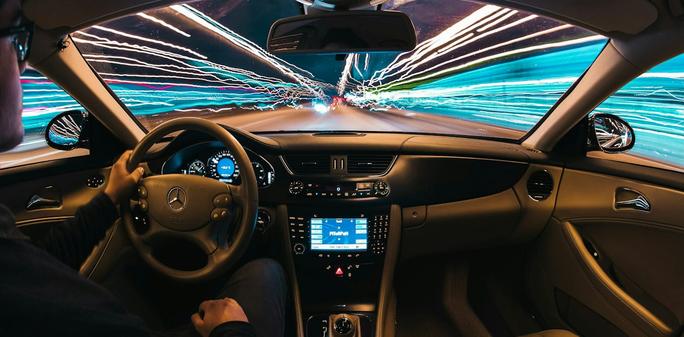

Self-driving cars struggle to see at night or in fog – but imitating the human brain can make them safe

AI models that power self-driving cars work great in clear conditions, but turn blind in fog or at night.

The Conversation
The Logical Song - Supertramp (Cover by Emily Linge)

YouTube
Human vision: what we actually see – and don’t see – tells us a lot about consciousness | The-14

What we see is only part of reality. New research on vision and consciousness reveals how the brain processes unseen information shaping awareness & perception.

The-14 Pictures

Reflections on Human and Artificial Intelligence

📰 Original title: I.N.

🤖 IA: It's not clickbait ✅
👥 Usuarios: It's not clickbait ✅

View full AI summary: https://killbait.com/en/reflections-on-human-and-artificial-intelligence/?redirpost=f209a88f-8f4c-4547-b469-ef844c4d2039

#artificialintelligence #cognition #humanbrain

Reflections on Human and Artificial Intelligence

The article explores the nature of human intelligence in comparison with artificial intelligence (AI). The author argues that AI is often described as merely simulating reasoning…

KillBait Archive

15 sneaky signs someone is far more intelligent than you realize

https://fed.brid.gy/r/https://www.upworthy.com/15-sneaky-signs-of-intelligence-ex1

Scientists once thought the brain couldn’t be changed. Now we know different | The-14

Neuroplasticity overturned the myth of a fixed brain. Science now shows how learning, stress, sleep and exercise reshape the brain across the whole lifespan.

The-14 Pictures

The Most Bizarre Neurological Conditions You Never Heard Of

https://peertube.gravitywell.xyz/w/dc4zQju5c7i1C1MnAPg3GQ

The Most Bizarre Neurological Conditions You Never Heard Of

PeerTube
From PsyPost.org: How scientists are growing computers from human brain cells – and why they want to keep doing it: A new race is on to build computers using human brain tissue. Fuelled by venture capital and biotech advances, startups are blurring the line between biology and machines. http://dlvr.it/TQHX7L News: bit.ly/3LA2jdQ #Neuroscience #Biotech #HumanBrain #ArtificialIntelligence #Bioengineering
How scientists are growing computers from human brain cells – and why they want to keep doing it

A new race is on to build computers using human brain tissue. Fuelled by venture capital and biotech advances, startups are blurring the line between biology and machines.

PsyPost Psychology News